Home


Menu

Close

Secure Your Cloud Collaboration Platform Against AI Bottlenecks and Synthetic Drift
Published:
July 11, 2026
Introduction: The New Frontier of Cloud Collaboration
Have you ever stopped to wonder what happens to your data when you upload it to a cloud platform? You probably trust that it stays safe. But in 2026, trust alone is not enough.
Cloud collaboration platforms have become the backbone of how we work. Teams share files, run meetings, and build products using these digital spaces every single day.

But here is the problem nobody talks about enough: these same platforms face serious trust and security challenges that can hurt both people and the AI systems they depend on.
Think about it this way. When a team uses a cloud based collaboration platform, every comment, every edit, and every decision leaves a digital trail. That trail is gold for training AI systems. But most of that data is messy, incomplete, or gathered without proper permission. And that creates what experts call an "AI bottleneck."
The numbers tell a rough story. According to recent research, a shocking number of AI projects simply fail. One study found that 95% of AI pilots do not deliver real results. That is not because AI is bad technology. It is because the data feeding those systems is not built on a strong foundation. A big reason for this failure rate is poor data quality. When the data lacks ethics and permission, the AI loses reliability fast.
So what does this mean for your team? It means the cloud based collaboration platform you use right now might be causing hidden problems. The lack of ethical, permission-based private data creates a situation where AI performance degrades over time. This is called "synthetic drift," and it is a growing concern for organizations that want their AI to serve people well, not just chase engagement numbers.
Organizations in 2026 must step back and ask hard questions. Are our tools designed for attention or for human flourishing? Do they help us build trust, or do they quietly erode it? To get the most out of any cloud cyber security strategy or collaboration tool, you need to start with data that people willingly share, data that reflects real human values.
The good news is that solutions exist. Teams can adopt systems that focus on ethical data capture and reinforce positive behaviors. But first, we need to understand the full picture of what is going wrong.
In the sections ahead, we will explore how something as simple as a cloud based collaboration platform can either build trust or break it. We will also look at how cloud-based cyber security companies are stepping up to protect both people and AI. And we will examine the real reason so many AI projects fail: the lack of trustworthy, permissioned data.
This introduction is just the starting point. The path forward requires a shift in how we think about data, trust, and technology. And it starts with understanding the very real need for permissioned private data to avoid synthetic drift in every tool we use.
The AI Bottleneck: Why Ethical Data Is the Foundation of Secure Collaboration
Here is the problem most teams miss. You pick a cloud based collaboration platform for your daily work. You love how it speeds things up. But the AI features inside that platform are only as good as the data they train on. And right now, a lot of that data comes from scraping public websites without anyone's consent.
Think about what happens when you ask an AI assistant to summarize a meeting or suggest next steps. The AI pulls from a pool of data that was gathered from all over the internet. Some of that data is biased. Some is flat out wrong. Some was never meant to be used for training. This creates a hidden layer of mistrust.
A 2026 study from Qlik found that 81% of companies still struggle with data quality issues on AI projects.
That is not a small problem. When your AI runs on shaky data, every decision it makes becomes a risk. Your cloud collaboration platform might recommend a document or flag a risk based on information that is inaccurate or ethically questionable.
The root cause is simple. Most AI models today are trained on public data that was scraped without permission. This data reflects the worst of human behavior. It contains bias, misinformation, and noise. When you use a cloud based collaboration platform powered by that kind of AI, you inherit all those flaws. Your team might start trusting the AI less, or worse, trusting flawed outputs without questioning them.
But there is a better way. Permissioned data marketplaces are starting to change the game. These are places where people willingly share their data, knowing exactly how it will be used.
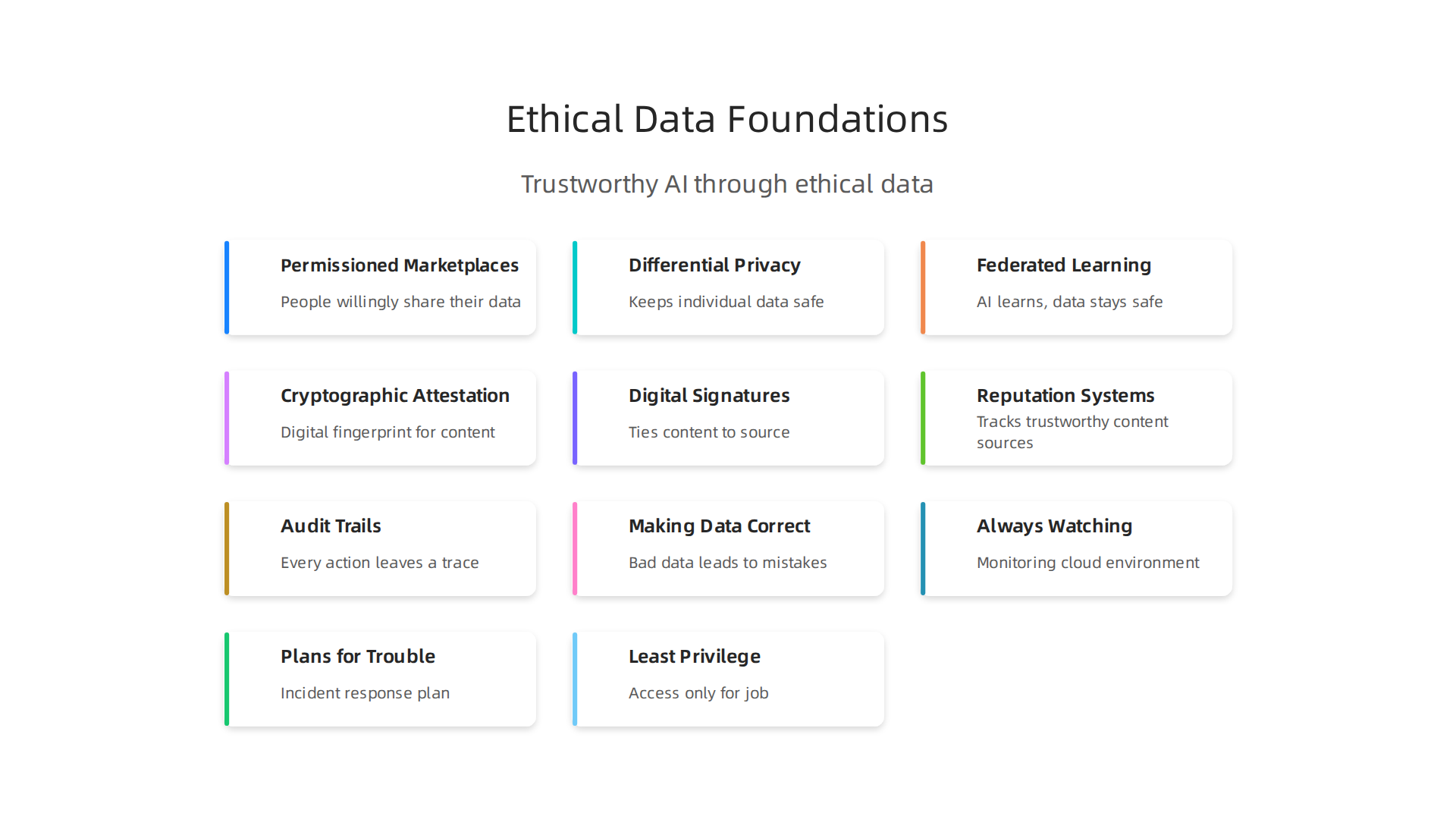
The data is clean, ethical, and comes with consent. This is the kind of information that can ground AI systems in reality and build real trust.
Privacy-preserving techniques also help. Methods like differential privacy and federated learning keep individual data safe while still letting AI learn from it. When a cloud based collaboration platform uses these techniques, it protects both the user and the quality of the AI.
The key takeaway is that overcoming the data bottleneck and synthetic drift requires a shift in how we collect and use data. Your team should ask the cloud based collaboration platform you use: where does your AI data come from? Is it permissioned? Is it ethical? If the answer is fuzzy, the AI will eventually let you down.
Organizations that invest in ethical data foundations now will have a huge advantage in the coming years. They will build AI that is not only smart but trustworthy. And that starts with choosing tools that value consent over convenience.
Understanding Synthetic Drift in Shared Digital Spaces
Ethical data is just one piece of the puzzle. Even with permissioned data, another threat lurks in shared digital spaces: synthetic drift. This term describes what happens when truth and human behavior get distorted as AI-generated content cycles through digital systems over and over again.
Think of it like a photocopy of a photocopy. Each copy loses a little detail. The edges blur. Colors shift. After enough copies, the image barely resembles the original. The same thing happens when AI content gets fed back into other AI systems. The outputs drift further from reality. The Transparency Coalition explains this cycle as a form of "model collapse" where generative AI trained on its own synthetic data slowly loses connection to the organic data it started with.
Now picture this happening inside a cloud based collaboration platform. Your team shares documents, generates summaries, and asks AI assistants for recommendations. Every piece of AI content you create might find its way back into the system as training data. Over weeks and months, the information your team depends on starts to drift. Recommendations become less accurate. Summaries miss important points. The shared understanding your team once had begins to erode.
This is not just a technical problem. It is a trust problem. When the AI inside your collaboration platform slowly drifts away from reality, your team members start to notice. They might see conflicting information from different sessions. They might question whether the AI really understands their work. Eventually, they stop relying on the tool altogether, or worse, they follow bad advice without realizing it.

Early detection is key. Teams need tools that monitor for drift in real time. They need transparency about where AI outputs come from and how they are being reused. The same organizations that prioritize ethical data also need systems that flag when content is starting to drift.
This is exactly why permissioned private data helps AI assistants avoid synthetic drift. When AI trains on clean, consented data, it stays grounded in reality. It does not spiral into distortion. And when that data is also tracked and verified throughout its lifecycle, drift becomes visible long before it causes real harm.
For any cloud-based collaboration platform you choose, ask directly: what safeguards do you have against synthetic drift? Does your platform monitor for content degradation? Can your team see when an AI suggestion is based on stale or recycled data? These questions separate trustworthy tools from those that will slowly lead your team astray.
The bottom line is that synthetic drift is silent but dangerous. It builds up slowly, day by day, until the digital space your team shares no longer reflects the truth you all need to do good work. Building a culture of transparency and early detection is the only defense that matters.
The Trust Crisis: Verifying Truth in Cloud Platforms
So how do we know what is true inside a cloud based collaboration platform? When AI generated content can look just like human work, and synthetic drift quietly erodes accuracy over time, trust can no longer be assumed. It must be verified.
This is the trust crisis facing every organization using a cloud based collaboration platform in 2026. Model drift and its impact on AI performance shows how AI systems slowly lose accuracy as underlying data changes. When your platform relies on that drifting AI, every recommendation, summary, and insight becomes questionable.
The fix is not to stop using AI. The fix is to build verifiable truth into every layer of your cloud based collaboration platform.
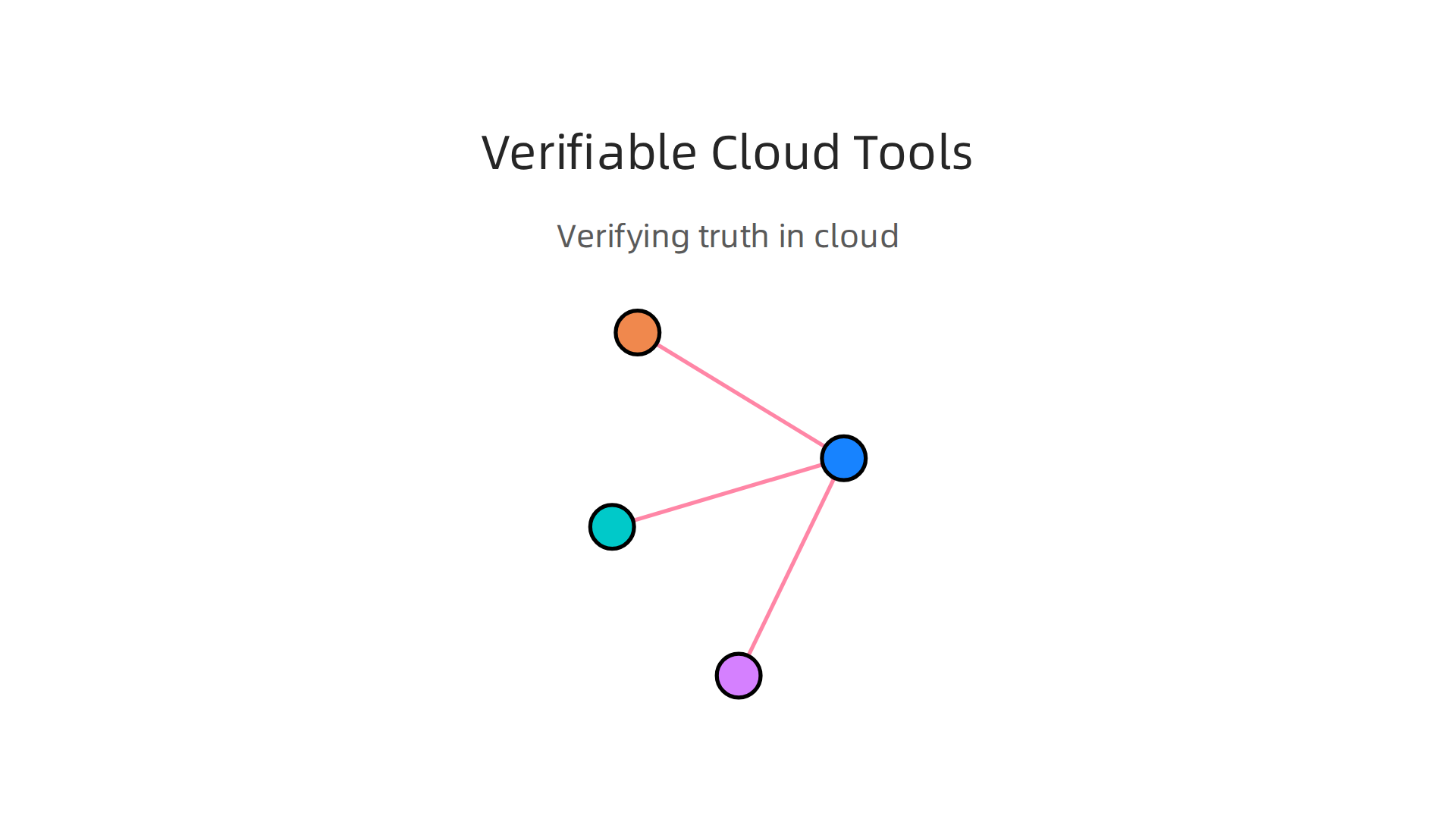
Cryptographic attestation is one of the most powerful tools. It creates a digital fingerprint for every piece of content. Anyone can check whether that content has been altered since it was created. If your team shares a document with an AI generated summary, cryptographic attestation can prove that the summary has not been tampered with. This simple check restores a surprising amount of trust.
Digital signatures take this further. They tie content to a specific person or system. When you see a digitally signed report, you know exactly who or what produced it. You can trace it back to the source. Cloud security best practices for 2026 emphasize regular audits and strict access controls.
Digital signatures complement these practices by creating a clear chain of responsibility.
Reputation systems add a human layer. They track which sources consistently produce accurate, trustworthy content. Over time, the system learns which team members, data sources, and AI models you can rely on. This is especially important for cloud based collaboration platforms where many people and systems contribute content.
Audit trails and provenance tracking tie everything together. Every action inside your cloud based collaboration platform should leave a trace. Who created this document? When was it last modified? Which AI model generated this summary? What data was used to train that model? These questions should have clear, accessible answers. Data protection services that solve the AI trust crisis can help organizations implement these tracking systems effectively.
Without these safeguards, your team is flying blind. They have no way to tell good information from bad. They cannot verify whether an AI recommendation is based on clean, current data or stale, drifting content. Over time, the entire platform becomes unreliable.
The good news is that the technology to restore trust already exists. Cryptographic attestation, digital signatures, reputation systems, and audit trails are not futuristic concepts. They are available today. The question is whether your organization will invest in them before the trust crisis hits, or after.
Human-Centric Design for Secure Collaboration
While the tools to build trust are ready, there's another important step: how we design these tools. It's not just about having the right tech, it's about making sure that tech works for people. Sadly, many tools today, especially cloud-based collaboration platforms, are built to grab our attention more than to help us feel good or work well. They focus on keeping us hooked, which can make us feel anxious and lower our trust in the information we see.
This is where "human-centric design" comes in. This way of thinking puts people first when building any product or service.

It means making sure the tools are easy to use, open about how they work, and fit with what people really value. As experts explain, human-centric design focuses on real people, their situations, and how they truly behave. This helps create digital experiences that are useful and make sense Human-Centric Design: what it is and why HCD matters.
For a cloud-based collaboration platform, this means thinking about how people will use it, what makes them feel safe, and how to help them be their best.
When we put humans at the center of how we design a cloud based collaboration platform, we can tackle big problems like synthetic drift. Synthetic drift is when information slowly becomes less accurate over time because AI models might be learning from bad data. By designing with ethics in mind from the very start of the user experience (UX), we can make platforms that naturally encourage good behavior. This also means users are more likely to adopt and use important security features. For example, if a security check is easy and makes sense, people will use it. If it's confusing, they might skip it. Good design helps make sure that people want to protect their work and trust the platform.
It's about more than just a nice look. It's about how the whole system works together to make people feel safe, respected, and able to do their best work without unnecessary stress. By building these ethical choices into the core of how a cloud-based collaboration platform operates, we can make sure that AI helps us, rather than making us doubt what is real. This also involves understanding why permissioned, private data is important to avoid problems like synthetic drift in AI systems. You can learn more about how to prevent this issue by exploring Why Generative AI Assistants Need Permissioned Private Data to Avoid Synthetic Drift.
When cloud-based cyber security for these platforms is also designed with humans in mind, it becomes a strong defense. It makes it easier for everyone to play a part in keeping information safe. This helps build a stronger, more trustworthy online space for everyone. Organizations should look to cloud-based cyber security companies that understand this deep connection between human experience and strong defenses.
Ethical Data Governance for AI Training
When we build tools with people in mind, as we discussed with human-centric design, we also have to think about the huge amount of information these tools create. A cloud-based collaboration platform generates a lot of data. This data can be super helpful for making Artificial Intelligence (AI) smarter. But there's a big "but": we must always respect what's right and fair. It's like having a superpower; you need to use it wisely.
If AI systems learn from bad or unfair data, they can make mistakes or even cause harm. This is why having good rules for data is so important. Actually, many companies find it hard to get real value from AI projects because the data they use isn't good enough. Some studies even show that about 95% of AI projects don't make a profit, partly due to poor data quality 95% percent of organizations aren't seeing meaningful gains from AI. Others report that more than half of companies say data quality is the biggest problem they face when trying to use AI Data quality & availability top list of AI adoption barriers. This just goes to show how much good data matters for AI to work well.
Laws are also in place to help keep data safe and fair. For example, rules like GDPR (General Data Protection Regulation) in Europe and the newer EU AI Act make sure that companies get permission to use your data. These rules also say how companies must handle data safely and explain how AI uses that data. For a cloud-based collaboration platform, this means careful planning. Companies need to make sure their cloud cyber security helps them follow these laws.
To truly handle data well, a company needs to create a culture where everyone understands how important data is and how to protect it. We call this "data stewardship." It means having clear rules about:
- Who can see the data: Not everyone needs access to everything.
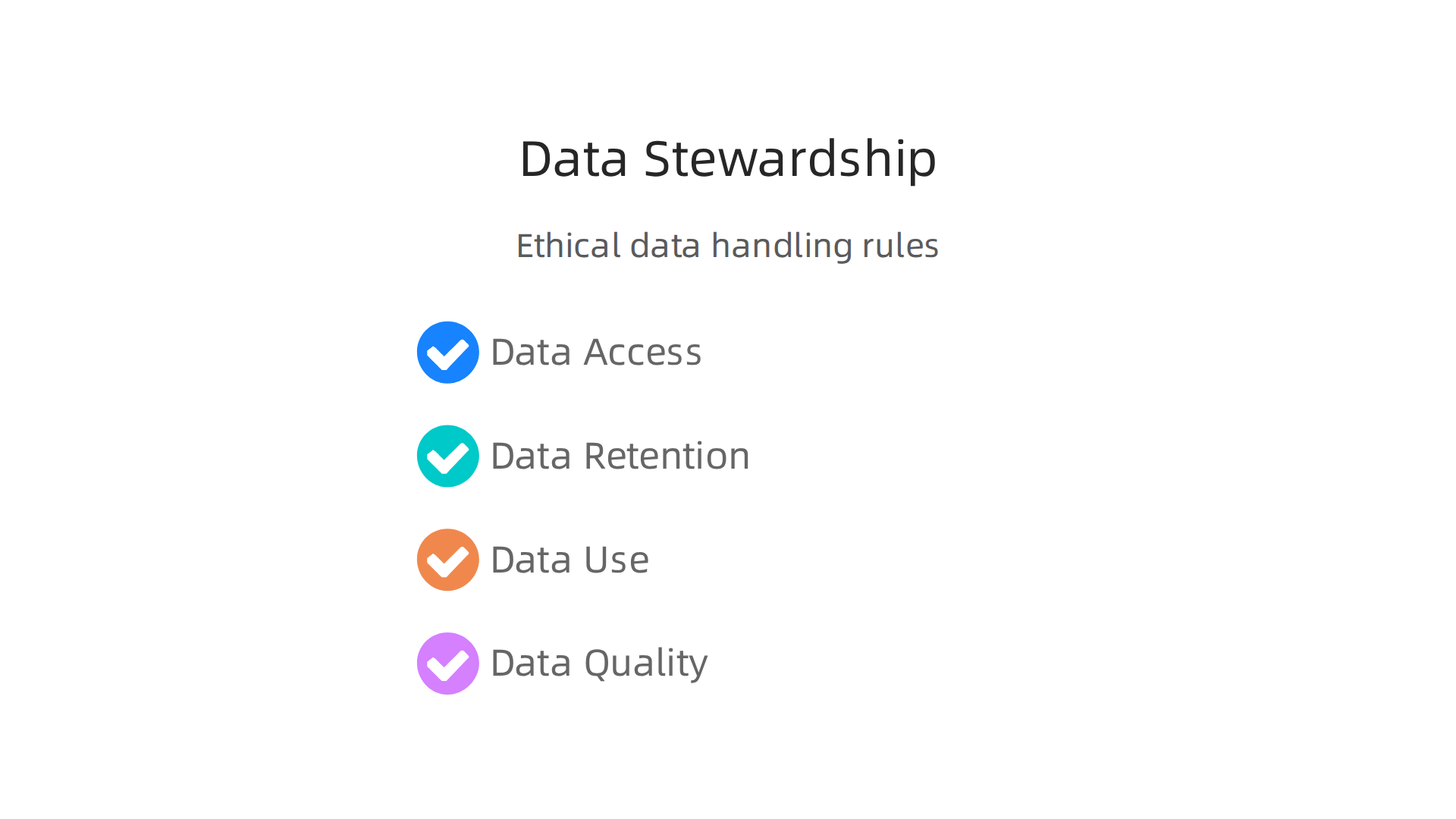
- How long data is kept: Data should not be stored forever if it's no longer needed.
- How data is used: It should only be used for the reasons people agreed to.
- Making sure data is correct: Bad data leads to bad AI decisions.
By putting these clear rules and systems in place, companies ensure their AI is built on a strong, trustworthy foundation. This also means working with cloud-based cyber security companies that understand these tough requirements. When organizations make ethical data handling a core part of their work, they build trust with their users and make sure their AI helps people fairly and effectively. This helps prevent problems where AI learns from misleading or incomplete information, which is a big step towards a more reliable digital world.
Implementing a Holistic Security Framework for Cloud Collaboration
After making sure we handle data in a fair and right way, especially for AI, the next big step is to set up strong security for everything we do in the cloud. Imagine your cloud-based collaboration platform as a busy office building. Ethical data rules are like having good manners inside, but you still need strong locks, security guards, and cameras for the whole building. A good security plan needs to cover many things: keeping your data private, making sure AI is used fairly, checking that content is real, and building trust with everyone who uses the platform.
In 2026, companies need a complete security plan that acts like a shield. This shield protects against many threats. One key idea is called "zero trust." This means you don't automatically trust anyone or anything, inside or outside your network. Every person and device must prove they are who they say they are, every single time they try to get access. This is a big change from older ways of thinking about security, and many experts agree that zero-trust network architectures are a key update expected in 2026.
Here are some other important parts of a strong security plan for your cloud-based collaboration platform:
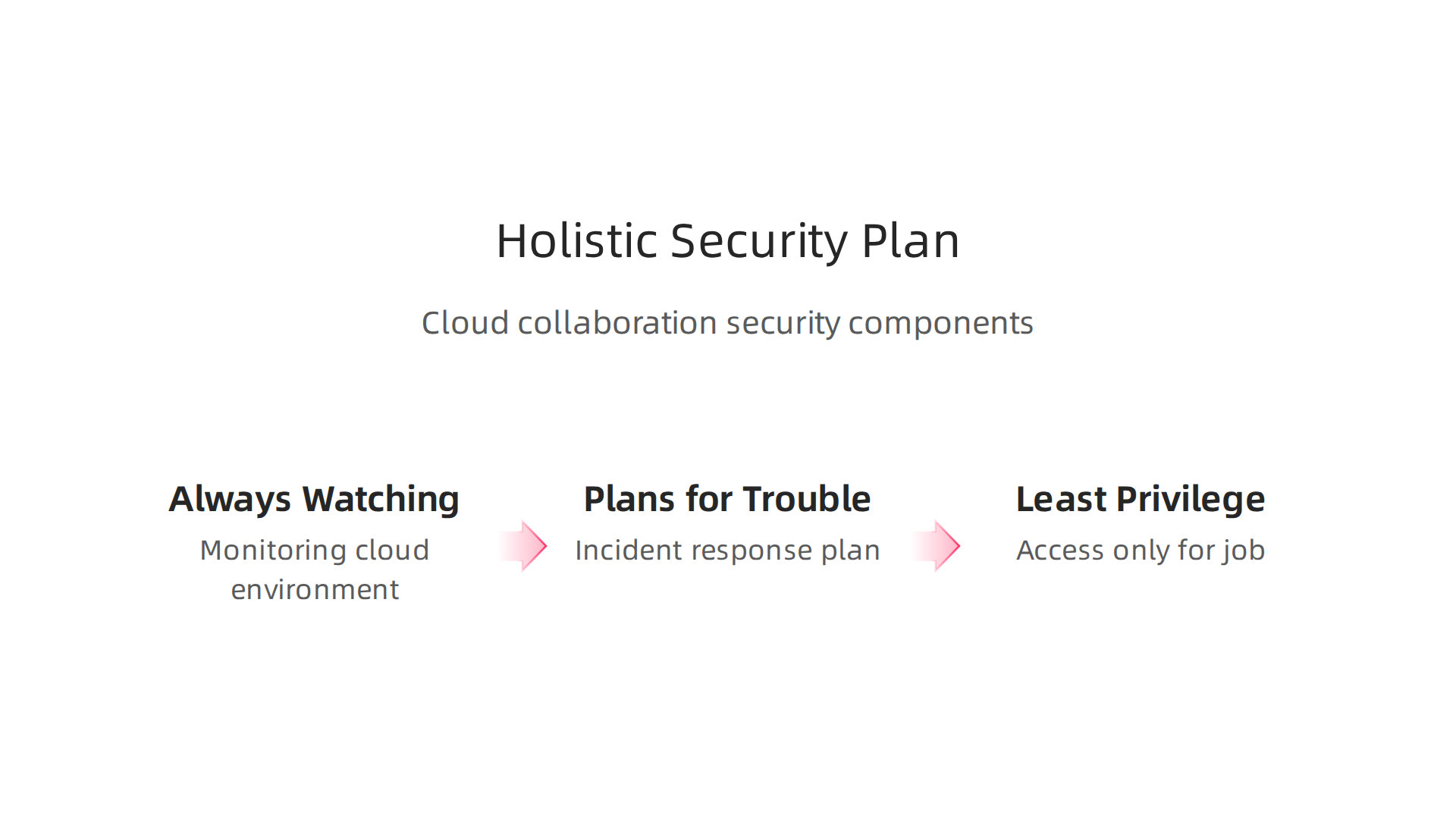
- Always Watching: This means keeping an eye on everything happening in your cloud environment all the time. If something strange happens, like someone trying to get into an account they shouldn't, you need to know right away. Continuous monitoring helps catch problems quickly.
- Plans for Trouble: Even with the best security, things can sometimes go wrong. That's why having an "incident response plan" is so important. This is like a fire drill for your security team. It lays out exactly what to do if there's a data breach or another security problem, helping to fix things fast and limit any damage.
- Least Privilege: This simple rule means people should only have access to the information and tools they absolutely need for their job, and nothing more. This helps prevent mistakes and keeps sensitive data safer. Many companies suggest this as a top cloud security best practice for 2026.
Making sure a cloud-based collaboration platform is truly secure isn't just a job for the IT department. It needs everyone to work together. This means the people who handle IT, those who ensure rules are followed (compliance), and the teams thinking about ethics must all talk and plan together. When different teams share ideas, they can build a much stronger defense. They can make sure that the cloud cyber security is not just technically sound but also fair and trustworthy, especially when it comes to how AI uses human data.
Using frameworks like those from the National Institute of Standards and Technology (NIST) can also guide companies in building these strong defenses. NIST cloud security provides essential guidelines that help manage risks and ensure compliance. By working with specialized cloud-based cyber security companies, organizations can make sure their security systems protect not just data, but also the ethical use of AI. This creates a digital space where users can feel safe and confident, knowing their information is protected and used in a way that respects their values. Understanding models like the CIA Triad Cyber Security Model can also help in securing AI systems effectively.
Summary
This article explains why cloud-based collaboration platforms can both enable modern teamwork and secretly undermine AI trust if data is unmanaged or unconsented. It describes the
Related Blogs
No Similar Blogs found
