

About
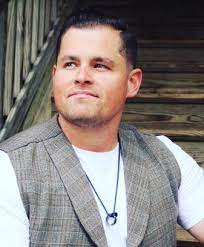
Dean Grey

What happens when human truth begins to drift.
Dean Grey is a Behavioral Scientist, Synthetic Drift Specialist, bestselling author, and co-inventor of the Value Reinforcement System, U.S. Patent No. 12,205,176. His work is built on four decades of field research across more than 30 countries, studying how identity, memory, values, and first-hand human experience are shaped, distorted, and preserved in the digital age.
From field research to Synthetic Drift
Long before artificial intelligence became a public conversation, Dean Grey was studying how people form trust, make decisions, remember events, and pass meaning from one generation to another. His work began in real-world environments, not abstract theory. Across communities, organizations, stadiums, platforms, and international field settings, he observed the same pattern repeatedly: when human experience is removed from its original context, truth becomes easier to flatten, distort, and replicate.
This observation became central to Dean’s later work around Synthetic Drift, a framework for understanding how human identity, memory, and behavioral truth can erode when filtered through synthetic media, algorithmic systems, and public-data AI models.
Behavioral science for the age of artificial intelligence
Dean’s work sits at the intersection of behavioral science, data sovereignty, artificial intelligence, memory, and truth preservation. His research focuses on a central problem: the future of AI cannot be grounded only in public, scraped, decontextualized information. It also needs verified, permission-based human data that preserves the source, intent, and lived context behind what people say, remember, and value.
This is where Dean`s work around the Value Reinforcement System becomes important. The VRS connects behavioral architecture with private, permission-based data systems, creating a foundation for capturing and preserving human perspective before it is separated from the person who lived it.
The work is not only about technology. It is about human continuity.
This research is concerned with what future generations will inherit. In a world where synthetic content can be produced instantly, copied endlessly, and distributed without context, the question is no longer only whether information is available. The deeper question is whether that information still carries human origin, lived experience, and moral weight.
Dean`s work asks how families, communities, institutions, and societies can protect first-hand truth before it becomes diluted by automation, repetition, and algorithmic interpretation.
Three decades of field research led to one finding; human truth must be captured before it is distorted, replicated, and scaled by machines.
52+
30+
1
200+
A fascinating interview with Dean Grey of Skylab Apps, with insights into AWS-powered Do Your Part and the evolution of Gamification into a Value Reinforcement System (VRS).

Powerful visionary with world-class innovative skills. Having worked with Dean for more than 20 years I personally observed his ability to fuse multi-domain business and IT resources in innovative ways. His dynamic and relentless pursuit of excellence while being able connect/learn and develop relationships is uncanny. I look forward to lifelong journey of friendship and collaboration with Dean!
Through Skylabs Platform, we were able to host our virtual marriage summit on our application and received over 8`000 downloads from one course alone!

When I first met with Skylab, I was blown away by Dean`s innovative technology that would allow me to monetize, reward and grow my community. The NEM app is a great tool for you to have access to workouts, stay motivated, and interact with others in a global community all powered by the amazing team and tech at Skylab.

The Skylab platform is without a doubt the most incredible platform l've ever seen. It is the 'WordPress' of platforms! The features are mind blowing yet incredibly simple to use. I can see that this will be the biggest needle-mover in anyone's online business.
We first chose Skylab for the Blended Festival Platform because we wanted to have a place for festival-goers to share their experience about going to one of our festivals. After consulting with the Skylab team, we were able to do that and much more! After the success we had in 2021 and the ability to prove our success through the Blended Festival Platform, we are gearing up for massive growth in 2022.