Home


Menu

Close

Unlock Trustworthy AI with a Modern Customer Data Platform
Published:
August 2, 2026
Why a modern customer data platform (CDP) is the missing piece for trustworthy AI
In 2026, many companies are excited about using AI to make their business better. But there's a big problem, often called the "AI bottleneck." This bottleneck happens because AI needs a lot of good, private information to learn from. If AI systems learn from bad or made-up information, they can start to give wrong answers or spread misinformation. This is a problem known as "Synthetic Drift," where the truth gets twisted as it moves through digital systems.
To fix this, businesses need a special tool: a modern customer data platform. Think of a customer data platform (CDP) as a smart hub that brings together all the information a company has about its customers.
This includes details from sales, marketing, customer service, and even website visits. The main goal of a CDP is to create one complete, clear picture of each customer. This helps businesses understand their customers better and use AI in a way that feels personal and trustworthy.
A customer data platform is super important for AI because it makes sure the data used is good and that customers have said it's okay to use it. This means the AI isn't just guessing or using public data that might be wrong or biased. Instead, it uses real, permissioned data from real people. This helps to stop synthetic drift and builds trust in what the AI does. Companies can use these platforms to manage customer information safely, following all the rules about privacy and consent.
By bringing all customer data into one place, a CDP allows for clear data governance.

This means companies can control who sees what data and how it is used. This is key for building AI systems that are fair and reliable. In the end, a customer data platform is not just about organizing data; it's about making sure that AI systems are built on a strong, honest foundation of customer truth, helping to achieve human-centric AI goals and avoid problems like misinformation. In fact, large companies are leading the way, with 63.4% expected to dominate the customer data platform market in 2026. This is because they deal with many customers and need clear rules for data and advanced ways to understand it. You can learn more about how to make AI trustworthy by focusing on ethical data.
Why Enterprises Need a Customer Data Platform Now: Strategic and Ethical Drivers
Companies in 2026 are looking closely at how they use customer information. A modern customer data platform (CDP) is no longer just a nice-to-have; it is a must-have tool for big businesses. There are two main reasons for this: smart business choices and doing what is right.
First, let's talk about making smart business choices. Enterprises handle huge amounts of information every day. This includes details from online shopping, customer service chats, and even smart devices using IoT data integration. Without a CDP, all this information stays separate. A CDP brings it all together to create one clear picture of each customer. This is called a unified identity. This complete view lets companies truly understand what each customer wants and needs.
This understanding then helps businesses offer very personal experiences. Imagine getting offers that truly match what you like, or help that knows your past needs. That's what powerful personalization looks like. It also makes data analytics better. When all data is in one place and clean, it's easier to run a data analytics bootcamp for employees or use the insights for faster decisions. This unified, high-quality data is also super important for training AI models. AI systems need good, clean information to learn from, and a CDP provides just that. Experts say a strong CDP should have at least ten key features, like bringing customer data together and using machine learning for deep insights, according to 10 Capabilities You Need in an Enterprise CDP.
Now, let's look at the ethical side, which is just as important.

In today's world, people care a lot about their privacy. A customer data platform helps companies use data in a way that respects this privacy. It helps manage customer consent, so businesses only use information they are allowed to use. This means customers know their data is being handled properly. For more on this, check out how SAP Customer Data Platform features focus on data privacy.
CDPs also help with "provenance" and "traceability." Provenance means knowing where every piece of customer data came from. Traceability means being able to follow how that data has been used over time. This helps companies be honest and open about their data practices. It makes sure that AI optimization works towards helping people, not just making more money or getting more clicks. By focusing on ethical data practices, companies can build AI systems that support human well-being and fight against wrong information. This aligns AI with human flourishing, which is a key goal for trustworthy AI in 2026. If you're looking to understand more about ethical data practices and AI, you might find our article on how ethical data analysis builds trust in AI helpful.
Designing an ethical data supply chain for AI: consent, provenance, and stewardship
Building on the idea of using data ethically, let's talk about something called an "ethical data supply chain" for AI. Think of it like a journey your customer's information takes. An ethical supply chain makes sure that at every step of this journey, from start to finish, the data is handled fairly, openly, and with respect. This is super important in 2026 because AI systems learn from this data. If the data isn't good or ethical, the AI won't be either.
A customer data platform (CDP) plays a huge role in making this ethical supply chain work. Here's how it fits in:
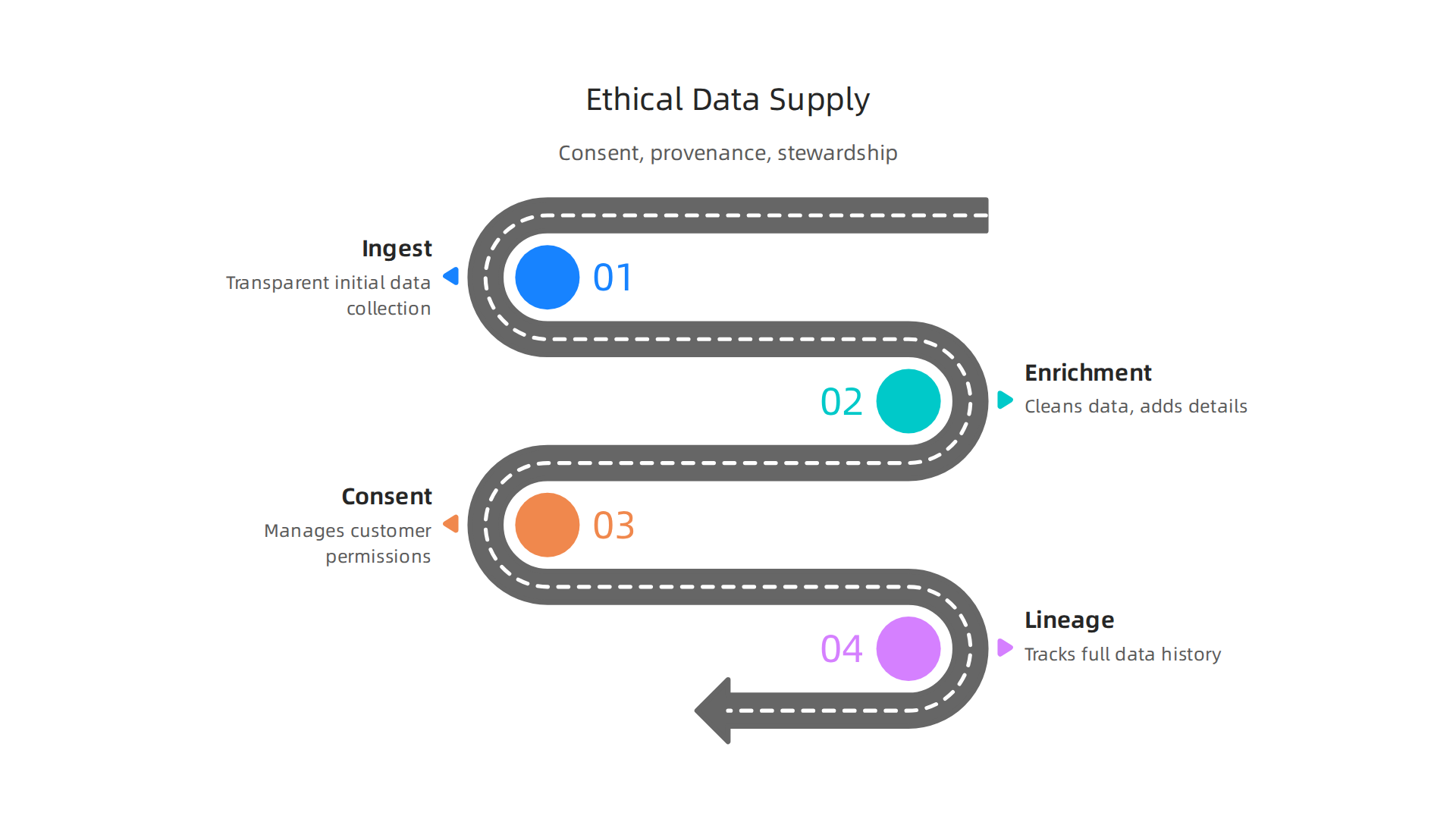
- Ingest: This is where data first comes into the system. CDPs can bring in information from many places, like websites, apps, and even smart devices using IoT data integration. An ethical system ensures this initial collection is transparent.
- Enrichment: Once data is in, the CDP cleans it up and adds more useful details, like grouping similar customers. This process makes the data more helpful for things like a data analytics bootcamp or for training AI.
- Consent Management: This is a big one for ethics. A CDP helps manage all the "yes" or "no" answers from customers about how their data can be used. It keeps track of what they agreed to and when, making sure companies only use data they have permission for. This keeps businesses on the right side of privacy rules and builds trust with customers. You can find more details about this crucial aspect in resources like Consent Management and Data Privacy in Your CDP or a Practical Guide for Privacy-Safe CDP Consent Management.
- Lineage (or Provenance): This means tracking the full history of every piece of data. Where did it come from? Who touched it? How was it changed? A CDP helps keep a clear record of this journey. This transparency is key for what is called "data provenance," ensuring that the data's origin and path are always clear. Standards like PROV-O help define how this information should be recorded.
To make sure data is truly used ethically and prevents misuse or "synthetic drift" (where data becomes distorted over time), companies need strong controls. These are like traffic rules for data:
- Consent Flags: These are simple labels attached to data that show exactly what a customer has agreed to. For example, a flag might say "Can use for marketing, but not for sharing with partners."
- Purpose Metadata: This describes why the data was collected and how it will be used. Every piece of data should have this information tied to it, ensuring it's only used for its intended purpose. The ISO/IEC TS 27560:2023 provides guidance on how to create and manage these consent records.
- Retention Policies: These rules say how long data can be kept. Once data is no longer needed for its stated purpose, it should be removed.
- Detailed Lineage: Going deeper than just provenance, detailed lineage means having a step-by-step log of every action taken with the data. This helps identify any issues and confirms that data hasn't been changed in a way that goes against ethical guidelines. Having a good Customer Data Governance Framework for CDP Operations can help set these rules.
By putting these operational controls in place, enterprises can make sure their customer data platform helps build AI systems that are fair, accountable, and trustworthy. This prevents things like synthetic drift and helps AI work towards human well-being. It is how we ensure that the vast amounts of information we collect truly serve people, not just profits. Learning about ethical data practices is vital, especially in roles like AI engineer roles defined key skills ethics and team structure for 2026.
CDP architecture for enterprise AI: integration, governance, and security
After understanding how to use data ethically, let's explore the actual setup of a robust customer data platform (CDP) designed for enterprise AI. Think of the CDP as the engine room for your AI, where all the customer information is prepared and managed. Its architecture, or how it's built, is key to making sure that AI systems are not only smart but also safe and fair in 2026. A good CDP architecture brings together different parts smoothly, sets clear rules, and keeps everything secure.
Technical architecture patterns for AI
A modern customer data platform acts as a central hub, gathering and organizing customer data for many uses, especially for powering AI. Here are some key parts of how these systems are built:
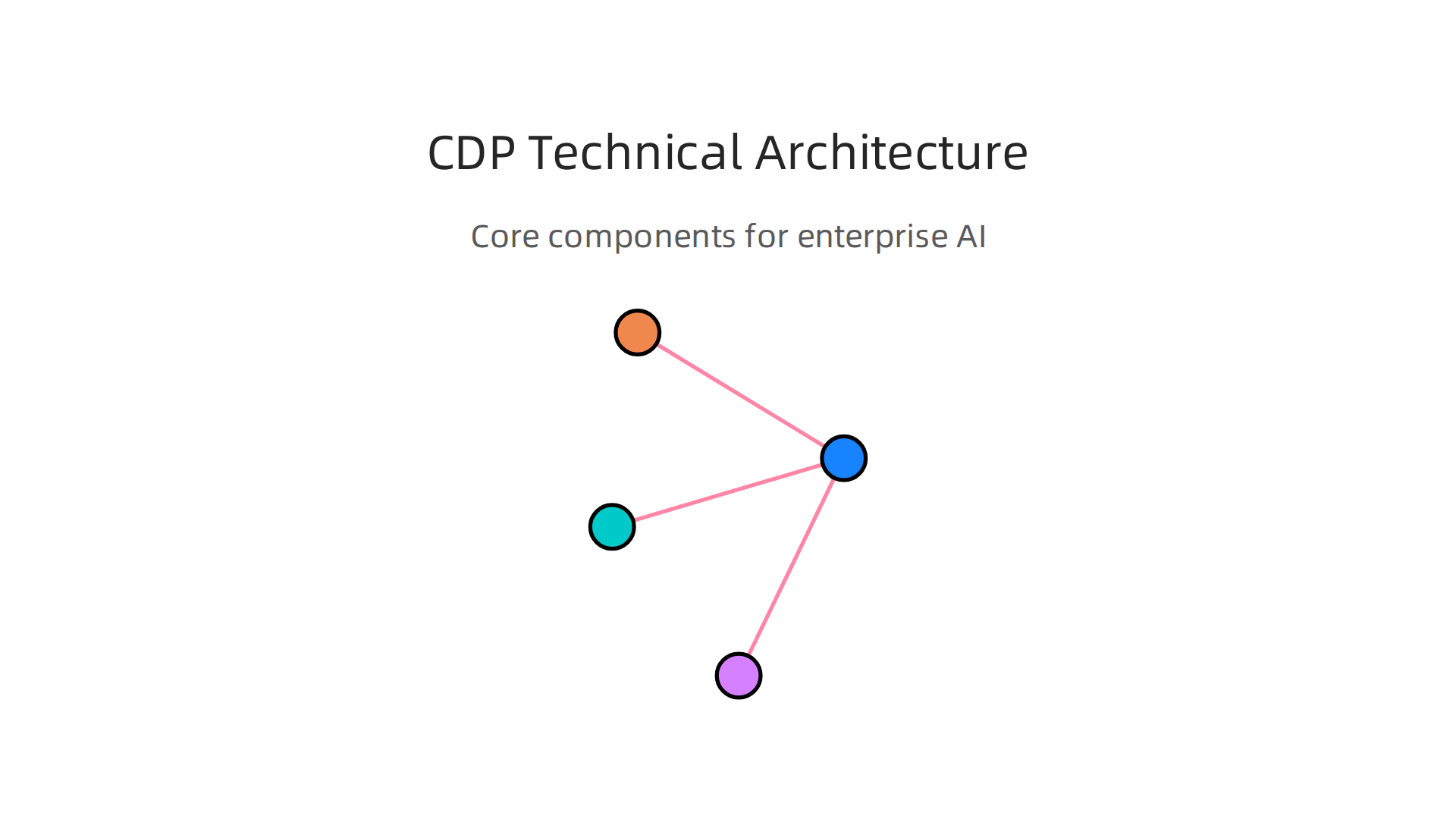
- Identity Graph: Imagine having a complete picture of each customer, no matter where their information comes from. An identity graph connects all the different pieces of data about one person, like their website visits, app usage, and purchases, into one clear profile. This helps AI understand customers better.
- Real-Time Streaming: Data often needs to move very fast. Real-time streaming means that information flows into the CDP constantly, as it happens. This allows AI systems to react immediately to customer actions, like showing a special offer right after a product is viewed.
- Feature Stores: For AI and machine learning (ML), we often need specific pieces of data, called "features," ready to go. A feature store is like a special library that holds these pre-made data features. It ensures that the same features are used when training AI models and when those models are actually working, making the AI more reliable.
- API Layers for ML Pipelines: APIs (Application Programming Interfaces) are like bridges that let different computer programs talk to each other. In a CDP, API layers allow AI and ML models to easily get the data they need from the platform. This makes it simple to feed data into AI "pipelines" that train and run the models.
Sometimes, companies build what's called a "composable CDP." This means they pick and choose the best tools for each part of the CDP, like using one system for storage and another for AI. This approach can offer more flexibility and custom options, as noted in The CISO's Guide to CDP Architecture Decisions.
Governance and security for trustworthy AI
Making sure your customer data platform is set up correctly also means having strong rules around how data is managed and kept safe. This is crucial for building trustworthy AI.
- Role-Based Access: Not everyone needs to see all the data. Role-based access means that only certain people with specific job roles can view or change particular types of data. This limits who can access sensitive information, protecting customer privacy. Good security starts with defining who has access to what, as discussed in the Cloudera Security Reference Architecture Guide.
- Encryption: This is like scrambling data so that only authorized people can read it. Data should be encrypted both when it's stored and when it's moving from one place to another. It adds a strong layer of protection against unauthorized access.
- Audit Trails: An audit trail is a detailed record of every action taken with the data. It shows who accessed what data, when, and what they did with it. This record helps ensure accountability and makes it easier to spot any unusual activity or potential misuse.
- Segmentation for Sensitive Attributes: Some customer data is more private than others, like health information or financial details. Segmentation means separating this sensitive data and applying extra safeguards to it, ensuring it's used only under the strictest conditions.
By putting these security and governance steps in place, businesses can ensure their customer data platform provides a solid and secure foundation for enterprise AI. This careful approach helps AI systems remain fair, compliant, and focused on helping people. To understand more about keeping AI systems safe, you might look into how the CIA triad cyber security model protects AI systems in 2026.
Now that we've talked about how to build a strong customer data platform and keep it safe, let's look at how people actually use it every day. It's not enough to just have great technology. To make sure AI is truly helpful and fair, all the teams in a company need to work together with human needs in mind. This means setting up clear jobs, rules, and ways of working that put people first.
Processes and roles for ethical data
Making sure your customer data platform works ethically needs special roles and clear steps. It's about more than just keeping data secure; it's about using data in a way that respects customers and builds trust.
- Data Stewards: Think of data stewards as the guardians of your customer information. They make sure data is correct, clean, and used properly. They also help enforce the rules about how data is collected and shared, ensuring it stays true to human values.
- Ethics Review Boards: These groups check new AI projects and data uses to make sure they are fair and won't harm anyone. They act like a conscience for the company, making sure technology choices line up with what's right.
- Consent Lifecycle Teams: Customers should always know and agree to how their data is used. Consent lifecycle teams manage this process, from getting permission to letting customers change their minds. This is a very important part of gathering ethical electronic data.
- Cross-Functional Governance Councils: These councils bring together leaders from different parts of the company, like legal, marketing, and data science.

They work to set company-wide rules for data and AI, making sure everyone is on the same page. This helps create a common understanding of what ethical data use looks like for every team, from those involved in a data analytics bootcamp to the core AI engineers. Understanding roles, like those of AI engineers in 2026, is crucial for these councils.
A good customer data platform should have features that help these teams do their jobs easily, like tools for managing consent or tracking data usage.
Change management for human-centric AI
Getting all teams to adopt new ways of working with data is a big task. It's called "change management." Companies need to help their product, marketing, data science, and legal teams understand why human-centric data practices are so important.
This means agreeing on shared rules for how data is used and what success looks like. Instead of just tracking clicks or sales, companies should also measure how AI impacts human well-being. This is about making sure AI helps people thrive, not just about making more money. A "trust-first" approach is becoming a business imperative in 2026 for ethical data handling.
For example, a product team might use the customer data platform to design features that encourage positive habits, not just screen time. A marketing team might focus on personalized content that truly adds value, rather than just grabbing attention. Data scientists need to ensure their models are trained on permissioned private data to avoid "Synthetic Drift," where information becomes warped over time. Even legal teams play a role in making sure these practices follow all the right privacy laws. By working together, everyone can make sure the customer data platform supports AI that truly helps people. Some customer data platforms include strong data governance features like consent management and role-based access to ensure security and compliance, as noted in a guide on customer data platforms.
To truly know if a customer data platform helps AI make things better for people, we need to measure more than just simple numbers like how many clicks an ad gets or how many sales are made.

We need new ways to measure if AI is really helping people live better lives. This is called "human flourishing."
Measuring impact: metrics to align AI with human flourishing
Traditional ways of measuring success, like how long someone spends on a page or how many items they buy, don't tell us if AI is truly good for them. For AI to be human-centered, we need to look at deeper things. For example, does the AI help build trust between people and companies? Does it help people find true information? Does it make customers feel better and happier in their daily lives? These are the kinds of questions new measurements aim to answer.
Experts are now creating ways to measure how well AI helps people flourish. This includes looking at things like a person's character, their relationships with others, their happiness, their sense of purpose, and their mental and physical health. For example, the Flourishing AI Benchmark is a new way to check if AI systems are truly aligned with these human values, rather than just chasing engagement or profit goals. In 2026, companies like Gloo are introducing new standards to advance AI that focuses on these goals, evaluating how well AI helps people across these key areas Gloo Announces New Trust Standards to Advance AI Aligned with Human Flourishing. Measuring these impacts is important for making AI policies that truly benefit us all, as highlighted by discussions on Metrics for Aligning AI Policy with Human Flourishing.
How can a customer data platform help with this? A good customer data platform is key to gathering the right information. It can:
- Link consented signals to outcomes: The platform collects data from customers who have given their permission. This data can include things like survey responses about their well-being, how they interact with helpful AI features, or even their feedback on the trustworthiness of information. The customer data platform connects these everyday actions and feelings to bigger life outcomes.
- Support A/B frameworks: Companies can use the customer data platform to try out different AI features with small groups of users. For example, one group might see an AI that promotes positive habits, while another sees a standard version. By tracking the new human-centric metrics in both groups, companies can see which AI truly helps people flourish more.
- Detect drift and keep data honest: Over time, the data AI learns from can change or become less truthful, a problem known as "Synthetic Drift." A customer data platform helps monitor the quality of the data being used. This means checking if the information is still accurate and if the AI is still acting in a way that lines up with human values. This is important for building trustworthy AI and combating synthetic drift with ethical data. Understanding
what is data scienceis crucial here, as data scientists use these tools to analyze and interpret these new, complex measurements. They can also use their skills learned from a data analytics bootcamp to manage this information.
By putting these new measurements in place, businesses can make sure their AI systems are not just smart, but also kind and helpful. It helps everyone involved to see the real, positive difference AI can make in people's lives.
Putting a customer data platform in place, especially for a big company, is a journey. It's not a one-day task. To make sure this important tool truly helps people and keeps data safe, companies need a clear plan. In 2026, many businesses are using a step-by-step approach to make sure their customer data platform works well and aligns with ethical values.
Migration roadmap: implementing a CDP in large organizations (phases, risks, and KPIs)
Setting up a customer data platform in a big company involves several steps. Think of it like building a house, brick by brick. A good plan helps avoid problems and makes sure the customer data platform meets its goals. Experts suggest a phased roadmap that helps manage the process and keep things on track for success. According to one guide, a full deployment can take 6 to 12 months for ready-made CDPs and even longer for custom ones CDP Implementation Roadmap: Practical Enterprise Guide 2026.
Here is a common roadmap for putting a customer data platform into action:
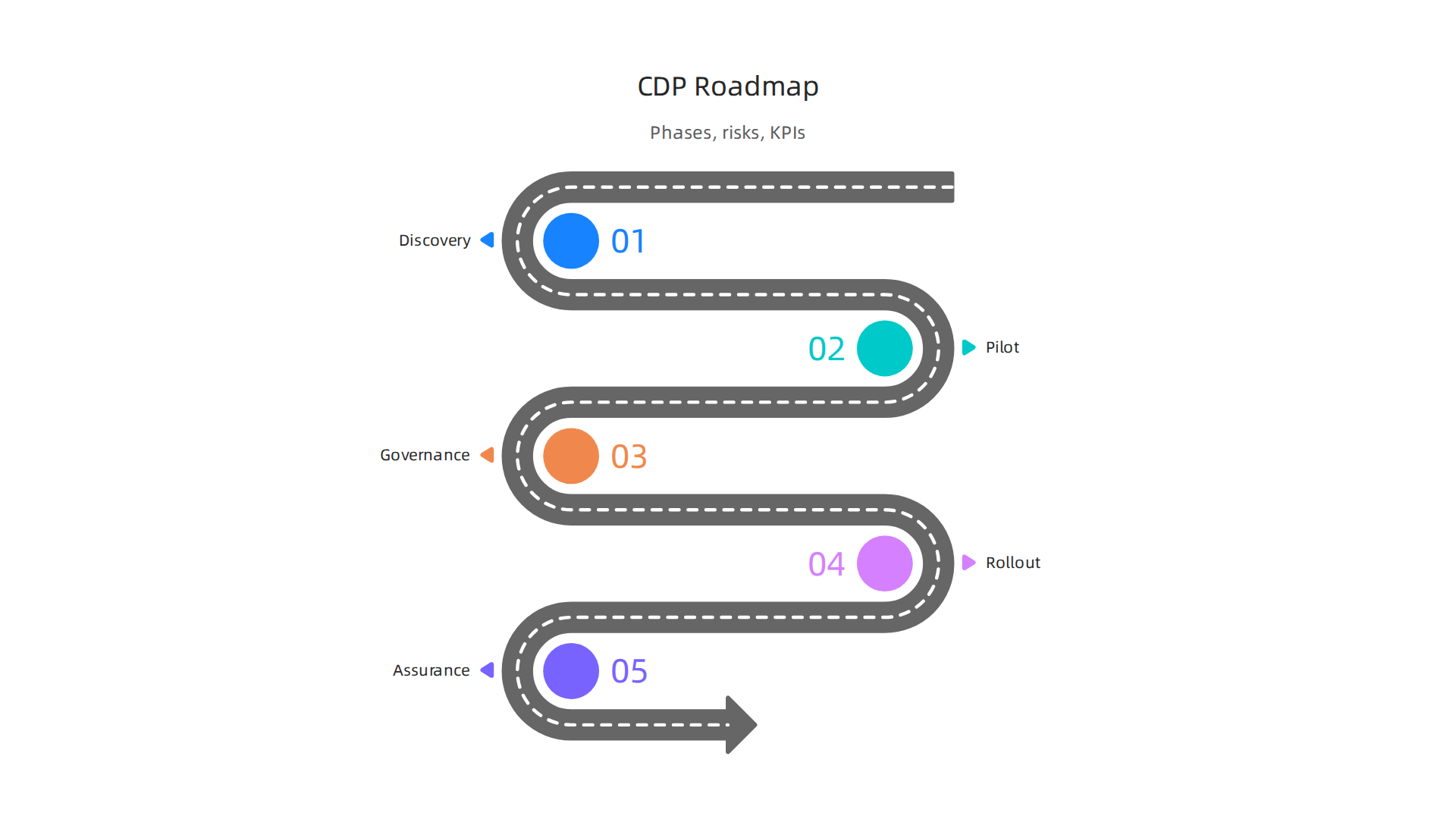
- Discovery: This first step is all about understanding what the company needs and wants to achieve. What problems will the customer data platform solve? What data sources are most important? It's like drawing the blueprints for the house. You need to identify all the places where customer information lives, from websites to apps. Setting clear goals is very important here CDP Implementation Guide: Phases, Timelines, and Pitfalls.
- Pilot with Consented Datasets: After planning, it's smart to start small. A "pilot" means testing the customer data platform with a limited amount of data, especially data that customers have agreed to share. This helps companies see how the system works in real life before rolling it out everywhere. This phase also checks if the new human-centered measurements are working.
- Governance & Tooling: This phase is about setting up the rules for how data is handled. Who can see it? How long is it kept? This includes making sure the customer data platform follows privacy laws and keeps data safe. It also means choosing the right tools to clean, sort, and manage the data. This is where skills related to what is data science become very useful. Proper iot data integration is also key, bringing in data from smart devices and other sources while keeping privacy in mind.
- Rollout: Once the pilot is successful and the rules are in place, the customer data platform can be launched to more parts of the company. This means connecting all the different data sources and training teams on how to use the new system.
- Continuous Assurance: Implementing a customer data platform isn't a one-time thing. It needs ongoing care. Companies must keep an eye on how the system is working, check the quality of the data, and make sure it continues to meet the company's goals and ethical standards. This helps prevent problems like "Synthetic Drift," where data can become less accurate over time.
To make sure the customer data platform is doing its job well, companies also need to think about risks and how to measure success.
- Privacy Impact Assessments (PIAs): Before collecting new types of data, companies should do a PIA. This helps find and fix any privacy risks. It ensures that customer data is handled with respect and follows all rules. Protecting customer trust is a top priority.
- Model Validation Checkpoints: If the customer data platform is used to feed data to AI models, it's vital to check those models regularly. Are they still fair? Are they still helping people flourish? Or are they just chasing simple numbers? This is where the work of people who went through a data analytics bootcamp can really shine, as they can help review and validate the models.
- Stakeholder Adoption Targets: Success isn't just about the technology. It's also about people. Companies should set goals for how many people inside the company use the new customer data platform and how well they use it. If people don't use it, it won't help the company or its customers.
By following a clear roadmap and focusing on both technical steps and human-centered goals, large organizations can make sure their customer data platform truly supports ethical AI and helps everyone involved.
Summary
This article explains why a modern customer data platform (CDP) is essential for building trustworthy AI and preventing the information problem called synthetic drift. It shows how a CDP unifies scattered customer signals from marketing, sales, service and IoT into a single, permissioned view that AI models can safely learn from. The piece details ethical controls — consent flags, purpose metadata, provenance and retention rules — and the technical building blocks such as identity graphs, real-time streaming, feature stores and API layers. It also covers governance, security (encryption, audit trails, segmentation), and the human processes needed: data stewards, ethics boards and cross-functional councils. The article describes measurement approaches that go beyond engagement metrics to evaluate human flourishing, and it gives a phased roadmap for enterprise CDP implementation with pilots, governance setup and continuous assurance. Overall, readers will learn how to choose, design and operationalize a CDP so AI systems are accurate, fair, and aligned with customer trust.
Related Blogs
No Similar Blogs found
