Home


Menu

Close

Unlock Trustworthy AI Systems with AI-Ready Data
Published:
August 21, 2026
Why 'AI-Ready Data' Matters Now
In 2026, Artificial Intelligence (AI) is changing how we live and work. But here's a big secret: many companies and groups are struggling with something called the "AI bottleneck." This means they don't have the right kind of information for their AI tools to work well and be trusted. They lack AI-ready data.
What does "AI-ready data" even mean? Simply put, it's data that is accurate, complete, consistent, and safe to use, with extra details that help both people and machines understand it Making government datasets ready for AI. It's also data that is set up in a way that AI systems can use easily, following good standards and rules Guidelines and best practices for making government. Without this special kind of data, AI can't reach its full potential.
The problem starts because much of the data used today isn't collected in a thoughtful, permission-based way. It's often scraped from the internet or put together without careful checks. This leads to big issues like "Synthetic Drift." This is when truth gets twisted as information spreads online, causing misinformation to grow and people to lose faith in what AI tells them. We all want to avoid losing trust in our AI tools and the information we get from them.
Making sure your data is AI-ready data is key to making sure your AI systems are fair, trustworthy, and actually helpful. This article will show you practical ways and tools to get your data in shape. We'll explore how to handle information so your AI can be reliable and avoid problems like misinformation. By focusing on ethical and careful ethical electronic data gathering and retrieval, you can overcome these challenges and start building AI systems that truly make things better. You can also learn more about how to fix these issues in our guide on overcoming synthetic drift building trustworthy ai.
Getting your data ready for AI means making sure it has certain important qualities. Think of it like making sure all the ingredients for a cake are just right before you start baking. If even one ingredient is off, the cake won't turn out well. The same goes for AI-ready data.
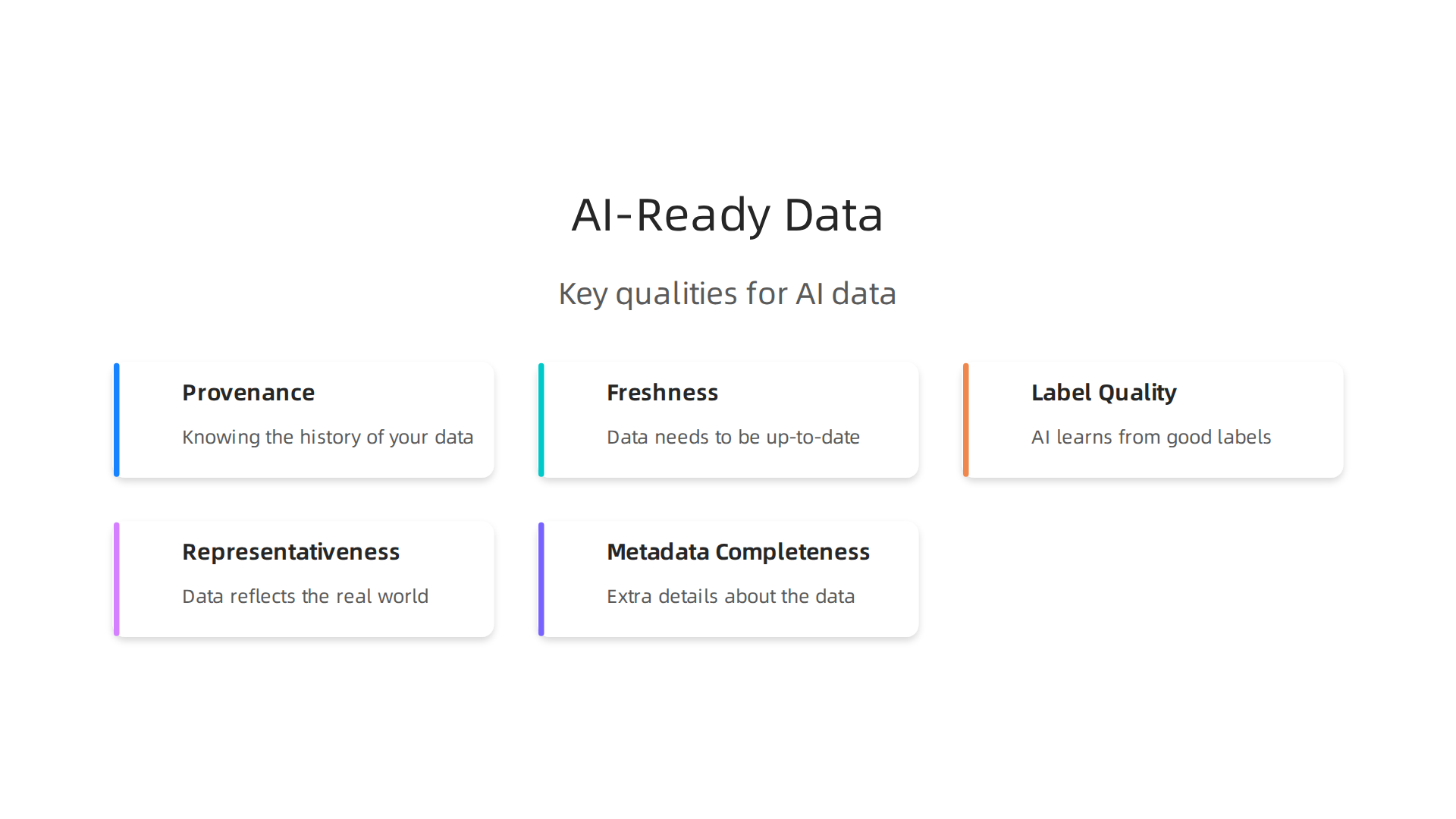
Here are the key things that make data "AI-ready":
-
Provenance (Where Data Comes From): This simply means knowing the history of your data. Where did it start? Who collected it? Was it gathered fairly and with permission? When you know the source, you can trust the data more. If you don't know where the data came from, it's easy for misinformation or "Synthetic Drift" to creep in. Using permission-based private data is key to avoiding this problem and building trustworthy AI, especially for generative AI systems Why Generative AI Assistants Need Permissioned Private Data to Avoid Synthetic Drift.
-
Freshness (How New It Is): Data needs to be up-to-date, especially for things that change often. Old information can lead AI to make wrong guesses. For example, AI trying to predict today's weather needs today's weather data, not last year's. Making sure data is timely is a big part of getting it ready for AI Making official statistics AI-ready with SDMX.
-
Label Quality (How Well It's Tagged): AI learns from examples. These examples need good labels or tags. For instance, if you're showing an AI pictures of cats, each picture needs to be clearly labeled "cat." If the labels are wrong or messy, the AI will learn the wrong things. High-quality labels help AI models understand what they're looking at and make better decisions. You can learn more about this in our guide on how to master data annotation to build trustworthy ai.
-
Representativeness (If It Covers Everyone): Your data should be like a good picture of the real world. It needs to include examples from all different groups or situations that the AI will deal with. If your data only has information from one type of person, the AI might not work well for others. This is called bias, and it can make AI unfair. Data needs to reflect the group it's meant to represent An Introduction to FAIR Data and AI-ready Datasets. This helps create AI systems that are fair and useful for everyone.
-
Metadata Completeness (Extra Details About the Data): Metadata is like the "data about data." It tells you important things, such as what the data means, how it was collected, and what units it uses. Having complete metadata helps both people and AI tools understand the data better. It means the data is not just readable by machines, but also understandable by them, because it's "enriched with contextual metadata" Generative Artificial Intelligence and Open Data: Guidelines and .... Good data modeling relies on complete metadata to give AI the full picture, helping to improve its strength and keep it from being easily fooled.
Making sure your ai-ready data has these qualities helps reduce unfairness, stops false information from spreading, and makes your AI models strong and reliable. This means your AI will work better and be more helpful, acting in ways we can trust. These qualities are crucial for the technical suitability of data for machine learning and its overall quality An actionable framework for AI‐ready data.
Once you know what makes your data "AI-ready," the next big step is to keep checking it.

It's like baking a cake and then making sure it stays fresh and delicious. You need to constantly measure and watch your data's quality to make sure your AI tools keep working correctly and don't start making mistakes. This is especially important in 2026, as AI systems are used for more and more important tasks.
Practical Ways to Measure Data Quality
To make sure your ai-ready data stays good, you need clear ways to measure it. Think of these as checkpoints:
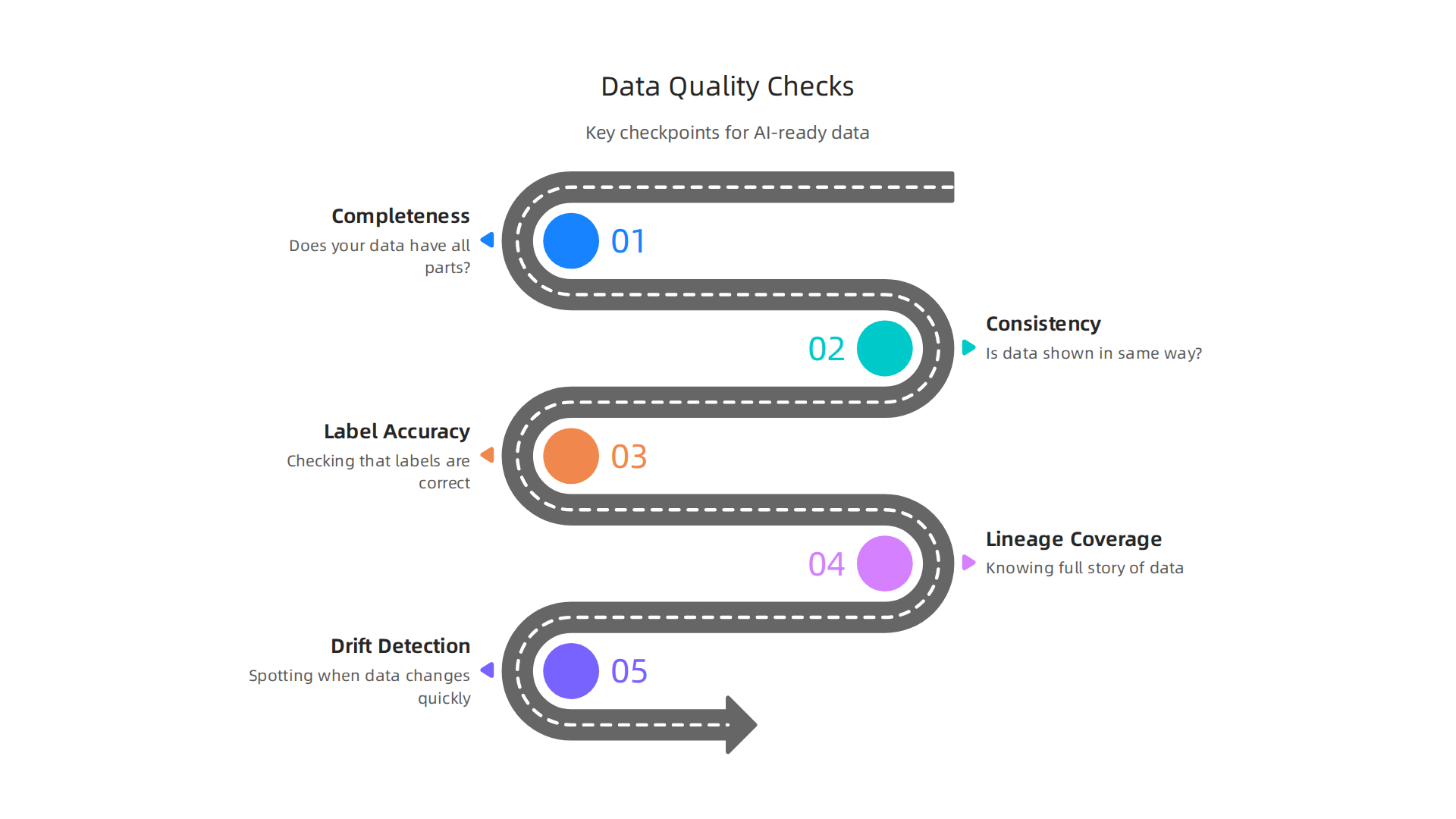
- Completeness: Does your data have all its parts? Or are there empty spaces where information should be? If too much data is missing, it's hard for AI to learn the full picture. High-quality datasets have minimal missing values A survey of data quality requirements that matter in ML development pipelines.
- Consistency: Is your data always shown in the same way? For example, if you list dates, are they always Month/Day/Year, or do they sometimes switch around? Inconsistent data can confuse AI. Making sure data is consistent is key for AI readiness Making government datasets ready for AI.
- Label Accuracy: As we talked about, labels help AI learn. If your data has wrong labels, the AI will learn the wrong things. Checking that labels are correct is super important.
- Lineage Coverage: This means knowing the full story of your data. Where did it come from? How has it changed over time? Good lineage coverage helps you trust your data's source and spot any problems early.
- Drift Detection Signals: Data changes over time in the real world. For example, people's habits might change, or new words might become popular. When the data your AI sees changes too much from what it learned on, it's called "data drift." This drift can make AI less effective or even lead it to wrong answers. Spotting these changes quickly is called drift detection, and it helps you keep your AI working well A Python library for drift detection in machine learning systems. This is how you can tell if "Synthetic Drift" is happening. You need to measure how much your data is moving away from the true human source. Learning how to overcome this problem is crucial for building reliable AI. You can find more details on how to tackle this in our article on overcoming synthetic drift building trustworthy ai.
Keeping an Eye on Your Data: Monitoring and Alerts
It's not enough to just check your data once. You need to watch it all the time. This means having a plan for monitoring your data regularly.
- Regular Checks: Set up times to look at your data's quality metrics. How often depends on how fast your data changes. For some AI, daily checks might be needed. For others, weekly or monthly could be fine.
- Automatic Alerts: The best way to catch problems fast is to set up alerts. These are like alarms that go off if your data quality drops below a certain level. For example, if too many labels suddenly become wrong, or if data drift is detected, you'd get a warning right away. Tools used for data modeling often have ways to do this.
- Using AI Tools for Data Analysis: There are many great AI tools for data analysis available in 2026. Some of these tools can help you track data quality, find inconsistencies, and even detect drift automatically. These tools can make monitoring much easier, helping you catch problems like data drift or "distributional shifts" (meaning the overall patterns in your data have changed) before they cause big issues for your AI models Data drift detection and mitigation: A comprehensive MLOps.
By constantly measuring and monitoring your ai-ready data, you can make sure your AI systems stay strong, fair, and reliable. This ongoing work helps your AI truly be helpful and trustworthy, instead of being easily fooled by bad information.
After ensuring your data is always top-notch, we must also think about privacy, getting permission, and sharing data in a fair way. It's like having fresh ingredients for a cake, but also making sure you know where they came from and if it's okay to use them. For AI to be truly trustworthy in 2026, the data it learns from must be collected and used with care and respect.
Privacy-Preserving Ways to Prepare Data
Creating good ai-ready data means keeping people's information safe. Here are some smart ways to do that:
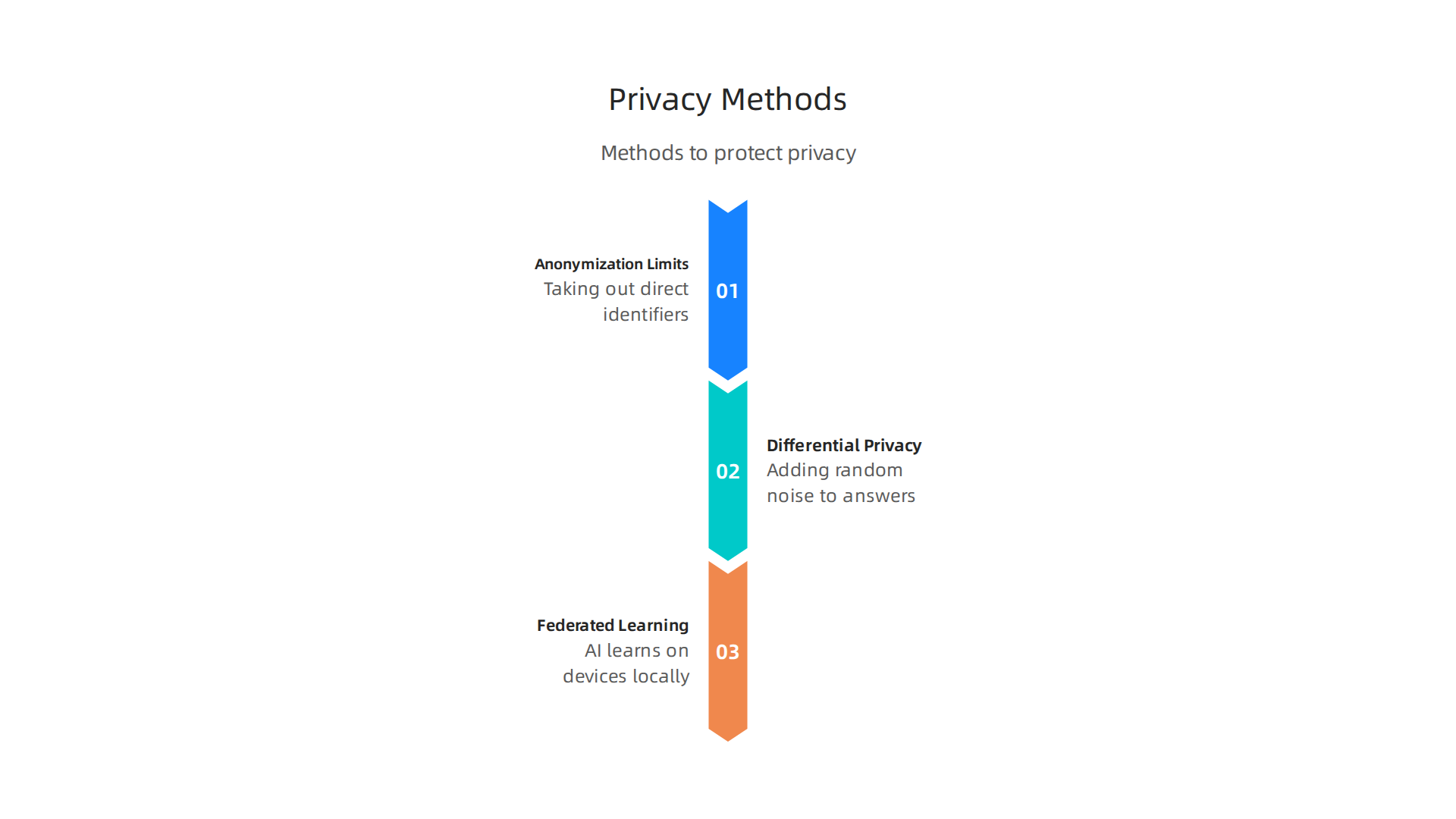
- Anonymization Limits: This is about taking out names or other direct ways to identify someone from data. The idea is to make it so no one can tell who the data belongs to. But sometimes, even after anonymizing, clever people can still figure out who's who by looking at other bits of information. So, it's a good first step, but often not enough on its own.
- Differential Privacy: This is a more advanced way to protect privacy. Imagine you're asking a lot of people a sensitive question. Instead of giving exact answers, each person adds a little bit of random "noise" to their answer before sending it in. When you put all these slightly noisy answers together, you still get a good overall picture without knowing any single person's true answer. This helps make data useful for data modeling without revealing secrets about individuals. It's a key method for deploying machine learning ethically How to deploy machine learning with differential privacy. Experts at NIST also provide guidelines for evaluating differential privacy guarantees.
- Federated Learning: This smart method allows AI models to learn without all the data ever leaving people's devices. Think of it this way: instead of everyone sending their homework to one teacher, each student studies at home with a copy of the textbook. They send back only their learning improvements, not their actual notes. The teacher then combines everyone's improvements to make the main textbook better. This way, private data stays private on people's phones or computers, but the AI still gets smarter. This approach is central to privacy-preserving federated learning.
Asking Permission and Fair Data Use
Beyond just hiding private details, truly ethical ai-ready data starts with asking for permission. This means:
- Getting Clear Consent: People should always know what data is being collected from them, why it's being collected, and how it will be used. They should have a clear choice to say yes or no. This gives people "human agency," meaning they have control over their own information.
- Legal Compliance: In 2026, there are many laws around the world that tell us how to handle data responsibly. Making sure your data practices follow these laws is super important for staying out of trouble and building trust.
- Ethical Data Capture: The goal is to collect "human truth" at its source, meaning real-world human actions and choices, not data that's already been twisted by digital systems. When data is captured ethically and with permission, it helps prevent "Synthetic Drift," which is when AI learns from false or skewed information. This approach is vital for any organization wanting to develop ethical electronic data gathering and retrieval. This kind of permissioned, high-quality data is what truly helps build trustworthy AI systems and makes sure they are not easily fooled. For generative AI assistants especially, permissioned private data helps avoid synthetic drift.
By focusing on these ethical practices, we can make sure our ai-ready data not only works well but also respects everyone's privacy and earns public trust. This is how we build the best ai tools for data analysis that truly serve people for the better.
Beyond keeping data private and asking for permission, building AI that you can truly trust also needs good rules and clear records. Think of it like a recipe. You might have great ingredients (private, permissioned data), but you also need clear steps, who did what, and how it was all put together to make sure the final dish is good and safe to eat. This is where governance, lineage, and documentation come in handy for ai-ready data.
Governance, Lineage, and Documentation: Building Trustworthy Pipelines
For AI to be trustworthy in 2026, we need a clear system for how data is handled from start to finish. This system helps make sure everything is fair, accurate, and can be checked later.
What Is Data Governance?
Data governance is like having a rulebook and a referee for all your data. It sets up how data is collected, stored, used, and protected.

It answers big questions like:
- Who is in charge of this data?
- What are the rules for using it?
- How do we make sure it stays safe and correct?
Good data governance is very important because it builds trust. When people know there are clear rules and someone is watching over the data, they feel safer. This is especially true for the kind of ai-ready data that powers modern systems. Many studies now look at what makes data good enough for machine learning. For example, a survey reviewed many tools for checking and making data better for AI models over the last five years A Survey on Data Quality Dimensions and Tools for Machine Learning.
Understanding Data Lineage
Data lineage is like a map that shows where every piece of data came from, where it has been, and how it was changed along the way.
- Did it start as a survey response?
- Was it cleaned up or combined with other data?
- Who touched it last?
Tracking data lineage is vital for understanding the quality of your data. If something goes wrong with an AI model, knowing the data's journey helps you find the problem quickly. It helps ensure the "human truth" captured at the source remains clear and untouched, reducing the risk of "Synthetic Drift."
The Power of Documentation
Just like a good recipe needs clear instructions, good ai-ready data needs excellent documentation. This means writing down everything important about the data:
- What each piece of data means.
- How it was collected.
- Any changes made to it.
- Why those changes were made.
Good documentation makes it easy for different teams to work with the same data. It also allows outside experts to check and audit the AI system, proving that it's fair and working as expected. Clear documentation is part of what makes data modeling trustworthy and allows people to build the best ai tools for data analysis.
Key Checkpoints and Roles for Trustworthy AI
To put governance, lineage, and documentation into action, companies in 2026 often set up special roles and checkpoints:
- Data Stewards: These people are like the guardians of specific data sets. They make sure the data is accurate, consistent, and used properly according to the rules. They help keep the data clean and ready for AI. To learn more about how roles are changing, you can read about what a data analyst does in 2026.
- Model Stewards: These folks are responsible for the AI models themselves. They make sure the models are built using good data and that they behave ethically. They also watch out for issues like bias or unfair results.
- Ethics Reviews: Before any AI system is widely used, it should go through an ethics review. This is a special check by a group of experts who look at the AI's potential impacts on people and society. They ask if the AI is fair, private, and truly helpful.
By setting up these roles and reviews, organizations create a strong system of checks and balances. This helps prevent problems and builds a foundation of trust for all AI activities. In essence, it helps ensure that when you look at an AI's decisions, you can trace them back through clear, ethical steps, much like having a reliable data studio that shows all the work.
Putting these systems in place helps us build strong trust for all AI work. But to truly make sure your AI systems are trustworthy, you need the right tools. Just like a chef needs good knives and pans, those working with AI need special software to prepare, manage, and protect their ai-ready data.
Tools and Platforms for Creating and Maintaining AI-Ready Data
Getting your data ready for AI and keeping it in good shape needs more than just rules. It needs smart tools and platforms that help you do the work easily and correctly. In 2026, many different kinds of tools help create and look after ai-ready data.
Let's explore some key categories:
- Data Catalogs: Imagine a giant library for all your company's data. A data catalog acts like the librarian, helping you find, understand, and use data. It tells you what data you have, where it comes from, and what it means. This makes it easier to keep track of your data and use it well for AI. Businesses know this is important, with recent reports showing that data governance, which relies on these catalogs, is now key for enterprise AI Data Governance Emerges as the Operational Bedrock for Enterprise AI.
- Labeling Platforms: AI models learn by looking at examples. These examples need to be "labeled," meaning someone has to tell the AI what each piece of data represents. For instance, in pictures, you might label cars, trees, or people. Labeling platforms make this process faster and more exact. They help turn raw data into useful ai-ready data that models can understand. To dive deeper into this, you can learn how to Master data annotation to build trustworthy AI.
- Lineage Tools: We talked about data lineage as a map for data's journey. Lineage tools are the GPS systems that automatically track this map. They show every step a piece of data takes, from its start to how it's used in an AI model. This helps make sure the data hasn't been changed in a bad way and supports good data modeling.
- MLOps Pipelines: MLOps stands for Machine Learning Operations. These are like assembly lines for AI models. They help manage everything from getting the data ready, training the model, testing it, and then putting it into real-world use. Think of them as the complete data studio that helps build and manage your AI projects. Top platforms in 2026, like Amazon SageMaker and Google Vertex AI, offer these end-to-end solutions for the whole AI lifecycle MLOps Platform Comparison 2026: AWS vs Vertex vs Azure.
- Synthetic Data Generators: Sometimes, real data is too sensitive to use for training AI, or you just don't have enough of it. Synthetic data generators create new, artificial data that looks and acts like real data but doesn't have any real personal information. This is a great way to make more ai-ready data while protecting people's privacy.
- Privacy Toolkits: These tools help protect sensitive information. They use special techniques to hide or change parts of the data so that individuals can't be identified. For example, some tools can add a little bit of noise to data to protect privacy while still letting AI learn from it, a technique known as differential privacy Protecting Trained Models in Privacy-Preserving Federated Learning. These toolkits are crucial for building trustworthy AI, especially when handling personal data.
Choosing the Right Tools for Your Needs
Picking the best AI tools for data analysis means thinking about what your organization truly needs and what ethical rules you must follow. Here are some simple guidelines:
- Look at your data: How much data do you have? Is it pictures, text, numbers? Different tools work better with different types of data.
- Consider privacy: How sensitive is your data? Do you need strong privacy protection tools like those using differential privacy or federated learning?
- Match your team's skills: Some tools are easier to use than others. Choose tools that your team can learn and use effectively.
- Think about your budget: Tools can be free and open-source, or they can be paid services. Find what fits your company's pocketbook.
- Follow ethical rules: Always make sure the tools you pick help you meet your ethical goals and legal requirements for data use.
By carefully matching tool capabilities to your organization's needs and ethical boundaries, you can ensure you're building AI systems that are both powerful and responsible. It's important to evaluate AI tools with a framework for ethical data and trust to make the best choices.
Once you've chosen the right tools, the next step is to put them into action with a clear plan. Building and using AI responsibly isn't a one-time thing. It's a journey that needs a good map. This map shows how to prepare your data, use it for AI, and keep everything working well over time.
Operational Roadmap: From Data Assessment to Sustainable AI Operations
To truly build AI systems that people can trust, organizations need a clear plan, or roadmap. This roadmap guides them from just looking at their data to having AI systems that work well and keep getting better.

A strong roadmap often involves several key steps:
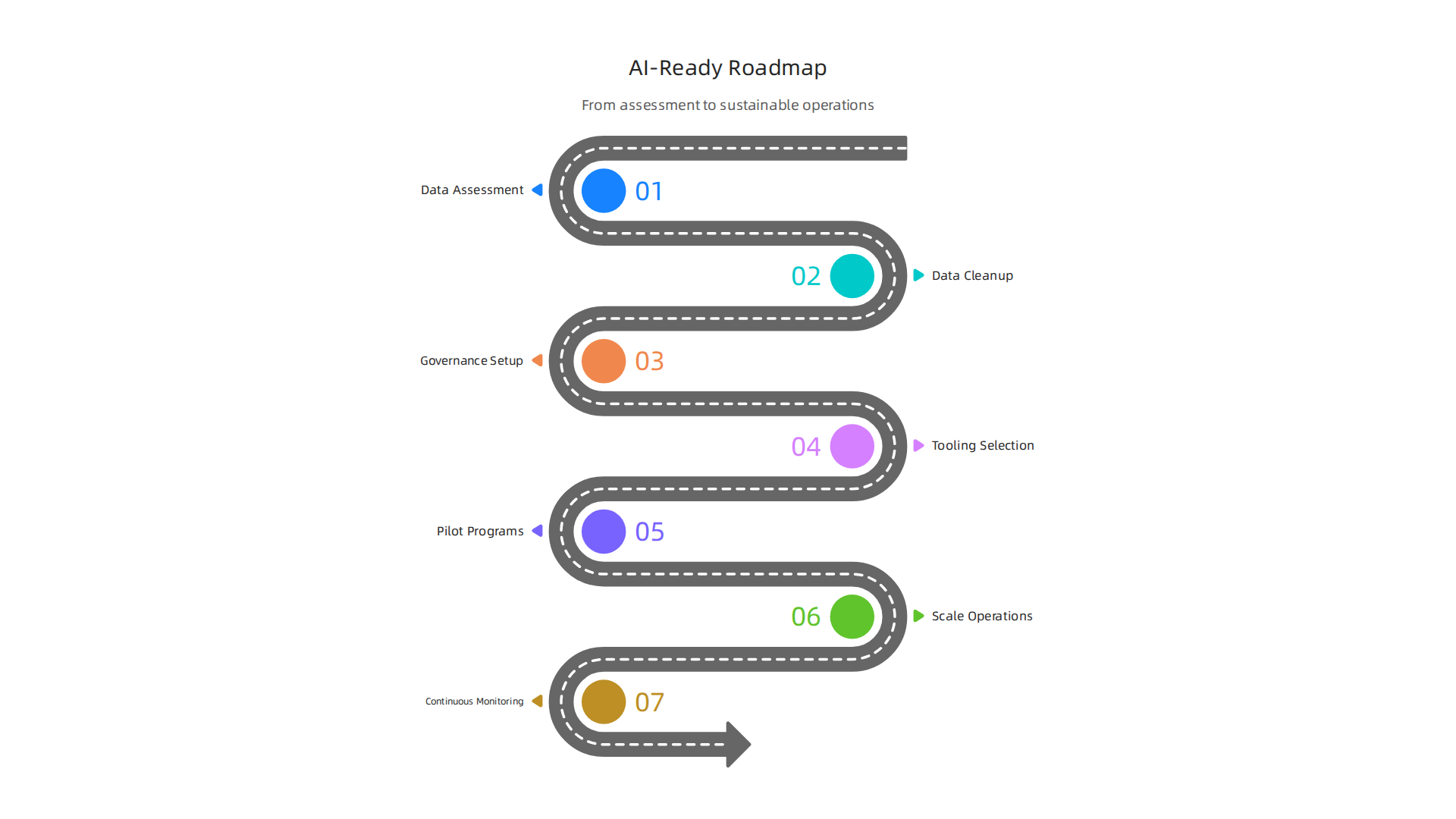
- 1. Data Assessment: First, you need to look closely at all your data. What kind of data do you have? Where does it come from? How accurate is it right now? This step helps you understand what you're working with and what needs fixing to get truly
ai-ready data. A 2026 report highlights the importance of assessing current data governance to develop AI-driven policies and ensure continuous monitoring for compliant and secure AI systems, emphasizing that this roadmap involves assessing current data governance maturity and setting up continuous feedback loops International Journal of Multidisciplinary Research and Growth Evaluation. - 2. Data Cleanup and Preparation: This is where you make your data shiny and new. You fix mistakes, remove old or useless information, and make sure it's all in a format that AI can easily understand. This often includes careful
data modelingto structure information effectively. - 3. Governance Setup: Once data is clean, you need rules for how it's used and managed. This means deciding who can access what data, how it should be protected, and how to make sure it's fair and unbiased. Setting up strong data governance is key for trustworthy AI. For instance, a practical roadmap suggests starting with data inventory, classification, and lineage before moving to quality and access governance for AI Data Governance for AI.
- 4. Tooling Selection and Integration: You've picked your
best AI tools for data analysisfrom the previous section. Now, it's about making sure these tools work together smoothly. Think of it like setting up a completedata studiowhere all parts connect and share information easily. - 5. Pilot Programs: Instead of changing everything at once, start small. Pick a small project to test your new data and AI processes. This helps you learn what works and what doesn't without big risks.
- 6. Scale Operations: If your pilot project goes well, you can then apply what you've learned to bigger parts of your business. This means using your
ai-ready dataand new processes more widely. - 7. Continuous Monitoring and Improvement: AI and data needs change all the time. So, it's important to keep an eye on your data and AI systems. Look for new problems, check for fairness, and always try to make things better. This ongoing effort makes sure your AI stays trustworthy.
Key Organizational Changes for Trustworthy AI
An operational roadmap also means changes in how people work and what they focus on. For AI to be truly successful and ethical, organizations often need to adjust their internal setup.
- New Roles and Skills: You might need new people, like "data stewards" who look after specific sets of data, or "AI ethics committees" to guide decisions. Existing roles, like a data analyst in 2026, will also need new skills.
- Shifting Incentives: Instead of just rewarding how much AI is used, businesses should reward good data practices and ethical AI outcomes. This helps everyone focus on building AI that is helpful and fair.
- Measuring Success Differently: Traditional measures often focus on how much money is made or how many people click on something. For trustworthy AI, we need to look at "human-centric outcomes." This means checking if AI is actually improving people's lives, reducing stress, or making communities stronger, rather than just boosting engagement metrics. This shift helps align AI's goals with true human well-being, pushing toward a trust-first AI strategy that benefits everyone.
Summary
AI‑ready data is the accurate, complete, consistent and ethically sourced information that modern AI systems need to be reliable and trustworthy. This article explains what makes data AI‑ready—provenance, freshness, label quality, representativeness and rich metadata—and shows how to measure those qualities with checks for completeness, consistency, label accuracy, lineage and drift detection. It covers privacy techniques like anonymization, differential privacy and federated learning, and stresses clear consent and legal compliance to prevent synthetic drift and loss of trust. You'll also learn how governance, documentation and roles (data stewards, model stewards, ethics reviews) create accountable pipelines, what tool categories to use (catalogs, labeling, lineage, MLOps, privacy toolkits), and a practical roadmap from assessment to continuous monitoring so your AI stays fair, safe and effective over time.