Home


Menu

Close
Security Classification Guide: Master Data Protection and AI Access
Published:
August 19, 2026
Why security classification guides matter right now
In today's world, keeping important information safe is harder than ever. Think of it like a treasure chest full of your company's most valuable secrets. If there isn't a clear map showing what's inside and who can open it, those secrets are not truly safe.

This is where big problems start. When there are no clear rules about how sensitive information should be treated, things can easily go wrong. Some data might be left open for anyone to see, while other data might be too locked down, making it hard for the right people to do their jobs. This creates holes in your security, known as gaps in your access control list, which can make your company data security weak.
This is exactly why a Security Classification Guide, often called an SCG, is so important. You might be asking, "what is security classification guide?" Simply put, it's a special document. It's like a rulebook that tells everyone exactly how to handle important information. It lists what information needs to be kept secret, how secret it is, and for how long. An SCG is an official record of decisions about what information should be protected Developing and Using Security Classification Guides. It's a guide to make sure everyone knows the proper way to protect sensitive information related to a project, system, or plan What Is a Security Classification Guide? Full Explainer.
In 2026, many big groups, like large companies, government offices, and helpful non-profits, are dealing with lots of sensitive data. They also use powerful new tools like Artificial Intelligence, or AI. With AI handling more and more important details, knowing exactly what's classified and how to protect it is crucial. These groups also have to follow many strict rules and laws, which is a big part of their cybersecurity policy.
Having a clear SCG helps these organizations keep their valuable information safe, especially with the rise of AI. It makes sure that all information is handled with the right level of care, stopping problems before they even begin. Learning how to protect your systems is key for any large organization, especially in 2026. This means mastering Cybersecurity AI Skills for Enterprise Security in 2026.
Core components of a security classification guide
After understanding what a Security Classification Guide, or SCG, is and why it's so important for keeping company data security strong, it's time to look inside. What exactly does an SCG contain? Think of it as a detailed instruction book, with different chapters each explaining a part of how to protect information.

An SCG tells you which pieces of information are secret, how secret they are, and for how long. It's like the official playbook for handling sensitive data within a project or system Essential Insights: What Is Security Classification Guide?. Here are the main parts you'll find in almost every SCG:
Classification levels
This is one of the most important parts. It lists the different levels of secrecy for information.
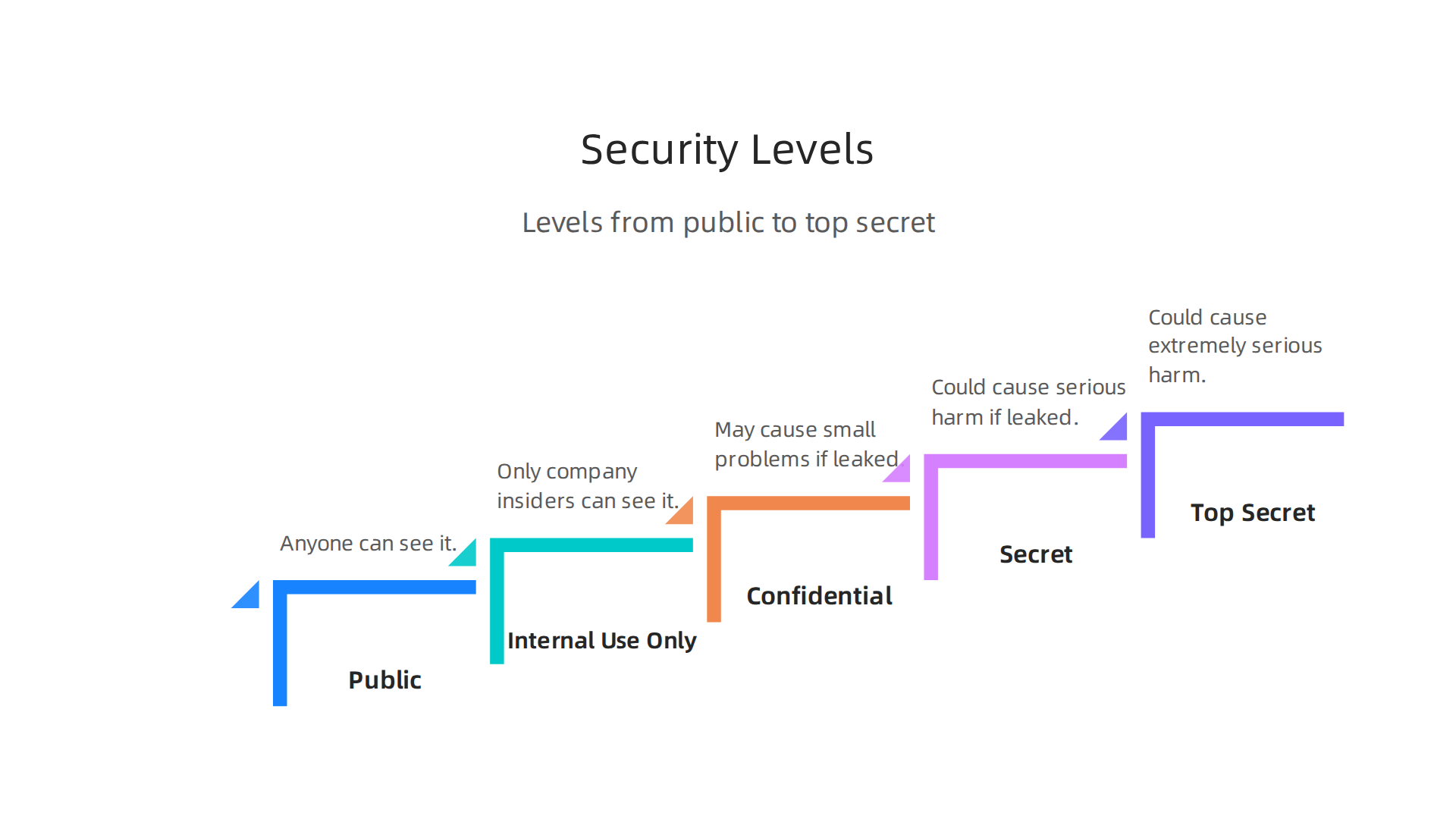
For example, a company might have levels like:
- Public: Anyone can see this information.
- Internal Use Only: Only people inside the company can see it.
- Confidential: This is secret and could cause small problems if leaked.
- Secret: This is very sensitive and could cause serious harm if leaked.
- Top Secret: This is the most sensitive and could cause extremely serious harm, even to national security, if it gets out.
These levels help everyone understand how much care is needed for each piece of information. An SCG outlines the criteria for assigning these levels to information What is a security classification guide?.
Data types
The SCG also explains different kinds of information. It shows how to classify various types of data. This could include:
- Project plans and blueprints.
- Emails and meeting notes.
- Financial records.
- Employee information.
- New product ideas.
For each type, the guide says what level of secrecy it needs. For instance, a new product idea might be "Secret," while a company's public announcement might be "Public."
Decision criteria
This section explains how the classification levels are decided. It lays out the rules for figuring out if something is "Confidential" or "Secret." This involves looking at things like:
- Impact: How much harm would happen if this information got into the wrong hands?
- Source: Where did the information come from? Is it something truly private or something found openly?
- Age: Is the information still sensitive, or has it become less important over time?
These rules help keep the process fair and consistent.
Control mappings
Once information is classified, the SCG shows how to actually protect it. This is where the rules turn into real actions. It maps the classification levels to specific controls. For example:
- For "Confidential" data: Only certain employees might have access. It might be stored on a special computer system with an organized access control list to ensure only authorized users can see it.
- For "Secret" data: It might be encrypted, stored in a secure location, and only a very small group of people can touch it.
These controls are key parts of an organization's overall cybersecurity policy and help protect the company's data security. They make sure that the written policies are put into practice, guarding against unwanted exposure or misuse.
When we talk about a Security Classification Guide, or SCG, the idea of "classification levels" is super important. These levels are not just made up on the spot. They come from careful thinking about how sensitive a piece of information truly is.
Understanding sensitivity
Think about the everyday things you keep safe. You probably lock your front door for your home, but you might keep your diary in a secret spot, and your bank account details are hidden even more carefully online. Information in a company works the same way. A Security Classification Guide helps everyone know exactly how secret something needs to be. This is often called "sensitivity criteria."
These criteria help decide if information is, for example, "Public," "Internal Use Only," "Confidential," or "Secret." Some places, like government bodies, might use even more specific terms such as "OFFICIAL," "SECRET," and "TOP SECRET" for their data Government Security Classifications Policy - Wikipedia. The main idea is to match the protection to the possible harm if the information gets out.
How decisions are made
So, how do companies decide which level to put on different pieces of information? This involves a process using "decision frameworks."
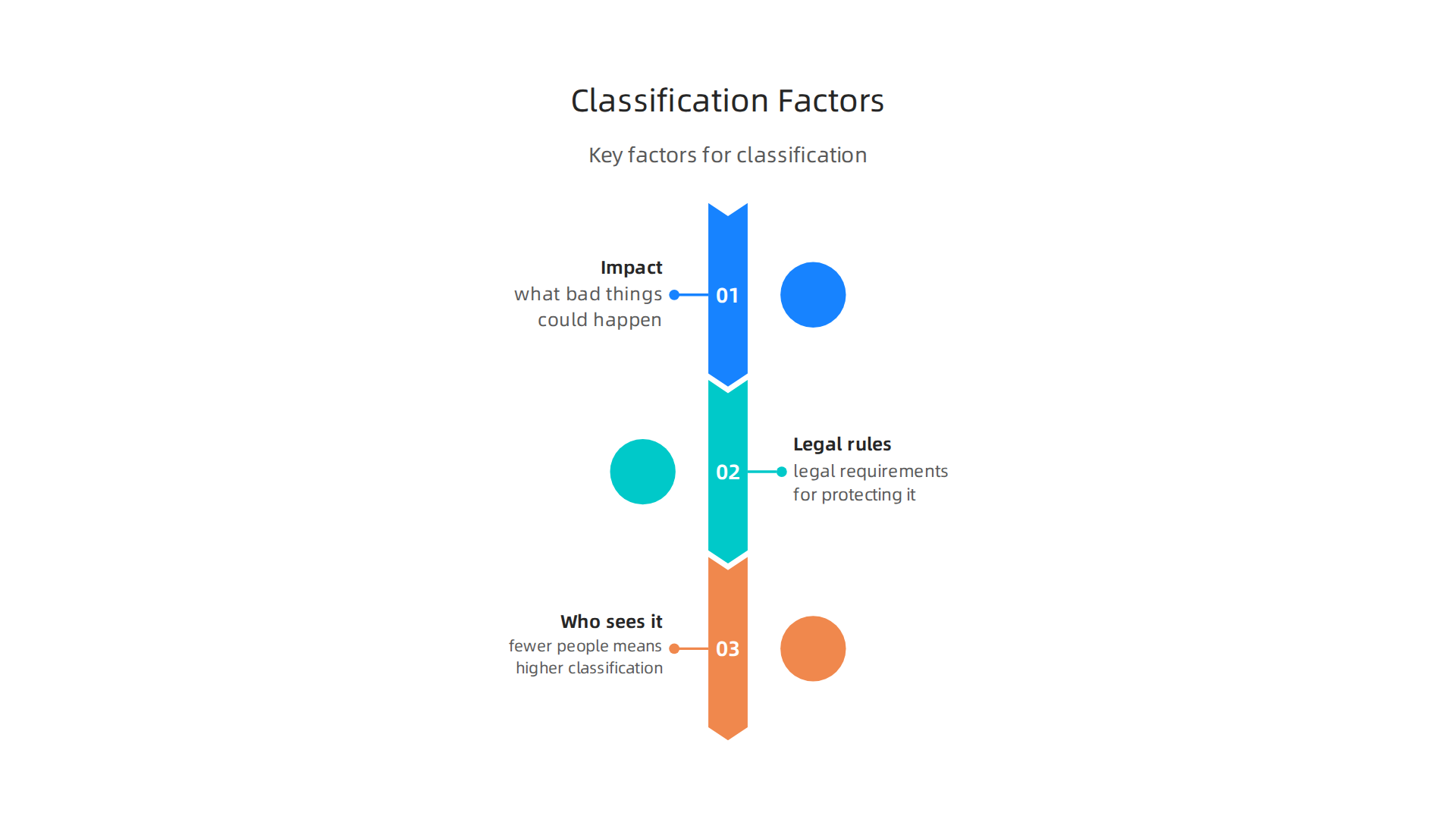
These frameworks help them look at several things:
- Impact of a leak: This is the most important part. If this information got out, what bad things could happen?
- Small problem: Maybe it would be a bit embarrassing or cause a tiny loss of money. This might be "Confidential."
- Serious harm: It could cause big financial losses, legal trouble, or hurt the company's good name. This might be "Secret."
- Extremely serious harm: It could threaten national security, cause huge public distrust, or lead to major shutdowns. This is usually "Top Secret." A good SCG documents these decisions clearly Developing and Using Security Classification Guides.
- Legal rules: Some information, like customer data or health records, has special laws about how it must be protected. The SCG makes sure the classification follows these laws.
- Who needs to see it? The fewer people who need access to information, the higher its classification might be. This helps limit risks.
Human review versus automated tagging
Making these decisions can be done in a couple of ways:
- Human Review: For very important or brand-new information, people who are experts (sometimes called "Original Classification Authorities") will look at it carefully. They read the documents, understand the context, and then assign a classification level. This ensures a human touch on tricky decisions. A security classification guide acts as a formal record of these classification decisions Security Classification Guide (SCG) - AcqNotes.
- Automated Tagging: In 2026, many companies use smart computer programs and AI to help. These tools can scan huge amounts of data and suggest classification levels based on keywords, types of data, and past decisions. For example, a program might see a document with many employee names and addresses and automatically flag it as "Confidential" or "Internal Use Only." While helpful, it's important that these automated systems are built on strong, ethical data practices to ensure accuracy and prevent problems that could arise from biased or incorrect tags. You can learn more about how to make AI systems trustworthy by understanding topics like building trustworthy AI combat synthetic drift with ethical data.
Both human review and automated tagging work together to make sure that data within a company has the right level of protection, keeping company data security strong against different threats.
Mapping classifications to access control: RBAC, ABAC, and hybrid approaches
Once information gets a classification level, like "Confidential" or "Secret," the next big step is to make sure only the right people can see it. This is where "access control" comes in.
Think of it like a special gatekeeper for your company's information. A good security classification guide tells this gatekeeper exactly what to do.
In 2026, companies use different ways to manage who can access what. These are called access control models. Let's look at the main ones.
Role-Based Access Control (RBAC)
Imagine a school. Teachers have certain access, students have others, and the principal has even more. They all have different "roles." Role-Based Access Control (RBAC) works just like this. Instead of giving each person individual permissions, you give permissions to a role.
For example:
- Role: Project Manager
- Permissions: Can see "Confidential" project plans, but not "Secret" company finances.
- Mapping: If a document is marked "Confidential," only people with roles like "Project Manager" or higher can open it.
This makes managing company data security much simpler, especially in big companies where many people have the same job.
Attribute-Based Access Control (ABAC)
Attribute-Based Access Control (ABAC) is like a smarter, more flexible gatekeeper. It doesn't just look at someone's role. It looks at many "attributes" or features. These can be things about:
- The person: Their job, their department, where they are located, or even the time of day.
- The information: Its classification level ("Secret," "Internal Use Only"), its project name, or its owner.
- The environment: Is it being accessed from a company computer or a personal phone?
So, with ABAC, a rule might be: "Only employees in the Finance Department (person attribute) who are in the office (environment attribute) can view 'Secret' financial reports (information attribute) during business hours." This offers a very detailed way to protect information. Experts have looked closely at different access control models, including ABAC Guide to Attribute Based Access Control (ABAC) Definition and Considerations.
Hybrid Approaches
Sometimes, using just RBAC or just ABAC isn't enough. Many organizations in 2026 use a "hybrid" approach, mixing both. For example, they might use RBAC for general access based on job roles and then add ABAC rules for extra security on very sensitive data or in special situations. This creates a strong cybersecurity policy that protects information at many levels.
How Classifications Link to Access Rules
No matter which access control method is used, the information from the security classification guide is key. This guide helps create the "access control list" or rules that say who can do what with classified data.
- Permissions: Each classification level gets a set of permissions. For "Public" data, everyone has permission to view. For "Secret" data, only a few have permission.
- Enforcement Points: These rules are put into action everywhere information is stored or shared. This could be on a computer network, in a cloud storage system, or even on a secure printer.
- Audit Trails: It's super important to keep records. An audit trail shows who accessed which document, when, and from where. If a "Secret" document was viewed, the system records it. This helps make sure everyone follows the rules and allows companies to check if something went wrong.
Having a clear understanding of what is a security classification guide and how it connects to access control models is vital for strong company data security. It ensures that sensitive information is always protected according to its importance.
Keeping information secure isn't a one-time job. After setting up classifications and access rules, the next step is making sure these stay correct and helpful over time. This is called governance and lifecycle management. It prevents something called 'classification drift,' which is when data classifications become wrong or outdated.
Governance Structures and Owner Roles
For a security classification guide to work well, clear rules and responsibilities are needed. Think of it like a team effort. Every piece of important information should have an "owner." This owner is usually the person or department that created the data or uses it the most. Their job is to know what is a security classification guide and make sure their data is tagged correctly. They also help decide how sensitive that data is.
Companies often have a special group or person, like a Data Security Manager, who oversees the whole system. They help set the main rules for the company's cybersecurity policy and make sure everyone follows them. This setup helps keep the company data security strong.
Approval Workflows and Periodic Reviews
Classifications aren't set in stone. Sometimes, information becomes more or less sensitive over time. Or new kinds of data appear. That's why there needs to be a clear way to update classifications. This is called an approval workflow. It means that if someone wants to change a classification, they need to ask for permission, and someone in charge must approve it. This process helps maintain proper access controls, making sure changes are reviewed before they happen. For example, rules might be in place for how access is requested, approved, and even removed, with constant monitoring for risks NIST Access Controls & 800 53 Framework Insights.
Also, regular checks, called periodic reviews, are super important. In 2026, companies often review their classification guide and data at least once a year.
This helps find any data that has the wrong label or if the guide itself needs updating. These reviews stop 'classification drift' and keep the system accurate.
Lifecycle Controls and the Classification Guide
The security classification guide is used throughout the entire "life" of information, from when it's created until it's no longer needed. This is called lifecycle control.
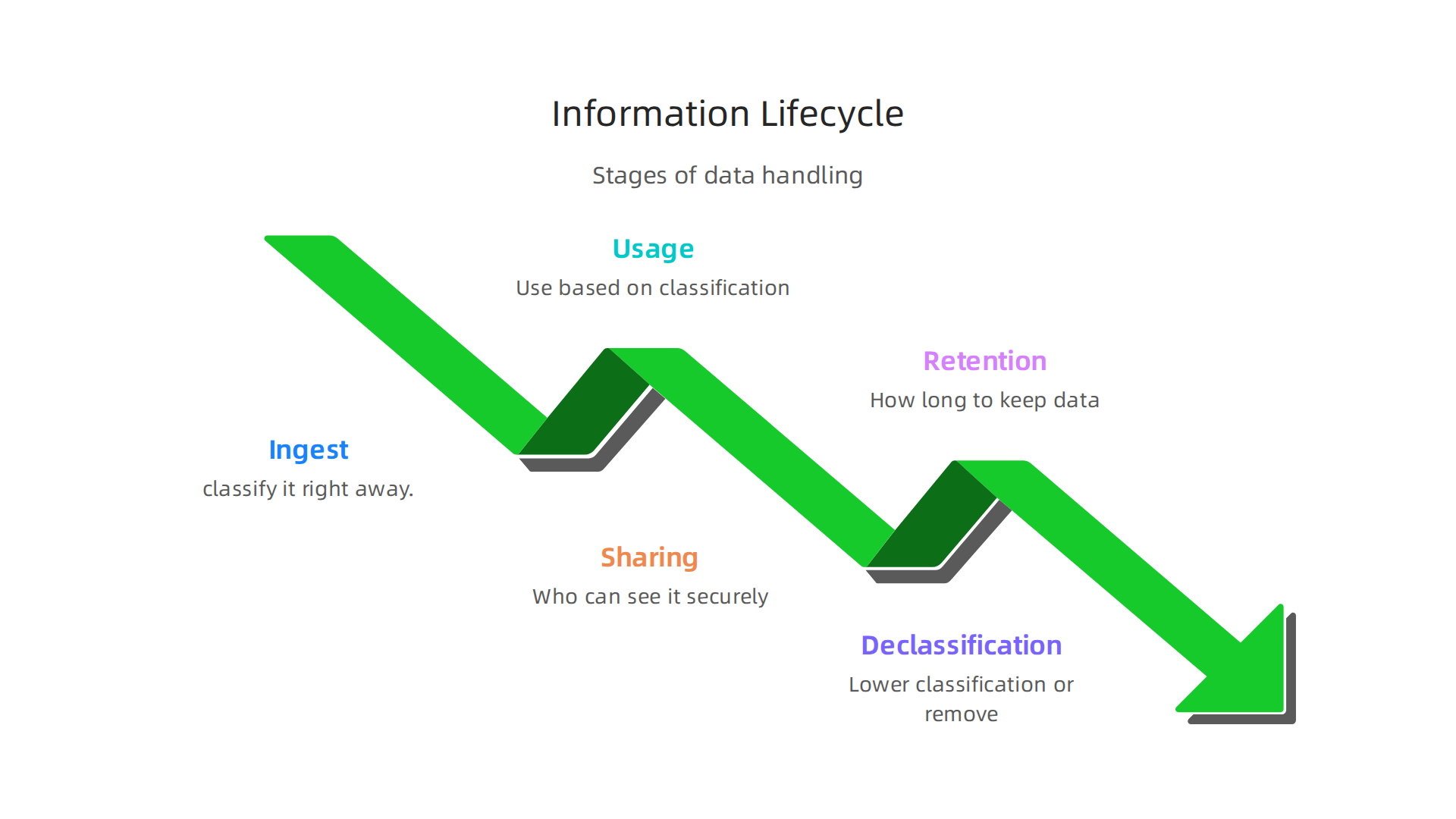
- Ingest: When new data first comes into the company, the guide tells people how to classify it right away. This is the first step in protecting it.
- Usage: As people work with data, the guide reminds them how they can use it based on its classification. For example, "Secret" data might only be viewable in a secure area.
- Sharing: Before sharing any information, the guide helps decide who can see it and how it should be sent securely. It's like checking the access control list before opening a door.
- Retention: How long data needs to be kept depends on its classification. The guide helps set rules for this. For example, financial records might need to be kept for many years, while less important data can be deleted sooner. Maintaining clear records, including retention periods and sensitivity classifications, is considered a best practice for compliance The Best Practices For Maintaining Compliance Evidence And Records.
- Declassification: Sometimes, data that was once very sensitive is no longer critical. The guide explains how to lower its classification or remove it completely when it's safe to do so. This makes sure information isn't over-protected forever.
By carefully managing classifications through governance, workflows, and lifecycle controls, companies can keep their data safe and their cybersecurity policy strong in 2026. This focus on long-term management is a key part of good data protection services solve the AI trust crisis.
Putting a data classification guide into action means more than just having rules. Companies need to make sure these rules are truly followed every day. This is done through technical controls, careful logging, and regular checking, which is called auditing. These steps help prove that the cybersecurity policy is working and build trust in how the company handles sensitive information.
Technical Enforcement of the Classification Guide
Technical controls are like automatic safeguards that make sure data stays protected based on its classification. When we talk about "what is security classification guide," we're talking about the core rules these controls enforce. They work at different points where data is used or stored.
One important control is how people get access to data. This is often managed through systems like Attribute-Based Access Control (ABAC). Instead of just giving someone access based on their job title, ABAC looks at many factors, like who the user is, what they want to do, and the data's classification level. For instance, a policy might say that only certain people can look at "Confidential" data, and only from a company device. The data's classification helps decide who can see it and what they can do with it Role-Based Access Control (RBAC): The Complete Guide. These systems make sure that security controls are applied automatically based on the data's classification and the user's permissions Netherlands Government Classification Compliance Guide.
Other technical controls include:
- Encryption: This scrambles sensitive data so that only people with the right "key" can read it. It's like putting a secret message in a code that only your friends can crack.
- Data Masking: For less sensitive uses, like testing new software, data masking changes the real data into fake but realistic data. This protects the original sensitive information while still allowing tests to happen.
These controls are essential for strong company data security.
Logging, Audit Trails, and Metrics
Even with strong technical controls, companies must keep track of everything that happens with their data. This is where logging and audit trails come in. An audit trail is a detailed record of who accessed what data, when they did it, and what changes they made. It's like a security camera for all your data.
Collecting this evidence is vital for both internal checks and outside reviews. For example, if someone changes a data classification or tries to access data they shouldn't, these actions are logged. For serious security, companies might need to log all changes and uses of data attributes for later checking Attribute Considerations for Access Control Systems. These records help show that the company is following its cybersecurity policy.
Important metrics that companies track include:
- Access attempts: How many times was sensitive data accessed? Were there any failed attempts?
- Changes to data: Who modified data, and when?
- Policy violations: Any instances where the classification guide rules were broken.
In 2026, companies use tools to centralize these logs, making it easier to review them and prove continuous compliance Operational Playbook for Preparing for Security Audits and .... This deep level of tracking is crucial for ensuring that the protection measures are truly working.
When organizations use robust technical controls and detailed logging, they can confidently show that their data is protected. This builds trust with customers, partners, and regulators. It also helps in improving how data is handled overall, ensuring that the company's AI-powered security solutions combat synthetic drift and build trust.
While tracking data use is important for regular information, artificial intelligence (AI) systems bring their own special set of challenges. When we think about what is security classification guide, we must also consider how these rules apply to AI, which learns from and uses data in unique ways. This means going beyond basic company data security to address AI-specific issues.
Implementation Challenges for AI Systems
AI systems face problems that can make it hard to keep data safe and private.
- Labeled Private Training Data: AI models need lots of data to learn. Often, this data must be clearly labeled and private. Finding enough of this high-quality, ethically sourced private data is a big challenge. If AI is trained on low-quality or public data that might be wrong, it can learn bad habits or spread misinformation.
- Synthetic Drift: This happens when AI models are trained on too much "fake" or synthetic data, or when the real-world data changes over time in ways the AI doesn't understand. It's like an AI slowly losing its grasp on reality, leading to less reliable results. This can make AI systems less trustworthy over time Understanding Effects of Data Drift in Membership Privacy. Companies must work to combat this overcoming synthetic drift building trustworthy ai.
- Model Access Controls: It's not just about who sees the data, but who can use the AI models themselves. An access control list for AI models needs to be very strict. For example, only certain people should be able to run a sensitive AI model that handles financial predictions. The government also has strict guidelines for securing AI systems Companion Guide on Securing AI Systems.
- Fine-tuning Controls Tied to Classification: AI models often get "fine-tuned" or updated with new data. If this new data isn't handled according to the cybersecurity policy and its classification, the AI could start behaving in unsafe ways. For example, updating an AI with public data might accidentally leak private rules or information it was not meant to learn.
Mitigation Strategies
To handle these AI-specific issues, companies can use several smart strategies:
- Data Enclaves: These are like super-secure, isolated environments where sensitive data, especially labeled private training data, can be stored and used only by AI models. Think of it as a vault where the AI does its learning without the data ever leaving the safe space.
- Permissioned Datasets: Instead of making all data available, companies can create specific datasets that only certain AI models or authorized users can access for training. This is crucial for maintaining strong company data security. This approach helps explain why generative AI assistants need permissioned private data to avoid synthetic drift.
- Contextual Metadata: This means adding extra tags or information to data that tells the AI not just what the data is, but also how it can be used. For example, a tag might say, "This customer data can only be used for improving purchase recommendations, not for marketing outside the company." This helps the AI understand the limits of its use.
- Human-in-the-Loop Controls: This strategy involves humans regularly checking the AI's output and how it processes data. If the AI shows signs of synthetic drift or makes strange decisions, a human can step in to correct it. Regularly auditing AI classification outputs is recommended to ensure fairness and accuracy Data Security within AI Environments. This helps ensure that the AI continues to align with human values and the original cybersecurity policy.
By putting these methods in place, companies in 2026 can better manage the risks that come with AI, making sure that what is security classification guide remains strong and effective even in advanced digital systems.
Summary
This article explains what a Security Classification Guide (SCG) is, why it matters in 2026, and how organizations should use one to protect sensitive information. It walks through the SCG's core elements—classification levels, data types, decision criteria, and control mappings—and shows how those labels translate into access rules using RBAC, ABAC, or hybrid models. The piece also covers governance: owners, approval workflows, periodic reviews, and lifecycle controls from ingest to declassification. It describes technical enforcement like encryption, data masking, and centralized logging plus the metrics auditors expect. Finally, the article highlights AI-specific risks—labeled training data, synthetic drift, and model access—and practical mitigations such as data enclaves, permissioned datasets, contextual metadata, and human-in-the-loop checks so teams can keep AI and enterprise data secure and compliant.
Related Blogs
No Similar Blogs found
