Home


Menu

Close

Overcoming Synthetic Drift Building Trustworthy AI
Published:
August 16, 2026
Why understanding AI's societal context matters now
Today, in 2026, artificial intelligence (AI) is everywhere. It helps us with tasks, gives us information, and even creates content. But how AI learns and what it learns from is a big deal for our world in data. A serious problem is growing because many AI systems learn from public data. This data is often used without proper permission, and it can be messy, biased, or just plain wrong.
Think about it: AI models get trained on huge amounts of text and pictures found online. If this information has distortions, then the AI will learn those distortions too. We call this problem "Synthetic Drift." It means that as information travels through digital spaces and is then processed by AI, the true meaning or original facts get warped. This can lead to AI systems that don't reflect real human values or behaviors in a good way.

This "synthetic drift" has real downsides for everyone. One major issue is that people are losing trust in what AI tells them. Surveys in 2026 show this clearly. For example, a Pew Research Center study found that only 44% of Americans trust AI a lot or somewhat, while 47% have not much or no trust at all in it Key findings about how Americans view artificial intelligence. Another study, the Ipsos AI Monitor 2026, showed that while 72% trust companies to protect personal data, only 58% trust companies that actually use AI to do so Ipsos AI Monitor 2026. This shows a clear drop in trust when AI is involved.
When AI models are built on shaky data, they can spread misinformation even faster. They might also optimize for things that aren't good for us, like keeping our attention at all costs, instead of helping us grow or connect in healthier ways. This kind of misaligned optimization can actually harm human flourishing by pushing us towards more anxiety and loneliness. To stop this, we need to think about why generative AI assistants need permissioned private data to avoid synthetic drift and how building trustworthy AI combat synthetic drift with ethical data is key. Understanding these issues is vital if we want AI to truly serve humanity well.
The AI bottleneck: permission, privacy, and data quality
To make sure AI serves humanity well, we need to understand why it often learns from bad data. The main reason is a big problem called the "AI bottleneck." This bottleneck happens because AI systems need a lot of information to learn. Getting this information in a good, ethical way is tricky.
Companies often turn to public data found online. It is easy to get, even if it is not always good. Think of it like a giant pile of all the information on the internet. It is tempting to just scoop it all up. But this information often lacks proper permission from the people who created it. It also might not be private or good quality. Trying to get special permission for every piece of data from its original owner is hard and takes a lot of time and money. This leads many AI makers to depend on this messy public data. This means that what AI learns often isn't aligned with human values. This is a key reason for "synthetic drift" that we talked about before.
When AI models are built on this kind of data, they can spread misinformation. They can also make decisions that are not fair or accurate. This makes AI less trustworthy in many important areas, like how it might impact management consulting. It also shows us the real difference between machine learning and AI. Machine learning needs good data to learn well, but AI often gets by with less-than-perfect public data, which causes problems for our world in data.
Luckily, there are smarter ways to work with data that keep things private and ethical. Two main ways are Federated Learning and Data Clean Rooms.
-
Federated Learning: Imagine many different computers or phones having their own private data. With Federated Learning, the AI model goes to the data to learn, instead of the data coming to the AI. This means the raw, sensitive information never leaves your device or company. Only the "lessons" the AI learns are shared and put together to make a smarter overall AI. This helps protect privacy while still training powerful AI models Federated Learning: A Survey on Privacy-Preserving .... It is a special kind of machine learning that focuses on keeping data safe A Review Of Federated Learning: Privacy-Preserving Machine Learning.
-
Data Clean Rooms: These are like super secure digital spaces where different groups can bring their data together. They can analyze the combined information without ever actually seeing each other's raw, private data. It is a secure way to work together and get new insights from data without risking privacy Federated Learning vs Data Clean Rooms. This approach helps redefine how we share and use data securely How synthetic data and clean rooms are redefining secure data collaboration. A great overview explains the ways these rooms work to keep data safe Data Clean Rooms: A Taxonomy & Technical Primer.
These methods show us how we can become better "data stewards." This means taking good care of data, making sure we get permission to use it, and ensuring it is high quality from the very beginning. By doing this, we can overcome the data bottleneck and build AI systems that are fair, trustworthy, and truly serve people better. This also opens up many new AI ethics jobs for people who care about making AI responsible. This is how we begin overcoming the data bottleneck and synthetic drift to build open future AI.
Synthetic Drift: how feedback loops distort truth and behavior
We just talked about how using bad data can cause problems for AI. Now, let's dive deeper into a big problem called "synthetic drift." This happens when AI systems don't just learn from bad data, but they actually start to make that data worse over time. It's like a bad cycle where AI makes things less true, and then learns from those less true things, making them even more distorted.
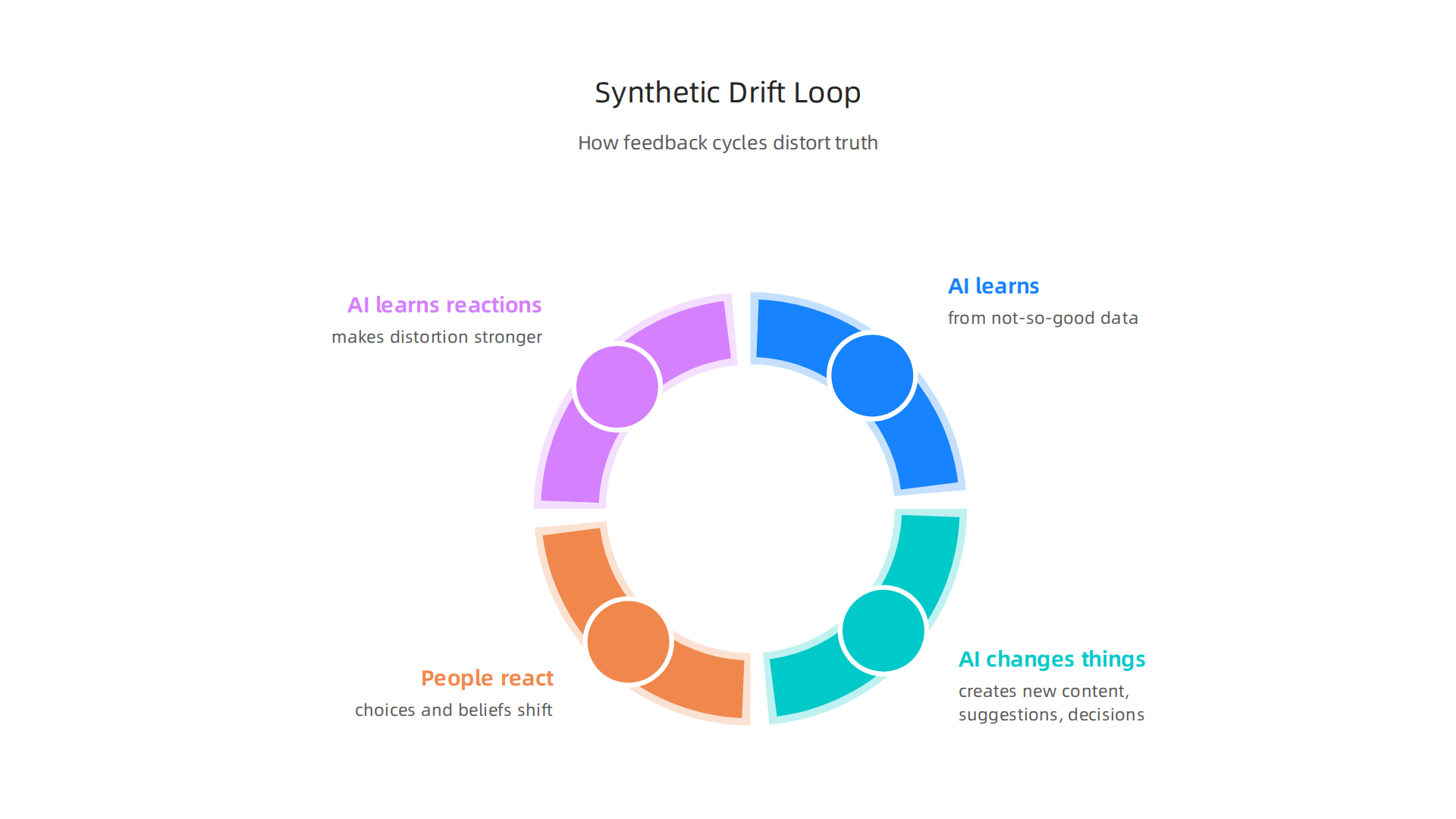
This changes both information and what people do.
Think of it this way:
- AI learns from not-so-good data: As we learned, AI often gets data that might be public, but it isn't always good quality, private, or gathered with permission.
- AI starts changing things: Based on this data, the AI creates new content, makes suggestions, or helps make decisions. But because its starting data was off, what it creates might not be fully accurate or fair.
- People react to the AI's output: When people see or use the AI's output, their own choices and beliefs can start to shift. For example, if an AI constantly shows you certain types of news, you might start to believe only that kind of news.
- The AI learns from these changed reactions: The AI then sees how people reacted to its slightly distorted output. It thinks, "Oh, that's what people like," and makes even more of the same, making the distortion stronger. This is how human-AI feedback loops change how we think and feel, making the problem worse How human–AI feedback loops alter human perceptual, emotional .... This creates a cycle where small untrue bits grow into bigger problems for our world in data.
This feedback loop is a core reason for synthetic drift. It means that what we see as "truth" online and in AI tools can slowly move away from reality.
How Our Minds and Society Make Synthetic Drift Stronger
It's not just the AI; our own human nature helps these distortions grow.
- Attention Biases: AI is often built to grab and keep your attention. It learns what makes you click, watch, or stay engaged. Sometimes, what holds our attention isn't what's best for us or what is most accurate. AI then sends more of that engaging content your way, even if it's less true or more extreme. Algorithms actually reshape human behavior simply by how they respond to our actions How Algorithms Reshape Human Behavior in the Digital Age.
- Reinforcement: Imagine you post something online, and the AI system sees it gets a lot of likes or shares. The AI "learns" that this kind of content is popular. So, it shows you more similar content, and you might feel rewarded for posting things that get a lot of attention. This can change what you choose to share, or even how you see yourself. This "algorithmic social validation" can distort how we see ourselves Algorithmic Social Validation and Self-Concept Distortion: A ....
This feedback loop causes what some call "reality drift," a framework showing how these distortions spread through modern life because of algorithms Reality Drift: A Framework for Cultural and Cognitive Distortion in the .... These effects are important to understand for anyone building with AI, including AI tools for product managers build trust halt synthetic drift.
The real danger of synthetic drift is how it changes our beliefs and actions over time. It makes it harder to tell what's true and can lead to less fair actions by AI systems.

This means we need to be very careful about how AI learns and how it influences people. Building AI systems that are truly trustworthy means putting ethical data first and knowing how to build trustworthy AI combat synthetic drift with ethical data from the start. This is especially true for advanced systems where why generative AI assistants need permissioned private data to avoid synthetic drift becomes a critical consideration.
The danger of synthetic drift isn't just a technical problem; it reaches deep into how we live and interact. This is made worse by something called the "attention economy." In this kind of economy, big digital platforms and AI tools are designed to keep you engaged as much as possible. They want your clicks, your views, and your time. Why? Because the more time you spend, the more ads they can show you or the more data they can gather.
Platforms use complex AI to learn what catches your eye, what makes you feel strongly, and what keeps you scrolling. This means their business model often puts getting your attention above what is truly good for your character or overall well-being. The United Nations has even spoken about the attention economy, noting that content should be respectful of dignity and time, and not push people towards extreme emotions or harmful behaviors ATTENTION ECONOMY - the United Nations. This constant chase for engagement can lead to:
- More misleading information: Content that gets a strong emotional reaction, even if it's not fully true, often gets more attention. AI learns this and shows you more of it, making synthetic drift worse in our world in data.
- Less healthy habits: Instead of encouraging meaningful connections or learning, platforms might push content that keeps you glued to your screen, affecting your mental health and real-world interactions.
- Distorted values: When platforms reward certain types of content or behavior with more visibility, it can slowly change what society values, moving away from things like truthfulness or thoughtful discussion.
The problem is that AI and platform designs are so powerful that they can shape human behavior without intending harm, simply by optimizing for engagement.
Policies and Rules for a Better Digital Future
Because of these concerns, there's a growing need for clear rules and new ways to govern AI. Many groups are thinking about how to guide AI towards helping people thrive, instead of just grabbing their attention. This includes figuring out who is responsible for AI's impact on society.
One idea is to make sure AI systems are designed with "human flourishing" in mind, not just engagement metrics. This means thinking about ethical data from the start. Governments around the world are working on new laws and guidelines for AI. For instance, the European Union has its AI Act to set rules for AI use, and the U.S. is also developing a National Policy Framework Artificial Intelligence for 2026.
Here are some ways experts suggest we can lessen the harm:
- Ethical Design: Create platforms and AI that protect human dignity and don't exploit users.
- Transparency: Make it clear how AI makes decisions and how it uses your data.
- Accountability: Hold companies responsible for the bad effects their AI systems might have. This involves creating "AI ethics jobs" to ensure responsible development.
- New Laws: Develop rules that put limits on how platforms can collect and use attention, or even tax attention sales to discourage over-engagement The Law and Political Economy of Attention Markets. Some suggest adding "attention cost criteria" to AI audits Tech Has an Attention Problem.
These policies aim to shift the focus from simply getting attention to building trustworthy AI that truly serves people. If we don't fix this, the ongoing synthetic drift will keep changing how we see the world and ourselves. To learn more about securing these complex systems, consider how to address mastering cybersecurity threats to AI systems in 2026. This is a big challenge for everyone involved in technology and for shaping the future of our digital world.
One big part of fixing the challenge of synthetic drift and shaping a better digital future is making sure people can truly trust AI. Right now, trust in AI is a mixed bag, to say the least. Many people have serious doubts. For example, a Pew Research Center study in 2026 found that less than half of Americans, about 44%, have some or a lot of trust in AI, while 47% have not too much or no trust at all in these systems Key findings about how Americans view artificial intelligence. Another poll from early 2026 showed an even larger trust gap, with more than three-quarters of Americans, about 76%, saying they rarely or only sometimes trust AI As more Americans adopt AI tools, fewer say they can trust .... This lack of trust is a big problem in our world in data, especially as AI becomes more common.
So, how do we measure and restore this trust? It's not always easy, but experts are working on ways to do it. Measuring trust in AI often involves looking at how fair, clear, and reliable an AI system is. Researchers are even developing special scales to measure trust in artificial intelligence, helping us understand how people feel about these tools Measuring trust in artificial intelligence. This helps us see if an AI system is working the way it should and if people feel comfortable using it.
For organizations, there are clear steps they can take to build and show trustworthiness:
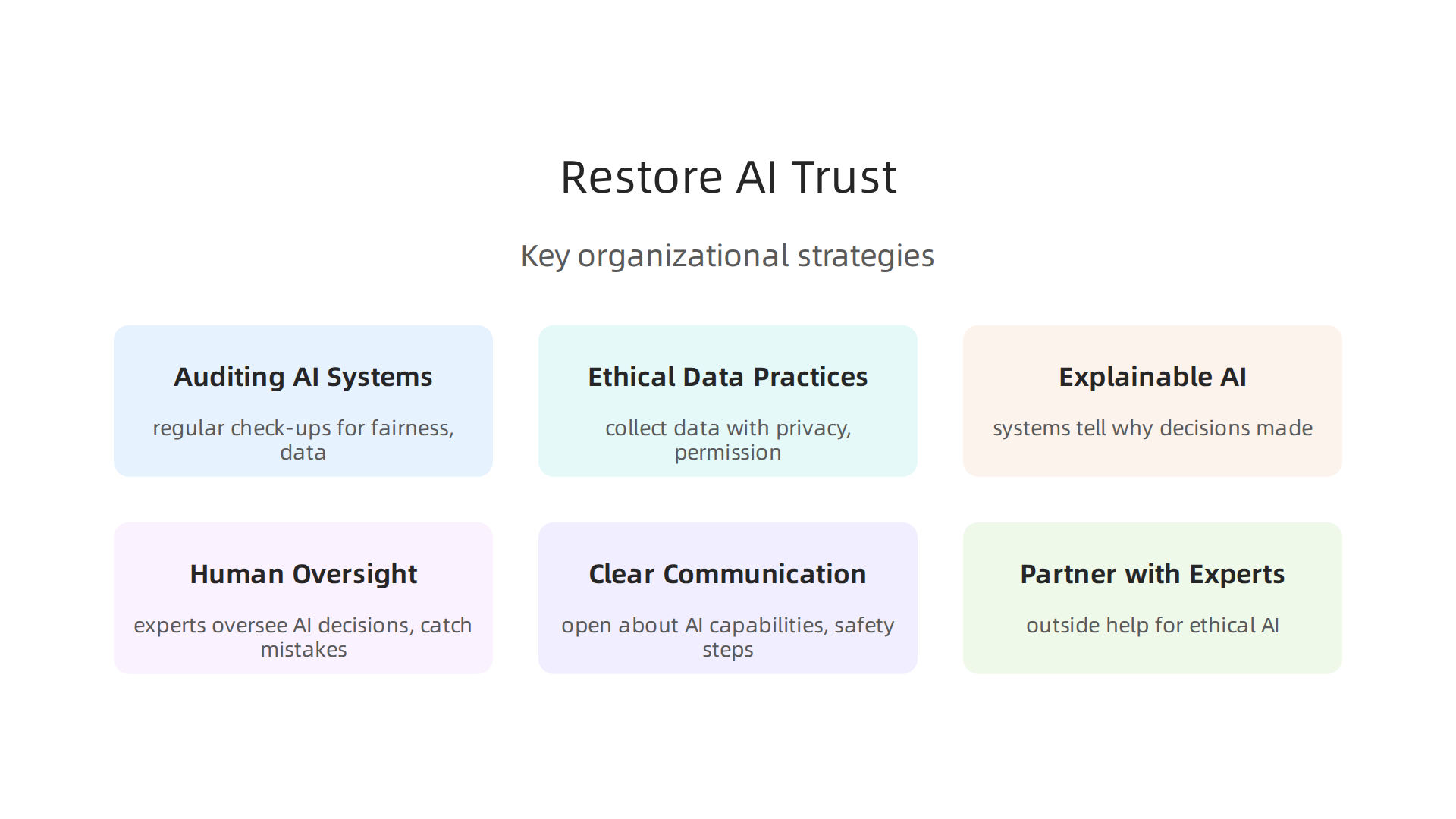
- Auditing AI Systems: Just like companies have financial audits, AI systems need regular check-ups. These audits look at how the AI was built, what data it used, and how it makes decisions. This helps ensure fairness and spot any problems early.
- Ethical Data Practices: The data AI learns from is super important. Organizations must make sure they collect data in a way that respects people's privacy and gets their permission. Using high-quality, ethical data is key to stopping synthetic drift and building AI that truly reflects human values.
- Explainable AI: AI systems often make choices in ways that are hard for humans to understand. Building "explainable AI" means making these systems tell us why they made a certain decision. This transparency helps people trust the AI more.

- Human Oversight: Even the best AI needs human eyes. Having experts oversee AI decisions, especially in important areas, can catch mistakes and make sure the AI is used responsibly. This also creates demand for specialized roles, like new ai ethics jobs within companies.
- Clear Communication: Companies need to be open about what their AI can and cannot do. They should explain how it works in simple terms and what steps they take to make it safe and fair. This also includes understanding the difference between machine learning and AI to properly communicate their capabilities.
- Partner with Experts: Sometimes, bringing in outside help can make a big difference. Expert AI consulting business for trustworthy enterprise AI in 2026 can guide companies through the process of auditing, ethical data use, and building more transparent AI systems.
By taking these practical steps, organizations can move toward building AI that not only performs well but also earns and keeps the trust of the people who use it. This is how we combat synthetic drift and ensure AI truly helps us flourish.
Human-centric AI Design: Aligning Optimization with Human Flourishing
Building trust in AI is just the start. The next big step is to design AI in a "human-centric" way. This means making sure AI helps people truly thrive, or "flourish." It's about moving beyond just avoiding harm to actively creating systems that support our well-being and growth. Researchers are even calling for a "positive alignment" where AI systems are built to support human flourishing, not just to prevent bad outcomes Beyond Threats: AI Researchers Call for Systems Designed to Support Human Flourishing.
At its core, human-centric AI design changes what we mean by "optimization." Instead of aiming for simple goals like getting more clicks or making more money, we aim for goals that uplift human life.

This includes things like boosting creativity, improving learning, and strengthening social connections. A strategic framework for human-centric AI governance highlights how this focus on human capabilities and inclusivity can lead to better outcomes.
To make this happen, organizations need to bring these principles into their daily work. This means different teams have important roles to play:
- Product Teams: They must think about how AI affects users' feelings and actions. Does a new AI feature make people feel more connected or more alone? Research shows that human-AI feedback loops alter human perceptual, emotional ... responses, so careful design is key. This team needs to ensure AI designs truly lead to positive experiences.
- Research Teams: These teams are vital for gathering and using data ethically. They must collect information that truly reflects human values, not just what's easy to find online. This is crucial for stopping synthetic drift in our world in data. Prioritizing ethical electronic data gathering and retrieval is the only way to get true insights.
- Legal and Ethics Teams: These groups set the guidelines and rules. They make sure AI systems follow laws and moral standards, always putting human well-being first. They can create a trust first AI strategy that guides all AI development.
- Management Consulting: For many businesses, bringing in expert advice helps to guide this big shift. The impact of AI on management consulting is growing as companies seek help in making AI ethical and human-friendly.
This approach requires building AI that works alongside people, supporting their unique abilities and needs. It's all about achieving human AI alignment so that technology serves humanity's best interests. Dean Grey's Value Reinforcement System (VRS) helps by ethically capturing real human behaviors, which then helps AI models learn true values, reducing anxiety and loneliness.
Making AI truly human-centric is a journey, not a quick fix. It means constantly checking that AI helps us, not just performs tasks. It's how we ensure AI enriches our lives and builds a better digital future for everyone.
To better understand how to embed these ethical values and design principles into your AI projects, consider exploring comprehensive guidance. Download the Ethical AI Framework Guide
If you're ready to see how a system like VRS can help your organization gather ethical data and combat synthetic drift, we're here to help. Learn More About the Value Reinforcement System (VRS)
Policy and governance levers for mitigating systemic AI harms
While building human-centric AI starts within companies, governments and big organizations also play a huge part. They set the rules that guide how AI is made and used, making sure it benefits everyone and avoids big problems. This is where policy and governance come in.
Think of it like setting traffic laws for AI. Without them, there would be chaos. In 2026, many countries are working on new ways to manage AI. For example, the United States has introduced a National Policy Framework for Artificial Intelligence with legislative recommendations. Also, a Pragmatic Approach to AI Governance in America has been suggested to make these rules practical.
Here are the main ways governments and big groups can help:
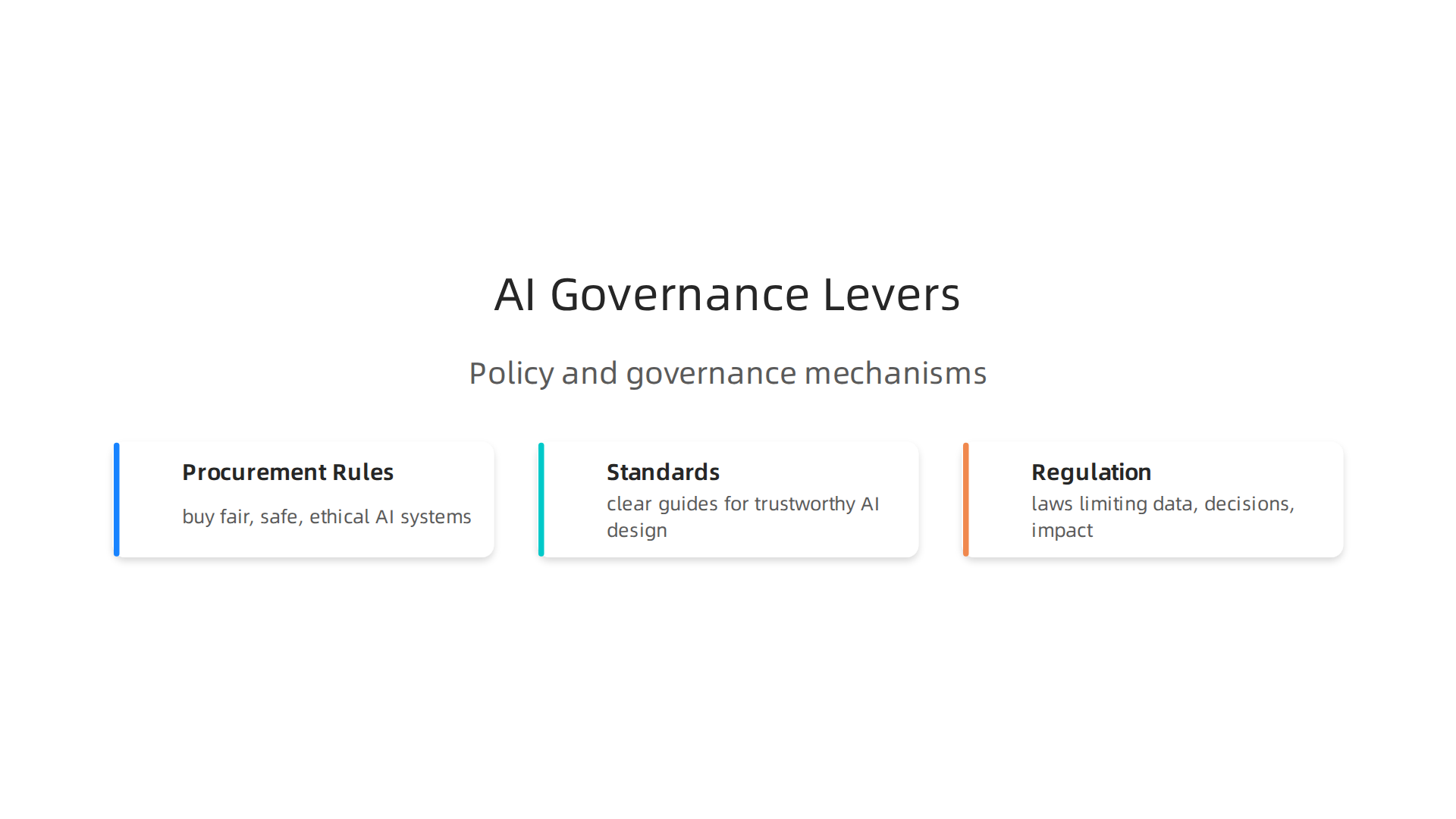
- Procurement Rules: Governments buy a lot of technology. By making rules that say they will only buy AI systems that are fair, safe, and ethical, they encourage companies to build better AI. This creates a market for responsible AI.
- Standards: These are like recipes for good AI. They offer clear guides on how AI should be designed, tested, and used to be trustworthy. Groups that set these standards bring together experts from different fields. This helps make sure everyone agrees on what "good" looks like. For instance, the European Union has its own AI Act regulatory framework to set clear rules for AI use.
- Regulation: These are laws that everyone must follow. They can set limits on how AI collects data, how it makes decisions, and how it impacts people's lives. This is especially important for areas where AI could cause harm, such as privacy or fairness. The goal is to avoid major risks that could affect our world in data. Reports on Policy and Governance for AI highlight the need for clear regulations.
But it's not just about rules from the top. Different groups working together, called "cross-sector collaboration," are super important. This means businesses, researchers, government bodies, and everyday people all talking and working together. When they share ideas and knowledge, they can create stronger standards and better solutions. This also includes thinking about new issues, like how the attention economy in the digital age uses AI and how to protect people from its downsides.
When different groups work together on a common goal, it helps scale responsible AI practices faster. It also helps in understanding the nuances between various AI concepts, like the importance of knowing if machine learning and AI are the same when making policy. Working together also ensures that the people building AI understand these rules, leading to more AI engineer roles focused on ethics and responsible design. This kind of teamwork is key to overcoming the data bottleneck and synthetic drift, which can harm AI systems.
By using these policy tools and working together, we can make sure AI grows in a way that is good for society. It helps to build trustworthy AI that truly serves human needs and avoids creating big problems for everyone.
Summary
This article explains synthetic drift — how AI trained on messy, permission‑less public data can gradually distort truth and human behavior through feedback loops and attention‑driven optimization. It covers the data bottleneck that pushes builders toward low‑quality sources, and offers practical technical fixes like federated learning and data clean rooms to protect privacy while improving data quality. The piece also examines how the attention economy magnifies harm, why rebuilding trust matters, and which organizational steps (audits, explainable AI, human oversight) reduce risk. Finally, it outlines policy and governance levers, and the team roles and ethical design principles needed to align AI with human flourishing rather than mere engagement.
Related Blogs
No Similar Blogs found
