Home


Menu

Close

New AI Tools 2026: Categories, Data Challenges, and Trustworthy Deployment
Published:
September 15, 2026
Why this overview matters now: the promise and peril of new AI tools
It's 2026, and new AI tools are popping up everywhere. Businesses, governments, and groups that help people are all using them in big ways. Many companies have started to use AI tools like ChatGPT and Copilot, with almost 40% using them fully in their daily work. This shows just how fast things are changing in the world of artificial intelligence, or AI 70 Enterprise AI Statistics for 2026. It is a big moment for figuring out what is AI and what it means for us all.
But with all these exciting new AI tools, there are also some big problems. One major issue is called the "AI bottleneck." This happens because there is not enough good, private information to teach AI systems. Instead, AI often learns from public data, which can be old, wrong, or even made up. When AI learns from bad data, it can lead to something called "synthetic drift."

This means the information gets twisted and less truthful as it moves through digital systems. This drift makes it hard for people to trust what AI tells them, and it can even make the truth harder to find. Knowing how to overcome this problem is key to overcoming synthetic drift building trustworthy AI.
Because of these problems, building trust in AI is super important right now. Many leaders are realizing that a trust first AI strategy becomes business imperative in 2026. In this overview, we will look at the different kinds of new AI tools out there. We will also talk about the big challenges around data and how to manage AI fairly and safely. Most importantly, you will learn practical steps to help your organization use AI in a smart, trustworthy way, whether you work for one of the biggest AI companies or are just starting to explore free AI platforms like Spark AI.
To really build trust in AI, we first need to know who is making these new AI tools and how they work. In 2026, the AI world is made up of a few main types of companies, each playing a special part. Knowing this helps us understand what is AI and how it impacts big groups.
Who Builds What
The companies that build new AI tools can be put into different groups:
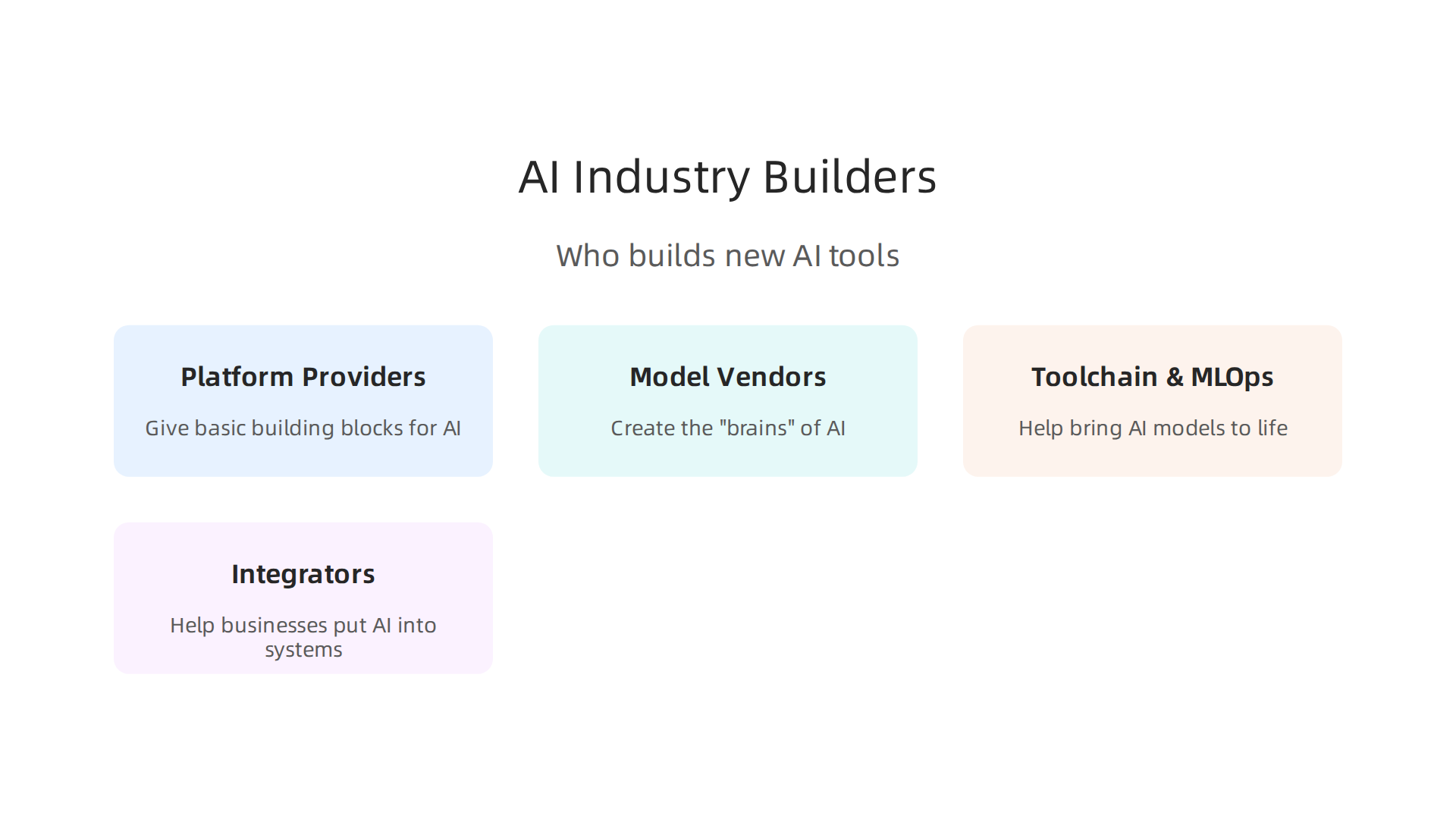
- Platform Providers: These are the biggest AI companies. They give us the basic building blocks for AI, often through cloud services. Think of them as providing the land and tools to build a house. Their platforms offer many ways to make, run, and manage AI. According to one report, there are many AI companies out there, showing how big this field is getting AI Company Rankings 2026: Dataset for 2,000+ AI ... - TLDL.
- Model Vendors: These companies create the "brains" of AI. They build large language models (LLMs) and other smart models that can do things like write text or recognize pictures. Many other new AI tools are built using these models.
- Toolchain and MLOps Providers: MLOps stands for "Machine Learning Operations." These companies make special tools that help bring AI models to life. They manage everything from the start of an AI project to making sure it works well every day. This includes tools for building, training, and running machine learning models at scale, which is key for complex AI systems Best AI/ML Platforms software in 2026.
- Integrators: These are companies that help other businesses put AI into their own systems. They connect different AI tools, make sure they work together, and fit them into a company's daily tasks. This is super important for big organizations that need custom solutions.
Why Design Choices Matter
The way these new AI tools are designed is shaped by what people need:
- Easy to Use: Many companies want AI to be simple for everyone.

They want to make it so that even if you're not an expert, you can still use AI. This pushes for tools that are easier to learn and use, not just for the biggest AI companies, but also for smaller ones or even free AI platforms like Spark AI.
- Made for Specific Jobs: Instead of one-size-fits-all tools, many new AI tools are built for certain industries like health care, money, or making things. This helps AI work better for those specific needs. The deployment of AI agents, for example, is quickly moving from tests to actual use in businesses in 2026 Enterprise AI Agent Stats 2026: 80% Embed, 31% Deploy.
- Big Company Rules: Large companies and governments need AI tools that are very secure, can handle a lot of work, and follow strict rules. This means AI tools must be built with strong safety features and ways to make sure they are fair and private.
What This Means for Big Groups
For large organizations and governments, knowing this AI landscape is key for how they buy, manage risks, and set rules for AI. They must carefully pick the right new AI tools that not only work well but also fit their ethical standards and legal requirements. This helps them control costs and ensures their AI systems are trustworthy. Thinking about how to make sure AI systems are ethical and reliable is a big part of dealing with modern data challenges. To dive deeper into these core concepts, consider reading about the Elements of AI Decoded Stop Synthetic Drift Build Trustworthy Systems. This way, they can use AI to its fullest without causing problems like synthetic drift.
2) Categories of new AI tools and their enterprise uses
After understanding who makes new AI tools and why design choices matter, it's helpful to look at the different kinds of tools themselves. For big companies, knowing these categories helps them choose the best new AI tools for their needs. In 2026, companies often use a mix of these tools to get their AI projects done.
Here are the main types of new AI tools you'll find:
- Model Hosting Platforms: These are places where AI models live and run. Think of them as special homes for your AI brains. They help companies put their AI models into action so they can be used by customers or staff. These platforms are key for making sure AI is always available and working well. Many different types of AI model deployment platforms exist in 2026, from full cloud services to tools that help manage large language models specifically AI Model Deployment Platforms: The 2026 Buyer's Guide.
- Enterprise Uses: These are often used for things like customer service chatbots, personal AI assistants, or tools that help run daily business tasks.
- Foundation Models and APIs: These are the very smart "brains" of AI that can do many different things, like understand language or create images. The biggest AI companies often create these models. Businesses can then connect to these models using APIs (Application Programming Interfaces). An API is like a special doorway that lets different software talk to each other.
- Enterprise Uses: Companies use these foundation models for developing brand new smart applications, doing research and development (R&D), or for creative tasks like writing marketing materials.
- MLOps and DevOps Tools: MLOps (Machine Learning Operations) and DevOps tools are all about making sure AI projects run smoothly from start to finish. They help teams build, test, and update AI models without problems. In 2026, these tools are very important for managing complex AI systems. There are many tools available to help with MLOps tasks like tracking experiments and deploying models 26 MLOps Tools for 2026: Key Features & Benefits.
- Enterprise Uses: These tools are vital for IT teams and operations to manage AI projects, keep costs down, and ensure new AI tools are reliable every day.
- Data Management Tools: All AI needs good data to learn and work. Data management tools help companies collect, organize, clean, and store the vast amounts of data needed for AI. This ensures the AI gets high-quality information to learn from.
- Enterprise Uses: These tools support R&D by preparing data for training AI models. They also ensure data quality for front-line services, making AI more accurate.
- AI Verification and Governance Tools: These new AI tools are made to check that AI systems are fair, safe, and follow all the rules. They help prevent AI from making mistakes or being unfair to certain groups. This is a big part of building trust in AI.
- Enterprise Uses: Companies use these tools for compliance, making sure their AI systems meet legal and ethical standards. They also help with risk management and boosting trust in AI outputs. You can learn more about how organizations are approaching these topics in 2026 by reading about rethink AI learning to build trustworthy AI for institutions.
Bringing it all Together: Integration and Vendor Lock-in
For large companies, getting these different new AI tools to work together is a big job. They need to make sure that a model hosting platform can talk to a foundation model, and that MLOps tools can manage everything smoothly. This is called "integration."
Sometimes, when a company picks one big provider for many of its AI needs, it can get "vendor lock-in." This means it might be hard to switch to a different provider later without a lot of cost and effort. So, big organizations need to think carefully about how they buy and connect their AI tools. They want to avoid being stuck with one vendor and keep their options open. Picking the right partners is a key step in ensuring long-term success with these technologies, as explored in selecting the right enterprise AI company for trust and growth.
3) Data challenges: the AI bottleneck, synthetic drift, and data integrity
While companies work hard to integrate new AI tools, a major challenge lies just beneath the surface: data. Good data is like good food for AI; it helps AI learn and work correctly.

But getting this good, clean data is often very hard for big companies. This difficulty creates what we call the "AI bottleneck."
The AI Bottleneck
The AI bottleneck happens because there's a big need for ethical, permissioned, and private data, but not enough of it is easily available. Think about it: to train really smart AI, you need huge amounts of information. Ideally, this information should come from sources that you know are correct and that you have permission to use. But often, such data is hard to get, especially in large amounts.
Because of this, many AI systems, even those from the biggest AI companies, end up relying on "scraped" public data. This means they collect information from the internet without always knowing its true origin or if it's permissioned. This scraped data can have problems, like being unfair, incorrect, or even violating intellectual property rights Intellectual property issues in artificial intelligence trained on scraped data. When AI learns from bad data, it can make mistakes or spread misinformation. This bottleneck slows down progress and makes it harder to build trustworthy AI.
Synthetic Drift: When AI Gets Lost in Translation
Now, imagine an AI system learns from this less-than-perfect public data. Then, that AI creates new content or makes new decisions. What if other AI systems then learn from that AI-generated content? This is where "synthetic drift" comes in. It's like playing a game of telephone, but with AI. Each time the information is passed along and processed by another AI or digital system, small errors or distortions can get amplified.
This drift means that the original truth or human intent gets further and further away from what the AI produces. It's a bit like a photocopy of a photocopy; each copy gets a little fuzzier. Experts note that keeping track of where data comes from and how it's changed is key to stopping problems like this Data Poisoning and Scraped Training Sets: 2026 Guide. The problem of synthetic drift becomes even bigger when AI models learn from data that was itself created by another AI. This can lead to a cycle where distortions grow with each new generation of AI, affecting everything from simple chatbots to complex decision-making systems. This problem is real, and it touches every kind of new AI tool. To stop this drift, companies must use systems that ensure human truth is captured at the very beginning, before digital systems can distort it.
The Risks of Unchecked Synthetic Drift and How to Fight It
When synthetic drift goes unchecked, it creates serious risks for truth verification, following rules (compliance), and public trust.
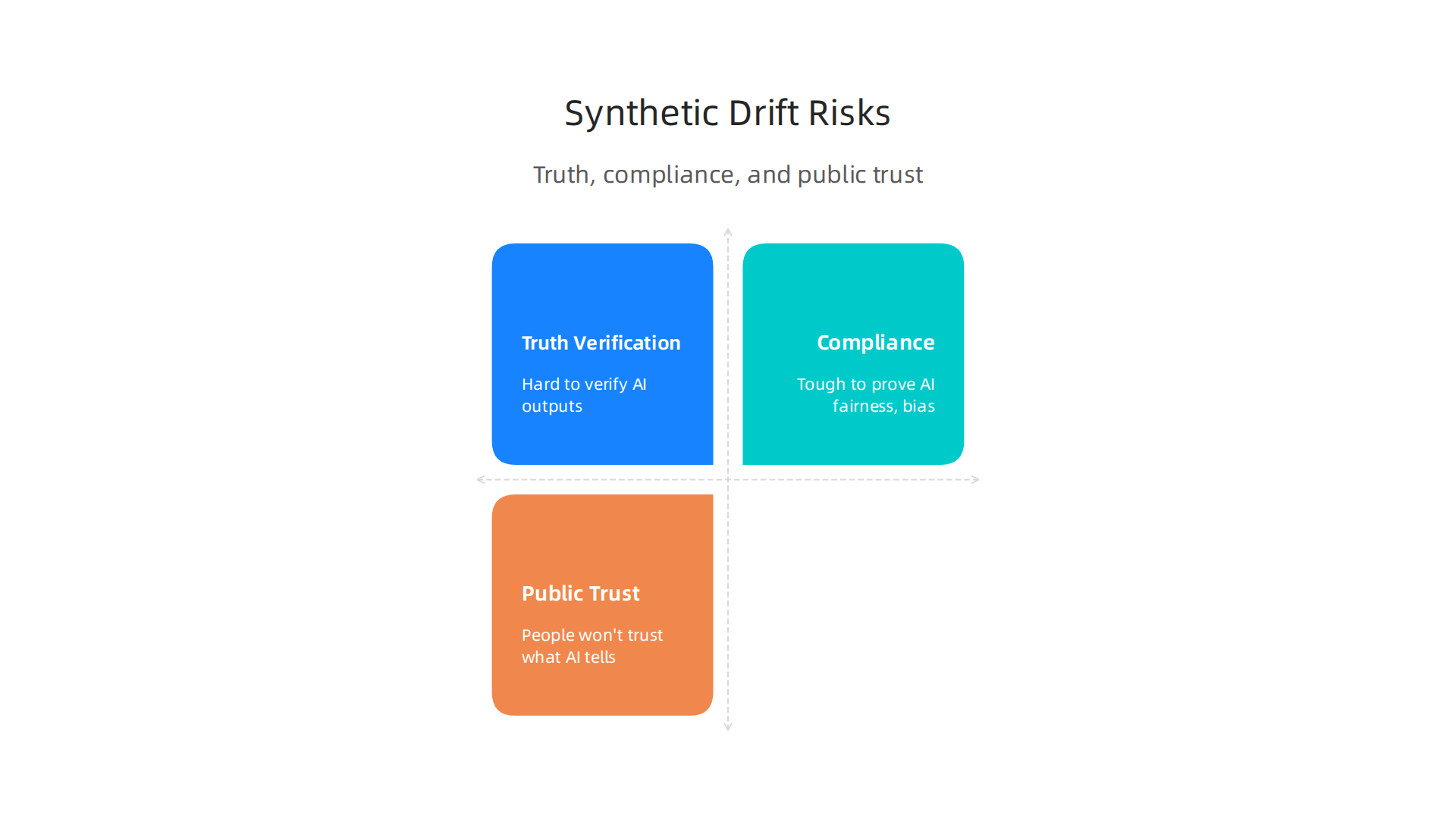
- Truth Verification: It becomes very hard to know if the information provided by AI is real or if it's a distorted version of the truth. This affects how companies can trust their own AI tools and how customers trust them too.
- Compliance: Governments and organizations are setting more rules for AI. If AI systems have synthetic drift, it's tough to prove they are fair, unbiased, and compliant with these rules. Keeping a "Data Bill of Materials" can help show where data comes from and how it changes, which is important for security and trust OWASP GenAI Data Security - MateMatic.
- Public Trust: If people can't trust what AI tells them, they won't use it. This can hurt businesses and make it harder for society to benefit from new AI tools.
To fight against the AI bottleneck and synthetic drift, companies need to focus on data integrity. This means making sure data is accurate, consistent, and has a clear origin story. Having trustworthy and high-quality data is essential for building AI that truly helps people. You can learn more about how to do this by reading about overcoming the data bottleneck and synthetic drift to build open future ai.
To stop problems like synthetic drift and ensure data is always good, companies also need to think about trust, ethics, and how they manage their new AI tools. This is where governance frameworks come in. They are like a set of rules and practices to make sure AI is used safely and fairly.
Governance Models for Emerging AI Tools
For any organization, from the biggest AI companies to small businesses using free AI platforms, having a clear plan for AI governance is key. These plans help guide how new AI tools are made and used. Here are some parts of a good governance model:
- Internal Ethics Boards: These are groups inside a company that make sure AI projects follow moral rules. They think about how AI might affect people and society.
- Compliance Frameworks: These are rules that help companies follow laws and industry standards for AI. Many governments are creating new rules for AI, so companies need clear ways to meet them. For example, some countries have model AI governance frameworks to guide organizations in responsible AI use Second Edition of the Model AI Governance Framework.
- External Audits: Sometimes, outside experts check a company's AI systems to make sure they are working as intended and following all the rules. This helps build trust.
- Standards: These are widely accepted guidelines that help make sure different AI tools work well and safely. Many of these standards focus on making AI human-centric, meaning they are designed with people's needs and well-being at heart Human at the Center: A Framework for Human‐Driven AI Development.
Restoring Trust with Data Provenance and Consent
Trust in new AI tools relies heavily on knowing where the data comes from and having permission to use it.
- Data Provenance: This means tracking the whole journey of data, from where it was first collected to how it's used by AI. Knowing the origin helps make sure the data is real and hasn't been changed in a bad way. It's like knowing the ingredients in your food; you want to know they're good and safe.
- Consent Frameworks: These are systems that make sure people agree to have their data used. When AI uses data with proper consent, it feels more fair and respects privacy. This is very important for spark AI and other advanced systems.
- Verification Processes: These are ways to check if the data and the AI's results are accurate and fair. This can involve having humans review AI decisions, known as "human-in-the-loop" oversight. Human review helps spot errors and biases that the AI might miss.
By focusing on these areas, organizations can improve how they manage their AI and prevent the kinds of data problems discussed earlier.
Governance Actions for AI Leaders
For Chief AI Officers and policy teams, taking clear steps is crucial to build trustworthy AI. Here's a checklist of actions:
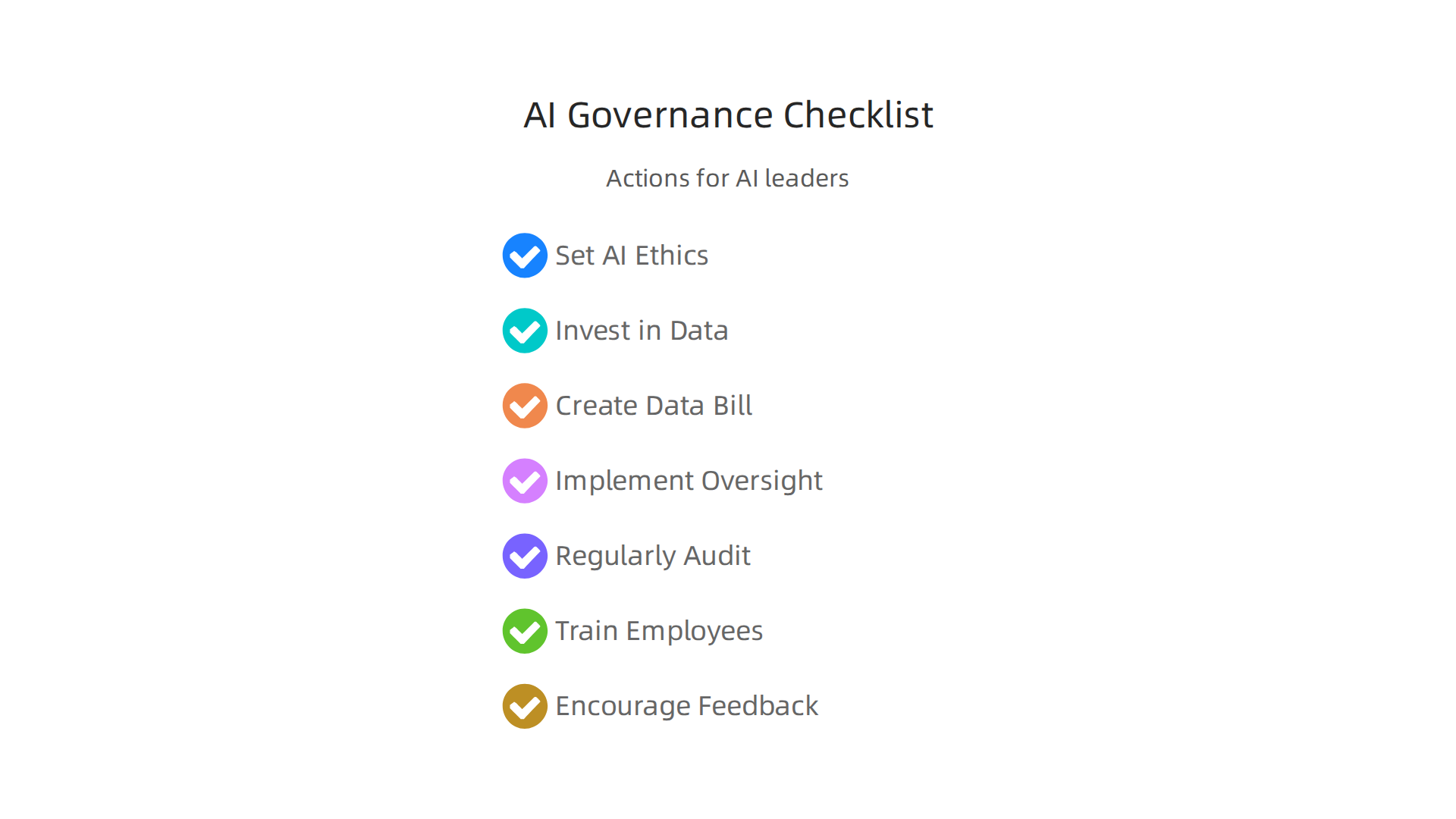
- Set up clear AI ethics guidelines: Make sure everyone in the company knows the moral rules for using new AI tools.
- Invest in data quality: Work to get ethical, permissioned data for training AI models. This is key for the "what is AI" question when it comes to practical use.
- Create a "Data Bill of Materials": Keep a detailed record of all data sources and how they are used by AI systems.
- Implement human oversight: Have humans regularly check and approve important AI decisions, especially for critical systems.
- Regularly audit AI systems: Have internal or external experts review AI for fairness, accuracy, and compliance.
- Train employees: Educate staff on ethical AI practices and data privacy.
- Encourage feedback loops: Create ways for users and experts to report problems with AI systems so they can be improved.
By following these actions, organizations can work towards building AI that is not only smart but also safe, fair, and trustworthy. To dive deeper into securing your AI systems, consider learning more about AI Security Challenges Building Trust For Large Organizations.
Once a company has a strong plan for using AI safely and fairly, the next important step is to put these new AI tools into action and make sure they keep working well. This involves smart ways to set up AI systems, check their performance, and design them with people in mind.
Deployment Patterns, Verification, and Human-Centric Design
In 2026, companies use many types of setups to deploy their AI. These setups, also called deployment platforms, help organizations from the biggest AI companies to smaller teams manage their systems. You can find full cloud platforms, tools just for running AI models, and special systems called MLOps platforms that help with the whole AI journey AI Model Deployment Platforms: The 2026 Buyer's Guide. For big businesses, knowing which platform is best for enterprise AI is key Top AI Platforms for Enterprise 2026 | AI Advisory Practice.
Putting new AI tools into use is just the beginning. After deployment, it is very important to keep checking these systems to make sure they are accurate and fair. This process of checking is called verification, and it uses several important techniques:
- Provenance Tracking: This means keeping a detailed record of where all the data came from and how it was used to train the AI. It helps make sure the data is real and hasn't been changed in a bad way. Knowing the journey of the data helps prevent issues like data poisoning Data Poisoning and Scraped Training Sets: 2026 Guide. This is like having a "Data Bill of Materials" for your AI.
- Red-Teaming: This is when experts try to find weaknesses or problems in an AI system on purpose, almost like they are trying to trick it. It helps uncover potential issues before the AI is used widely.
- Continuous Monitoring: After AI is deployed, it needs to be watched all the time. This means checking its behavior, how well it performs, and if anything unexpected happens Post-deployment monitoring for AI | AI Governance Lexicon. Setting up alerts for unusual activity helps keep new AI tools running smoothly and safely AI monitoring controls | AI Governance Lexicon.
- Human-in-the-Loop (HITL) Checks: This is about having real people review or approve certain AI decisions, especially for important tasks.

It adds a layer of human judgment to the AI's work. For advanced systems, like spark AI, human oversight is a spectrum, meaning sometimes humans check everything, and sometimes they only step in if there's a problem Human-in-the-Loop: A 2026 Guide to AI Oversight .... This helps ensure trustworthy AI even in complex situations. You can learn more about building these systems to build trustworthy AI with robust data pipelines.
Beyond just checking how AI works, we also need to think about how new AI tools are designed from the start. We should aim for human-centric design, which means creating AI that helps people thrive, rather than just trying to get their attention. Many online systems in the past focused on making people click more or spend more time online. However, we now know it's more important for AI to support positive human behaviors and well-being. By focusing on ethical data capture and encouraging good habits, we can build AI that truly helps people instead of distracting them. This helps make sure AI systems are grounded in authentic human values and can help us overcoming synthetic drift building trustworthy AI.
6) A strategic roadmap: aligning AI tool adoption with organizational values and societal impact
Building on the idea of making AI that truly helps people, we need a clear plan for how companies adopt and use new AI tools. This plan helps make sure that the goals of AI match what the company believes in and how it wants to help society. It's like having a map for using AI wisely.
Here's a simple roadmap for bringing new AI tools into a business:
- Step 1: Check Things Out First Before diving in, companies should look closely at any new AI tools. This means figuring out what problems the AI can solve and what new problems it might create. It also involves seeing if the AI fits with the company's main values. This helps leaders decide how to start using AI in a way that truly helps people, as highlighted in "Human at the Center: A Framework for Human‐Driven AI Development" Human at the Center: A Framework for Human‐Driven AI Development.
- Step 2: Try Small with Safety Rules Next, companies should try out new AI tools on a small scale, like a pilot project. During this pilot, it's important to have clear safety rules, also known as governance guardrails. These rules ensure the AI acts fairly and accurately. This step lets organizations test the AI without taking big risks. Even the biggest AI companies start with small tests to learn and adjust.
- Step 3: Grow with Constant Watching If the pilot goes well, the company can start using the AI more widely. But it's not enough to just let it run. They must keep watching the AI all the time. This means checking its performance and making sure it doesn't start acting in unexpected ways. This continuous monitoring helps keep the AI helpful and safe as it grows.
- Step 4: Be Open and Honest Finally, companies need to be open with the public about how they use their new AI tools. This means explaining what the AI does, how it makes decisions, and how the company handles any problems. This public accountability builds trust and shows that the company cares about its impact on society.
Measuring Success Beyond Just Clicks
When we talk about new AI tools, success isn't just about how many people click something or how long they stay on a page. We need to measure deeper things called Key Performance Indicators, or KPIs. These KPIs should look at trust, fairness, and if the AI truly helps people live better lives. For example, instead of just tracking "engagement," a company might track how the AI helps users learn new skills or connect with others in a positive way. These kinds of measures help make sure AI works for human well-being, not just business profit. Things like how well an AI performs for trustworthiness need to be set before the AI is even used Trustworthy Artificial Intelligence (AI).
What Leaders Can Do to Keep AI Safe and Good
Company leaders have a big role to play in making sure new AI tools are used well. They need to de-risk AI projects, which means finding ways to lower the chances of something going wrong. This involves:
- Setting the Right Tone: Leaders must show that they care about ethical AI and fair use. This sends a clear message to everyone in the company.
- Linking AI to Company Values: Make sure all AI projects support the company's Corporate Social Responsibility (CSR) goals, which means caring about society and the environment.
- Being Ready for Public Questions: Leaders should be prepared to answer questions from customers and the public about their AI. Being transparent helps build confidence.
By following this roadmap, companies can ensure that their AI strategies are not just about making money but also about making a positive impact on people's lives. It shows that a Trust-First AI Strategy Becomes Business Imperative in 2026. This is how we build AI for a better future.
Summary
This article explains why 2026 is a turning point for new AI tools and why trust and data integrity matter more than ever. It outlines who builds AI (platform providers, model vendors, MLOps/toolchain vendors, and integrators) and describes the main tool categories enterprises use, from model hosting to governance and verification tools. The piece highlights core data problems — the AI bottleneck and synthetic drift — and shows how poor or scraped training data can erode truth and compliance. Practical guidance covers governance models, provenance and consent frameworks, human-in-the-loop checks, and a step-by-step roadmap for piloting, scaling, and measuring AI in ways that align with values. Readers will learn concrete actions leaders and teams can take to choose, deploy, and monitor AI responsibly so systems remain accurate, auditable, and trustworthy.