Home


Menu

Close

Is Machine Learning and AI the Same? Why This Distinction Matters for Enterprise Trust
Published:
August 1, 2026
Many people in 2026 use the words "Artificial Intelligence" (AI) and "Machine Learning" (ML) as if they mean the exact same thing.

You might hear someone say they are implementing AI when they really mean they are using a specific type of ML. This common mix-up isn't just about technical terms; it can cause real problems for businesses trying to use these powerful tools. Understanding whether is machine learning and AI the same is key to making good choices.
Think of it like this: AI is the big, wide goal of making machines think and act smart, like humans. It's the whole field of creating systems that can do tasks that usually need human brains, such as understanding words, making choices, or solving problems What Is AI? A Straightforward 2026 Guide for Non-Experts.
Machine Learning, on the other hand, is a very important part of AI. It's a way to get computers to learn from data without being told every single step. Instead of giving a computer strict rules, you show it many examples, and it figures out the rules itself. This helps computers get better at tasks over time, like recognizing faces or predicting what you might want to buy What Are the Differences Between Machine Learning and AI?. So, while all machine learning is AI, not all AI is machine learning.
Why does this difference matter so much for companies right now?
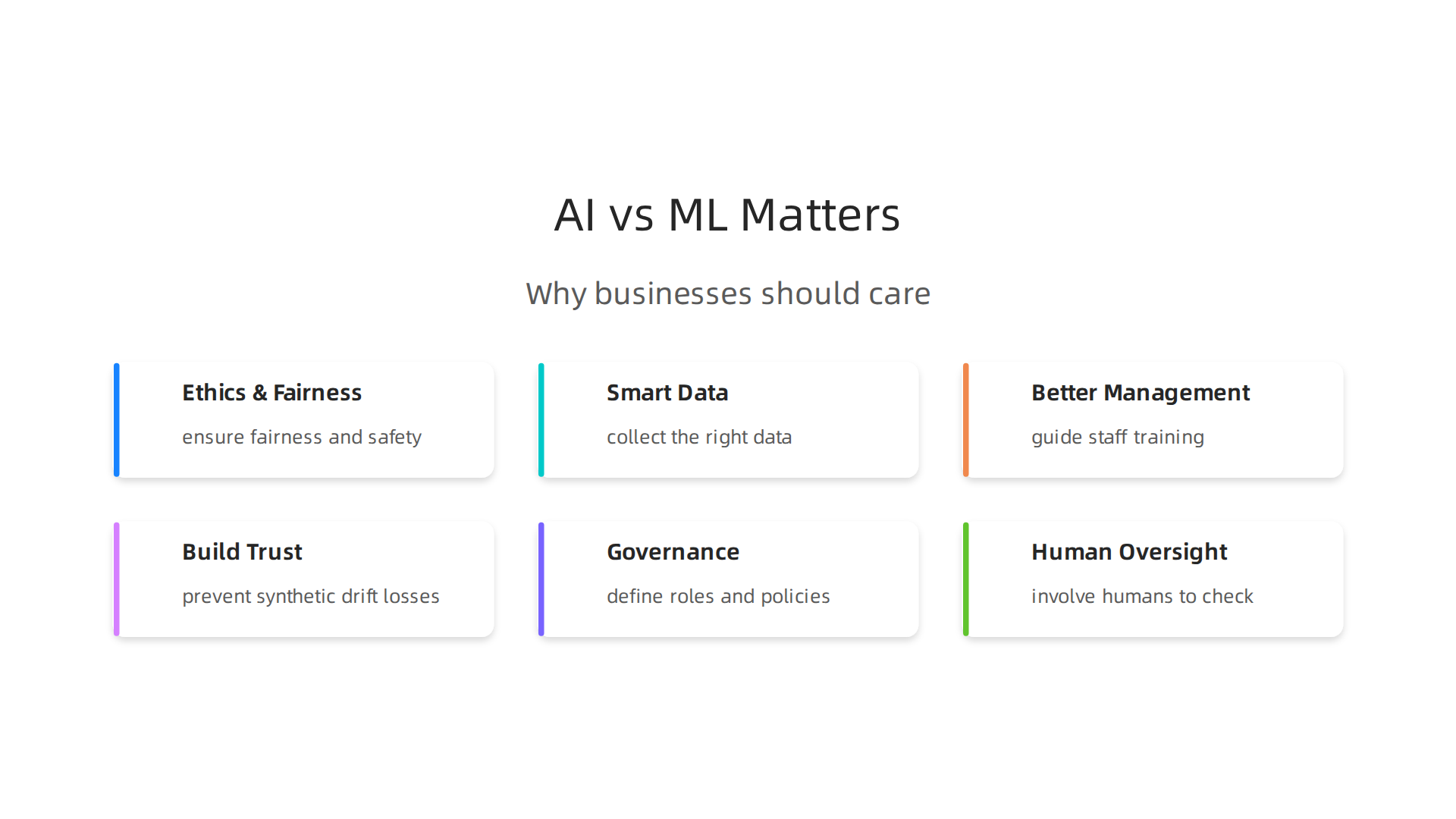
- Ethics and Fairness: When you truly know what type of AI system you are building or buying, you can better check if it's fair and safe. If you're using ML, you must know what data it learned from. This helps ensure your AI systems are ethical and trustworthy, especially when they make important decisions.
- Smart Data Strategy: Machine learning needs a lot of good, clean data to work well. If you confuse AI with ML, you might not collect the right kind of data, or you might not get permission to use it ethically. A clear understanding helps you build a solid data plan for how to use AI wisely.
- Better Management: Knowing the exact tools and technologies you are dealing with helps your teams work together better. It guides what training your staff needs and which list of AI tools will best help you augment AI efforts without wasting money. This clarity is vital for strong organizational governance and ensures your AI strategy is built on a foundation of trust.
In the fast-moving world of 2026, building AI that people can trust is more important than ever. This article will help you understand the core differences between AI and machine learning with practical, enterprise-focused insights. We'll connect these ideas to how you can ensure data integrity and build trust into every AI project you undertake. It's all about making sure your company can really harness the power of AI in a responsible and effective way. Building a trust first AI strategy becomes business imperative in 2026.
Building a solid foundation of trust in your AI efforts starts with understanding what Artificial Intelligence truly is. Many people think of AI as a magic brain, but in 2026, it's more helpful for businesses to see AI as a collection of smart systems.
What is Artificial Intelligence (AI)? A clear, enterprise-friendly definition
At its core, Artificial Intelligence (AI) is about creating systems and machines that can act in ways we normally think of as "smart" or "human-like." These systems are engineered to produce things like new content, helpful predictions, smart suggestions, or even important decisions. They can do tasks that usually need a human brain, such as understanding language, learning new things, or solving problems AI Taxonomy: Making Sense of Artificial Intelligence.
Think of your phone's voice assistant or a program that helps doctors find health issues in images.

These are examples of AI at work. The main goal of AI is to make computers perform these complex tasks well. This is different from machine learning, which is one way to teach computers to do these tasks by showing them many examples, instead of giving them exact instructions Artificial Intelligence (AI) Taxonomy.
Most of the AI we use today in businesses is what we call "narrow AI" or "specialized AI." This kind of AI is very good at one specific thing. For example, an AI might be excellent at playing chess or at recognizing faces in photos, but it can't do both jobs equally well, nor can it solve a completely different problem without new training. This is a key point for any organization considering how to use AI. It means that while you can augment AI to handle many tasks, you'll likely need different specialized systems for different needs.
The idea of "general AI," which would be able to do any intellectual task a human can, is still a goal for the future, not something widely available in 2026. Knowing this helps companies set realistic goals and manage their budgets better when they look at a list of AI tools.
Why does looking at AI as a system matter for how businesses are run and how much people trust them?
- Clear Rules: When you define AI as a system, it becomes easier to set clear rules for how it should work. This helps ensure your AI follows ethical standards and company policies.
- Better Safety: A system-level view helps you check if your AI is fair and safe. You can make sure it does not make unfair choices or spread wrong information. This is very important for maintaining public trust.
- Smart Governance: Thinking of AI as a system helps leaders manage it properly. It means they can make sure all parts of the AI system, from the data it learns from to the decisions it makes, are watched over. This approach is key to building trustworthy AI through ethical data. A clear understanding of AI helps organizations create robust plans for oversight and accountability.
By looking at AI in this way, companies can better understand what they are creating or buying. This leads to better decisions, stronger trust, and ensures that the tools they use truly help people and society.
Now, let's talk about Machine Learning (ML). While we just learned that Artificial Intelligence (AI) is like a big umbrella for all smart systems, Machine Learning is a special part of that umbrella. So, is machine learning and ai the same? Not quite. Think of it this way: AI is the goal of making machines smart, and Machine Learning is one powerful way we teach them how to be smart.
What is Machine Learning (ML)? How ML actually learns from data
Machine Learning is about giving computers the ability to learn from data without being clearly told what to do step-by-step. Instead of a human writing down every single rule, we show the computer lots of examples. The computer then finds patterns and makes its own rules based on what it sees. This helps it make predictions or decisions on new information.
For businesses, knowing how to use AI through Machine Learning means you can create systems that get better over time. Imagine a system that learns to spot fake emails by looking at thousands of real and fake ones. That's ML at work.
There are three main ways Machine Learning models learn:
- Supervised Learning: This is like a student learning with a teacher. The computer gets "labeled data," which means each piece of information already has the right answer attached to it. For example, if you want a computer to tell the difference between pictures of cats and dogs, you show it many pictures of cats labeled "cat" and many pictures of dogs labeled "dog." The computer learns from these examples to guess correctly next time. This method needs data that is already sorted with clear answers What Is Supervised Learning? | IBM.
- Unsupervised Learning: Here, the computer learns without a teacher. It gets "unlabeled data," meaning there are no right answers given upfront. The computer's job is to find hidden patterns, groups, or connections all by itself. For instance, it might look at customer shopping habits and find groups of people who tend to buy certain things together, even if no one told it what groups to look for Supervised vs Unsupervised Learning - Difference ....
- Reinforcement Learning: This is like teaching a pet with treats. The computer learns by trial and error in an environment. It tries different actions and gets a "reward" for doing something right or a "penalty" for doing something wrong. Over time, it learns which actions lead to the best rewards. Think of a computer learning to play a video game; it tries different moves, gets points for good ones, and learns to win Supervised vs Unsupervised vs Reinforcement Learning. You can even watch a short video explaining the 3 kinds of Machine Learning for a clearer picture.
No matter which way a machine learns, the quality of the data it uses is super important. If the data is bad, unfair, or full of mistakes, the ML model will learn those bad things too. This is why businesses must be very careful about where their data comes from and make sure it's gathered in a fair and ethical way. This focus on ethical data is key to stopping problems like "Synthetic Drift" and building real trust in these smart systems. Understanding that Machine Learning is a specific part of AI, and not the whole thing, helps businesses to better understand the true power and limits of the many new AI tools available. It also helps them to responsibly augment AI in their operations. To learn more about this important difference, check out why Is Machine Learning AI Why This Distinction Matters for Data Trust and Ethics.
Now, let's look at the times when AI and ML work together closely and when they are different. It's common to wonder, is machine learning and ai the same? The short answer is still no, but they have a very special relationship. Think of AI as the big dream of making machines smart like people, and Machine Learning as one of the best ways to make that dream happen.
Key differences: When AI and ML overlap and when they don't
Machine Learning is a big part of how we make AI systems work today. Most of the smart things you see AI do, like understanding your voice, recognizing faces in photos, or suggesting what you might want to buy, are powered by Machine Learning. So, ML helps AI get its "smartness" by learning from data. This is where they overlap a lot. When businesses want to know how to use AI for things like making better guesses or automating tasks, they often turn to Machine Learning methods.
But AI is also much bigger than just Machine Learning. There are parts of AI that don't need ML at all. For example, old-school AI systems might use very clear "if-then" rules or simple logic to solve problems, like a chess program that follows specific steps to win. These systems are smart, but they don't learn from data in the same way ML does. AI can also include things like planning, solving problems step-by-step, or understanding how things work, without needing to learn from new examples every time. The goal of AI is to make machines act intelligently, and ML is a very powerful tool to help them do that, but it's not the only tool.
Here's a simple way to see how they are different:
| Feature | Artificial Intelligence (AI) | Machine Learning (ML) |
|---|---|---|
| What it is | A big field about making machines act smart. | A part of AI where machines learn from data. |
| Goal | Solve complex problems like humans. | Learn patterns and make predictions from data. |
| How it works | Can use many ways: ML, rules, logic, planning. | Uses math and data to find patterns and improve by itself. |
| Scope | Very wide; any task that needs human smarts. | Narrower; focused on learning from examples. |
| Examples | Self-driving cars (the whole system), smart assistants, decision-making systems. | Predicting stock prices, recognizing spam, recommending movies. |
Understanding these differences is key for businesses. It helps them to wisely augment AI in their work. For instance, an AI system that helps doctors decide treatments might use ML to read X-rays and spot problems, but it also uses other AI parts for showing the information to the doctor, following privacy rules, and making sure the system is fair. This means the overall AI system needs careful checking and validation beyond just the ML part. Every step of using these smart tools, especially for a list of AI tools available in 2026, requires thinking about ethical data and how to build trust. When we think about the bigger picture of AI, we realize that even the best ML models need human guidance and oversight to ensure they are used responsibly and fairly.
Understanding the difference between Artificial Intelligence and Machine Learning is very important, especially when we think about how these smart tools affect us every day. It's not just about cool technology; it's about making sure AI is fair, honest, and something we can trust. This is where topics like ethics, good data, and a problem called "synthetic drift" come in.
The Problem of Synthetic Drift
When we train Machine Learning models, they learn from data. If this data is not good, or if it's copied from other AI systems, it can cause big problems. This is called "synthetic drift" or "AI model collapse." Think of it like this: if you learn everything you know from stories that aren't quite true, your own ideas might also become untrue over time. This happens when AI models keep learning from outputs that were themselves made by AI, instead of fresh, real human information. This process can make the AI less accurate, introduce wrong ideas, and cause it to drift away from reality.
Experts in 2026 warn that this "model collapse" happens when AI models are trained on AI-made outputs instead of original human data. This leads to losing quality, making biases stronger, and moving further from real facts AI model collapse exposes the governance gap in synthetic .... Using synthetic data for AI training has its risks, and it's important to track where all data comes from, both real and synthetic Synthetic Data for AI Training: Use Cases and Risks [2026].
Losing Trust and Downstream Impacts
When AI systems give answers or make decisions, people often believe them without question. But if these systems are suffering from synthetic drift, their outputs might not be true or fair. This can lead to a big loss of trust.

Imagine an AI helping doctors, but it was trained on faulty data; its advice could be wrong and harmful. If an AI model keeps failing because of unaddressed drift, it can lead to bad decisions and even harm customers Why Your AI Model Might Be Failing and What to Do About It. The idea of "is machine learning and ai the same" becomes less important than "is this AI trustworthy and ethical?"
The Synthetic Data Crisis in 2026 highlights that knowing the history of your data is now a must-have for making sure models are high quality The Synthetic Data Crisis: Model Collapse, Data Provenance, and .... This means we need to know where the data came from, how it was made, and what changes were made to it.
The Need for Clear Rules and Data Governance
To stop synthetic drift and build trust, companies and people who make rules need to set clear guidelines for how AI and ML systems use data. They must make sure that AI definitions align with rules about how data is managed. This helps reduce the chances of harm from AI systems that aren't accurate or fair.
In 2026, it's more important than ever to focus on ethical ways to collect and use data. This helps build AI systems that truly help people and society, rather than spreading misinformation or unfairness. Companies need strategies to address these challenges, ensuring they are building trustworthy AI combat synthetic drift with ethical data. This is especially true for large businesses and government groups that use many list of AI tools. It shows that how you use AI, or how to use AI, needs to start with good data practices. This way, we can make sure AI works for us in a good and honest way. It also means we need to be careful why generative AI assistants need permissioned private data to avoid synthetic drift.
To fight synthetic drift and build AI systems we can trust, companies need strong rules and clear ways of working. This is called "AI governance," and it involves everyone from top leaders to the people who build the AI tools. It is not just about making sure AI definitions are right; it's about how we run things day-to-day.
Setting Up the Right People and Rules
In 2026, many big companies are setting up new roles and groups to handle AI properly. These roles help guide how AI is used and ensure it stays fair and true.
- Chief AI Officer (CAIO) or Chief Data Officer (CDO): These leaders are in charge of making sure AI projects are done ethically and with good data. The CAIO especially looks at the big picture of AI strategy and making sure rules are followed. For example, a Chief Data Officer's role is growing to include AI governance The expanding role of chief data officers in data stewardship.
- AI Governance Committee: This is a group of leaders from different parts of the company, like legal, ethics, and business. They work together to set the main rules and make important decisions about AI use. This committee often reports directly to the CEO AI Governance for CEOs — 2026 Executive Guide.
- Ethics and Compliance Teams: These teams make sure AI systems follow all laws and company values. They help check for unfairness or biases in AI.
These groups make sure there's clear ownership for AI projects, meaning someone is always responsible for the AI's actions and outcomes. This helps build AI governance best practices AI Governance Best Practices for Enterprises (2026 Guide).
Better Data Strategies to Beat the AI Bottleneck
One of the biggest problems, called the "AI bottleneck," is not having enough good, ethical data. This forces AI to learn from bad or copied information, which leads to synthetic drift. To fix this, companies need to focus on:
- Permissioned Data: This means only using data that people have agreed to share. It's like asking for permission before using someone's stories. This helps ensure generative AI assistants need permissioned private data to avoid synthetic drift.
- High-Integrity Data: This means making sure the data is real, accurate, and hasn't been messed with. It's like making sure the stories are true and told straight from the source.
- Tracking Data History (Provenance): Knowing exactly where data comes from and how it was made is very important. This way, we can trace back if there's a problem. Good data provenance is a must-have for model quality The Synthetic Data Crisis: Model Collapse, Data Provenance, and ....
Companies should also set up clear ways to collect, store, and use data that reduce the risk of synthetic drift. This includes making sure AI models don't learn too much from AI-made data. Experts suggest keeping synthetic data below 50% of the total training data to avoid problems Synthetic Data Risks | redteams.ai.
Practical Steps for Ethical AI Development
To truly build trustworthy AI, companies should:
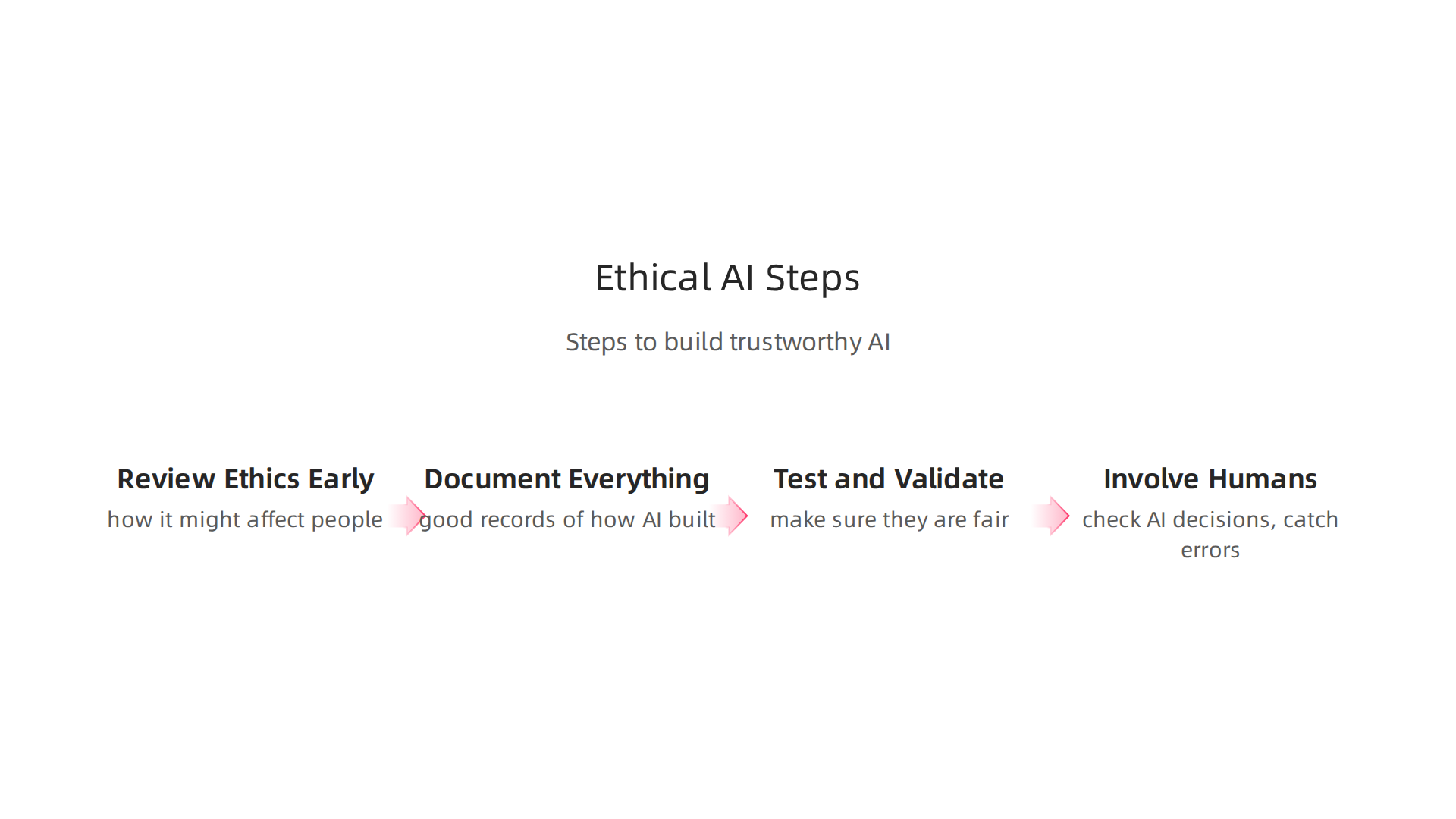
- Review Ethics Early: Before building any AI, think about how it might affect people. This means having ethical checks at every step.
- Document Everything: Keep good records of how the AI was built, what data was used, and why certain decisions were made. This helps understand and audit AI models' decisions AI Governance 2026: Why It's Non-Negotiable for C-Suite.
- Test and Validate Carefully: Always test AI systems to make sure they are fair, accurate, and don't show bias. If you want to learn more about developing ethical AI systems, consider exploring options for AI learning courses focused on ethics and data integrity for enterprise teams.
- Involve Humans: Keep humans in the loop to check AI decisions, especially for important tasks. This helps catch errors and biases that the AI might miss.
By following these steps, organizations can build AI systems that are not only smart but also safe, fair, and reliable. This makes sure that whether we are talking about what is machine learning and AI, or how to use AI, we are always thinking about trust and ethical data first.
For organizations looking to go deeper into these strategies, it's worth exploring the AI Governance Best Practices: Guide for Enterprise Leaders. </Text>
Building trustworthy AI is a big job. After setting up good rules and using the right data, we need to make sure our AI systems are actually working as they should. This means checking their work, understanding how they make choices, and proving that they are telling the truth.
Checking AI's Work: Evaluations and Benchmarks
Just like a student takes a test to show what they've learned, AI systems need to be tested. These tests are called AI evaluations. They help us see how well an AI works, if it's dependable, and if it's fair to everyone. In 2026, companies use many ways to check their AI.
One common way is to run the AI on special test data that has known right answers. This helps find any mistakes before the AI is used in the real world. This is called "offline evaluation" or "pre-deployment testing" 5 best AI evaluation tools for AI systems in production (2026).
Another important tool is an AI benchmark. Think of a benchmark as a standard racecourse where all cars (AI systems) compete using the same rules. This helps us compare different AI tools fairly and see which ones perform best at certain tasks AI Benchmarks 2026: Top Evaluations and Their Limits. Whether we are talking about machine learning or AI, these evaluation techniques are vital.
Making AI Clear: Explainability
Sometimes, AI makes a decision, but we don't know why. This can be a problem, especially for important tasks. That's where Explainable AI (XAI) comes in. XAI helps us understand how an AI system reached its answer. It's like asking a student to show their work on a math problem.
For example, tools like SHAP and LIME help break down an AI's decision so we can see which parts of the information were most important to its choice AI Explainability 2026: SHAP, LIME, CoT Guide - futureagi.com. When we talk about explainability, we look at things like:
- Faithfulness: Does the explanation truly show how the AI works?
- Robustness: Does the explanation stay the same even with small changes in the data?
- Understandability: Is the explanation easy for people to grasp?
By using these methods, we can make sure we trust the AI's reasoning, not just its answers 10 Essential Interpretability Metrics to Trust Your AI (2026).
Keeping Humans in the Loop
Even with the best checks, humans are still super important. This is called having "human-in-the-loop" checks. It means that people review AI decisions, especially for important tasks like in healthcare or finance. This helps us catch errors, spot unfairness, and make sure the AI truly helps people and aligns with our goals for human well-being. This is how we can really augment AI to be better and safer.
Also, keeping a close eye on where data comes from (its provenance) and how it changes over time helps us prove that the AI is still using good, truthful information. Continuous monitoring means we keep testing and checking the AI even after it's in use, making sure it stays aligned with our values.
Choosing the Right Checks: A Smart Way to Verify
Not all AI systems need the same level of checking. It makes sense to prioritize.
- Heavy-weight checks: For AI that makes very important decisions, like in healthcare or self-driving cars, we need the most detailed tests and deep explanations. This ensures they are safe and fair.
- Light-touch checks: For AI that makes less critical decisions, like recommending a movie, simpler checks might be enough.
To figure out how to use AI wisely, companies should look at the risks involved. The more impact an AI system has on people's lives, the more carefully it should be verified and monitored. This way, organizations can make smart choices about how much effort to put into verification and which list of AI tools to use for different jobs. If you want to dive deeper into how to pick the right tools, learn how to evaluate AI tools with a framework for ethical data and trust.
Summary
This article explains the real difference between Artificial Intelligence (AI) and Machine Learning (ML) and why that distinction matters for trust, ethics, and business outcomes in 2026. It defines AI as the broader system-level goal of building smart, human-like systems and positions ML as a key method that teaches machines to learn from data. The piece highlights the practical risks of poor data practices—especially synthetic drift and model collapse—and shows how those risks erode accuracy and trust. It outlines concrete organizational responses: permissioned, high-integrity data, clear data provenance, targeted governance roles (CAIO/CDO), and an AI governance committee. The article also covers testing and explainability techniques, and recommends matching verification rigor to risk. After reading, leaders will understand how to choose the right tools, set data controls, and put governance and monitoring in place to build trustworthy AI systems.