Home


Menu

Close

How to Design AI Machine Learning Courses for Trustworthy Enterprise AI
Published:
July 30, 2026
Artificial intelligence (AI) and machine learning (ML) are changing our world fast. We use them for everything from finding information to making big business choices. But as AI becomes more common, we face a big problem: how can we trust what AI tells us?

The answer often lies in how we train the people who build these systems. That's why high-quality ai machine learning courses are so important for creating AI systems we can truly rely on.

The Big Problem: Ethical Data, Synthetic Drift, and Lost Trust
Right now, many companies struggle with getting good, ethical data. AI systems learn from data, and if that data is not collected fairly or carefully, the AI can become biased or even wrong. For example, laws like the EU AI Act in 2026 say that companies making AI must tell everyone about the data they use for training. They even have to share where the data comes from and if it includes copyrighted work, as noted in the EU AI Act 2026: New Rules for Training Data and Copyright. This push for transparency highlights the need for organizations to "assess what are the sources of the data" and ensure it is "lawfully obtained for the intended purposes," according to the Responsible AI Legal & Ethical Guide July 2026. Without ethical data, AI cannot be fair or trustworthy.
Another challenge is something called "synthetic drift." This happens when true information gets twisted or changed as it moves through different digital systems. Imagine a story changing a little bit every time someone tells it; by the end, it might not be true at all. AI models trained on this kind of distorted information will also start to drift from the truth. This makes people lose faith in AI's answers and decisions. The more this happens, the more trust in AI outputs disappears, leading to widespread doubt about the information we get online. To counter this, experts emphasize using "quality and robust datasets" for AI training, as advised in the Recommendation on the Ethics of Artificial Intelligence.
Our Promise: A Path to Trustworthy AI Education
So, what can we do? The key is to make sure the people who work with AI know how to handle these challenges. This means having the right kind of education. This article will give you a clear, practical guide. We'll show you how to pick, design, and grow ai machine learning courses for big companies. Our main focus will be on building trust at every step. We'll explore the different types of AI and show you an effective ai learning path that teaches ethical data practices and helps avoid synthetic drift. By investing in the right training, we can ensure that AI systems truly serve people and help create a more reliable future, rather than making us wonder if data science will be replaced by AI without proper oversight.
This roadmap is designed to help your organization empower its teams to build AI systems that are not just smart, but also honest and fair. We want to help you build trustworthy AI from the ground up.
To build AI systems that people can truly trust, we need to make sure our teams have the right knowledge and skills.

This means understanding the many ai machine learning courses out there and knowing which ones are best for your company. There are different ways to learn about AI, each with its own pros and cons. Let's look at the main types of AI machine learning courses and how they help build trustworthy AI.
Types of AI Machine Learning Courses and How They Differ
When we talk about ai machine learning courses, we are not talking about just one kind of class. There are four main paths people and companies can take:
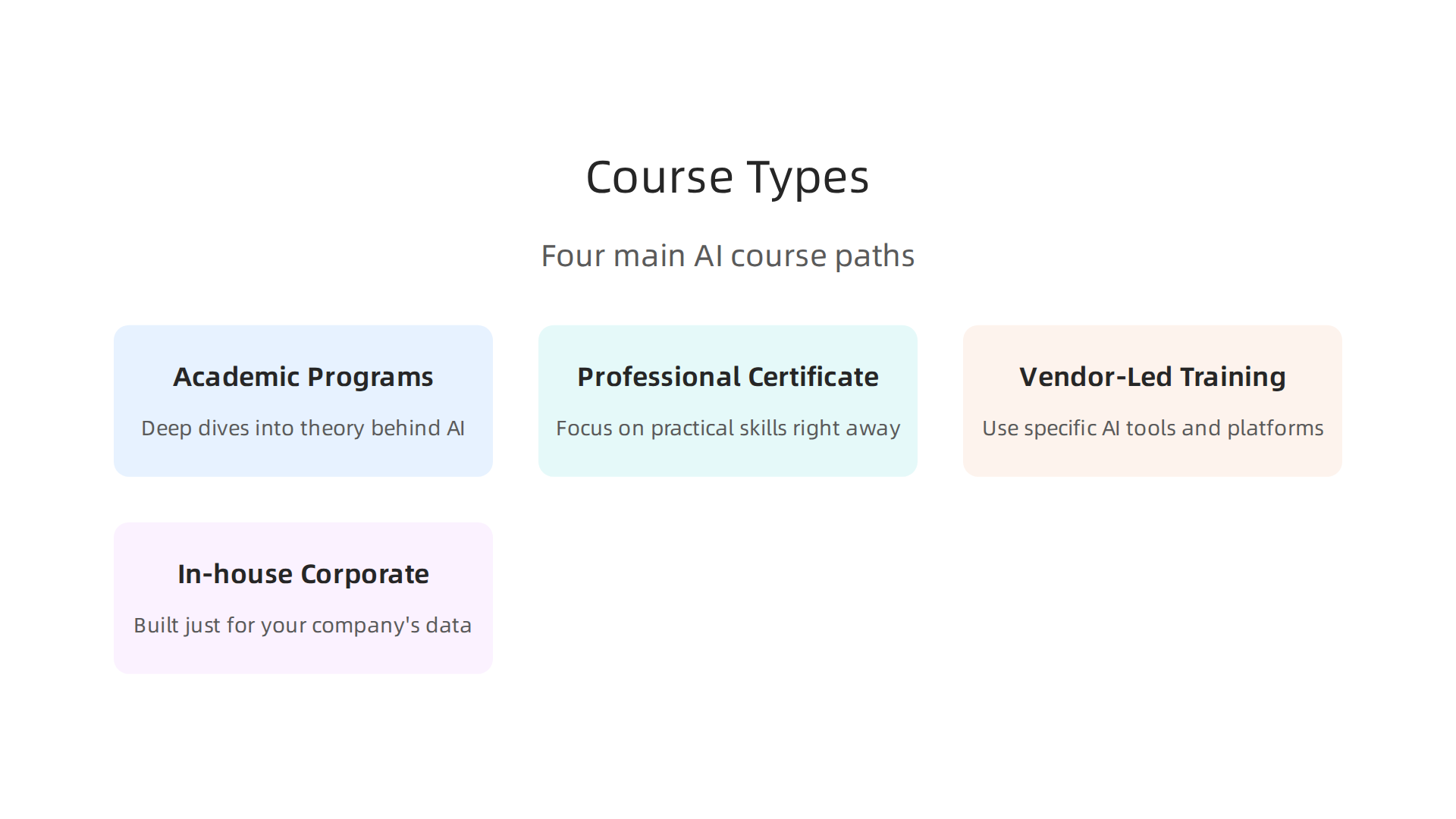
- Academic Programs: These are often found at universities and colleges. They offer deep dives into the theory behind AI and machine learning. Think of master's degrees or PhDs. These programs are great for understanding the 'why' behind AI, how it was invented, and how it works at its core. They teach a lot about research and new ideas.
- Professional Certificate Programs: These courses are usually shorter, from a few weeks to several months. They focus on practical skills you can use right away. Many online platforms offer these, and they can be a quick way to learn specific tools or methods. They are good for people who want to jump into AI work without a long degree.
- Vendor-Led Training: Big tech companies like Google, Amazon, or Microsoft often have their own AI training. These courses teach you how to use their specific AI tools and platforms. If your company uses a lot of one brand's AI products, these courses can be very helpful for getting your team up to speed quickly on those exact systems.
- In-house Corporate Training: This type of training is built just for your company. It teaches your employees about AI using your own data and business problems. This is often the most hands-on and practical way to learn because it's directly about what your team does every day.
Comparing the Choices: Depth vs. Practical Use
Each of these types of ai learning options has trade-offs:
- Depth vs. Immediate Use: Academic programs offer a lot of depth. You learn all the details and can even help create new AI ideas. But this means they can take a long time, and what you learn might not be ready for real-world business use right away. Professional certificates, vendor training, and in-house courses are much more about learning skills you can use quickly to build and run AI projects.
- Theory vs. Production-Readiness: Academic courses are strong on theory and how AI works in perfect conditions. Other courses, especially in-house and vendor-led ones, focus on "production-readiness." This means they teach you how to build AI systems that work well and safely in a company's day-to-day operations. This often includes teaching how to handle real data ethically and prevent problems like synthetic drift. Companies need to know how to train custom AI models safely in 2026, and the right training helps with that.
Choosing the right ai learning path means thinking about what your team needs most. Do they need a deep understanding of AI's foundations, or do they need to quickly build and manage AI tools for your business? For many companies, a mix of these approaches works best. It's not about asking "will data science be replaced by ai," but rather how data science and AI skills can grow together. The goal is to make sure your team has the skills to create AI that is not just smart, but also fair and honest.
To choose the right ai machine learning courses for your company, you need to think about what each person on your team needs to know.

Different roles require different skills. This helps ensure your AI systems are not only smart but also fair and honest, as we talked about before.
Matching Course Types to Company Roles
Not everyone in a company needs the same kind of AI training. Here's how to think about it for different groups:
- AI Engineers and Technical Teams: These are the people who build and run your AI systems. They need strong technical skills. For them, vendor-led training (like courses from Google or Microsoft) and professional certificate programs are very helpful. These teach them how to use specific tools and build AI solutions for real-world business problems. They might also need to understand how ethical data analysis builds trust in AI.
- Policy, Legal, and Compliance Teams: These teams make sure your AI follows rules and laws. They need to understand the ethical side of AI, data privacy, and how to avoid unfair outcomes. Courses that focus on AI ethics, governance, and legal rules are best for them. They also need to know how to evaluate AI tools with a framework for ethical data and trust.
- Company Leaders and Managers: People in charge need to understand how AI can help the business and what risks it brings. They don't need to code, but they do need to know enough to make good decisions about AI projects. Shorter professional programs that cover AI strategy, ethical use, and how to manage AI teams are a good fit. For leaders, a trust first AI strategy becomes business imperative in 2026.
- Auditors: These people check if AI systems are working correctly and fairly. They need special training on how to audit AI, look for biases, and make sure everything is transparent.
Using Modular Learning for Better Skills
One smart way to train your team is through "modular learning." This means breaking down big topics into smaller, easy-to-digest parts. Instead of one long course, people can take many short modules. This helps people learn only what they need for their specific job without getting bogged down by too much extra information. It makes it easier for everyone to gain the right skills at the right time.
Also, many companies find value in formal AI certifications. In 2026, these certifications show that a person has proven skills in certain areas of AI. They can be very important for showing that your team has the right knowledge, especially for technical roles. For example, some certifications focus on specific cloud platforms or advanced machine learning engineering skills, as noted in expert analysis of AI Certifications in 2026.
Choosing the right ai learning path for each role helps build a strong, trustworthy AI team across the whole company. It's not about if will data science be replaced by ai, but how these skills work together.
When you are building a strong team with the right AI skills, it's also super important how those skills are taught. This means creating AI machine learning courses that deeply teach about what is right and wrong with AI, how to manage data well, and how to stop AI from getting off track. In 2026, simply knowing how to code isn't enough; you need to understand the bigger picture of trust and fairness.
Making AI Courses Smart and Fair
Good AI courses for your company should have a few main parts that help everyone understand how to make AI that is good and trustworthy.
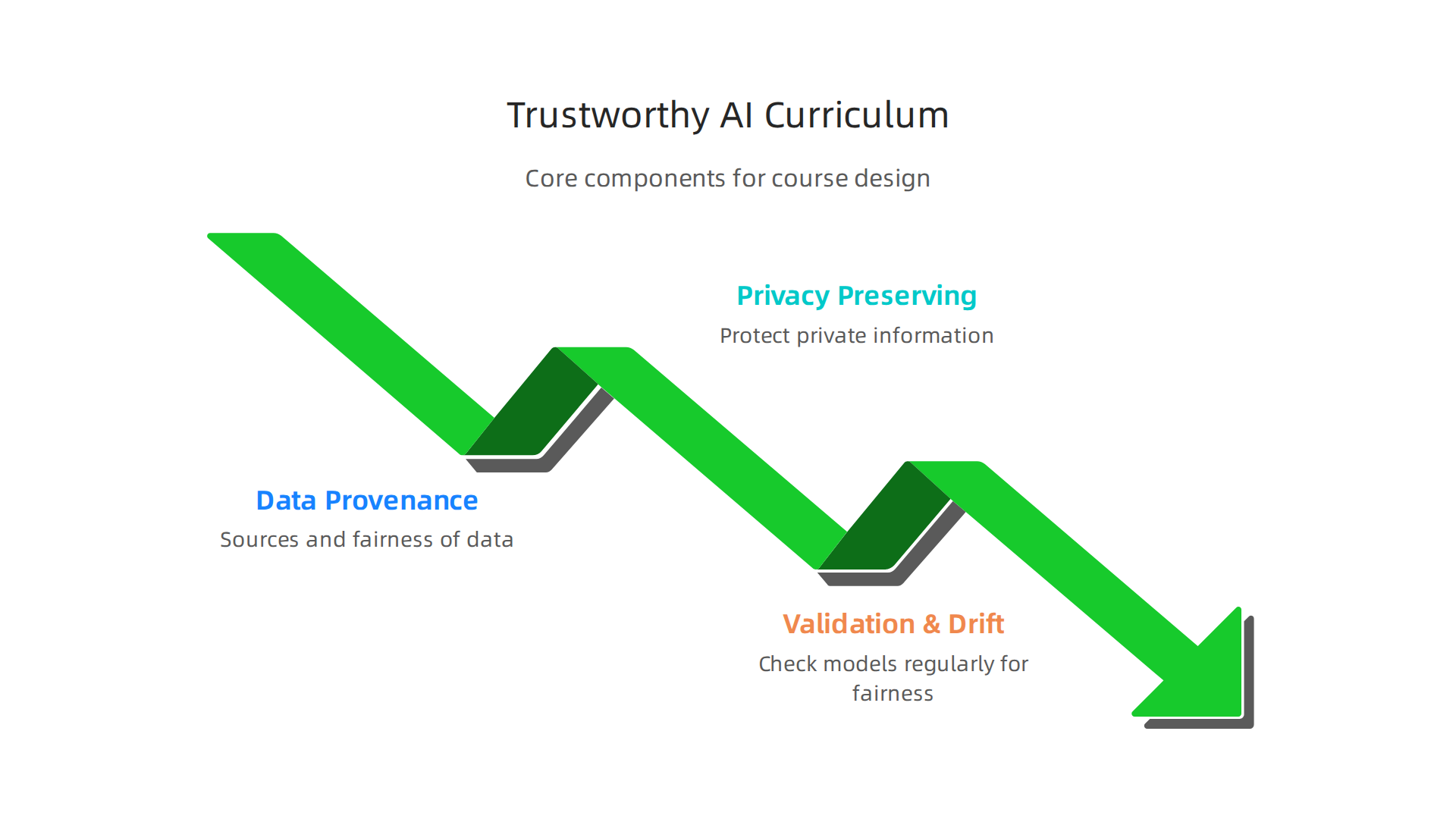

- Where Does the Data Come From? (Data Provenance): Imagine you're baking a cake. You need to know where the flour, sugar, and eggs come from. Is it safe? Is it good quality? It's the same for AI. Understanding "data provenance" means knowing all about the data used to train AI: its sources, how it was collected, and if it was gotten fairly. Laws like the EU AI Act now require companies to share summaries of their training data to improve transparency, especially for general-purpose AI models, according to insights on EU AI Act 2026: New Rules for Training Data and Copyright. Knowing this helps make sure the AI isn't learning from bad or unfair information. It also prevents "Synthetic Drift," where information gets twisted as it moves through digital systems.
- Keeping Secrets Safe (Privacy-Preserving Techniques): When AI uses data about people, it's very important to protect their private information. Courses should teach ways to keep this data safe, like using special methods to hide who the data belongs to. This is about being careful and respectful with people's information. Data ethics principles like consent and anonymization are key for responsible machine learning, as highlighted in a guide on Data Ethics in AI: 6 Key Principles for Machine Learning.
- Checking AI and Stopping It from Changing (Validation and Drift Mitigation): After an AI system is built, it needs to be checked often. Is it still working as it should? Is it still fair? Sometimes, AI can "drift" or change over time in ways we don't want, making it less trustworthy. Courses should teach how to test AI to make sure it stays fair and true, especially for important "high-risk" AI systems where data quality is very important, as stated in Article 10: Data and Data Governance of the AI Act. This practice helps to combat synthetic drift and keep your AI working correctly. Learning about this is a big step in building trustworthy AI: combat synthetic drift with ethical data.
How People Learn Best
To really learn these important ideas, AI training should be hands-on.
- Learning by Doing: People learn best when they can actually work on projects. This means courses should have real-world tasks where students build and fix AI systems.
- Using Real-World Data: Instead of made-up examples, courses should use actual datasets. This helps students see the kinds of problems they will face in their jobs, including how data might have biases that need fixing, as discussed in best practices for Ethical Use of Training Data: Ensuring Fairness & ....
- Solving Ethical Puzzles: Training should also include tricky situations where students have to think about the right ethical choice for AI. This helps them learn to spot and solve moral problems before they become big issues.
By focusing on these areas in your AI machine learning courses, you help your team build AI systems that are not just smart, but also fair, safe, and truly helpful to everyone. This approach helps to overcome the "AI bottleneck" by ensuring your AI is trained on ethical, high-fidelity data, which is key to avoiding synthetic drift.
To make sure your team really understands and can use these important AI ideas, you need ways to check their skills. This is where assessment and certification come in. Just like learning to drive means both practicing and taking a test, learning about AI ethics needs similar steps.
How We Check What Was Learned
There are two main ways to check how well someone has learned in ai machine learning courses.
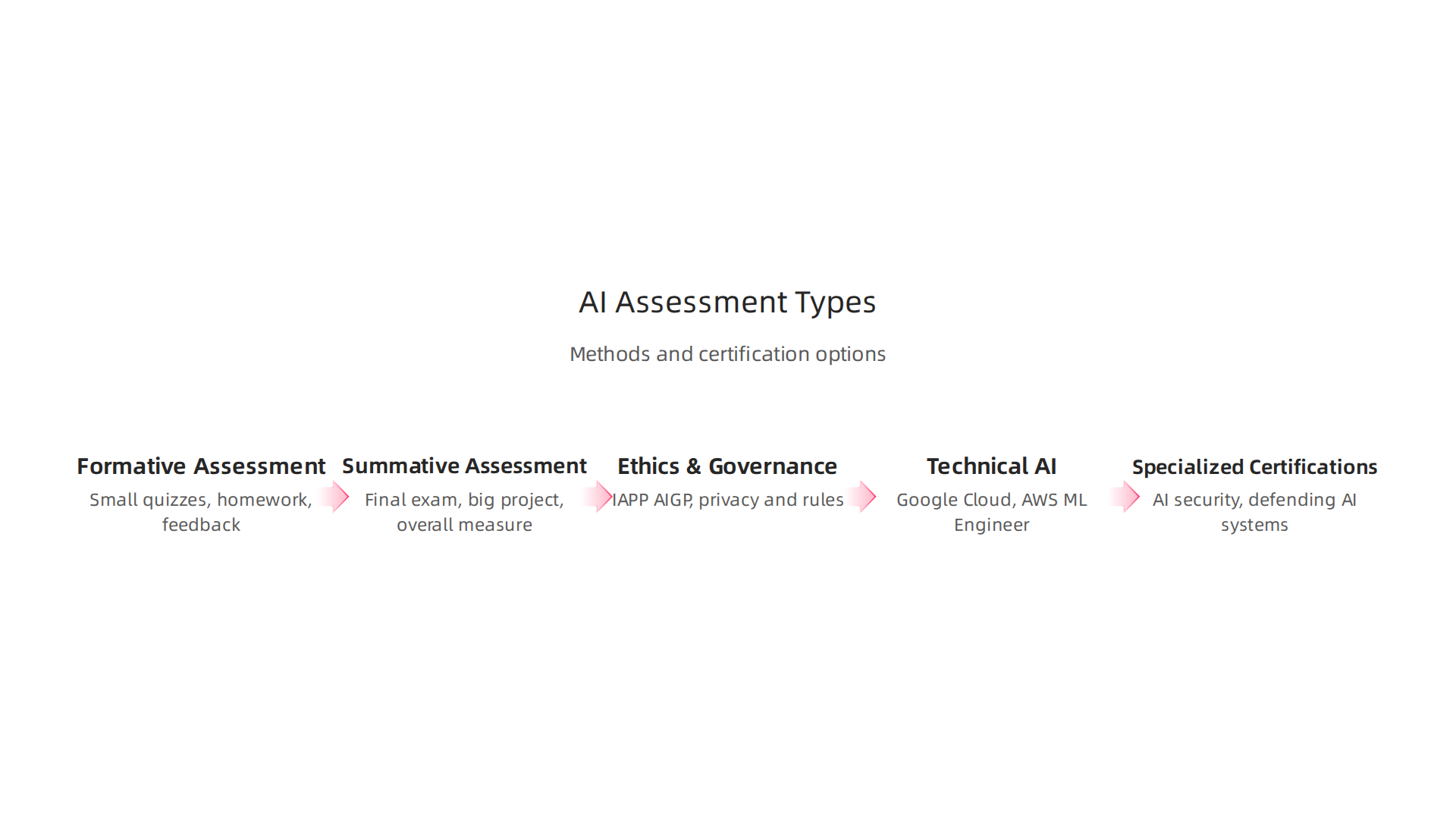
- Formative Assessment (Checks Along the Way): Think of this as small quizzes or homework assignments during a class. These checks help students and teachers see what is being understood and what needs more work. It is like getting feedback during a project to make sure you are on the right track. For AI ethics, this could mean looking at how a team handles ethical puzzles in practice or discussing their solutions. This helps shape their AI learning path as they go.
- Summative Assessment (Big Final Checks): This is like a final exam or a big project at the end of a course. It measures what a person has learned overall. For AI teams, this could be a large project where they build an AI system, making sure it follows all ethical rules and safety steps from start to finish. It shows they can put all their knowledge into action.
Official Proof of Skill: AI Certifications
For companies, official certifications are a great way to show that your team members have specific AI skills, especially in important areas like ethics and safety. These certifications tell everyone that a person has met certain standards.
In 2026, there are many kinds of AI certifications available:
- Ethics and Governance Certifications: These are becoming very important. For example, the IAPP AI Governance Professional (AIGP) certification focuses on privacy and rules for AI, making it highly respected in the field, as highlighted in the AI Certification Landscape 2026.
- Technical AI Certifications: These prove skills with specific AI tools or platforms. Think of Google Cloud Professional ML Engineer or AWS Machine Learning Specialty, which are key for hands-on AI work on cloud systems, according to a guide on AI and Machine Learning Certifications 2026. These types of AI skills are vital for different types of AI.
- Specialized Certifications: Some certifications focus on areas like AI security, showing skills in defending AI systems, as offered by GIAC's Artificial Intelligence (AI) Certifications.
Companies like CertiProf even have a framework for keeping these tech credentials up to date, making sure they always match what the industry needs in 2026, according to their 2026 framework for maintaining current AI tech credentials. This helps ensure that your team's skills stay sharp and relevant.
Checking Skills Inside Your Company
Beyond outside certifications, many companies, especially those in regulated areas, create their own ways to check their teams' AI skills. This is called internal validation. It might involve:
- Regular Skill Reviews: Managers check in with team members often to see how they are doing and what new skills they have learned.
- Internal Projects: Giving teams special projects that test their understanding of ethical AI and data handling.
- Specialized Training Programs: Designing your own advanced ai machine learning courses that focus on the specific rules and values of your company.
By using both ongoing checks and final tests, and by encouraging certifications and internal validation, your company can build a highly skilled and trustworthy AI team. This helps ensure that the people behind your AI systems are not just smart about technology, but also deeply understand how to build AI that is fair, safe, and works for everyone.
After knowing how to check your team's AI skills, the next big step is making sure everyone can get the training they need. This means finding the best ways to offer those important ai machine learning courses and lessons. Companies can either buy training from outside experts or build their own learning programs inside the company.
Scaling Training: Procurement, Vendor Selection, and Building Internal Academies
Growing your team's AI knowledge across the whole company requires smart planning. You need to think about how you will get the training and how you will keep it going.
Choosing Training Partners (Vendor Selection)
When a company decides to get training from outside experts, like those offering specialized ai machine learning courses, they go through a process called procurement. This means carefully picking the right partner. Here are key things to look for in 2026:
- Clear Goals First: Before looking at any vendor, figure out exactly what problems the training needs to solve. You should have 3 to 5 clear goals in mind, as suggested by the Enterprise AI Procurement Framework 2026.
- Data Handling and Trust: This is very important. Ask how the vendor will use your company's data during training. Will they keep it private? Will they use it to improve their own AI tools without your permission? Contracts should clearly state who owns the data and ensure transparency, as outlined in guides like Procuring AI: Key considerations and strategies and AI Procurement In Enterprise: What Legal And Compliance .... You want to make sure your data is safe and handled ethically.
- Support and Adoption: Check if the vendor provides help for your team to actually start using what they learned. This might include help with planning how to use new skills or training for your own teachers, according to Enterprise AI Training and Adoption | Procurement Considerations.
- Transparency and Security: A good vendor will be open about how their AI works and how they keep systems safe. They should have strong security rules and ways to oversee AI use, which are important "trust signals" for buyers, as noted by Enterprise AI Trust Signals: What Buyers Verify.
- Match Your Business Needs: The training should fit with your company's overall plans and goals, making sure the AI solution helps achieve business outcomes, a point made in Adopting AI Responsibly: Guidelines for Procurement of AI Solutions by the Private Sector.
- Look for Proven Experience: Review the vendor's past performance and technical capabilities to ensure they can deliver high-quality training. You can find more details in the Artificial Intelligence (AI) Procurement Handbook.
- Long-Term Partnership: It's often better to work with a vendor that can be a long-term partner, not just a one-time trainer. This helps build a Trust-First AI Strategy Becomes Business Imperative in 2026.
Building Your Own Learning Centers (Internal Academies)
Many companies also create their own "AI learning path" inside. This gives them more control and ensures the training perfectly matches their unique needs and values.
- Design Your Own Programs: Develop special ai machine learning courses that focus on your company's specific ethical rules and how you handle data. This makes sure the training is always relevant.
- Keep Learning Alive: AI changes all the time, so learning needs to be a continuous process. Your internal academy can set up ongoing lessons and updates. Experts say that 80% of workers will need retraining by 2026, so continuous learning is a must to Stay Relevant as 80% Must Retrain.
- Micro-credentials: Offer small, focused learning badges called micro-credentials. These are perfect for quickly teaching new skills without needing a long course. In 2026, micro-credentials are a key part of modern learning because they focus on specific skills, as explained in the Top 5 Digital Credentialing Trends in 2026. Many places like Purdue University offer Artificial Intelligence Microcredentials for AI basics, and Coursera is also expanding its catalog, according to Coursera Expands Micro-Credential Catalog.
- Align with Company Rules: Make sure your internal training always follows your company's rules for how AI should be used. This helps keep everyone on the same page and builds trust in your AI systems. When you Evaluate AI Tools with a Framework for Ethical Data and Trust, you are also building this internal strength.
By smartly picking outside partners and building strong internal learning programs, companies can make sure their teams are always ready for the future of AI. This helps create AI systems that are not just powerful, but also fair, safe, and trustworthy.
6. Future-proofing learning: emerging topics, microcredentials, and maintaining trust
Even with great internal learning centers for ai machine learning courses, companies must always look ahead. The world of AI changes very fast. To keep teams ready, it is important to know about new topics and new ways to show off skills.
Important New AI Skills for 2026
As AI grows, new skills become very important. These skills help make sure AI is used safely and wisely.
- AI Safety: This means learning how to build and use AI tools so they do not cause harm. It is about making sure AI systems are reliable and secure, always.
- Human-AI Teamwork: People and AI will work together more and more. Training should teach how to make this teamwork smooth and helpful. This ensures that people know how to guide AI and check its work.
- Matching AI to Human Values: It is key for AI to help with goals that are good for people and society. This is called "value-aligned optimization." It means teaching AI to care about more than just making money. Instead, it should help improve well-being and build trust, which is a major part of building trust in superhuman AI.
- Understanding Different Types of AI: As new types of AI come out, like generative AI that creates content, teams need to understand how each one works. This helps them use the right AI for the right job and understand its limits.
Thinking about these new skills is part of creating a complete ai learning path for everyone in the company.
Small Badges (Microcredentials) and Always Learning
The idea of small, focused learning badges called microcredentials is a big deal in 2026. They are perfect for learning new skills quickly. Instead of a long course, you can get a badge for mastering one specific task.
- Quick Skill Updates: Microcredentials help people learn new things fast as AI keeps changing. They fight against skills becoming old and useless. By focusing on specific abilities, workers can show they have the most current knowledge. This is crucial for career-ready skills, as many employers now value practical AI outcomes and demonstrable familiarity with cloud AI platforms, according to the Top AI Certifications 2026 for Career Ready Skills.
- Building Trust: When employees get these small credentials, it shows they are serious about staying updated. This builds trust within the company and with customers. It also helps answer questions like "will data science be replaced by ai?" by showing how skills are growing, not just disappearing.
- Many Options: In 2026, many places offer useful AI certifications and microcredentials. Companies like Google Cloud, Microsoft Azure, and AWS have their own programs. You can find out which credentials are truly worth it by looking at guides like AI Certifications in 2026: Which Credentials Are Actually Worth It. Some examples include easy "AI Essentials" for beginners or more advanced "Professional ML Engineer" certifications. These show a real skill and are not just a simple completion certificate, as explained in Are AI Certifications Worth It in 2026? An Honest Assessment.
By planning for new AI topics and using microcredentials, companies can make sure their teams are always ready for what is next. This helps create building trustworthy AI that works well and is trusted by everyone.
Summary
This article explains how high‑quality AI and machine‑learning training is essential to building trustworthy AI that is fair, safe, and reliable. It walks through the core problem—biased or poorly sourced training data and the risk of synthetic drift—and shows why educating the people who build AI is the most practical remedy. You'll learn the main types of courses (academic, professional certificates, vendor training, and in‑house programs), how to match learning to different roles, and why modular, hands‑on learning works best. The guide covers assessment strategies, industry certifications, and internal validation methods to prove competence. It also explains vendor selection and procurement precautions to protect data and ensure long‑term support. Finally, the piece outlines how to scale learning with internal academies, microcredentials, and future topics like AI safety and human‑AI alignment so teams remain up to date and trustworthy.