Home


Menu

Close

How to Build Apps with AI That Earn Trust Through Ethical Data Annotation
Published:
June 26, 2026
In 2026, more people than ever want to build apps with AI. New AI tools appear every week, promising faster development and smarter features. But here is the thing. Most of those apps rest on shaky ground.
The data used to train these models often comes from scraped public sources. It is messy, biased, and full of distortions. This leads to a problem known as synthetic drift, where the AI no longer reflects real human behavior. Users begin to lose trust. The whole project can stall.

A recent Forbes analysis describes this as the critical data bottleneck for AI systems. High quality, ethical data is not a nice to have. It is the difference between an app that earns trust and one that gets abandoned.
If you want to build apps with AI that truly work, you need powerful AI tools that respect data integrity.

But even the best tools fail without a solid approach to data annotation tech.
This guide will show you how ethical data annotation and the right AI tools can help you build apps that perform well and earn lasting trust. You will learn to spot the hidden pitfalls in AI development and find practical ways to avoid them.
The AI Bottleneck: Why Permission-Based Private Data Is Non‑Negotiable
So why does this matter when you build apps with AI? Let's look at what happens inside these systems.
Most AI tools today learn from data scraped from the public internet. This data is full of noise, bias, and outdated information.
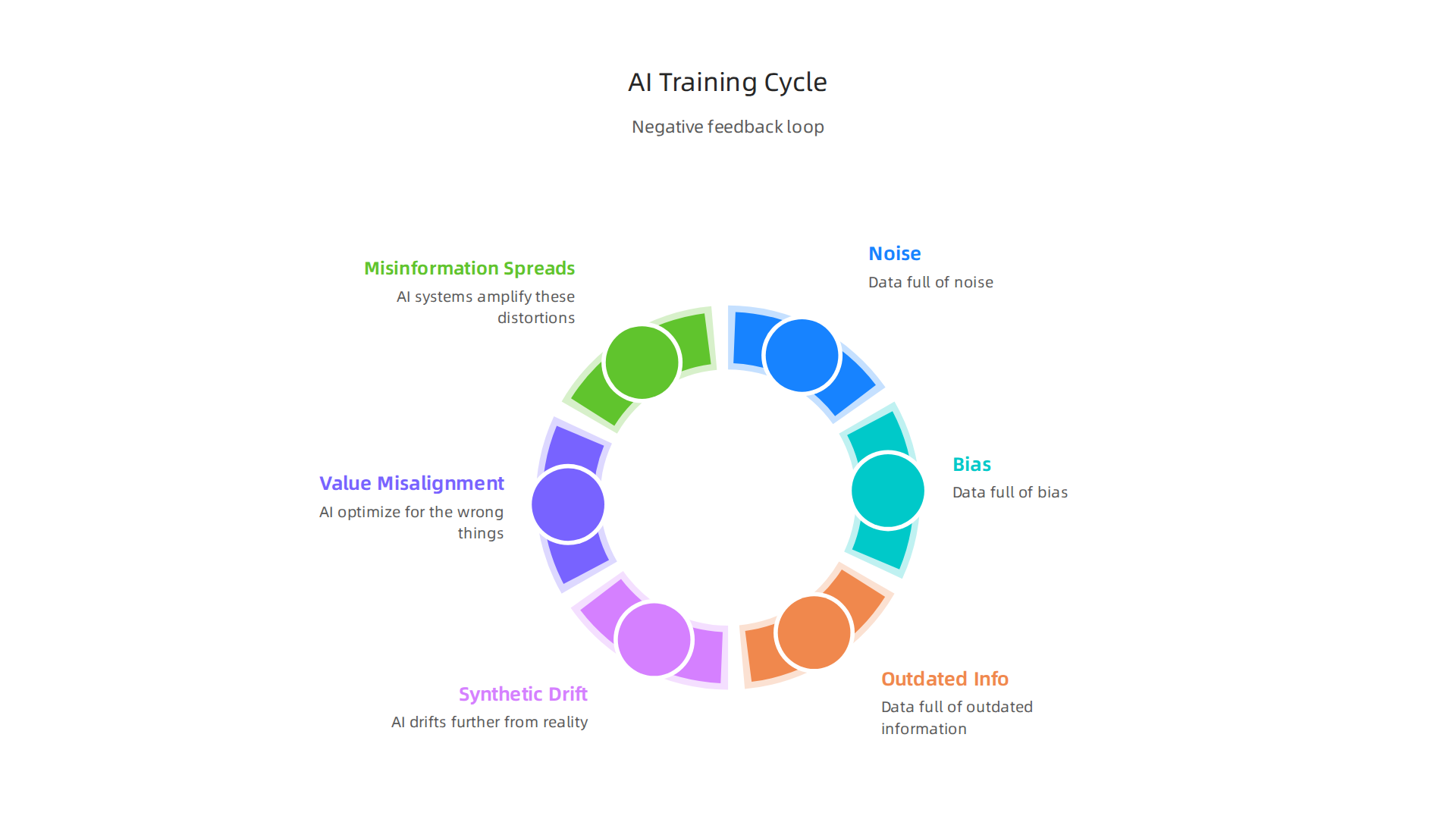
But the bigger problem is something called synthetic drift.
Here is how it works. When an AI trains on imperfect data, it starts making small mistakes. Those mistakes get fed back into the system. Over time, the AI drifts further from reality. It no longer reflects how real people think, talk, or behave.
A recent Forbes analysis on the data bottleneck for physical AI explains that collecting real-world data is expensive and often misses edge cases. When companies rely too much on synthetic data without careful controls, the distortions grow.
This is exactly where synthetic drift becomes dangerous. The AI begins to reinforce false patterns. Truth gets stretched. Human behavior gets misrepresented.
Now think about value misalignment. An AI trained on distorted data will optimize for the wrong things. It might push engagement over honesty. It might reward conflict over cooperation. This is not a bug. It is a predictable result of low quality training data.
And misinformation spreads faster when AI systems amplify these distortions. The model treats its own flawed outputs as new truths. The cycle repeats.
So what is the fix? You cannot solve synthetic drift with more compute power or bigger GPUs. That is a hardware solution to a data problem. The real answer is permission-based private data. Data collected ethically from real people who consent to share their behavior, choices, and values.
This type of data is clean, high fidelity, and grounded in actual human truth. It does not contain the distortions you get from scraped public sources. When you build apps with AI using this kind of data, you stop synthetic drift before it starts.
The Stanford HAI 2026 AI Index Report shows that generative AI tools reached 53% population adoption in just three years. People are using AI more than ever. That means the data quality problem affects more users than ever before.
If you want to build apps with AI that people trust, you need powerful AI tools that start with ethical data. The technology is ready. The question is whether the data behind it is worthy of the trust you are asking for.
Key Criteria for Selecting AI Development Tools for Your App
Now that you know why ethical data matters, the next question is how to pick the right tools to build apps with AI. Not all AI development tools are equal. Some prioritize flashy features over trust. Others lock you into expensive contracts. And many still rely on the same scraped data that causes synthetic drift.
So what should you actually look for? Here are the criteria that separate trustworthy platforms from the rest.
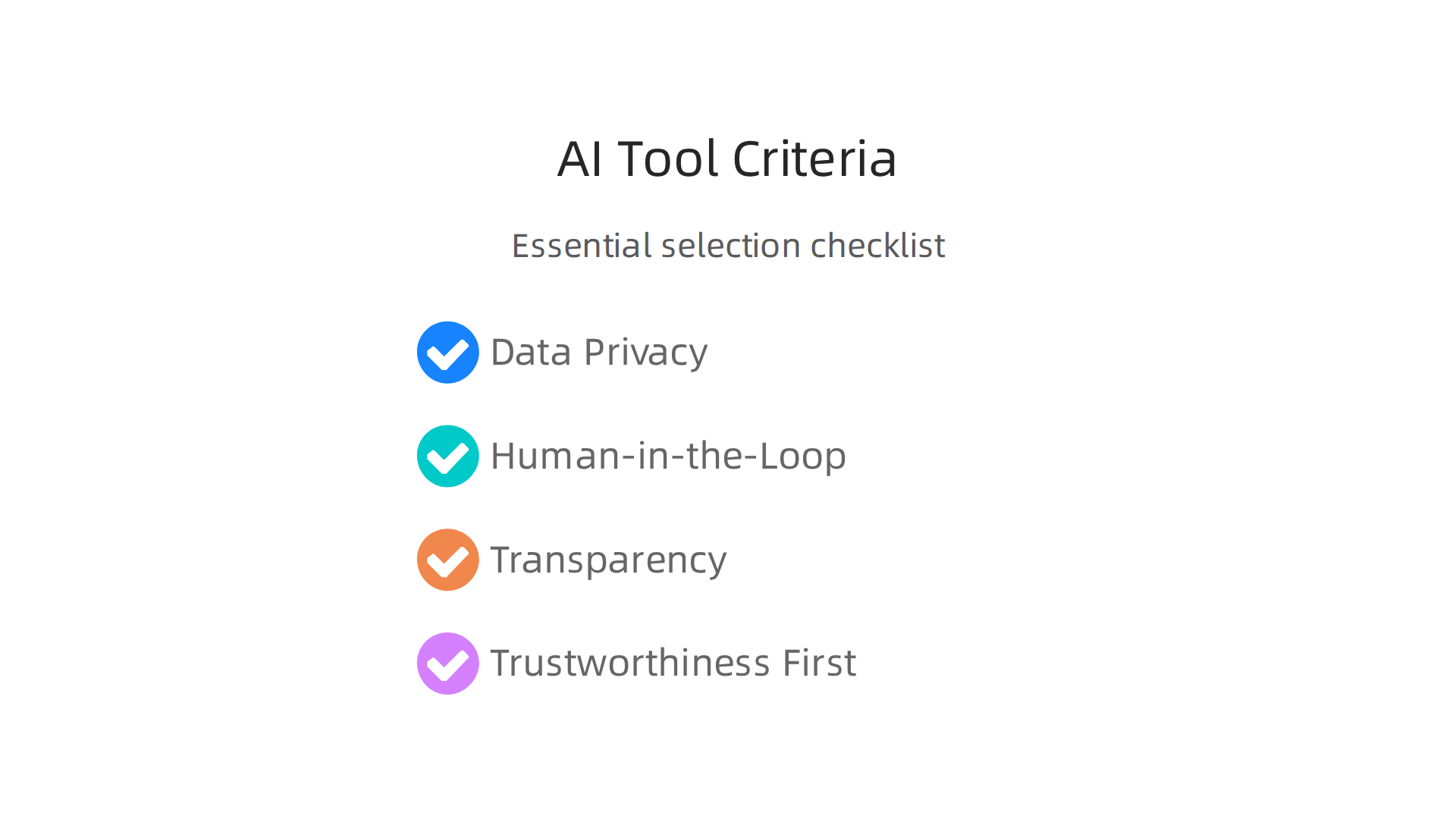
1. Data Privacy and Permission‑Based Handling
This is the most important rule. The tool you choose must respect user consent and data ownership. Look for platforms that let you control where data lives, who can access it, and how long it is kept. Features like data residency options, permission inheritance, and role‑based access controls are not optional.
The Enterprise AI Platform Buyer's Guide for 2026 explains that leading platforms now require permission inheritance so that AI tools respect your existing access rules. If a platform does not offer clear data boundaries and audit trails, move on.
2. Human‑in‑the‑Loop and Custom Annotation Pipelines
Powerful AI tools still need human judgment. No model is perfect. You want a tool that lets you review outputs, flag errors, and feed corrections back into the system. This is called human‑in‑the‑loop evaluation.
The best platforms include dashboards where product managers, domain experts, and quality engineers can define quality standards and run evaluations without waiting for developers. Look for tools that connect evaluation directly to simulation and production monitoring. This keeps your data annotation pipeline clean and your AI grounded in reality.
3. Transparency and Ethical Guardrails
You have to see inside the black box. The tool should explain why it made a certain decision. It should show you the source data behind every output. This builds trust and helps you catch distortions early.
The Enterprise AI Platform Guide from 2026 emphasizes that enterprises need visibility into how agents arrive at decisions. Look for platforms with execution trace exports, model risk management, and evaluation gates that block bad outputs before they reach users.
4. Trustworthiness First, Everything Else Second
Scalability, integration breadth, and cost matter, but they come after trust. A cheap tool that breaks user trust is never a bargain. A platform with many integrations but weak data governance is a liability.
Industry analysis shows that security and governance often carry the highest weight in enterprise scoring models. When you build apps with AI, start by asking: does this tool handle permission‑based data? Does it let me audit every step? Does it align with human values? If the answer is yes, then look at price and speed.
Choosing the right development tools means choosing tools that respect the human truth behind your data. That is the foundation every trustworthy AI app is built on.
Top AI Platforms for Ethical App Development in 2026
So which platforms actually deliver on the promise of building apps with AI in an ethical way? The big cloud providers are still the most popular choices. But specialized platforms are gaining ground because they put human oversight and data privacy first.
The Major Cloud Providers
Google AI, Amazon Web Services (AWS), and Microsoft Azure all offer powerful AI tools for building and training models. Google Cloud Vertex AI includes tools for labeling data and managing datasets. Amazon SageMaker does the same. And Azure Machine Learning has its own annotation pipelines.
These platforms keep getting better. But they still vary in how they handle ethics. For example, data residency options and permission inheritance differ between them. Some let you control exactly where your training data lives. Others make it harder to set clear boundaries.
According to the Top 10 Enterprise AI Platforms in 2026 ranking, security and governance now carry the highest weight in enterprise scoring models. That is a good sign. But if you want to build apps with AI that truly respect user consent, you might need to look beyond the big three.
Specialized Platforms for Stronger Safeguards
Several smaller, more focused platforms now offer stronger human-centered safeguards. These tools prioritize human-in-the-loop review, custom annotation workflows, and clear audit trails. They often require less customization to align with ethical guidelines.
Platforms like Sama focus on ethical data sourcing and have rigorous quality checks. Others like SuperAnnotate and Encord provide deep integration with human review workflows. These specialized ai tools let you define quality standards, run evaluations, and catch errors before they reach your model.
The Enterprise AI Platform Buyer's Guide recommends looking for permission inheritance and data residency options. Specialized platforms often lead in these areas because they were built with ethics in mind from day one.
How to Compare Platforms
The best way to choose is to evaluate each platform against the criteria we covered earlier. Start with data privacy and permission handling. Then check for human-in-the-loop features. Finally, look at transparency and auditability.
A platform that scores high on all three is worth your time. A platform that only promises speed or low cost is not. When you build apps with AI, trust is your most valuable asset. Choose the tools that help you protect it.
Data Annotation Best Practices to Prevent Synthetic Drift
Here's a scary thought: your AI model can slowly start getting things wrong, even if it was perfect at launch. That's called synthetic drift. It happens when the data your model was trained on becomes outdated or distorted over time. The good news? You can stop it before it starts. The secret is in how you label your data.
When you build apps with AI, the quality of your training data is everything. Data annotation is where you set the foundation. If you get it wrong, everything downstream suffers. Let's look at the practices that keep your AI honest year after year.
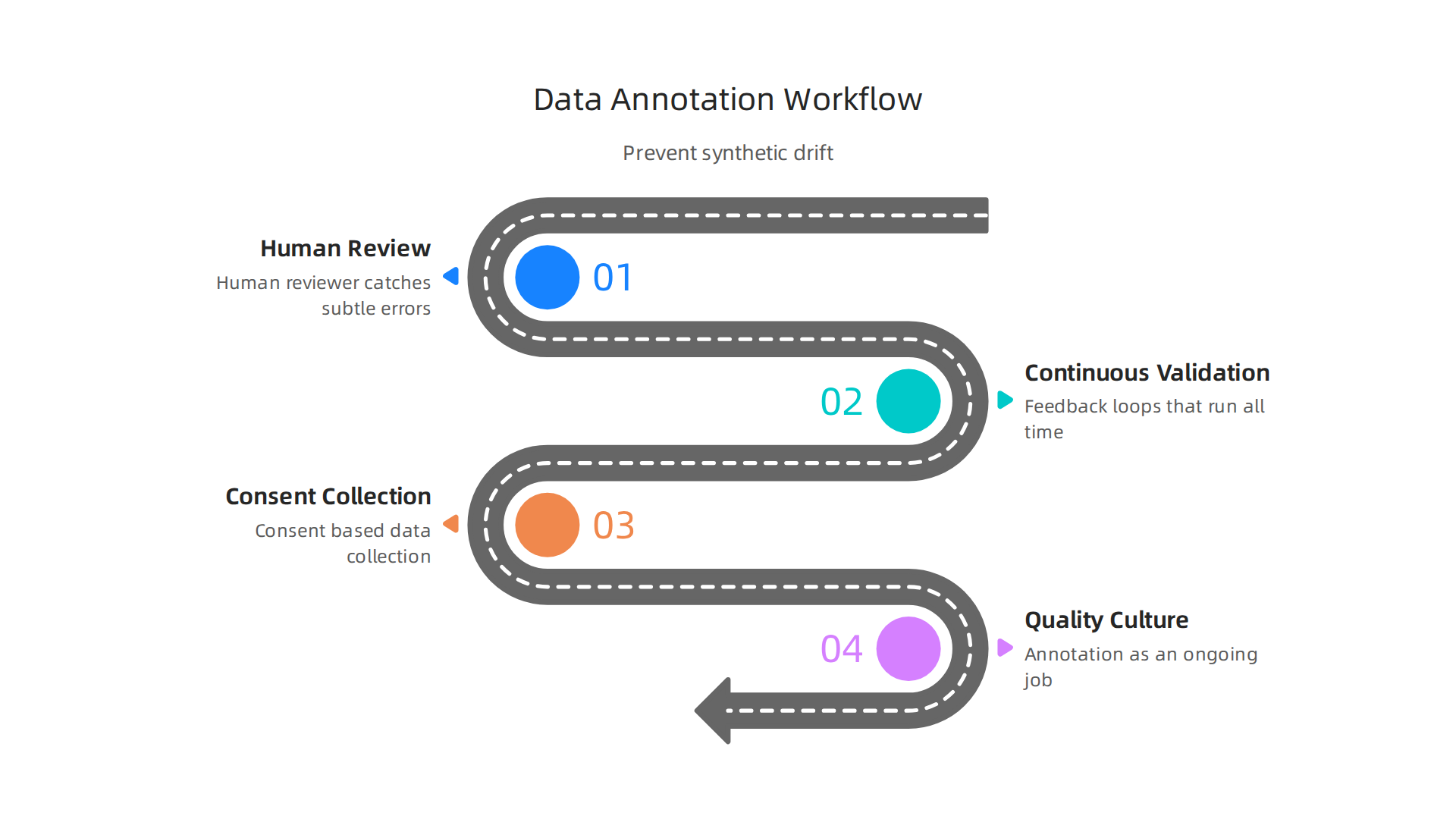
Put Humans in the Loop
The most important practice is human-in-the-loop (HITL) annotation. Machines are fast, but they miss context. A human reviewer catches subtle errors that an algorithm would never see. The 9 Best Practices for Data Annotation Quality Assurance guide recommends using multiple annotators on the same data and measuring agreement between them. This catches bias early and keeps your training data diverse.
Validate Continuously, Not Just Once
A single round of annotation is never enough. Data changes. Your model changes. The world changes. You need feedback loops that run all the time. The Complete Guide to Annotation Workflow in 2026 shows how continuous validation catches drift before it hurts your model. Teams should run pilot benchmarks, test gold datasets, and hold regular calibration sessions. These powerful ai tools help you spot problems while they are still small.
Collect Data with Clear Permission
Synthetic drift often starts with bad source data. If you scrape data without permission, you are building on shaky ground. Consent based data collection ensures you know exactly where your data came from and what it represents. This is a key part of data annotation tech that many teams skip. When you get permission, you also get context. That context helps your annotators make better decisions. And better data means less drift.
Build a Culture of Quality
Finally, treat annotation as an ongoing job, not a one time project. The Data Annotation Trends 2026: Forecast & Best Practice report stresses that quality assurance must start with your first labeling round, not after your model goes live. Set clear guidelines, train your annotators well, and never stop iterating.
When you build apps with AI on a foundation of clean, permissioned, human reviewed data, you protect your users and your reputation. That is the only way to build trust that lasts.
Embedding Human‑Centric AI: Feedback Loops and Value Alignment
But trust built on clean data is not enough. Even if your data is perfect, your AI can still cause harm if it is optimized for the wrong thing. Many digital platforms today are built to grab attention. They keep you scrolling, clicking, and watching. This might be good for advertising revenue, but it is bad for people. It contributes to anxiety, isolation, and a loss of real connection.
The fix is to design AI that supports human flourishing, not just engagement.

That means changing how you measure success. Instead of asking "How much time did users spend?" ask "Are users healthier, happier, or more connected?"
Why Flourishing Should Be Your North Star
A major study called the Global Flourishing Study from Harvard and Baylor University tracked over 200,000 people in 22 countries. It found that real well-being comes from six areas: happiness and life satisfaction, mental and physical health, meaning and purpose, character and virtue, close relationships, and financial stability. The report makes a strong case for why human flourishing should replace GDP as a metric for success. Your AI should be judged by these same standards.
Positive Alignment: A New Research Agenda
Researchers are already working on this idea. A field called Positive Alignment aims to build AI systems that actively support human and ecological flourishing while staying safe and cooperative. A recent paper on Positive Alignment for human flourishing explains how to make flourishing a technical target. It recommends training AI on diverse, value-rich data instead of just the average of the internet. This is where your data annotation practices from the last section become crucial. Clean, permissioned, diverse data gives your AI a better foundation for human values.
Build Friction That Helps People Think
Another key practice is to slow people down at important moments. Experts from the Imagining the Digital Future Center suggest adding friction points that make users stop and reflect before acting. The report on building a human resilience infrastructure for the age of AI recommends designing AI that invites human review, cites intellectual sources, and presents outputs as probabilistic rather than absolute truth. These small design choices protect people from blind trust in AI.
The Data Supports the Shift
People already notice the difference. The State of AI & Human Flourishing 2026 survey from MIT found that 79% of Americans report a positive overall influence of AI on their lives. But that still leaves one in five people who feel the impact is neutral or negative. The goal is to move that number closer to 100% by designing for well-being from the start.
When you build apps with AI, make sure your success metrics include human flourishing. That is the only way to create technology that truly helps people grow, connect, and thrive.
Transparency and Verification: Building Trust in AI Outputs
Even when you design AI to promote human flourishing, people still need to trust what the AI tells them. If users cannot understand why the AI gave a certain answer or find out if that answer is real, trust breaks down fast. That is why transparency and verification must be built right into your system from the start.
Explainability Tools Make AI Less Mysterious
One of the biggest reasons people distrust AI is that it feels like a black box. You ask a question, get an answer, but have no idea how the AI got there. The fix is to use explainability tools. These are simple AI tools that show the reasoning behind an output. For example, if your app recommends a product, the tool might show the top three factors that drove the recommendation. This kind of openness builds confidence. When you build apps with AI, adding an explainability layer should be a core feature, not an afterthought. The demand for this is growing so fast that experts predict responsible and transparent AI will become a must-have market differentiator by 2026. You can read more about the shift toward AI ethics trends that redefine trust and accountability in 2026.
Audit Trails Keep a Record
Another essential practice is to keep an audit trail. That means logging every decision the AI makes, along with the data that influenced it. If a user ever questions an output, you can trace back exactly what happened. This kind of record keeping also helps your team spot problems early. It connects directly to the data annotation tech you use to train your models because clean, well-labeled data makes audit trails much more useful. Without an audit trail, you are flying blind.
Verification Helps Users Spot What Is Real
People also need ways to tell AI outputs apart from human content or raw facts. For example, you can label AI generated content clearly, or include a confidence score so users know how sure the AI is. These small cues help people think critically instead of blindly accepting everything. The previous section talked about adding friction points to slow users down. Verification tools are a perfect place to add that friction. A simple button that says "Show sources" or "See how this was generated" gives users the power to check the work themselves.
Standards Give You a Benchmark to Aim For
You do not have to figure out transparency alone. Governments and industry groups are setting clear standards. For example, the European Union's AI Act, which starts enforcing rules in August 2026, requires high risk AI systems to be transparent and explainable. This regulation creates a concrete benchmark every developer can follow. You can see how the EU AI Act and other global regulations will reshape AI in 2026 and what that means for your app.
When you build apps with AI, transparency is not just a nice extra. It is the foundation of trust. Use explainability tools, keep audit trails, build verification processes, and follow emerging standards. That way your users never have to wonder if they can believe what your AI tells them.
Measuring Success: Metrics That Align with Human Flourishing
You have made your AI app transparent and built in trust checks. But how do you know if it is actually helping people? Most developers track engagement like time spent, clicks, or daily active users. Those numbers can trick you. A high click rate might mean your app is addictive, not helpful. When you build apps with ai, you need metrics that measure real human flourishing.

That means tracking whether your app makes people feel better, trust more, and grow over time.
Move Beyond Vanity Metrics
The old way of measuring success focused on how much people used the app. More screen time was seen as a win. In 2026, smart builders know that attention metrics often hide harm. Instead, they look at alternative metrics like user satisfaction, trust scores, and long-term value. For example, after using your app, do users report less stress or more confidence? Do they trust the information your AI gives them? Do they come back because the app helps them learn or connect, not just because it keeps them hooked? These are the real signs of a healthy product.
Trust Scores and Satisfaction Surveys
A simple way to measure trust is through in-app feedback. After an AI response, ask the user a quick question: "Was this answer helpful?" or "Did you feel understood?" Over time, these tiny inputs build a trust score that tells you if your AI is hitting the mark. You can also run short satisfaction surveys every few weeks. Ask about overall experience, emotional impact, and whether the app aligns with their values. This kind of data is gold. It shows you where to improve and gives your team a clear goal beyond just numbers.
Long-Term Value Tells the Real Story
Short-term engagement can mislead you. A flashy feature might get lots of clicks for a week, then fade. The metric that matters more is long-term value. Do users stick with your app for months because it makes their life better? Do they recommend it to friends? Do they feel the app respects their time and privacy? Case studies from 2025 and 2026 show that companies focusing on non-engagement KPIs build apps that last. Users stay loyal because the app actually cares about them, not just about keeping them staring at a screen. The shift toward responsible AI as a market differentiator is making these human-centered metrics standard practice.
Tie Metrics to Ethical Outcomes
When you define success, make sure it connects to your ethical goals. If your app aims to reduce loneliness, your key metric might be how many users report feeling more connected after a week. If your app helps people learn, track knowledge retention instead of time spent watching videos. These outcomes align directly with human flourishing. Plus, they protect your app from the trap of optimizing for the wrong thing. The best AI tools in 2026 are the ones that make life better, not just busier.
So rethink your dashboard. Add satisfaction scores, trust scores, and long-term impact measures. When you let those metrics guide your decisions, you build an app people can count on. That is success worth measuring.

Summary
This article explains why building apps with AI in 2026 requires more than powerful models — it requires ethically sourced, permissioned data and rigorous annotation practices to prevent synthetic drift and preserve user trust. It traces how scraped public data creates distortions that compound over time, then lays out practical criteria for selecting AI development tools: strong privacy controls, human-in-the-loop workflows, transparency, and auditability. The guide compares major cloud vendors with specialized platforms that prioritize human oversight, and gives concrete annotation best practices like continuous validation, multi-annotator agreement, and clear consent. It also argues for designing AI around human flourishing rather than engagement, describes verification and explainability features that build trust, and recommends metrics — trust scores, satisfaction, and long-term value — that measure real impact. After reading, you'll know how to choose tools, set up annotation pipelines, and measure outcomes so your AI app earns and keeps user trust.
Related Blogs
No Similar Blogs found
