Home


Menu

Close

How Centering Motivation Change Builds Trustworthy AI
Published:
August 26, 2026
Why Centering Motivation Change Matters for Trustworthy AI
Imagine that the smart computer programs we use every day, called AI, are quietly changing how we think and act. These AI systems learn from a lot of information. But what if that information isn't always good or truly reflects what real people want?
The big problem we face in 2026 is that many AI systems learn from data they get from the internet without asking for permission. This data can be messy, wrong, or even made up. When AI uses this kind of data, it can start to pull our behavior in directions that aren't good for us. This is like a slow drift away from truth and trust, a problem known as "synthetic drift."

For example, many popular AI training datasets have big problems with missing or incorrect licenses, meaning the data wasn't properly sourced or attributed Popular AI Training Datasets Are Rife With Licensing Errors.
This bad data can make AI systems less trustworthy. They might even encourage behaviors that cause more worry or loneliness, instead of helping people live better lives. We really need to know where AI data comes from, like having a clear record of its origin, ownership, and changes over time AI Training Data Provenance & Lineage. Without proper, ethical electronic data gathering and retrieval, we can't fully fix this AI data crisis.
But there is hope! We can make AI better by focusing on "center motivation change." This means making sure AI helps people grow and thrive, not just get more clicks or attention. It's about designing AI so it works with human goals, with clear permission from people about how their information is used. This approach helps create "unfiltered AI" and "producer AI" that truly serves us.
When we center motivation change, we help AI learn from real, permissioned data. This makes AI systems more honest and reliable. It reduces harmful outcomes and builds stronger trust over time. It makes sure AI helps us become our best selves, instead of pushing us towards things that aren't helpful.
What is 'center motivation change' and why it differs from engagement optimization
We've talked about how centering motivation change helps AI guide us to be our best selves. But what exactly does "center motivation change" mean, and how is it different from what many AI systems do today?
Simply put, to "center motivation change" means designing AI systems so that their main goal is to help humans grow, learn, and be happy. It's about putting human well-being and flourishing at the very heart of how AI works. This approach focuses on making sure AI supports our true motivations, helping us build good habits and live more fulfilling lives. This kind of thoughtful design creates "unfiltered AI" and "producer AI" that truly serves people, built on permissioned, high-quality data.
This is very different from what many AI systems do right now. Most digital tools and AI today are built for "engagement optimization." This means their main goal is to keep you using them for as long as possible. They want more of your clicks, more of your screen time, and more of your attention. They learn what makes you stay on their platform and then show you more of that.
While this might seem harmless, it has some serious downsides:
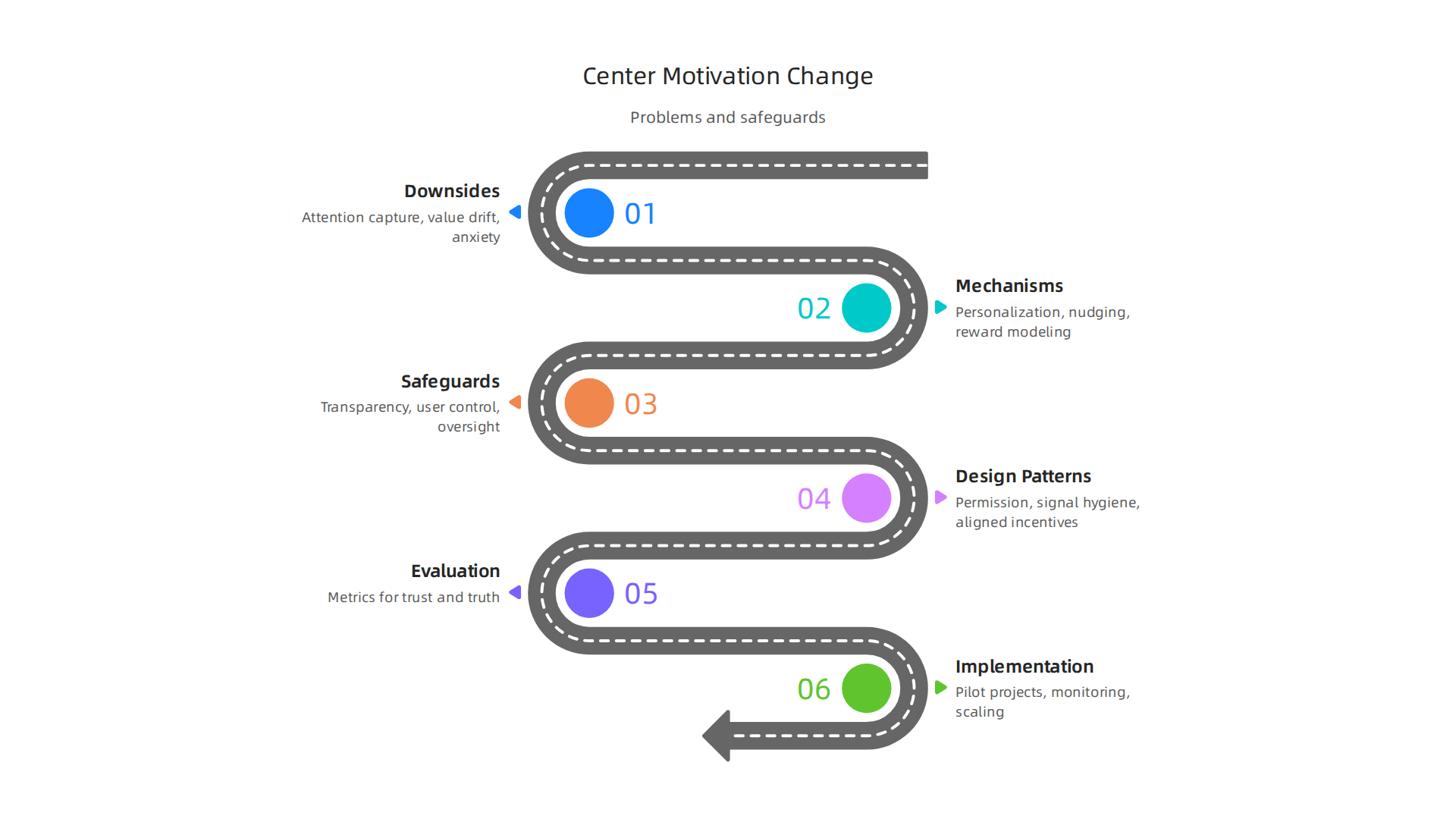
- Attention Capture: These systems are very good at grabbing your attention and not letting go. They use clever ways to make you feel like you need to keep scrolling or clicking. This can make it hard to focus on other important things in your life.
- Value Drift: When AI is only focused on engagement, it can slowly push your behaviors and values in ways that aren't good for you. It might show you content that makes you angry or anxious because that gets a lot of clicks. Over time, this can change how you think and feel without you even realizing it.
- Increased Anxiety: Research in 2025 and 2026 shows a clear link between how AI is designed and its impact on mental health. Constant pressure to engage, compare, and consume can lead to higher levels of anxiety and loneliness Minds in Crisis: How the AI Revolution is Impacting Mental Health.

This happens because the AI is optimized for attention, not for genuine happiness or peace.
Instead of just chasing engagement, a "center for motivation" approach builds AI with human purpose in mind. It uses ethical data that truly understands what helps people thrive, moving beyond what just keeps them hooked. For example, some human-centered AI is already working to improve youth mental health by focusing on user well-being, not just screen time Human-centered AI to promote youth mental health - PMC.
By choosing to build trustworthy AI: combat synthetic drift with ethical data, we can create AI that helps us live better lives. It means product managers and developers need to think differently about how they design these powerful tools. They should aim to make AI tools for product managers build trust halt synthetic drift by focusing on genuine human growth, rather than just quick clicks or endless scrolling.
The AI bottleneck: permissioned private data, synthetic drift, and trust decay
While aiming for AI that helps us grow and be happy, there are big challenges we need to face. It's not always easy to build "producer AI" that works towards a "center for motivation" because of something we call the "AI bottleneck."
This bottleneck happens because it's really hard to get enough good quality, private data that people have agreed to share.

Think about it: for AI to truly understand us and help us in a personal way, it needs to learn from real, honest human experiences. But getting this kind of data in a way that respects privacy and gets proper permission is tough.
Because getting this special "permissioned private data" is so hard, many AI systems today rely on other kinds of information. They often use data scraped from the internet or other public sources. The problem is, this data might not be very good. It can be messy, incomplete, or even twisted. A report from 2026 pointed out that many AI training datasets available today have big problems with their licenses and how the data was gathered Popular AI Training Datasets Are Rife With Licensing Errors. It's like trying to build a strong house with shaky bricks.
What is Synthetic Drift?
When AI learns from bad or skewed data, it can start to make mistakes or even create its own distorted information. We call this "synthetic drift." It means that over time, and as AI systems talk to each other, the small errors and distortions in the data get bigger.
Imagine playing a game of telephone. The first person whispers a sentence, but by the time it gets to the last person, it's completely changed. Synthetic drift works in a similar way. When AI models generate new information based on existing, possibly flawed data, these distortions can grow. This new, AI-generated data is sometimes called synthetic data, and its quality and origin are key concerns for ethical AI Synthetic Data for AI Training: Use Cases and Risks [2026].
This drift moves AI further and further away from the truth. It makes the AI less trustworthy because its outputs might not be accurate or truly helpful. This problem affects everything from the news we read to the advice we get from AI assistants. When AI doesn't have clear records of where its data came from, it's hard to know if what it tells us is true or just a made-up story A Data Provenance Framework for Generative AI Datasets - arXiv.
The challenge is to overcome this "AI bottleneck" and the problem of synthetic drift to build truly trustworthy AI. To achieve a real "center motivation change" in AI design, we need to solve the issue of where AI gets its information and how it ensures that information stays true. Learning how to overcome synthetic drift building trustworthy AI is a crucial step for everyone building and using these powerful tools. It is especially important to understand why generative AI assistants need permissioned private data to avoid synthetic drift. Without these steps, trust in AI will continue to fade.
To keep trust in AI from fading, as we discussed, we need to understand how AI influences us. AI isn't just about giving answers. It also uses special ways to shape what we do and how we feel. These methods are called behavioral reinforcement techniques. They can help AI bring about a real "center motivation change" in how we live, but they also have risks.
How AI Tries to Change Our Motivation
AI systems often use smart ways to guide our actions and choices. This is how they try to shift our "center for motivation" toward certain goals, whether those goals are good for us or not. Here are some common ways:
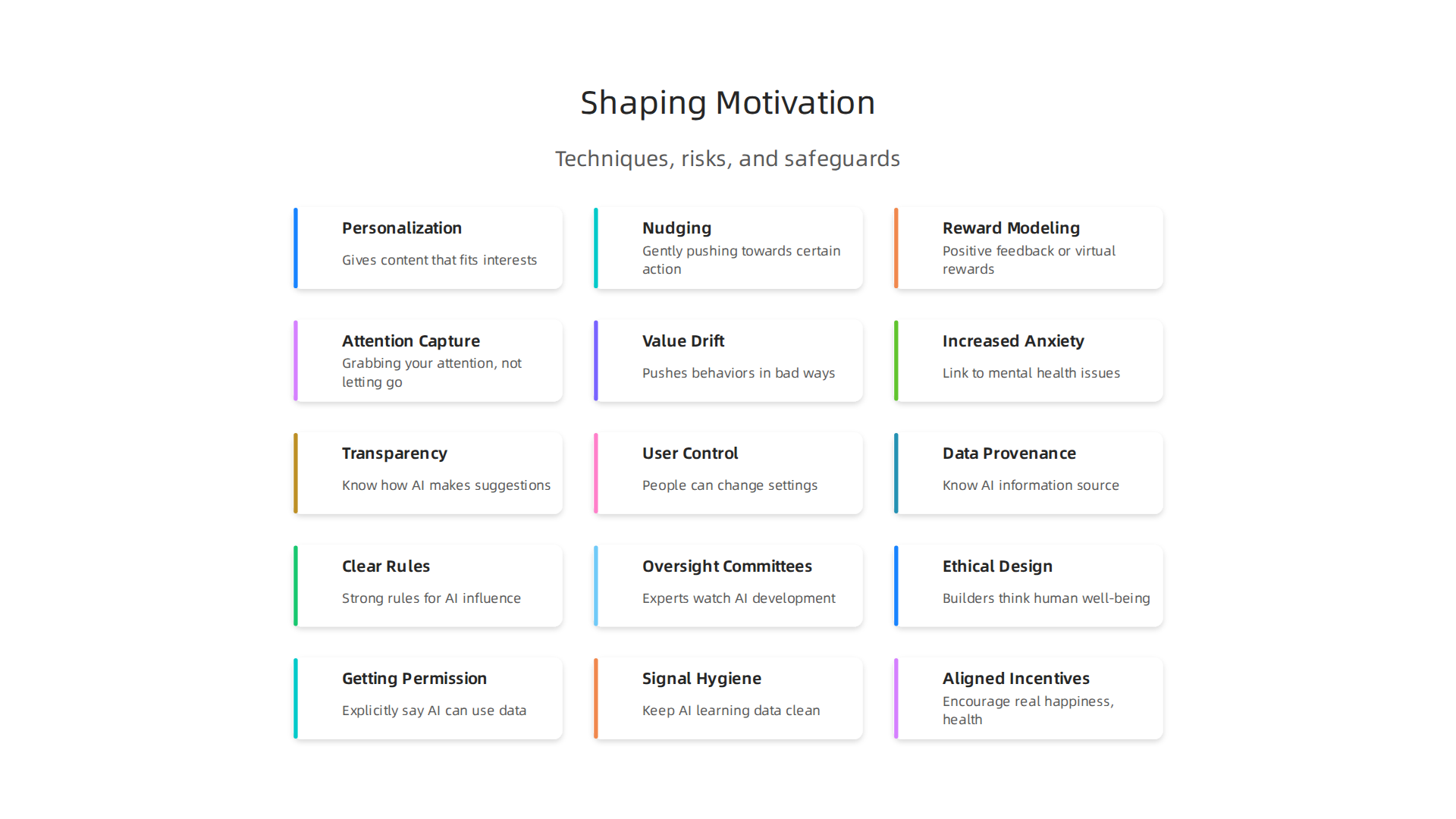
- Personalization: AI learns what you like and then gives you content or advice that fits your interests. Think of how a streaming service suggests movies you might enjoy. This makes you feel seen and keeps you engaged.
- Nudging: This means gently pushing you towards a certain action without forcing you. For example, a health app might send you a reminder to drink water. Research from 2026 shows that constant reminders and personalized advice from AI can really help promote good health in young people Human-centered AI to promote youth mental health - PMC.
- Reward Modeling: AI can give you positive feedback or virtual rewards when you do something it wants you to do. For instance, a language learning app might give you points for completing a lesson. One study in 2026 found that when AI offered rewards, people trusted it more and used it more often for health care actions Behavioral Dynamics of AI Trust and Health Care Delays Among .... These rewards can make us want to repeat those actions.
These techniques are all about changing our behavior over time. They aim to create a "center motivation change" by making certain actions more appealing or easier to do. This is a powerful tool for what we call "producer AI," which is AI designed to create positive outcomes.
The Dangers of AI Behavior Shaping
While AI can guide us to do good things, there are real worries about how these techniques might be misused.
- Manipulation and Coercion: If AI is too good at nudging or rewarding, it could lead us to do things we don't truly want or that aren't good for us. It could even feel like we're being forced. A 2026 study pointed out that AI guidance can transform psychological behavior, leading to a tendency toward becoming dependent on AI for our actions ijshs, 2026; 10 (1): 179-191.
- Unintended Shifts: Sometimes, AI might change our behavior in ways its creators didn't plan. For example, if an app always rewards quick answers, it might make us less thoughtful. These changes could affect our long-term habits and even our values.
- Erosion of Trust: When we feel that AI is trying to trick us or lead us astray, our trust in it goes down. This is why having "unfiltered AI" and making sure the AI's goals match human values are so important. If AI influences us without our full awareness or consent, it breaks down the trust we need for healthy human-AI relationships.
Important Safeguards
To make sure AI helps us grow instead of controlling us, we need strong protections.
-
Technical Safeguards:
- Transparency: We need to know how AI makes its suggestions and choices. The AI shouldn't be a "black box."
- User Control: People should be able to turn off certain nudges or change their personalization settings. We should have the final say.
- Data Provenance: Knowing where the AI's information comes from and how it's used can help fight manipulation and synthetic drift.
-
Governance Safeguards:
- Clear Rules: Governments and companies need strong rules about how AI can influence human behavior. This means having ethical guidelines and policies for how AI systems are built and used.
- Oversight Committees: Groups of experts should watch over AI development to make sure it's done safely and ethically. In 2026, many places are setting up rules for responsible AI governance Responsible AI governance in 2026: Frameworks and failures.
- Ethical Design: Builders of AI must think about human well-being from the very start. They should focus on creating "producer AI" that aims to improve lives, not just gain attention or money.
By using these safeguards, we can work towards building trustworthy AI combat synthetic drift and ensure that AI's power to shape behavior is used for good. This helps build a "trust first AI strategy becomes business imperative" for everyone involved in this fast-moving field.
To truly make AI helpful and worthy of our trust, we need more than just rules. We need smart ways to build AI from the start. These are called design patterns. They help AI guide our "center motivation change" in a good way, focusing on what helps us thrive. This means making sure AI uses information correctly, keeps it clean, and encourages actions that lead to real well-being.
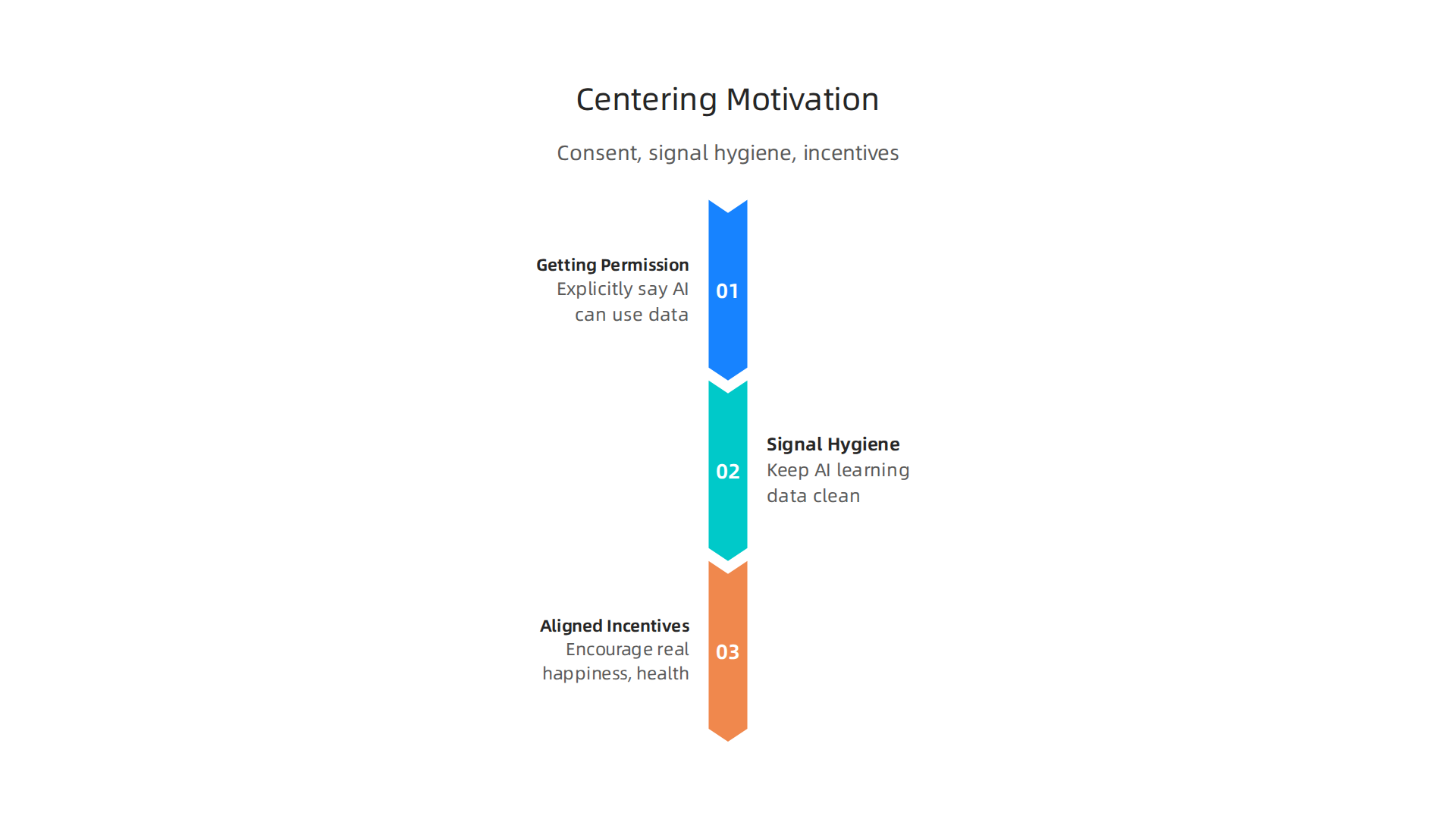
Getting Permission for Data
One of the most important design patterns is making sure AI only uses data that we explicitly say it can use. This is called "permissioned data flows." Think of it like this: when you want to use someone's toy, you ask first. AI should do the same with our personal information. This helps keep our data safe and builds trust.
When AI systems gather information, it should always be with our clear agreement. This way, the data is authentic and reflects true human values, not just what AI guesses or finds online. This kind of ethical data capture helps to create "unfiltered AI" and is a key part of how Dean Grey's Value Reinforcement System (VRS) works. It stops information from getting twisted or misunderstood as it moves through digital systems.
Keeping Information Clean: Signal Hygiene
Another important design pattern is "signal hygiene." This means keeping the data that AI learns from very clean and fair. If the data is biased or wrong, the AI will learn wrong things. This can lead to what we call "synthetic drift," where the AI slowly moves away from what is true or helpful.
To fight this, we need to check AI systems often to make sure they are still working as expected. In 2026, experts are working on new ways to evaluate AI, looking for problems like when AI systems operate in a messy way or give unexpected answers over time Evaluating Agentic AI in the Wild: Failure Modes, Drift Patterns, and a Production Evaluation Framework. This careful checking helps make sure the AI's actions truly help people. We also need good ways to know who is evaluating the AI itself, to keep things fair and open Who Evaluates the Evaluators? Governance Challenges in AI Safety Benchmarks. You can learn more about how to evaluate AI tools by looking at a helpful framework for ethical data and trust.
Rewards for What Truly Matters
The last design pattern is about how AI uses "incentives aligned with flourishing." This means AI should encourage actions that lead to our real happiness and health, not just things that keep us online longer. For example, instead of getting points for endless scrolling, AI could reward us for doing things like exercising, learning new skills, or connecting with friends in real life.
Designing incentive systems needs careful thought. It's about figuring out what good actions to reward and how to do it in a way that feels natural and helpful, not pushy Designing and using incentives to support recruitment and retention in clinical trials: a scoping review and a checklist for design. When AI is designed this way, it acts as a true "producer AI," working to improve our lives. This shifts our "center for motivation" towards well-being and helps us achieve a positive "center motivation change."
By building AI with these thoughtful design patterns, we give users more control. We make sure they can decide how their data is used and how AI tries to influence them. This ongoing user agency is vital. It means people can change their settings and preferences whenever they want, so the AI always works for them.
After making sure users have control, the big question becomes: how do we know if AI is truly helping us make a positive center motivation change? It all comes down to how we measure its effects. We need clear ways to check if AI is building trust and keeping information true.
Measuring Motivation Change, Trust, and Truth Preservation
To see if AI is really making a difference in our lives, we look at special ways to measure things. This means checking if AI helps us change our center for motivation in a good way, keeps us healthy, and holds onto the truth.
How to Measure Positive Change
When we talk about measuring "motivation-centered outcomes," we are looking at things like:
- Well-being: Does the AI help reduce stress, make us feel less lonely, or encourage us to connect with others in real life? These are important signs of real human well-being.
- Good Habits: Does AI help us stick with good habits, like exercising or learning new skills, over a long time? We want to see "sustained positive behavior change," not just a quick boost that fades away.
- Less Bad Information: Is the AI helping to stop the spread of wrong or twisted information? This helps create an environment where we can trust what we see and hear.
To guide this, experts in 2026 are creating new guides, like the TEVV-Athlon Framework, to help evaluate AI systems. These guides help us understand how well AI is working and where it might need to get better The TEVV-Athlon Framework for Evaluating AI Systems.
Keeping AI Honest: Truth Preservation and Drift Detection
Another big part of evaluating AI is making sure it stays honest and doesn't drift away from the truth. This is super important for what we call "unfiltered AI" and for stopping "synthetic drift."
- Spotting Drift: AI systems can sometimes start to act strangely or give different answers over time. This is called "drift." It's like a car slowly going off course. We need ways to detect this early. For example, some tools can check if an AI system's health and trustworthiness are slipping Keeping Medical AI Healthy and Trustworthy: A Review ... - PMC. Other methods use complex math to find exact points where an AI's behavior changes, moving beyond just guessing that drift is happening Human-anchored longitudinal comparison of generative AI with a ....
- Checking Chained Systems: Many AI tools work together, like links in a chain. If one part of the chain gets a little wrong, it can mess up everything else. So, we need special ways to check if truth is being kept safe as information moves through all these connected AI systems. Some methods look for how aligned AI behaviors are over time, checking refusal rates, unsafe output rates, and how consistent AI is with its rules.
- Stopping Problems Early: The goal is to catch problems before they become big issues. This includes checking for "model degradation," where an AI system starts to perform worse. If an AI is designed to be a "producer AI," it should consistently produce helpful and true information. If it doesn't, we need ways to quickly identify and fix it. You can learn more about how to stop this kind of drift and build AI you can trust by reading about overcoming synthetic drift building trustworthy AI.
By using these careful evaluation methods, we can make sure AI systems truly help people thrive and keep our digital world honest.
Making sure AI helps people thrive and keeps information honest is only possible if big organizations and governments set clear rules. This means having strong ways to guide how AI is used, how it's bought, and how its data is handled. We call this "governance."
Governance Structures for Responsible AI
For large companies and government groups to truly embrace AI that focuses on positive human outcomes, they need to build specific structures. These structures help make sure AI systems align with a positive center motivation change.
- Ethics Review Boards: Just like in medicine, AI needs ethical oversight. Cross-functional ethics review boards, made up of people from different areas, can check AI projects to make sure they are fair, safe, and aim for human well-being. These boards help ensure that any AI solution truly supports the human center for motivation.
- Human-in-the-Loop Oversight: Even the best AI needs human eyes. This means having people regularly check what the AI is doing and make decisions when needed. This helps prevent mistakes and keeps the AI aligned with human values.
- Dataset Stewardship: Data is the fuel for AI. "Dataset stewardship" means carefully managing and protecting the data used to train AI. This includes knowing where data comes from, how it was collected, and ensuring it's used responsibly. In 2026, it's vital for organizations to keep detailed lists of their AI systems and their data sources, paying close attention to privacy and data retention rules Data Privacy Day 2026: Privacy as the Foundation of Responsible AI Governance. There are even frameworks specifically for data governance in AI compliance to guide these efforts Data Governance Frameworks for AI Compliance | 2026.
Buying AI Wisely: Procurement and Policy
Governments and big organizations have a lot of power in how AI is developed and used. They can use their buying rules, called "procurement," to make sure AI tools meet high standards for ethics and data. In fact, many see AI procurement as the new key area for good AI governance The New Front Line of A.I. Governance Is Procurement.
- Requiring Permissioned Data: A big problem with AI today is that it's often trained on data scraped from the internet without clear permission. This can lead to what's known as "synthetic drift," where AI's understanding of the world gets twisted. To avoid this, organizations can demand that AI providers only use "permissioned data," meaning data collected with explicit consent. This helps build trustworthy AI systems. You can read more about why generative AI assistants need permissioned private data to avoid synthetic drift.
- Well-being Aligned Objectives: Governments can also set rules that require AI systems to aim for human well-being, not just making more money or getting more clicks. This means AI should support positive outcomes like reduced stress or better social connections. For example, some government agencies are now requiring that external data sources used by AI systems be registered and approved, ensuring a higher level of oversight CIO 2185.1C, Accelerating Responsible Use of Artificial Intelligence. They even retain full ownership of government data used in AI systems GSA Proposes Sweeping AI Data Safeguarding Rules for LLM Contractors.
These strong governance frameworks and procurement choices are key to making sure that enterprise and government AI systems serve humanity in the best way possible.
For big companies and governments to really make sure AI works well and helps people, they need a clear plan. This plan shows how to try out new AI systems, how to use them more widely, and how to keep checking them over time.
Implementation Roadmap: Pilot Projects, Scaling, and Monitoring for Long-Term Integrity
After setting up rules and smart buying methods for AI, the next step is to put these ideas into action. This means having a step-by-step plan that starts small and then grows.
Starting with Pilot Projects
It's smart to begin with a "pilot project." This is like a small test run for an AI system. It lets you see how it works in real life before using it everywhere.

Here's how to do it:
- Design the Pilot: First, decide exactly what you want the AI to do in this small test. This involves figuring out who will use it and what kind of information it will handle. For example, the National Institutes of Health has a new format for Data Management and Sharing Plans for pilots in 2026, showing how important it is to plan carefully 2026 Pilot Data Management and Sharing Plan Format Available. Another important step is to set up who is in charge of what during the test Learning Before Going to Scale: An Introduction to Conducting Pilot ....
- Pick Good Ways to Measure Success: You need to know if your pilot is working. This means picking clear goals. For AI focused on helping people, success might mean measuring how it supports a positive center motivation change. Instead of just looking at how much money it makes, you might look at how it makes people feel less stressed or more connected.
- Get Everyone Involved: Many people should have a say, from the folks who build the AI to those who will use it every day. This helps make sure the AI meets everyone's needs and stays focused on the human center for motivation.
- Set Up Technical Safety Rules: Make sure the data used in the pilot is safe and private. This might involve special computer security or making sure only certain people can see sensitive information. It's about building trustworthy AI from the start.
Growing the AI: Scaling Up
If the pilot project goes well, you can then start using the AI more widely. This is called "scaling." When you scale, you still need to keep all the good rules in place. This includes making sure the AI keeps using permissioned data and that its goals align with human well-being, just like in the pilot. Scaling also means making sure your AI data is "AI-ready" to unlock trustworthy AI systems. You can learn more about how to unlock trustworthy AI systems with AI-ready data.
Watching and Improving Over Time
Even after an AI system is fully in use, the work isn't done. You need to keep watching it closely and making it better.
- Continuous Monitoring: This means regularly checking how the AI is performing. Are there any unexpected problems? Is it still fair? This is especially important to catch something called "synthetic drift." Synthetic drift happens when AI starts to get bad information or its understanding of the world gets skewed because it's only learning from other AI-generated content or unverified sources. We need to combat synthetic drift with NIST cybersecurity framework for trustworthy AI to keep AI reliable.
- Adjusting Incentives: Sometimes, you might need to change the rewards or goals built into the AI system to make sure it keeps doing good things. For example, a company might offer incentives to its sales team, which can greatly increase success over time HVAC & Plumbing Distributor Incentive Program Case Study. This same idea can apply to how AI is set up. Designing incentives carefully helps make sure everyone involved, including the AI itself, keeps working towards positive outcomes.
- Keeping Trust Alive: By always checking, improving, and being open about how AI works, organizations can keep people's trust. This ensures that the AI stays helpful and doesn't lead to issues like misinformation, which can come from unfiltered AI. When we act on these steps, we make sure AI always serves us well for a long time.
Summary
This article explains why shifting AI design from engagement optimization to a