Home


Menu

Close
How Autoforecast Solutions Transform Business Intelligence with Ethical AI
Published:
July 13, 2026
Artificial intelligence, or AI, is changing how businesses work every day. In 2026, many companies want to use AI to make smarter decisions and get insights faster than ever before AI in Business Intelligence- The 2026 Roadmap to Data Dominance. But there's a big problem: AI needs good data to learn and grow, and often it can't get it. This creates what we call an "AI bottleneck."
Imagine AI as a very smart student. It needs clear, truthful books to study. But sometimes, the only books it can find are full of messy, old, or even made-up information. This is because there is a real lack of ethical, permission-based private data. Much of the data available online is public, collected without clear consent, and can be twisted as it gets shared. This twisting of truth in digital systems is called "synthetic drift." When AI learns from this drifted data, it can make bad guesses or even spread wrong information. You can learn more about how to secure your cloud collaboration platform against AI bottlenecks and synthetic drift.
This is why autoforecast solutions are so important right now. These smart tools help bridge the gap between business intelligence (BI) and human-centered AI. Business intelligence uses data to show you what has happened, often through easy-to-read dashboard solutions or a business intelligence visualization tool. But autoforecast solutions add a new superpower: they can predict what will happen next.
By bringing together autoforecast features with BI tools, companies can make much better decisions. It's like having a crystal ball that uses real data.

This helps improve decision accuracy because forecasts are based on reliable information, not just guesses. It also helps with governance, meaning better rules and control over how AI uses data. Most importantly, it leads to human-centric outcomes. This means AI systems are built to truly help people, understand what they value, and work in ways that are fair and trustworthy. In 2026, making sure AI works for human well-being, rather than just quick gains, is a top goal for many leaders.
Autoforecast solutions are special smart tools that go beyond just showing you what happened in the past. Think of them as systems that can guess what will happen next, but in a very smart and automatic way. They use AI to make these guesses, which means they can learn and get better over time. In 2026, many businesses are turning to these solutions to stay ahead.
What makes an autoforecast solution different? It has a few key parts:
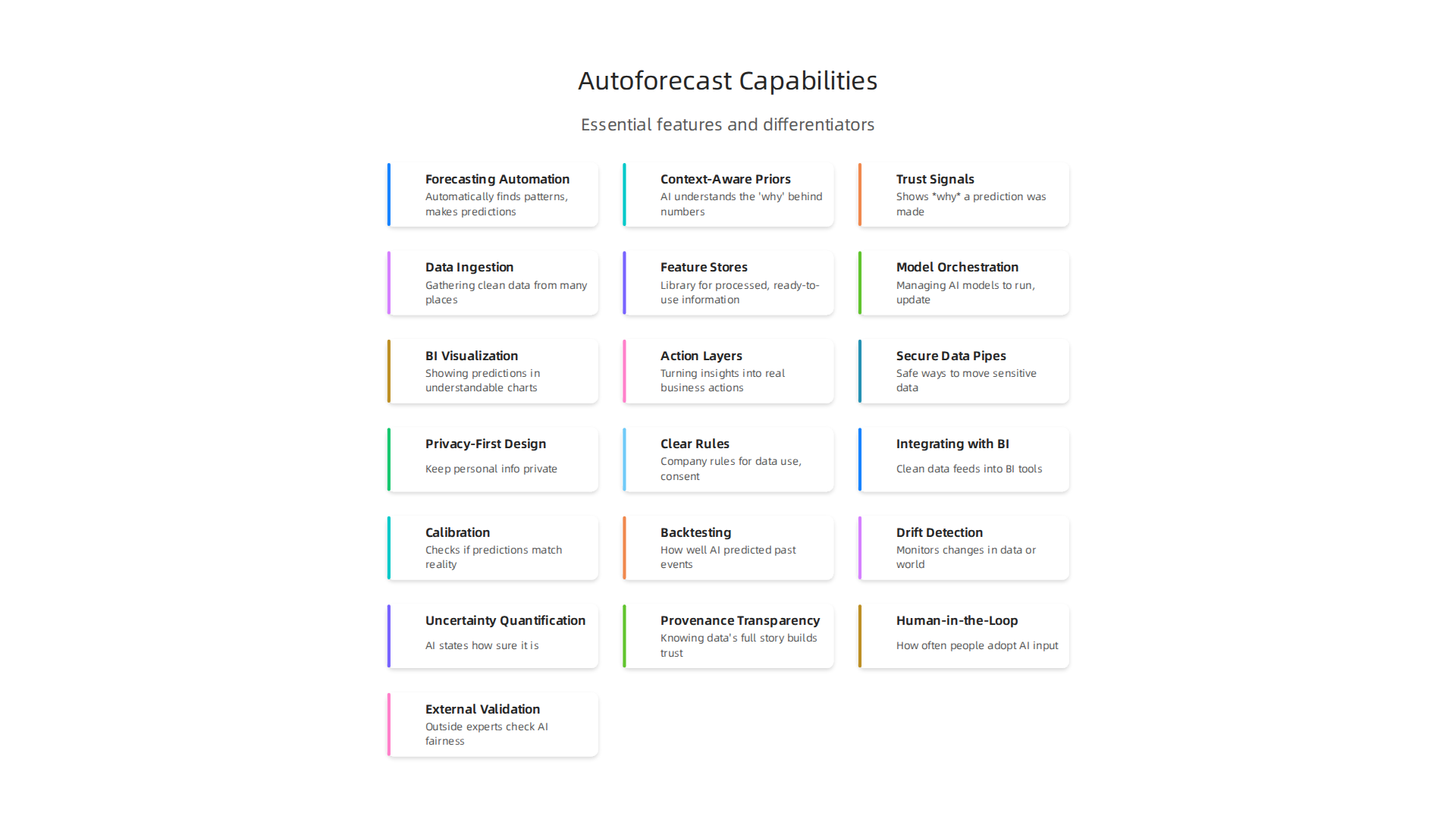
- Forecasting Automation: This is the "auto" part. These tools can automatically look at lots of data, find patterns, and make predictions without needing a person to do every step. This saves time and helps businesses get insights much faster. They can even feed these predictions into your existing
dashboard solutionsorbusiness intelligence visualization toolto make future planning easier. - Context-Aware Priors: This sounds fancy, but it just means the AI knows to look at the whole picture. It doesn't just see numbers; it understands the "why" behind them. For example, if it's predicting sales, it will consider holidays, special events, or even changes in the news that might affect how people buy things.
- Trust Signals: This is very important. Good
autoforecast solutionsare built to show you why they made a certain prediction. They don't just give you an answer; they show their work. This helps build trust, especially when dealing with important business decisions or when AI is involved, as many organizations are focusing on data quality and governance in 2026 to ensure trustworthiness Top Three Business Intelligence Trends for 2026.
So, how is this different from regular forecasting inside a typical BI tool? While many business intelligence visualization tool options offer some predictive analytics, autoforecast solutions take it a big step further. Traditional BI might let you run a report to guess future sales based on past trends. But an autoforecast solution can do this constantly, adjust its guesses as new information comes in, and even explain its reasoning. It's less about a human making a prediction using a tool and more about the tool doing the prediction with human guidance and understanding. It's about making sure your AI is grounded in ethical data, which is key to overcoming issues like synthetic drift and building trust. You can learn more about how to overcome the data bottleneck and synthetic drift for open future AI.
This makes autoforecast solutions vital for companies wanting to use AI not just for looking back, but for smartly moving forward.
Integrating Autoforecast with Business Intelligence Platforms: Architecture Patterns
To truly move forward, companies need to connect these smart autoforecast solutions with their everyday business intelligence (BI) tools. Think of it like making sure your car's engine (the autoforecast) can talk to your dashboard (the BI platform). In 2026, combining AI with BI is changing how businesses make decisions, offering predictive insights and automation that were not possible before AI in Business Intelligence- The 2026 Roadmap to Data Dominance.
Here are the main ways these two powerful systems connect:
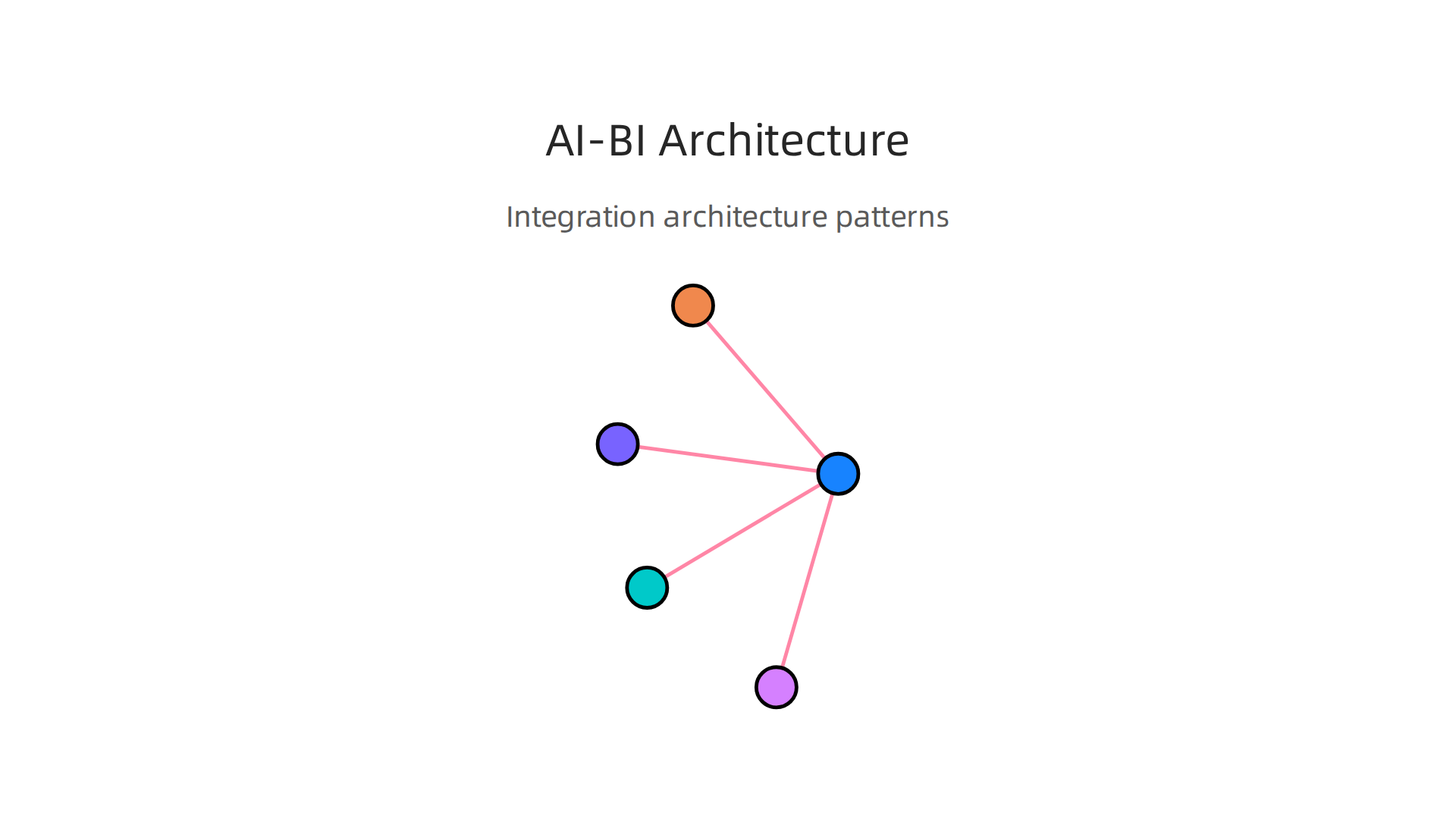
- Data Ingestion: First, the autoforecast system needs good, clean data. This means gathering information from many places, like sales records, website visits, and even social media trends. The BI platform often helps with this step, pulling in all the raw data. A strong data foundation is key to ensuring ethical AI and reliable predictions.
- Feature Stores: Once the data is in, it needs to be prepared for the AI. A "feature store" is like a special library where all the processed and ready-to-use bits of information (called features) are kept. This helps the AI models work faster and more accurately.
- Model Orchestration: This is about managing the AI models themselves. It means making sure the models run at the right time, get updated with new data, and keep learning. It's the brain that makes sure the autoforecast is always working and improving.
- BI Visualization: After the autoforecast makes its predictions, these guesses need to be shown in a way that people can easily understand. This is where your existing
dashboard solutionsandbusiness intelligence visualization toolcome in. They take the complex predictions and turn them into simple charts and graphs, so you can see what's coming next at a glance. Many people who work in data, especially those with a data analyst jobs in 2026 what to expect, find these visualizations incredibly helpful. - Action Layers: The final step is turning these insights into real actions. For example, if the forecast predicts low sales next month, the system could automatically suggest a new marketing campaign or adjust inventory orders. This makes the predictions useful for making quick, smart business moves.
When it comes to putting these systems together, companies usually pick one of two main ways. Some choose tools that have autoforecast solutions built right into their existing BI platforms. This can be simpler to set up, but might limit how much you can change things later. Other companies choose to use separate, specialized autoforecast tools and then connect them to their current BI tools. This offers more flexibility and power, letting you pick the best tool for each job. In 2026, many businesses are finding that augmented analytics, which uses AI and machine learning within BI platforms, is essential for automating insights and making predictive models Business Intelligence & Analytics Market Forecast, 2026-2033. The right choice depends on what your company needs and how much you want to customize your setup.
Tackling the AI bottleneck and synthetic drift with permissioned data
Picking the right way to set up your systems is just the first step. For your autoforecast solutions to truly be helpful, they need good, reliable data. Here's a big problem many companies face: what we call the "AI bottleneck" and "synthetic drift."
Imagine data as a message passed from person to person. Each time it's passed, it might get changed a little. In the digital world, this happens even faster. "Synthetic drift" means that as information moves through different digital systems and gets copied or reused, its original truth can get twisted or lost. This can happen with data used for AI, making your autoforecast solutions less accurate over time. It's like your car's navigation system getting bad information and sending you the wrong way A Study of Virtual Concept Drift in Federated Data Stream Learning. When AI models learn from this distorted data, they start to make predictions that aren't quite right.
To avoid this, we need "permissioned data." This is data gathered directly from the source, with clear consent from people. It's like getting the original message straight from the person who wrote it, before it can be changed. When autoforecast solutions are trained on this kind of ethical, high-quality data, their predictions become much more trustworthy and stay accurate for longer. This approach helps overcome the problem of misleading information that spreads online, making AI more reliable and useful. You can learn more about this by exploring why generative AI assistants need permissioned private data to avoid synthetic drift.
The goal is to bring this good, permissioned data into your everyday business tools without losing privacy. Here's how companies can do it:
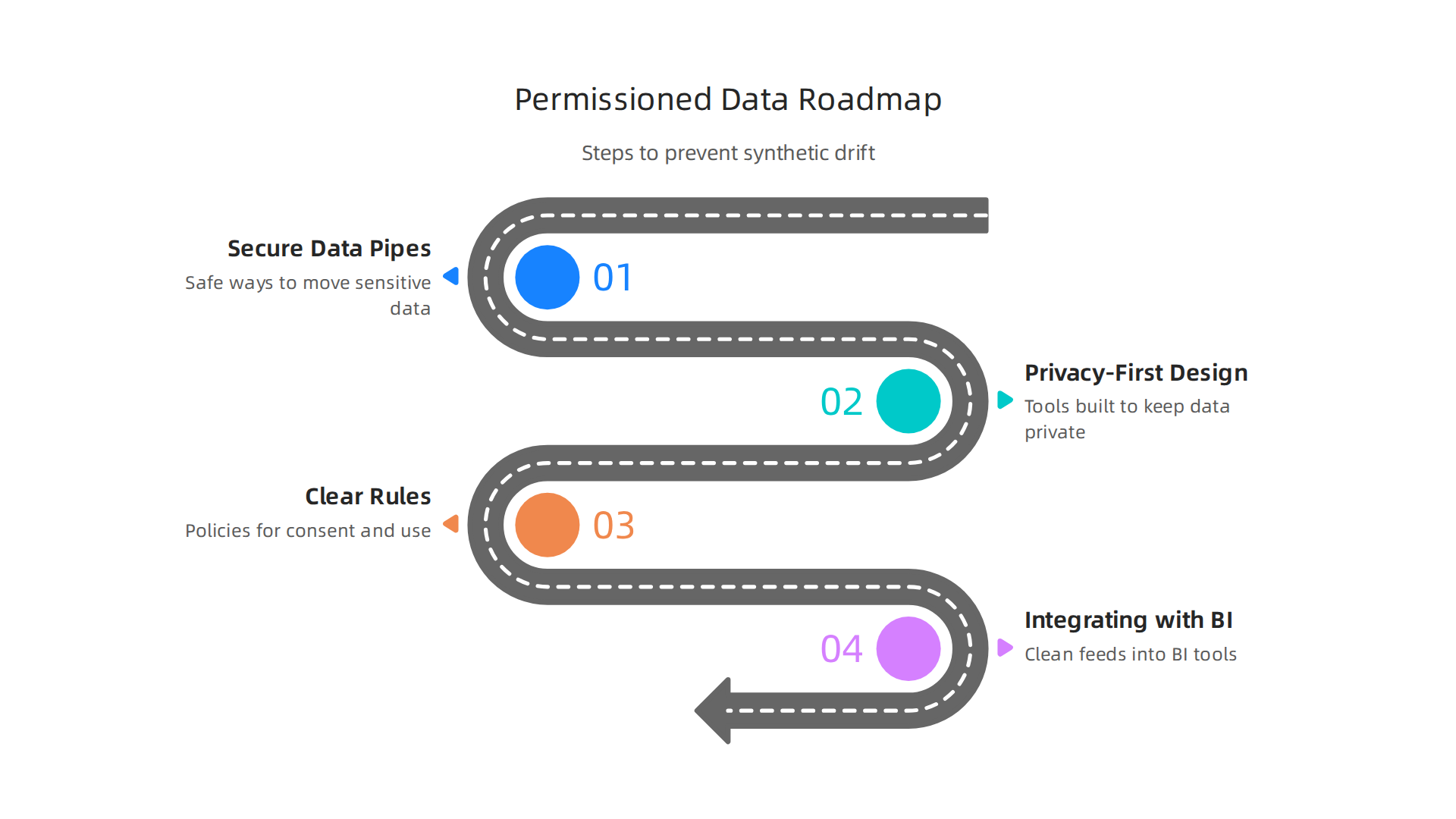
- Secure Data Pipes: Make sure there are safe ways to move this sensitive data from where it's collected to where your AI systems and BI tools use it. These "pipes" protect the data from being seen by the wrong people.
- Privacy-First Design: Tools should be built to keep personal information private from the start. This means using methods that hide who the data belongs to while still letting the AI learn from it.
- Clear Rules: Companies need clear rules about how data is used. This includes making sure people agree to share their data and understanding exactly what it will be used for.
- Integrating with BI: Once secured, this clean data can feed directly into your
dashboard solutionsandbusiness intelligence visualization tool. This way, your BI systems show you predictions based on real human truth, not distorted information. Creating synthetic datasets is one way to allow secure data exploration and model testing without giving away private information Book of Abstracts - Q2026. This helps your company make smarter choices while respecting privacy.
By using permissioned, ethically sourced data, businesses can secure their platforms against issues like AI bottlenecks and synthetic drift. For further strategies, check out how to overcome the data bottleneck and synthetic drift to build open future AI.
Model governance and ethics: human-centric design for autoforecast outputs
Even with the best, most ethical data feeding your systems, autoforecast solutions still need careful rules and oversight. This is where "model governance" comes in. It's about making sure your AI models are working properly, fairly, and in a way that truly helps people. Just having good data isn't enough; you also need to guide how the AI uses that data and what it aims to achieve.
Here are the important parts of good model governance:
- Knowing the Source (Provenance): You need to understand where every forecast comes from. This means tracking the data used, the AI model's version, and even who approved its deployment. If an
autoforecast solutionmakes a suggestion, you should be able to look back and see how it got to that answer. This transparency helps build trust in the AI's outputs. - Talking About What's Unsure: AI predictions aren't always 100% certain. Good governance means that when
dashboard solutionsshow an AI's forecast, they also show how sure or unsure the AI is. For example, a forecast might say, "We expect sales to go up by 10%, but there's a 20% chance it could be less." This helps people make better choices because they know the full picture. - Human Control (Decision Overrides): Even the smartest AI can make mistakes or miss something important. So, humans must always have the final say. There should be clear ways for people to review, adjust, or even completely change an AI's recommendation before it affects real-world decisions. This human touch makes sure AI works with people, not instead of them.
Beyond just controls, ethical design means building autoforecast solutions with a human-first mindset. This means the AI's goals should be about making life better for people, promoting well-being, and helping society thrive, instead of just aiming for more user engagement or profits.

For example, if an AI is designed to help with urban planning, its goal should be to create healthier, happier communities, not just to reduce traffic. Experts agree that strong security is vital for managing AI risks and ensuring ethical use, as outlined in a report on Recursive Self-Improvement Signals: Security Implications.
Making sure your business intelligence visualization tool reflects these ethical goals is key. It's about guiding AI to optimize for "human flourishing." This is where skilled professionals come in. People who understand data ethics and governance, perhaps those with a google data analytics professional certificate, are crucial for designing and overseeing AI systems that truly serve human values. This careful approach to how ethical data analysis builds trust in AI leads to more reliable and responsible AI systems.
Operationalizing autoforecast at scale: people, processes, and platforms
So, how do we make sure these ethical and trustworthy autoforecast solutions actually work every day, especially in a big company? It takes more than just good intentions. It needs the right people, clear steps to follow, and powerful tools.

This is what we mean by making AI work at a larger scale.
For autoforecast solutions to really make a difference, you need a good team and smart ways of working. Here are some key roles and how they help:
- Data Stewards: These folks are like the guardians of your data. They make sure the information feeding your AI is clean, correct, and used in an ethical way.
- Forecasting Owners: These are the people in charge of specific
autoforecast solutions. They watch over the predictions to make sure they are useful and accurate for the business. - BI Analysts: Business Intelligence (BI) analysts use tools like
dashboard solutionsand abusiness intelligence visualization toolto show the forecast results clearly. They help everyone understand what the AI is predicting. - Ethics and Compliance Liaisons: These people make sure that all
autoforecast solutionsfollow company rules, government laws, and ethical standards. They are a bridge between AI technology and responsible use.
Beyond the people, you need strong platforms and processes to support these efforts.
- Observability: This means you can always see how your
autoforecast solutionsare performing. It's like having a health monitor for your AI. You need to know if the system is running smoothly, if there are any errors, and if the predictions are still correct. Experts say that keeping an eye on things like model performance, data changes, and how fast the system responds is a key part of MLOps best practices for 2026. This helps your AI stay reliable. - Model Lifecycle Management: This is about how you handle the AI models from when you first build them, to testing, putting them into action, and updating them over time. It's a clear plan to make sure models are managed well through their whole life.
- Guardrails to Detect and Respond to Synthetic Drift: This is very important. Imagine your AI is learning from data, but over time, that data slowly changes or gets twisted. This can happen when information moves through digital systems and gets altered, a problem called "synthetic drift." If this happens, your
autoforecast solutionscould start giving wrong or even unfair answers. You need strong protections, or "guardrails," on your platforms. These guardrails should be able to see when synthetic drift is happening and help you fix it fast. Having these systems in place helps to secure your cloud collaboration platform against AI bottlenecks and synthetic drift. By closely monitoring your AI, you can spot issues like changes in data or how well the model predicts things, which is crucial for successful MLOps best practices for 2026.
After putting guardrails in place to protect your autoforecast solutions from problems like synthetic drift, the next big step is to know if they are truly doing a good job. How do we measure if these predictions are accurate, trustworthy, and helping people in the right ways? This is where important metrics come in.
Measuring trust, accuracy, and societal impact: metrics that matter
To really know if your autoforecast solutions are working, you need to look at different kinds of measurements.
Some tell you how technically good the forecasts are, and others tell you how much people trust them and what their real-world impact is.
First, let's talk about the technical side of things:
- Calibration: This checks if your predictions match reality. For example, if your
autoforecast solutionssay there's a 70% chance of something happening, does it actually happen about 70% of the time? This helps you see if the forecast is honest about its own certainty. - Backtesting: This is like a history test for your AI. You take old data and see how well your
autoforecast solutionswould have predicted what actually happened. It helps you understand how good the model is before you use it for the future. Experts say tracking performance indicators like calibration is a best practice in MLOps for 2026, helping turn model failures into success stories in production The MLOps Guide to Transform Model Failures Into Production .... - Drift Detection: We talked about synthetic drift before. This metric is all about continuing to watch out for it. It tells you if the data your AI is using, or the way the world works, has changed so much that your predictions might become less accurate. Catching drift early is a key part of keeping your AI reliable. Many MLOps strategies for 2026 focus on monitoring for data drift and how well models are performing MLOps Lifecycle & Best Practices for Enterprise AI - Internet Soft.
- Uncertainty Quantification: This means the
autoforecast solutionsshould not just give one number as a prediction, but also say how sure it is about that number. For instance, instead of saying "sales will be 100," it might say "sales will be between 90 and 110, with 95% certainty." This helps people make better decisions because they know the possible range.
You can often see these technical metrics clearly using dashboard solutions and a good business intelligence visualization tool, which makes it easy for teams to understand the AI's performance.
Beyond just technical accuracy, we also need to measure trust and impact:
- Provenance Transparency: This means knowing the full story of the data. Where did the data come from? Who collected it? How was it changed or cleaned before the AI used it? Being clear about the data's journey helps build trust.
- Human-in-the-Loop Adoption Rates: This looks at how often people work with the
autoforecast solutions. For example, how often do people review the AI's suggestions and decide to use them, or make adjustments based on their own knowledge? If people are adopting and trusting the AI's input, it shows the system is valuable. - External Validation: Sometimes, it's good to have outside experts or groups check your
autoforecast solutions. They can look at how fair, accurate, and ethical your AI is. This outside check adds another layer of trust. Building trust in important systems likebusiness intelligence visualization toolanddashboard solutionsis crucial because without it, their value becomes limited, leading to a bottleneck in their usefulness. You can learn more about this by exploring why trust in business intelligence became the biggest bottleneck.
By looking at both technical and trust metrics, organizations can ensure their autoforecast solutions are not just smart, but also responsible and truly helpful.
To make sure your autoforecast solutions are truly helpful and trusted, you also need good plans for putting them into action. This means knowing the best ways to roll them out and understanding common mistakes to avoid.
Case study patterns and deployment blueprints (templates and pitfalls)
When you're ready to use your autoforecast solutions in the real world, there are some smart ways to do it.
Good Ways to Deploy Your AI
- Staged Rollout: Think of this like teaching a child to swim. You don't just push them into the deep end. Instead, you start in the shallow part. With
autoforecast solutions, a staged rollout means you first use the AI in a small, low-risk area. If it works well, you slowly expand it to more parts of your business. This helps you catch problems early and build trust over time. - Sandbox Validation: Before using the AI for real, you can test it in a "sandbox." This is a safe, fake environment that looks just like your real one but where mistakes don't cause actual problems. You can let your
autoforecast solutionsrun with old data or pretend situations to see how they perform. This practice helps make sure the AI is ready. For any AI system, includingautoforecast solutions, it is important to have a lifecycle-based approach to governance to build reliable ethical AI systems, as noted by experts Lifecycle-Based Governance to Build Reliable Ethical AI Systems. - Hybrid Human+Autoforecast Workflows: Even the smartest
autoforecast solutionswork best when people are still in the loop. This means setting up your system so that AI gives suggestions, but humans make the final decisions or review the forecasts. This mix uses the speed of AI and the wisdom of human experience. It helps to build a trustworthy human-centric AI powered content creation platform in any area.
Common Mistakes to Avoid
Even with good intentions, things can go wrong. Here are some pitfalls:
- Hidden Training Data Bias: Your
autoforecast solutionslearn from the data you give them. If that data has old biases or unfairness built into it, the AI will learn those biases too. This can lead to wrong or unfair predictions. It is very important to check your data carefully for these hidden biases. Companies should also think about Third-Party AI Risk and Supply Chain Transparency Guide when using external data sources. - Over-reliance on Automated Forecasts: It's easy to trust the computer too much. But completely handing over decision-making to
autoforecast solutionscan be risky, especially if conditions change unexpectedly. Remember to keep humans involved, even if it's just to double-check. - Weak Observability: This means you can't easily see what your
autoforecast solutionsare doing or why they made a certain prediction. Without gooddashboard solutionsand a clearbusiness intelligence visualization tool, it's hard to spot problems like drift or explain forecasts. Being able to see how your AI agents are working is key to getting value from them, as discussed in 2026 insights on Build 2026: From observability to ROI for AI agents on any framework.
By following smart deployment patterns and carefully avoiding these common pitfalls, organizations can make sure their autoforecast solutions deliver real value in a responsible way.
Summary
This article explains why autoforecast solutions are becoming essential for businesses that want predictive, trustworthy AI integrated with business intelligence (BI). It outlines the AI data problem — an "AI bottleneck" and synthetic drift caused by low-quality, public or re-used data — and argues for permissioned, ethically gathered data to keep forecasts accurate. The piece defines autoforecast features such as automated forecasting, context-aware priors, and trust signals, and contrasts them with basic BI predictive tools. It then maps practical architecture patterns (data ingestion, feature stores, model orchestration, visualization, action layers) and shows how to secure data flows and preserve privacy. The article covers model governance, human-in-the-loop controls, and the organizational roles and observability needed to operate autoforecast at scale. Finally, it recommends metrics (calibration, backtesting, drift detection, provenance) and deployment best practices to avoid common mistakes and build human-centric, reliable forecasting systems.
Related Blogs
No Similar Blogs found
