Home


Menu

Close

How a Data Management Platform Builds Trustworthy AI Systems
Published:
September 18, 2026
In 2026, Artificial Intelligence (AI) helps us in many ways. But there's a big problem, a kind of "AI bottleneck."

Many AI systems learn from information found all over the internet. This public data isn't always checked for truth or ethical use. When AI relies too much on this kind of data, it can start to get things wrong or even twist the truth. This makes it hard to trust what AI tells us. We call this problem "Synthetic Drift." It means that as information moves through digital systems, it can become less real and less aligned with human values. This way, AI may not serve us as well as it could.
Actually, for AI to work well, it needs good, ethical data. This means data that people have agreed to share and that is used fairly. Without this, the value that AI can bring might not be what we expect. Experts agree that AI without trustable, ethical, and well-managed data can fail dramatically. This highlights how important governance is for successful data management programs in 2026, as noted in the Data Modernization and AI, 2026 - IBM report.
This article will show you practical steps to deal with these issues. We will explore how to design strong data and platform strategies. These strategies will help reduce Synthetic Drift, make AI more trustworthy, and unlock useful business insights. We will look at how to build trustworthy global AI systems to beat AI bottlenecks and stop synthetic drift by carefully managing data. A robust data management platform is key to making this happen.
For leaders in big companies, government groups, and non-profits, this is very important. We will cover how to set up clear rules, or "governance," for AI. We will also look at how to build the right systems, called "architectures," and how to measure if everything is working correctly. This way, you can make sure your AI tools help people live better lives and truly align with human flourishing. An Intelligent Data Governance and Ethical AI Framework for Enterprise Information Systems is key to embedding fairness and trust directly into AI systems. Building a strong trust first AI strategy becomes business imperative in 2026 to overcome these challenges.
Why the AI Bottleneck Threatens Trust — and How a Data Management Platform (DMP) Helps
The "AI bottleneck" is a serious problem because it can break our trust in AI. It happens in three main ways:
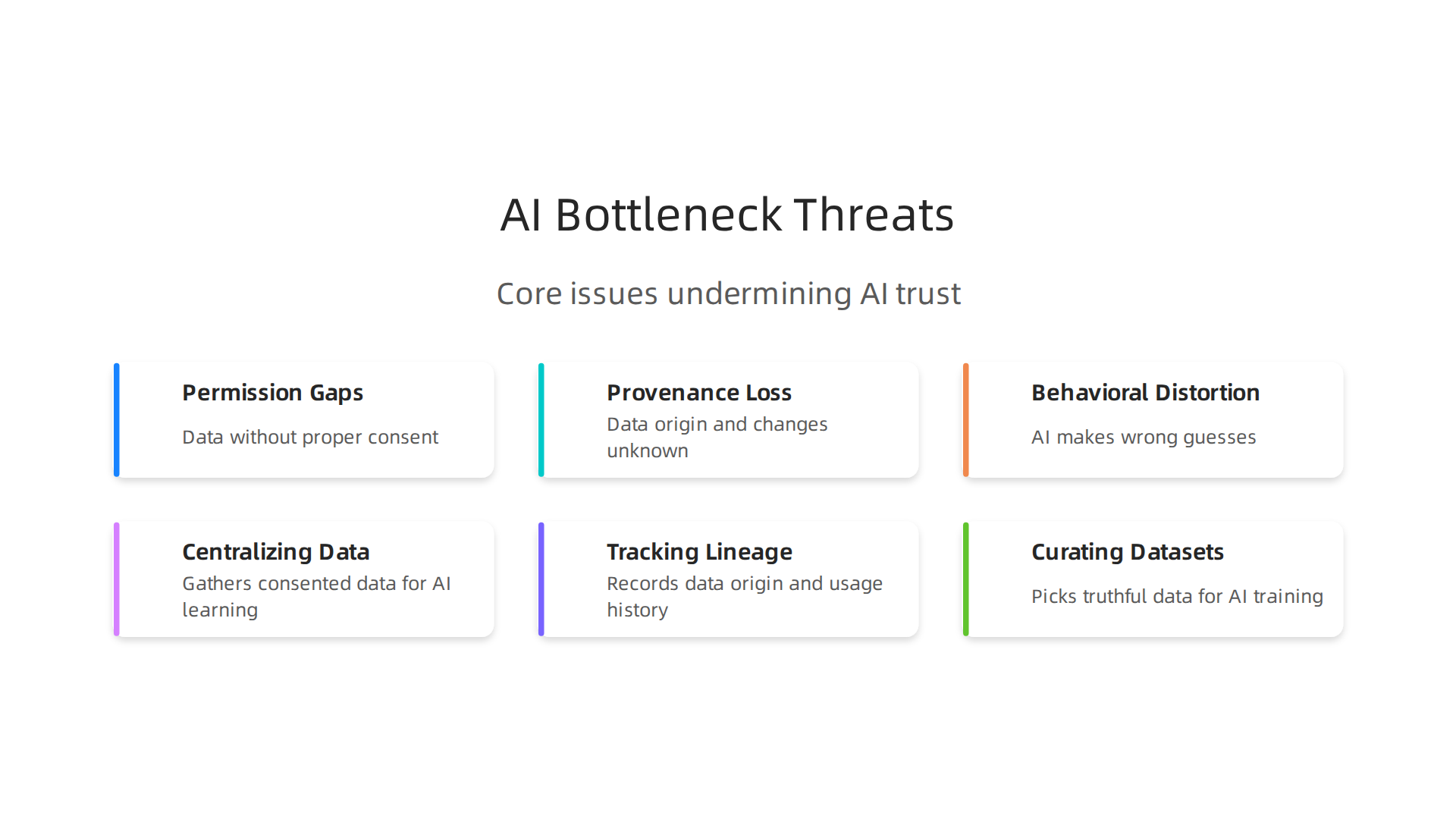
1. Permission Gaps
Imagine your neighbor telling stories about you that they heard from someone else, and you never gave them permission. That's a permission gap. Most AI systems learn from data found everywhere on the internet. But often, the people who first created that data never said it was okay for AI to use it. This means AI might be using information without proper consent, which is not fair or right.
2. Provenance Loss
Think of a story that gets told from person to person. After a while, it's hard to remember who first told the story or if parts of it changed. This is "provenance loss." For AI, it means we lose track of where the data came from. We don't know who collected it, how it was handled, or if it was changed over time. If we don't know the true source, how can we trust the AI that learned from it?
3. Downstream Behavioral Distortion
When AI systems are fed data that has permission gaps or lost provenance, they can start to make wrong guesses or give bad advice. This is "downstream behavioral distortion." The AI might learn to spread untrue ideas or act in ways that are not helpful for people. For example, an AI virtual assistant might start giving strange answers if its training data was mixed up.
How a Data Management Platform (DMP) Steadies the Ship
This is where a good data management platform comes in. It's like a special, organized library for all the information AI needs. A DMP helps by:
- Centralizing Consented Data: It gathers data that people have clearly agreed to share. This means the AI only learns from information that has a "yes" from its source.
- Tracking Data's Story (Lineage): A DMP keeps a clear record of where every piece of data came from and how it has been used or changed. This is called data lineage. It's like having a clear family tree for all your data, showing its history.
- Curating Datasets for Safe Training: Experts use the data management platform to pick out the best, most truthful datasets for AI to learn from. This stops the AI from accidentally learning bad habits or wrong facts. A good data catalog within the platform helps experts easily find and understand all the available data.
By doing these things, a data management platform helps to overcome the data bottleneck and synthetic drift to build open future AI.
The Big Problems for Businesses
When AI cannot be trusted, businesses face serious issues:
- Reputational Risk: If a company's AI makes bad choices or spreads wrong information, people will stop trusting that company. This can hurt their good name and make customers leave.
- Regulatory Exposure: Governments are setting more and more rules about how companies can use data and AI. If a company's AI uses data poorly or unfairly, it can get into trouble with the law and face big fines. The 2026 State of Data Integrity and AI Readiness report shows how important it is to keep data safe and follow the rules.
- Degraded Decision Quality: If AI gives faulty insights because it learned from unclear or wrong data, leaders will make poor decisions.

This can lead to wasted money, lost chances, and unhappy customers.
Building trust in AI is not just a nice-to-have, it's a must-have for any business in 2026.
Understanding Synthetic Drift, Data Integrity, and Measuring Truth in Complex Systems
While a good data management platform helps make AI more trustworthy, there's another hidden danger called "synthetic drift" that can still creep in. Think of synthetic drift as a tiny crack that grows bigger and bigger over time. It means that small distortions or errors in data can spread and get worse across different AI models and systems. Over time, this makes the AI less accurate and less reliable.
Imagine an AI virtual assistant that learns how to help people based on old or slightly wrong information. As it keeps learning from its own past responses or from other AI systems that also have small errors, these mistakes get amplified. Eventually, the assistant might start giving advice that is not only unhelpful but could even be harmful. This kind of drift makes it harder to know the real truth from what the AI tells us. It's a big challenge for businesses and users alike in 2026.
Signals to Measure Data Integrity
To fight synthetic drift, we need to know how to measure the "truthfulness" of our data. Here are some key things to look for:
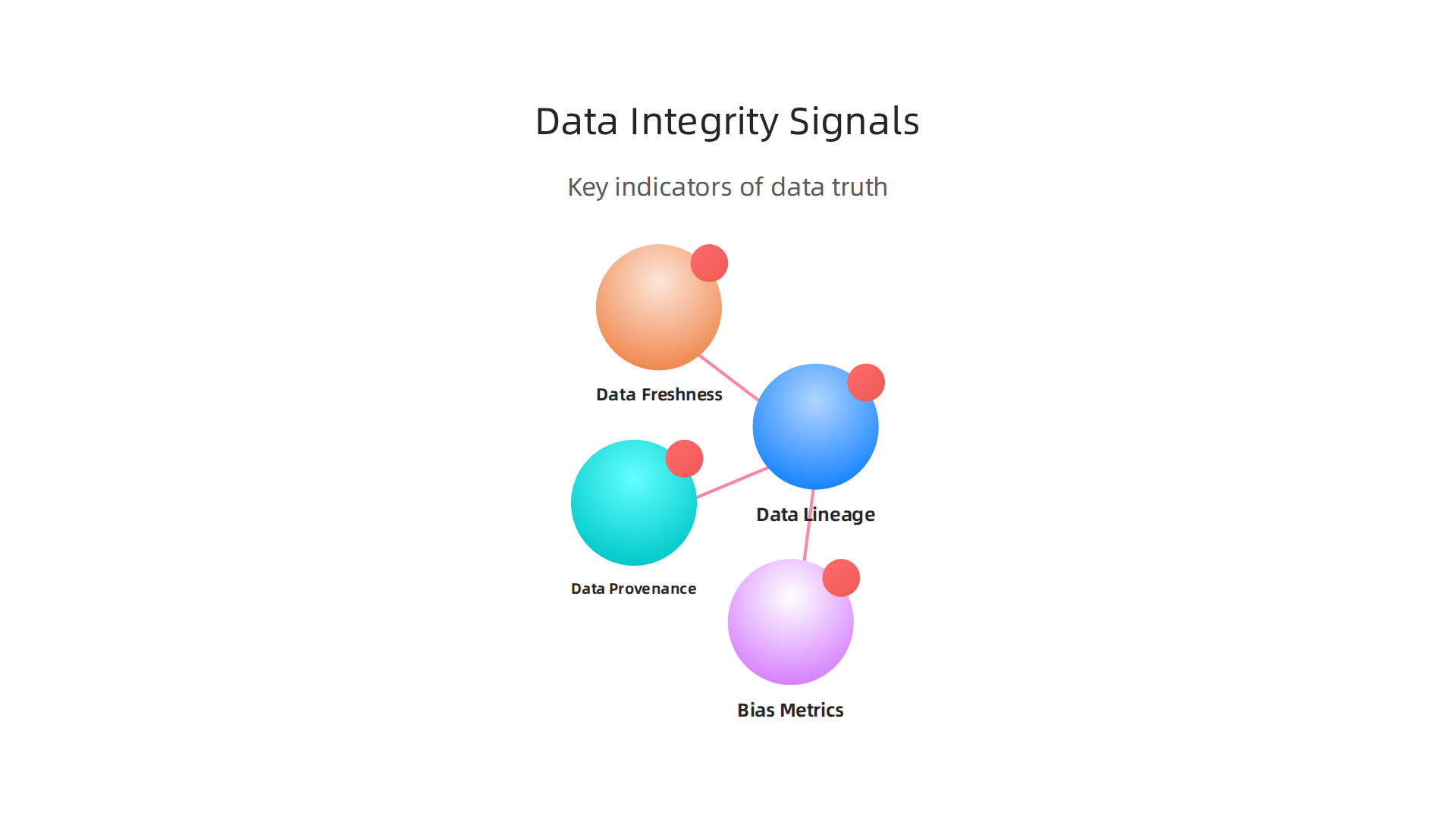
- Data Lineage: This is like a complete family tree for your data. It shows exactly where each piece of data came from, who touched it, and how it changed over time. Knowing the full story helps us spot when data might have gone off track.
- Data Provenance: This focuses on the very beginning of the data's journey. It answers: Who created this data? Was it collected fairly? Was permission given to use it? Strong provenance is the first step to truly trustworthy AI.
- Data Freshness: Data needs to be current. If an AI is making decisions based on old facts, it's likely to be wrong. Making sure data is fresh means the AI is always learning from the most up-to-date information.
- Bias Metrics: These are special checks to see if the data unfairly favors one group or idea over another. AI should be fair, and checking for bias helps ensure it doesn't learn and spread unfair ideas.
A strong data management platform often includes a helpful data catalog. This catalog acts like a detailed inventory, letting experts easily find and check all these signals for every piece of data. This makes it much easier to keep data clean and reliable for AI. For more on ensuring your data is ready, consider how you can prepare high integrity data sets to build trustworthy AI.
Keeping an Eye Out: Monitoring Strategies
Even with the best preparation, AI models can still start to drift. This is why constant monitoring is so important. We need strategies to detect drift early and keep AI aligned with what humans truly need.
- Regular Checks: Companies regularly review their AI's performance. They compare the AI's output to real-world results to see if anything has changed.
- Drift Detection Metrics: Special tools and calculations can tell us when data or AI behavior is changing in unexpected ways. For instance, metrics like "Mean Detection Time" measure how long it takes to notice a drift after it happens, while "Mean Time between False Alarms" helps avoid unnecessary warnings when there's no real problem. Researchers have developed various methods to detect these changes in data that can lead to drift in AI models A Framework for Evaluating and Benchmarking Concept Drift ... - arXiv. Other studies focus on evaluating different ways to spot data drift and how it affects machine learning Evaluating Data Drift Detection and Its Effects on Machine Learning ....
- Human-Centered Alignment: The goal is always to make AI work for people. Monitoring strategies should not just look at numbers, but also at how the AI affects users and whether it's still serving its purpose ethically and effectively. This helps prevent synthetic drift from leading to outcomes that go against human values.
By understanding synthetic drift, carefully measuring data integrity, and using smart monitoring plans, businesses can keep their AI systems running smoothly and, most importantly, trustworthily in 2026.
To keep AI trustworthy and stop problems like synthetic drift, we need more than just smart monitoring. We also need a strong foundation. That is where a modern data management platform comes in. It helps turn raw data into smart insights we can trust. These platforms are super important for any big company or government group in 2026 that uses AI.
Key Tools in a Modern Data Management Platform
A good data management platform has several important tools that work together to make sure data is ready for AI. Think of these as the main gears in a reliable machine:
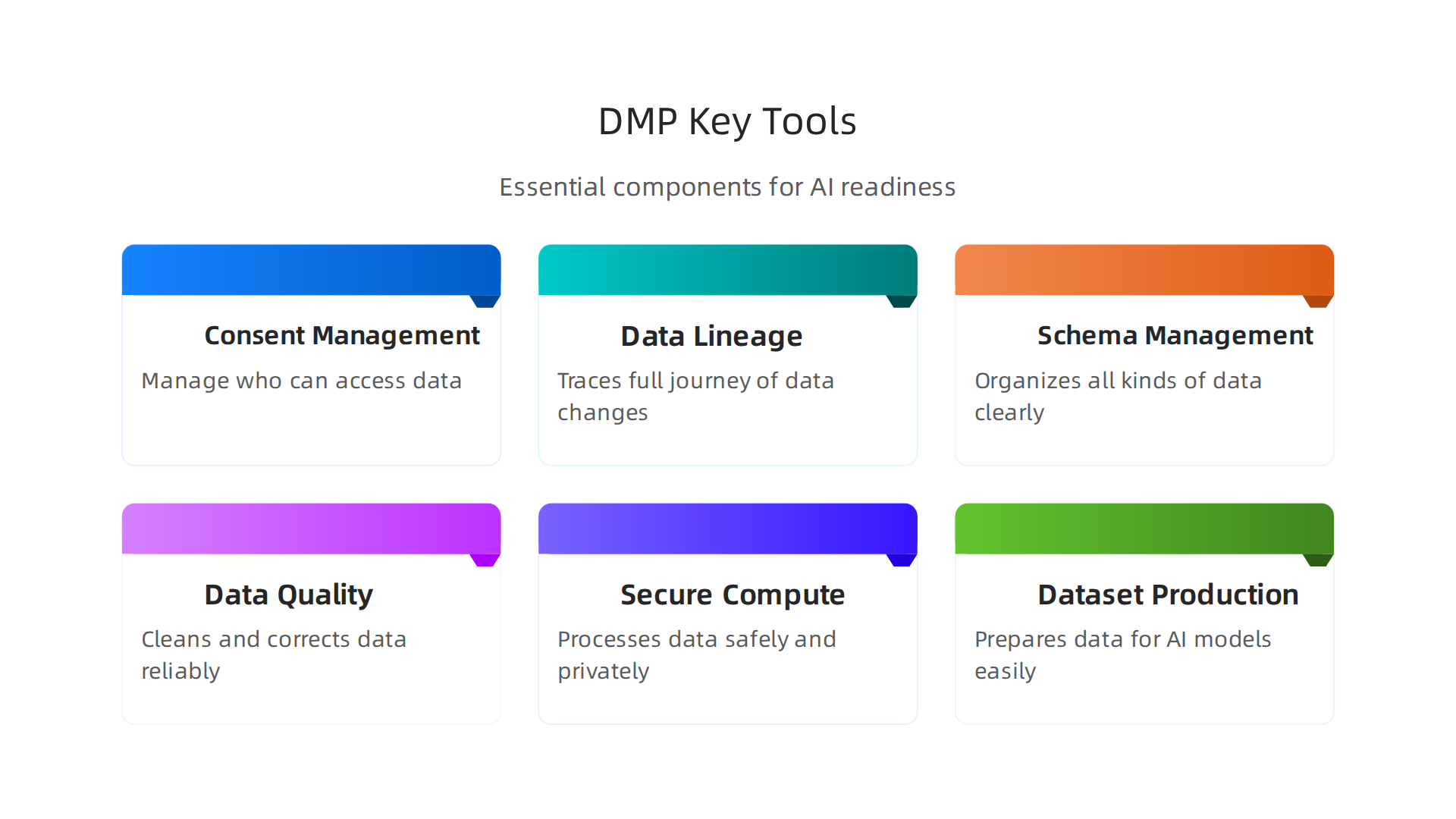
- Consent and Access Management: This is about who can see and use what data, and making sure everyone agrees. It's like having clear rules for sharing information, especially sensitive data.
- Data Lineage: As we talked about before, this traces the full journey of data, from where it started to how it changes. Knowing this story is key to trust. Experts say that a good system includes "metadata + lineage + policy as code" to make sure data is always correct and tracked.
- Schema Management: This helps organize data in a clear way. Whether data is structured like a spreadsheet or unstructured like an image, a good platform can handle it all, providing a single place for all kinds of data AI-ready data architecture.
- Data Quality: This makes sure the data is clean, correct, and ready to be used. It fixes mistakes and makes data reliable for building things like a helpful AI virtual assistant.
- Secure Compute: This means the platform can process data safely and privately, without unauthorized access.
- Model-Ready Dataset Production: Finally, the platform helps prepare data so AI models can learn from it easily. This turns raw information into usable "food" for the AI.
All these tools together create a powerful data catalog that helps teams find, understand, and use data correctly. This is part of a full framework for unified data governance, which brings together different systems in an organization Unified Data Governance Strategy for Enterprises.
Connecting Data to AI Insights
Once data is clean and organized, the data management platform helps connect it to how AI models are built and used. This includes:
- MLOps (Machine Learning Operations): This is about running AI models smoothly, from testing to putting them to work. The platform feeds the models with good data.
- Feature Stores: These are like libraries of ready-to-use data pieces (called "features") that AI models often need. They ensure models get consistent, correct information quickly, especially for common tasks.
- Analytics: This is about looking at the data to find patterns and make smart decisions. With governed data, businesses can get much clearer insights.
For more details on making sure your AI systems are trustworthy and avoid problems, you can learn how to build trustworthy global AI systems to beat AI bottlenecks and stop synthetic drift.
Centralized Versus Federated Architectures
When setting up a data management platform, companies often choose between two main ways to organize their data:
- Centralized Architecture: This is like having one main library where all data is stored and managed. It makes it easy to keep tight control over everything. This approach is often chosen for its simplicity in managing compliance, providing a single source of truth for regulations.
- Federated Architecture: This is more like having many smaller libraries, each managing data closer to where it's created or used. These smaller libraries still talk to each other. This setup is great for very large companies or government groups that have data spread across many different places or even different cloud services. It allows for more flexible control while still working towards common goals, like in a federated data lakehouse for multi-cloud governance.
Choosing the right approach depends on the size of the organization, how much data it has, and how it needs to share information. Both aim to ensure that the data used for inference AI (when AI makes decisions) is as reliable and trustworthy as possible. If you are looking to prepare your data for AI, it is critical to unlock trustworthy AI systems with AI-ready data.
Building on the different ways to set up a data system, like centralized or federated, it is also important to talk about how we make sure everything is fair, right, and follows the rules. This is called governance, ethics, and compliance. Even the best data management platform needs clear rules to make sure the AI we build is trustworthy.
Governance, Ethics, and Compliance: Policies and Practices to Build Trust
To make sure AI systems are truly trustworthy, we need strong rules and ways to check them. Think of these as the main pillars that hold up the trust in AI:

- Policies: These are the clear rules about how data should be used and how AI should act. They cover things like fairness, how transparent the AI is, and how robust it needs to be. A good
data management platformhelps put these policies into action, making sure only approved data is used in certain ways. Organizations need to document all AI-related regulations and specific rules for different regions or industries to guide these policies IFAIS AI Governance and Compliance Framework – IFAIS-GOV-001. - Accountability: This means someone is always responsible for the AI's actions. If an
inference AIsystem makes a mistake, we need to know why and who needs to fix it. Adata management platformhelps keep records of how data was used and how decisions were made, making it easier to see who is accountable who governs the machine?. - Auditability: This is about being able to check the AI's work. We should be able to look back at the data, the rules, and the steps the AI took to reach a decision. This helps us understand if the AI is working as expected and if it followed all the rules. The ability to collect evidence and track logs is key for auditability and constant improvement Privacy, Trust, Safety & Ethical Controls - EC-Council.
- Human Oversight: Even with smart AI, people should always be in charge. This means having humans review important AI decisions, especially for things like an
ai virtual assistantthat interacts with people. Thedata management platformcan show human operators what the AI is doing, so they can step in if needed.
These pillars help connect our daily operations with important frameworks like NIST AI RMF and ISO 42001, making sure that our AI systems are well-governed from start to finish Smart AI Governance in 2026.
The data management platform also helps with compliance. This means following all the different laws and rules, like privacy laws that protect personal information, or specific rules for industries such as healthcare or banking. For example, a platform can enforce who can see sensitive health data, making sure only authorized people have access. It does this by linking governance rules to technical controls, creating a strong defense for data security and privacy.
A smart way to handle governance is to use a risk-based approach. This means we focus our efforts on the areas where mistakes could cause the most harm. For example, if an AI helps with medical treatments, the governance around it must be very strict. If it is an AI that suggests new movies, the rules might not need to be as tight. By prioritizing what's most important, we can better protect people and the company's value. This approach helps manage AI security and make sure AI systems contribute positively. You can learn more about how to build a modern AI cyber awareness program for 2026 threats to enhance this protection.
After setting up strong rules for data and AI, the next step is to put these rules into action to get real value. This means looking at how data travels from being raw information to becoming smart insights that help shape a company's plans. It is about making sure all the data work leads to useful results we can measure.
From Data to Strategic Insights: Workflows, Measurement, and ROI
Using a good data management platform helps organizations create clear steps, or workflows, for handling data. These steps ensure data is collected properly, made ready for use, tested in smart ways, and finally turned into ideas that guide important decisions.
Turning Data into Actionable Insights
The journey from raw data to strategic insights involves a few key steps:
- Data Collection: This is where we gather data from many different places. It could be from customer interactions, website visits, or sensors. A solid
data management platformmakes sure this collection is done correctly and safely, following all the governance rules we talked about earlier. - Data Curation: Once collected, data often needs cleaning and organizing. Think of it like sorting out building blocks before you start to build something. This step ensures the data is accurate, complete, and ready for use. Tools like a
data cataloghelp keep track of all the different pieces of data, making it easier to find and use the right information. Having clean, well-organized data is crucial for building trustworthy AI systems. - Measurable Experiments: With clean data, we can start testing ideas. For example, we might use an
inference AIto predict what customers might want next or to spot unusual patterns. These experiments help us learn what works and what does not. Thedata management platformkeeps track of these tests and their results. - Strategic Insights: The findings from these experiments are then turned into insights. These insights help leaders make better decisions and set future plans. For instance, if an experiment shows that a new product feature makes customers much happier, that becomes a strategic insight to develop more features like it.
Measuring What Matters: KPIs and ROI
It is not enough to just use data and AI; we also need to know if our efforts are actually helping the business. This means defining how we measure success, using things like Key Performance Indicators (KPIs) and Return on Investment (ROI).
For data and AI, it is important to look beyond simple things like how many people clicked on something. We need to focus on bigger goals like building trust, making customers happier, and adding long-term value to the company. A good data management platform helps track these deeper impacts. For example, a 2026 report found that investing in good data management can bring back as much as $14.42 for every dollar spent. This shows the real financial benefits of treating data as a valuable asset.
From Small Steps to Big Wins: Pilots and Scaling
To get started with new data and AI projects, many companies begin with "pilots," which are small, trial projects. These quick wins help teams learn and show value without taking big risks. A clear plan for measuring success is needed from the start.
As pilots show good results, the projects can then be scaled up to help more parts of the business. This needs everyone in the company, from technical teams to business leaders, to be on the same page.

By making sure everyone understands the goals and how data and AI will help reach them, companies can better build their AI advantage trustworthy business intelligence in 2026 and gain real benefits.
To truly get the most out of data and AI, and to scale those wins across an entire business, it takes more than just good technology. It needs people working together, learning new ways, and making trust a key part of every step. This is how companies move from small, successful projects to big, company-wide changes that everyone can rely on.
Scaling Human-Centric AI: Organizational Change, Skills, and Operationalizing Trust
Scaling AI means getting it ready for more and more uses, always keeping people at the center. It means making sure the tools and data help people, not hurt them. This calls for clear roles, proper training, and ways to build trust into everything the company does.
Key People for Trustworthy AI
To make a data management platform truly work and grow, different kinds of leaders and teams must join forces.
- Chief AI and Data Officers: These are the top leaders who guide how the company uses AI and data. They set the big plans and make sure data is used in a smart way.
- Ethics Leads: These people are very important for making sure AI is fair, unbiased, and does not cause harm. They help set the moral rules for how AI acts.
- Engineering Teams: These are the builders. They set up and keep the
data management platformrunning smoothly. They make sure data can be collected and stored safely. - Product Teams: These teams make sure that the AI tools and products actually help users and meet their needs. They help turn smart insights into useful things for customers.
Working together, these roles help create a strong base for AI. Experts in 2026 suggest that good enterprise data architectures include clear governance layers to manage how data and AI are used AI-ready enterprise data architectures.
Helping People Adapt: Change Management and New Skills
When a company starts using AI in new ways, it changes how people work. This is where "change management" comes in. It is about helping everyone understand and get used to the new tools and processes.
- Training Programs: Companies need to offer good training. This teaches employees how to use new tools, like a
data catalogto find important information, or how to understand results frominference AI. - Incentives: Sometimes, it helps to offer rewards or show clear benefits for adopting new ways of working. This makes people more willing to try new things and see how AI can make their jobs easier.
- Clear Processes: When everyone knows the steps to follow, it makes working with new technology much simpler. These clear steps help turn the features of a
data management platforminto trusted results that truly help the business and its customers. Learning how to manage these changes well is key for building trustworthy global AI systems.
Making Trust a Daily Habit: Operationalizing Trust
"Operationalizing trust" means making trust a normal part of how a company works every single day. It is not just a goal; it is a continuous action.
- Cross-Functional Review Boards: These are groups made of people from different teams who regularly check AI projects. They look for fairness, accuracy, and if the AI is meeting its goals ethically.
- Regular Audits: Like checking a car's engine, audits are regular checks of data and AI systems. They make sure everything is working as it should and that ethical rules are being followed.
- Continuous Learning Loops: This means always learning and getting better. If something goes wrong, the company learns from it and makes changes. This constant feedback helps AI systems improve over time and helps keep trust strong. By making these habits part of daily work, companies can ensure their AI truly helps people and prevents problems like "Synthetic Drift," where information can get twisted or lose its real meaning as it moves through digital systems.
Summary
This article explains the 2026 AI bottleneck problem—how widespread, unvetted internet data produces permission gaps, provenance loss and a growing