Home


Menu

Close
Ethical Multimodal AI Strategies to Combat Synthetic Drift
Published:
August 3, 2026
Why this guide matters: ethical multimodal AI at a turning point
In 2026, artificial intelligence is everywhere. From helping us sort photos to powering self-driving cars, AI has changed our lives. Especially, multimodal AI systems, which can understand and use different kinds of information like images, sounds, and text, are becoming very common. But with all this new power comes a big challenge: trust. People are starting to worry if AI systems are fair, honest, and safe.

The truth is, many AI systems today face a serious problem. They learn from huge amounts of data, but if this data is not collected carefully, it can lead to bad outcomes. This creates a "trust crisis" because AI might start spreading wrong information or making unfair choices. This is often due to something called "synthetic drift," where true human behaviors and information get twisted as they move through digital systems. For example, multimodal models can spread societal biases if their training data isn't carefully chosen. Many experts agree that ethics is the defining issue for the future of AI. It's becoming very important to understand how to build trustworthy AI that combats synthetic drift with ethical data.
This guide is here to help. We will show you clear ways to build multimodal AI systems that you can trust. You'll learn about actionable frameworks and get tool-focused advice. Our goal is to make sure AI helps people thrive, not causes more problems. We want to show developers and organizations why a trust-first AI strategy is a business imperative in 2026. Let's build AI that truly serves humanity.
1. Why Ethical Multimodal AI Matters Now
Building AI that truly serves humanity means we must look closely at its ethical side. This is especially true for multimodal AI in 2026. These advanced systems don't just work with text. They can understand and create content using images, sounds, video, and even information from sensors. This means they have a much bigger reach, but also carry bigger risks.
When AI uses different types of information, it can amplify problems like bias and misinformation. If a system learns from biased images or sounds, it can spread those biases faster and wider than an AI that only uses text. This can cause wrong information to cross over from one type of media to another, making it harder to spot the truth. For instance, ethical concerns related to AI systems include things like algorithmic bias, data privacy problems, and a lack of transparency. These are major concerns for enterprises in 2026 AI Ethical Concerns in 2026: What Enterprises Must Address.
Because of this, many important groups are now asking for AI that is trustworthy, clear, and focused on helping people. Companies, governments, and everyday citizens all want to know that AI systems are fair and safe. The International AI Safety Report 2026 points out that general AI risks fall into categories like malicious use, malfunctions, and systemic risks

International AI Safety Report 2026. We need to build AI systems where we can see how they make decisions. This helps us make sure they lead to good outcomes for everyone.
This push for ethical AI is changing how we develop and use these technologies. It's not enough for AI to be smart; it also needs to be responsible. We need to focus on ethical data analysis to build trust in AI. This means rethinking how we gather data and how we design our AI training jobs to stop synthetic drift. Many of the ethical issues with artificial intelligence in 2026 now center on rights, safety, power, and trust What Are the Ethical Issues Associated With Artificial Intelligence in 2026?.
The goal is to move towards human-centered AI design, where the well-being of people is at the core. This helps prevent issues like why is AI bad or why does AI spread false information. Ethical AI is not just a nice-to-have; it's a must-have for the future. It's about making sure that as we create amazing multimodal AI and explore best AI tools for developers, these tools work for us, not against us. This helps us build a trustworthy human-centric AI-powered content creation platform.
2. Understanding the AI Bottleneck & Synthetic Drift
Building trustworthy AI is a big goal, but it faces some tricky problems. Two of the biggest challenges right now are something called the "AI bottleneck" and "synthetic drift." These issues make it harder for even the smartest multimodal AI systems to work as well as they should.

Imagine trying to build a strong house without enough good bricks. That's a bit like the "AI bottleneck" we face in 2026. It means there isn't enough high-quality, private data that AI systems can use for training. This data needs to be gathered ethically and with clear permission from people Data Authenticity, Consent, & Provenance for AI are all .... Think about it: our best AI, especially powerful multimodal AI systems that understand pictures, sounds, and text, learn from what they see. If they don't have enough truly honest and carefully collected data, their learning is limited. This lack of good, permissioned data is a huge problem. It's why many companies struggle to make their AI reliable and fair. Actually, getting the right data is often seen as the only real way to fix the current issues with AI data ethical electronic data gathering and retrieval is the only fix for ai data crisis.
When AI systems don't have enough private, high-quality data, they often turn to public information. But a lot of public data, like things you find on social media or random parts of the internet, can be messy, wrong, or even biased. When AI trains on this distorted public data, it starts to learn those inaccuracies. This leads to "synthetic drift." It's like playing a game of telephone where the message gets changed a little bit each time it's passed along. Over many rounds, the message becomes totally different from the original. Similarly, when AI learns from already distorted information, it can spread and even make those inaccuracies worse. Experts note that if multimodal AI models learn from data that already has biases, the models will not only keep those biases but also make them stronger The Road Ahead: Challenges, Ethics, and Future of Multimodal AI. This is a big reason why is AI bad sometimes or why it can create false information.
This problem is especially serious for multimodal AI because it handles so many types of information at once. A small mistake in how it interprets an image could lead to wrong ideas in the text it generates, and vice-versa. Synthetic drift means AI systems slowly move away from what is true and useful. It can make AI outputs less helpful and even harmful. Imagine an AI meant to help people, but because of synthetic drift, it gives bad advice or shows unfair information. To stop this, developers need to look for the best AI tools for developers that prioritize good data. This might include ai code review tools that check for data quality issues. This is why it's so important to find ways to fight synthetic drift and ensure AI remains aligned with human values building trustworthy ai combat synthetic drift with ethical data.
3. Data Stewardship: Building Permissioned, Private Datasets
To truly make AI trustworthy and fix the issues of limited good data and synthetic drift, we need to focus on something called "data stewardship." This means we carefully manage data from the very start. It's about building special datasets that respect people's privacy and use their information only when they say "yes." This way, multimodal AI systems can learn from real, honest human experiences.
Principles for Trustworthy Data
When we build these important datasets, a few key ideas guide us:
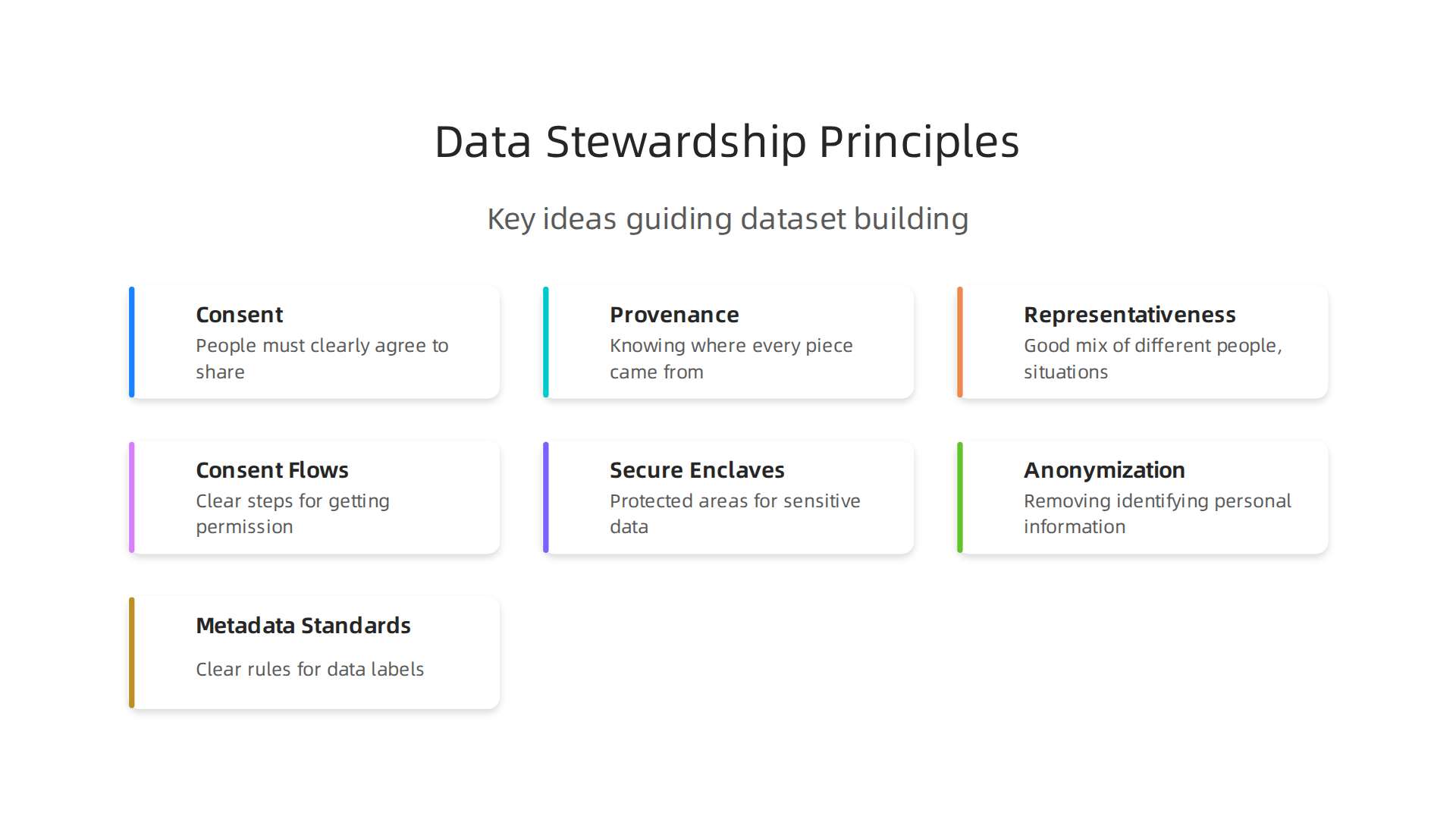
- Consent: This is the most important part. People must clearly agree to share their data. They need to know how their information will be used and for how long. This isn't just a checkbox; it's an ongoing promise. For example, new approaches in privacy-preserving multimodal AI show how patient data can be used ethically and safely, even in sensitive areas like healthcare, by building in formal differential privacy from the start NeuroCon-AutismNet: a privacy-preserving multimodal ....
- Provenance: This big word just means knowing where every piece of data came from. It's like a detailed history book for your data. We need to track who collected it, when, and how it changed over time. This helps us ensure the data is real and hasn't been messed with. Having strong data provenance is key for AI, as it documents the origin, history, and ownership of data Data Provenance in AI | ANALYSIS. Without it, it's hard to tell if data is trustworthy, and that's often why is AI bad sometimes.
- Representativeness: The data needs to be a good mix of different people and situations. If a dataset only has information from one type of person, the AI trained on it might not work well for everyone else. This causes bias, which is exactly what we want to avoid.
How We Build and Protect These Datasets
Making permissioned, private datasets isn't easy, but it's vital. Here's how it generally works:
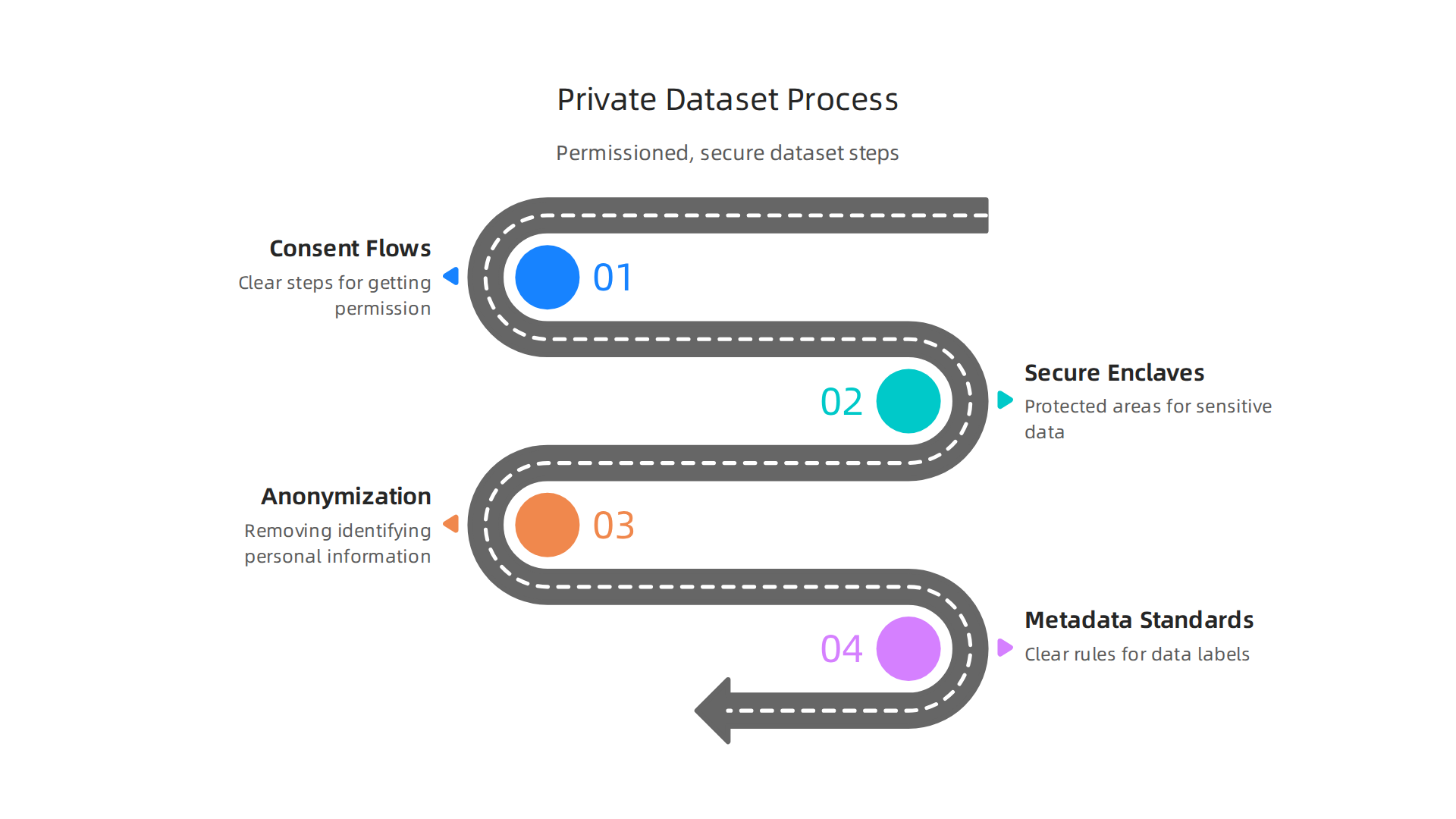
- Consent Flows: This refers to clear, easy-to-understand steps for getting someone's permission. It should be simple for people to agree or disagree to share their data, and also to change their minds later. This creates what we call "consent-based data trails."
- Secure Enclaves: Imagine a locked, high-security room for your most important data. Secure enclaves are like that for digital information. They are special, protected areas where sensitive data can be processed without being seen by others, even the system itself, ensuring strong privacy.
- Anonymization: This means removing any information that could identify a person. Sometimes, data is made anonymous so it can be used for general learning without anyone knowing whose data it is. However, careful thought is needed here, as pictures in multimodal AI might hold personal details that need to be removed Multimodal AI and Vision-Language Models 2026 | Zylos Research.
- Metadata Standards: Metadata is like a label for data. It tells us what the data is about, who owns it, and how it can be used. Having clear rules for these labels helps everyone understand and trust the data. For instance, the Croissant 1.1 standard helps create structured, machine-readable information about datasets, including clear usage rules
What's New in Croissant 1.1: Extensible, Agent-Ready ML Dataset ....
Using these practices helps create the high-quality, private data that multimodal AI needs to thrive. It moves us away from blindly using public internet data and towards a future where AI learns from trusted sources. This also means we need cloud security tools to secure AI data and build trust in 2026. Developers also need access to the best AI tools for developers that help manage this process effectively, including AI code review tools that check for ethical data practices. This is how we build multimodal AI that truly serves humans, not just algorithms.
4. Design Principles for Human-Centric Multimodal Models
Moving from collecting trusted data, we now think about how we design multimodal AI itself so it truly helps people. This means putting humans at the center of every choice, not just making AI that is smart, but AI that is also kind and helpful. It's about making sure these advanced systems work for our well-being and not against it.
Human-Centered Goals for AI
When we design multimodal AI with people in mind, we aim for important goals:
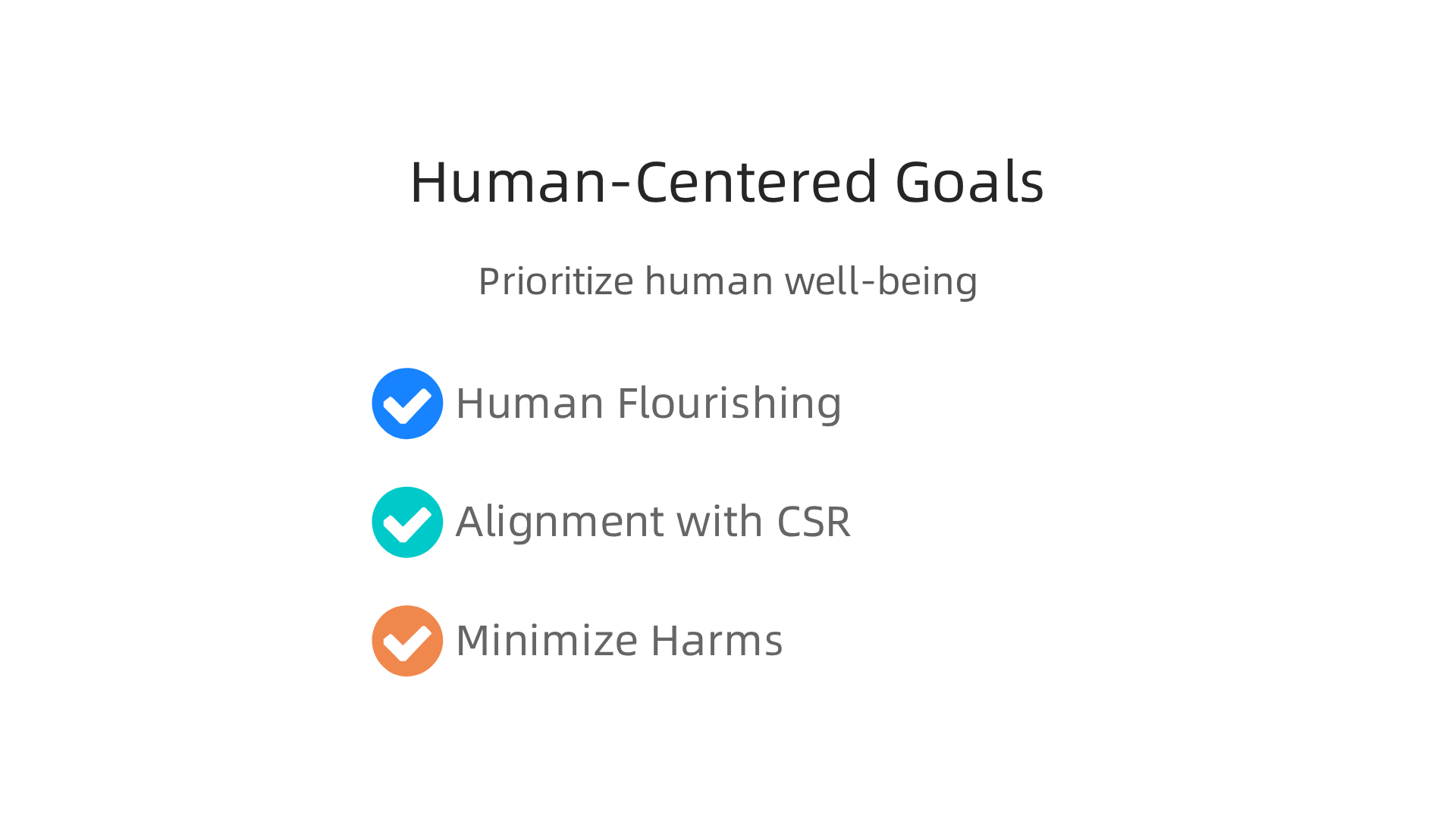
- Human Flourishing: This means AI should help people thrive and feel good, not just busy or entertained. We want to measure success by how AI supports happiness, health, and a sense of purpose. It should add real value to human lives. For example, in digital health, human-centered design focuses on how technology fits into a patient's journey to improve their well-being Human-Centered Design and Development in Digital Health.
- Alignment with CSR Goals: Companies often have Corporate Social Responsibility (CSR) goals, which means they want to do good for society. AI should fit with these goals, helping companies be more ethical and responsible. This also ties into building a trust-first AI strategy.
- Minimizing Attention-Optimization Harms: Many digital tools today try to grab and hold our attention for as long as possible. This can lead to problems like anxiety and loneliness. Human-centric AI tries to avoid this by focusing on truly helpful interactions, not just endless scrolling. We want to prevent AI from causing "Synthetic Drift" by distracting from real human values.
Smart Ways to Design These Models
To achieve these goals, we use special design methods:
- Value-Sensitive Design: This idea means we think about human values from the very start of designing AI. It's not an afterthought. We ask, "What values are important here?" and build them into the AI's core. For example, in systems that watch drivers, an ethical design framework helps include things like consent and fairness Ethical Multimodal Driver Monitoring Systems for Risk Mitigation. This is a great way to make sure our multimodal AI doesn't end up being why is AI bad for people.
- Inclusive Evaluation: We must test AI with many different kinds of people to make sure it works fairly for everyone. If we only test it with one group, it might not understand or help others. Human-centered benchmarks are becoming more common to evaluate how well these systems work for a diverse range of users Human-Centered Benchmarking of Driver Monitoring Models.
- Multimodal Interpretability Approaches: This big phrase simply means we need to understand how multimodal AI makes its decisions. Since these AIs use different kinds of data, like pictures, sounds, and text, it can be hard to see why they come up with certain answers. We need ways to open up the "black box" so we can check if the AI is being fair and logical. This helps us stop errors like cognitive drift, where AI might predict human fatigue in workflows Cognitive Drift Detection: An AI System to Predict Human Decision Fatigue in Digital Workflows. This is crucial for best ai tools for developers and helps in tasks like ai code review tools to ensure ethical practices are followed.
By focusing on these design principles, we can build multimodal AI that not only uses ethical data but also thinks about people's well-being in every step. This helps us ensure AI serves humanity in the best possible way, moving beyond just efficiency to true human benefit. If you're looking to develop AI systems that genuinely prioritize human values and ethical data, learning how to build a trustworthy human centric AI powered content creation platform is an important next step.
Moving from why we design ethical AI, let's now look at how we build it. This means talking about the special tools and ways to create multimodal AI systems that are not just smart but also fair and trustworthy. It's about putting good design ideas into real-world code and systems.
Smart Tools for Building Ethical AI
To make sure our multimodal AI is ethical from the ground up, we use several important technical methods:
-
Keeping Track of Data (Data Versioning) Imagine cooking a meal where you need to know exactly where each ingredient came from. Data versioning is like that for AI data. It means keeping a clear record of every piece of data used to train an AI, showing its origin, how it was changed, and who owns it. This helps if we ever need to check the data for fairness or problems, especially with different types of data like images, sounds, and text. Tools that manage data provenance are key here, ensuring that the full journey of the data is clear and auditable AI Training Data Provenance & Lineage. In 2026, standards like Croissant 1.1 are helping by adding ways to track data history more easily What's New in Croissant 1.1.
-
Building AI in Small Pieces (Modular Model Architectures) Instead of one giant, hard-to-understand AI, we can build multimodal AI using smaller, separate parts. Each part might handle a different type of data or task. This makes it easier to see how each piece works, check for mistakes, and make sure it's fair. If one part causes problems, we can fix just that part without breaking everything. This approach is better than having to ask "why is AI bad?" when we can't figure out where an issue came from.
-
Protecting Privacy During Training (Privacy-Preserving Training) Training AI often needs a lot of data, some of which might be private. But we can train multimodal AI without directly sharing sensitive personal information.
- Federated Learning: This is like many people learning from a teacher without sharing their homework with each other. The AI learns from many different data sources (like your phone or a hospital's computers) without the data ever leaving its original spot. Only the learning is shared, not the raw data. This is super important for areas like healthcare, where privacy is critical, as shown in new multimodal systems for brain disease detection Privacy-preserving multimodal fusion for Alzheimer's staging.
- Differential Privacy: This adds a little bit of "noise" or randomness to the data before the AI sees it. This extra noise is small enough that the AI can still learn useful things, but it's big enough to hide any single person's details. It makes it very hard for anyone to figure out individual information from the learned AI model. Formal differential privacy is even being used in multimodal systems designed for sensitive applications like autism screening NeuroCon-AutismNet: a privacy-preserving multimodal architecture.
-
Tools for Checking AI Performance (Evaluation Toolchains) After building an ethical AI, we need to test it thoroughly. Evaluation toolchains are sets of tools that help us check how well the AI works, especially for fairness, safety, and if it truly helps people. These tools make sure the multimodal AI performs correctly across different groups of people and avoids unfair biases.
How to Put It All Together
When we build multimodal AI, we often decide between two main ways to combine different types of data:
- Modality-Specific Experts: This means having separate AI "experts" for each type of data. One expert handles images, another handles text, and another handles sound. Then, a main system combines what these experts learn. This can make it easier to audit each part and see if any single expert is making a bad decision. This is often the focus for best ai tools for developers who want fine-grained control.
- Unified Models: This is one big AI that learns from all types of data at once. It's often very powerful but can be harder to understand why it made a certain choice. This is where the need for tools to help us understand AI decisions, called interpretability, becomes very important.
No matter which way we choose, the goal is always to keep good control and be able to check the AI's work. We want to prevent problems and ensure that our multimodal AI systems are truly helpful and ethical for everyone. Understanding these technical approaches is key to building trustworthy AI in 2026, and it's a skill that's becoming more and more important for those in AI engineer roles.
Even with the best tools and ways to build multimodal AI ethically, we also need clear rules and people in charge. This is what we call governance. Think of it like a game with clear rules and a referee to make sure everyone plays fair. An AI governance framework is a set of policies, standards, and technical controls that guide how AI systems work safely and ethically from start to finish
What is AI Governance? 2026 Framework Guide. In 2026, many companies are setting up these frameworks to handle the complex parts of AI, especially when it deals with different kinds of data like images, sound, and text.
To make sure a multimodal AI project stays on track, organizations need special structures. This means having clear roles: who designs the AI, who checks it, and who makes the final decisions. It's important to have different teams work together, like those who understand data, those who know about ethics, and those who know what the business needs. This way, everyone has a part in making sure the AI works well and is fair. This team effort helps prevent situations where people might ask "why is ai bad?" because problems are caught early.
Once a multimodal AI system is running, the work isn't over. We need to keep checking it all the time. This is called continuous risk assessment. It means constantly looking for new problems or unfairness that the AI might show. We use special tests, called benchmark suites, to make sure the AI is safe, robust (meaning it works well even when things change), and ethical. These tests help us see if the AI is treating all groups of people fairly or if it has hidden biases. For developers, this might involve using a guide to Evaluate AI Tools with a Framework for Ethical Data and Trust.
Finally, we need audit trails. Imagine a detailed diary of everything the AI does, every decision it makes, and every piece of data it uses. This diary helps us understand why the AI made certain choices and makes it easier to fix things if something goes wrong. It's like having a clear record of all the ingredients and cooking steps we talked about earlier. These audit trails are especially important for multimodal AI because it combines so much different information. They help build trust and show that an organization is serious about ethical AI. The global discussion on AI governance is evolving fast in 2026, with new frameworks being shared to guide this work Guidance for the New Global Dialogue on AI Governance.
After we set up clear rules and keep detailed records for AI, the next big step is putting it to work safely. This is called deployment. When we release multimodal AI into the real world, we need to be very careful to prevent any harm it might cause.
Careful Ways to Deploy AI
To make sure multimodal AI works well and does not cause problems, companies use smart ways to roll it out:
- Staged Rollouts: Imagine trying a new toy with just a few friends first before sharing it with everyone. This is what staged rollouts are like for AI. The AI system is slowly released to small groups of users. This helps find and fix any issues in a small setting before they can affect many people.
- Red-Teaming: This is where a special team tries to find all the ways an
AIcould go wrong or be misused. They act like hackers or tricky users to test its limits. This helps answer questions like "why is ai bad?" before the public ever asks them. It makes sure the AI is strong and safe before it goes live. For example, new ethical frameworks help in finding and reducing risks in complexmultimodalsystems such as driver monitoring, ensuring they are designed with care Ethical Multimodal Driver Monitoring Systems for Risk Mitigation. - Human-in-the-Loop Controls: Even smart AI needs people to keep an eye on it. With human-in-the-loop controls, humans make the final decisions on important actions suggested by the AI. This is especially key for
multimodal AIbecause it handles many types of information, making sure a person can step in if the AI makes a mistake or acts unfairly. - User Feedback Loops: After deployment, it is very important to listen to the people using the
AI. Their feedback helps find problems and ideas for making the system better.
Always Watching: Operational Monitoring
Even after a multimodal AI is running smoothly, the work isn't done. We need to watch it all the time. This is called operational monitoring. A big part of this is looking for something called "drift."
- Drift Detection for Multimodal Inputs: "Drift" happens when the data the
AIsees changes over time. Formultimodal AI, this means changes in the types of images, sounds, or text it processes. If the real-world data starts to look different from the data the AI was trained on, the AI might not work as well. For instance, new ways of speaking or different lighting in pictures can cause drift. Tools that use computer vision and large language models can help in spotting these changes, making sure the AI stays aligned with its purpose Automated Design System Drift Detection. Spotting these shifts is very important for keeping theAIuseful and fair, as continuous checks of outputs against expected standards are best practice AI Model Drift Monitoring. - Incident Response: If an
AIproblem pops up, companies need a quick plan to fix it. These plans are often written down as "remediation playbooks." They are like step-by-step guides to solve issues, get themultimodal AIback on track, and learn from what went wrong. - Fighting Synthetic Drift: By carefully watching for drift, we can also fight "synthetic drift." This is when data gets changed or twisted as it moves through digital systems. Building trustworthy AI means making sure that
AI training jobs stop synthetic drift and build trust in AI. It is all about using ethical data to make sure AI systems stay true to their goals and do not spread wrong information. In fact,building trustworthy AI: combat synthetic drift with ethical datais a key focus in 2026.
Summary
This guide explains why building ethical, trustworthy multimodal AI is urgent in 2026 and lays out practical steps to get there. It defines the twin problems of the AI bottleneck and synthetic drift—how low-quality or mis-sourced data distorts model behavior—and shows why permissioned, private datasets are the core remedy. The article covers concrete data-stewardship practices (consent, provenance, representativeness), design principles for human-centered models, and technical approaches like data versioning, modular architectures, federated learning, and differential privacy. It also explains governance needs: clear roles, audit trails, continuous risk assessment, and staged deployment with red-teaming and human-in-the-loop controls. Readers will learn how to choose tools and processes to prevent bias and misinformation, detect drift in multimodal inputs, and maintain operational trust over time. By following these frameworks, developers and organizations can build multimodal AI that serves people reliably and ethically.
Related Blogs
No Similar Blogs found
