Home


Menu

Close

Ethical Electronic Data Gathering and Retrieval Is the Only Fix for AI Data Crisis
Published:
July 1, 2026
The Urgent Need for Ethical Electronic Data Gathering and Retrieval
Think about the last time you asked an AI tool a question and got a strange answer.

That is not just a glitch. It is a warning sign. Many AI systems today learn from data scraped from the internet without asking for permission. This creates a serious data bottleneck. Without clean, ethical data, AI models start to lose accuracy over time. This problem is called synthetic drift, and it slowly erodes the truth in our digital world.
When AI models are fed on scraped public data, their performance degrades. The world changes, but the model does not. For a deeper look at this challenge, see this explanation of data drift and synthetic data. The result is inaccurate predictions and a loss of trust. Some models trained only on synthetic data even show big drops in precision and diversity. That is a major risk for businesses and government agencies that rely on AI for decisions.
Ethical electronic data gathering and retrieval offers the only real fix. This means collecting personal data with full consent, full transparency, and a human-first design. It also means strong intellectual property protection for the people who provide that data. Instead of gating data behind paywalls or sneaky tracking, ethical systems put people in control.
Large enterprises and government agencies now face growing pressure from regulators and the public to adopt these practices. Ignoring the problem is no longer an option. If you want to see how putting ethics first can rebuild trust, check out this guide on how ethical data analysis builds trust in AI. The path forward is clear: gather data the right way, or risk building AI on a broken foundation.
The Current Crisis: Why Ethical Data Capture and Retrieval Matter Now
Right now, most AI systems still run on data gathered without permission. That is the core of the crisis. When you scroll through social media, search the web, or use a free app, your behavior gets scraped and fed into models that were never designed to put you first. These platforms optimize for engagement, not for human flourishing. They keep you clicking, scrolling, and watching. Over time, those patterns create distorted training data. AI models then learn to predict what keeps people hooked, not what keeps them healthy.
This is where synthetic drift really hurts. As AI models retrain on public data that reflects engagement-driven behavior, they slowly lose sight of truth. Research shows that models trained only on synthetic or scraped data can suffer big drops in accuracy and diversity. For a deeper look at how this happens, see this explanation of AI model drift. The result is AI that makes bad predictions, spreads misinformation, and erodes trust.

Meanwhile, data gating makes the problem worse. Companies lock high-quality private data behind paywalls or hide it inside closed systems. That forces AI developers to rely on low-quality scraped data. The bottleneck is real. Without ethical electronic data gathering and retrieval, organizations simply cannot access the clean, permission-based data they need to build reliable systems.
Digital platforms also push value misalignment. When AI learns from content designed to maximize watch time, it learns to amplify outrage, fear, and division. That is the opposite of human flourishing. For a look at how leading organizations are pushing back, read about how top AI companies handle data ethics and synthetic drift. The time to fix this is now, before the distortion gets worse.
Understanding the AI Data Bottleneck
So where does the real bottleneck live? It is not just bad data. It is the fact that permission-based data is almost impossible to find at scale. Most websites scrape user content without asking for consent or tracking where it came from. That means clean, electronic data gathering and retrieval with proper permission barely exists in the wild. When AI teams try to build trustworthy models, they hit a wall. The raw material they need simply is not available.
This scarcity gives a big edge to organizations that do invest in ethical data retrieval. They move ahead of regulations like GDPR and CCPA without scrambling. They also earn public trust, which is harder to buy than any dataset. For a deeper look at how ethical data practices create a competitive advantage, check out this article on how ethical data analysis builds trust in AI. The companies that solve the bottleneck first will lead the next wave of reliable AI.
Principles of Ethical Electronic Data Gathering and Retrieval
So what does it actually take to build an ethical data system? It comes down to a few core principles that any organization can follow.
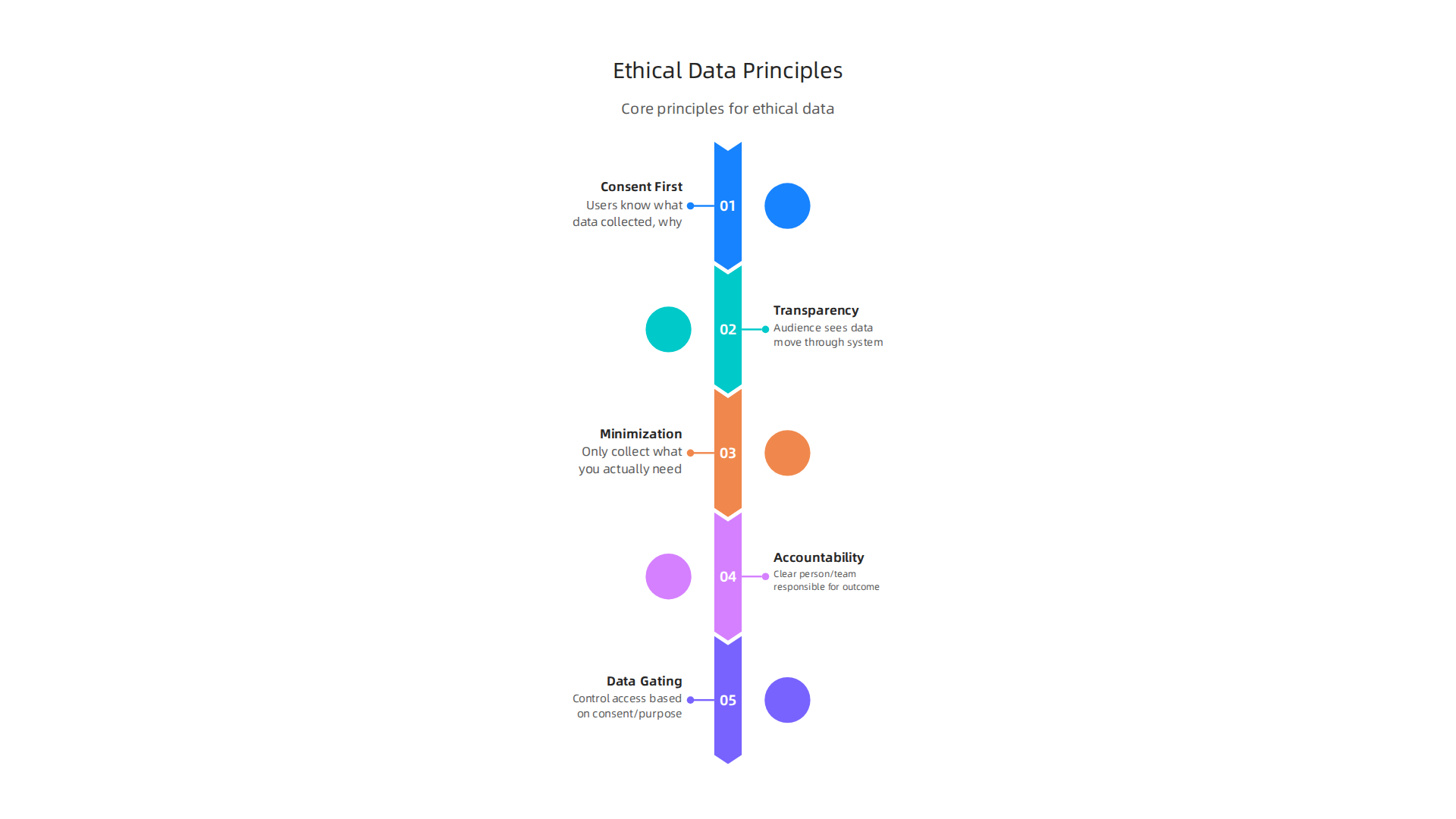
These rules keep electronic data gathering and retrieval honest, legal, and trustworthy. They also make sure the data you collect is actually useful for training AI that people can believe in.
Consent comes first. Users must know exactly what data you are collecting and why. They need a clear opt-in choice. And they must be able to opt out just as easily. This idea of user sovereignty is the foundation of ethical data gathering. No hidden checkboxes. No confusing language. Just straightforward permission.
Transparency is non-negotiable. Your audience should be able to see how their data moves through your system. Where was it collected? Under what terms? This is where data provenance tracking becomes critical. Every piece of data needs a clear trail that shows its origin and chain of custody. If you cannot trace it, you cannot trust it.
Minimization and purpose limitation go hand in hand. Only collect what you actually need. And only use it for the reason you stated. This principle directly shapes how you handle processing personal data. Collecting extra data "just in case" is a recipe for trouble. Laws like GDPR already require this. The new EU AI Act goes further by tying data minimization directly to AI training quality. You can learn more about how these rules work together by reading about processing personal data under the EU AI Act.
Accountability means someone owns the outcome. If something goes wrong with your data pipeline, there should be a clear person or team responsible. Creating a system that respects intellectual property protection also falls under this principle. You need to know who owns each piece of data and respect those rights.
A practical way to enforce these principles is through data gating. That means you control access to data based on consent and purpose. A user gives permission for one use. The system only unlocks that data for that specific purpose. Everything else stays blocked.
Following these principles does not slow you down. It actually speeds things up because you avoid legal headaches and public backlash. And it gives your AI teams clean, audit-ready data they can actually use. If you want to see how real organizations implement this, check out our guide on data protection services that solve the AI trust crisis.
Consent as a Cornerstone of Trust
Building on the principle of consent, let's look at how it works in practice. Regulations now demand granular, revocable consent. That means users must be able to give permission for one specific use and change their mind later.

A consent management platform (CMP) makes this possible. But the real trick is connecting that CMP to your data retrieval system. When a user revokes consent, the system must stop using their data immediately. You can learn more about how leading tools handle this in our analysis of data governance tools for 2026. This kind of tight integration keeps your electronic data gathering and retrieval both legal and trustworthy. For another look at how ethical data flows work, read about how generative AI programs depend on ethical data to earn user trust.
Technical Frameworks for Permission-Based Data Collection
Consent is just the starting point. To make permission-based data collection work at scale, you need the right technical setup. Three frameworks stand out in 2026.

First, Data Transfer Projects (DTP) from companies like Google, Apple, and Meta let you move your own data between services. This puts control back in your hands. You decide what gets shared and with whom.
Second, methods like federated learning and differential privacy let systems learn from your data without ever seeing it directly. Your personal information stays on your device. Only anonymous patterns get shared with the central system.
Third, every data pipeline needs APIs that check consent in real time and track where data came from. This is called data lineage. Tools like these open source data governance tools make it possible to trace every piece of data back to its original source and verify permissions along the way.
These frameworks turn electronic data gathering and retrieval into a system that respects privacy by design. When you build data pipelines this way, you don't just follow the rules. You earn trust at every step. For more on why these methods matter, read about how ethical data analysis builds trust in AI.
Data Provenance and Audit Trails
Technical frameworks only work if you can prove they are working. That's where data provenance comes in. Think of it as a permanent, tamper-proof record that shows where every piece of data came from, who handled it, and whether proper consent was given along the way.
Immutable logs powered by blockchain or similar technology create what is essentially a digital chain of custody. Each time someone accesses or modifies a data record in an electronic data gathering and retrieval pipeline, the system writes a time-stamped entry that cannot be changed later. This makes it simple to certify that every data point was ethically obtained and that no one tampered with it after the fact.
Audit trails do more than check a compliance box. They give regulators, partners, and the public a clear window into how you handle processing personal data. When stakeholders can see exactly what happened with each data point, trust grows naturally. The Data Provenance Initiative shows how tracing the full path of data from source to use helps organizations stay honest and accountable.
Building these audit trails into your system also protects your intellectual property protection strategy. You can prove that data used in your AI models was gathered with proper permission, not scraped or stolen. For more on how this connects to broader trust challenges, check out this guide to data protection services that solve the AI trust crisis.
Regulatory and Governance Considerations
Robust audit trails are your technical foundation. But regulations are the reason they exist in the first place. Navigating the world of electronic data gathering and retrieval means paying close attention to the legal landscape.
Laws like the GDPR, CCPA, Brazil's LGPD, and the EU AI Act have a direct impact on how you collect and handle data. They require strict consent, clear purpose, and total transparency. If your system involves processing personal data, you must build your workflows to meet these rules from the start. The EU AI Act, for example, demands specific data governance practices for high-risk systems. It requires detailed documentation and human oversight. You can explore how the EU AI Act Supplements GDPR to understand the full scope of your duties.
Meeting these rules requires more than just software. You need a strong governance framework inside your organization. This means setting up an ethics board, assigning clear data stewardship roles, and running regular audits of your AI systems. A Data Protection Impact Assessment, or DPIA, helps you spot privacy risks early. A good governance framework also uses data gating to control access. It makes sure everyone in the chain understands their role in protecting data integrity. This trend is only growing. More countries are adopting similar rules every year. Some of the top AI companies grapple with data ethics by embedding these principles into their core operations.
The cost of non-compliance is severe. Under GDPR, fines can reach up to 4% of your total worldwide annual turnover. The EU AI Act carries even steeper penalties. Beyond the fines, you lose public trust. That kind of loss can kill an AI project faster than any technical bug. This comparison of NIST vs GDPR highlights how different frameworks hold organizations accountable for data protection.
The smartest approach is to bake compliance into your electronic data gathering and retrieval process from the design phase. Building your system right the first time saves you from massive rework later. This protects your intellectual property protection strategy and builds a defensible position. A company that builds trustworthy AI by putting ethical data first shows exactly how a proactive approach creates a competitive advantage in this heavily regulated space.
Implementing Ethical Data Pipelines in Practice
So where do you start? The best time to think about ethics is before you collect a single piece of data. Here is a practical, three-step approach that works for teams of any size.
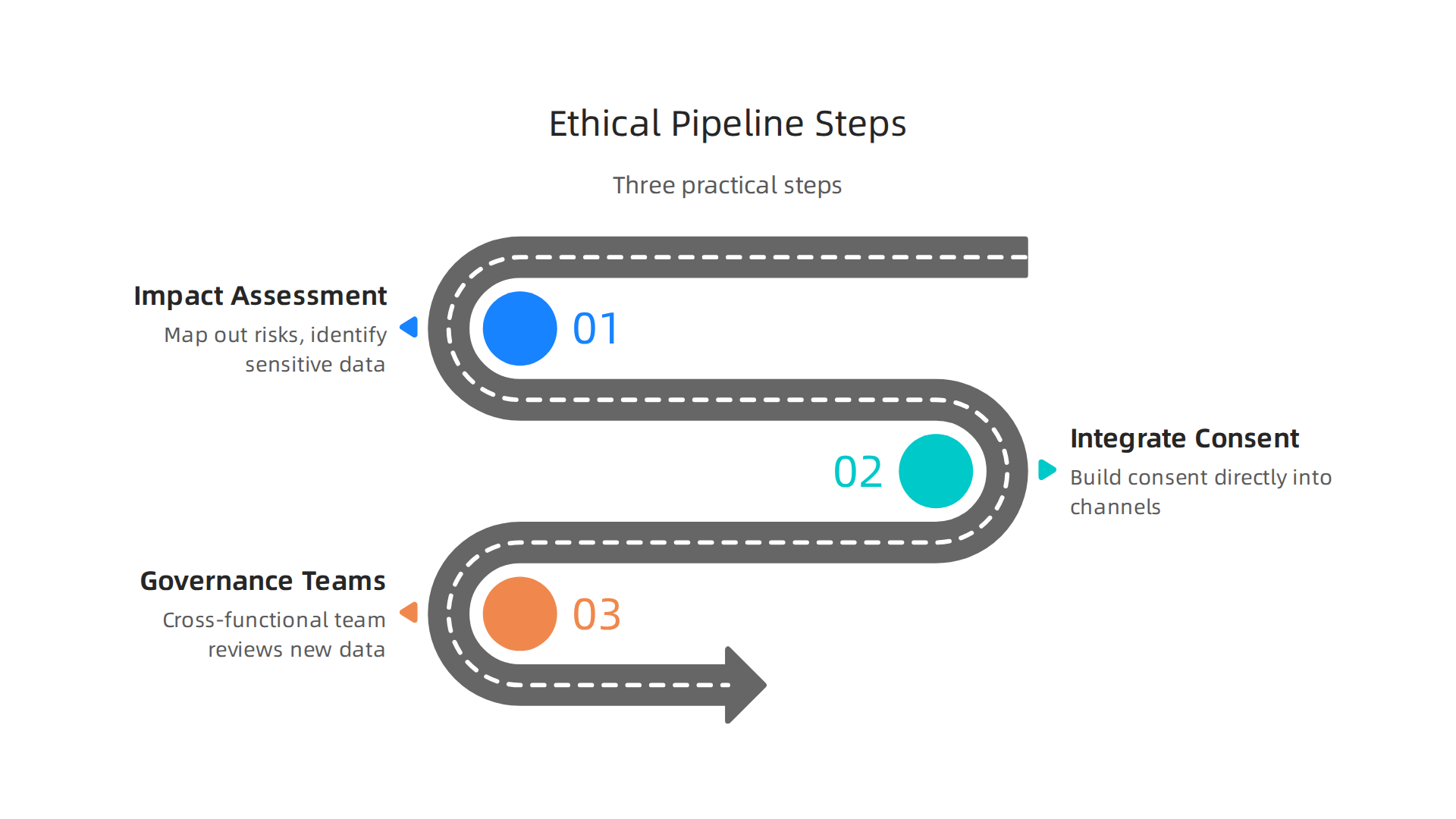
Step 1: Run a Data Ethics Impact Assessment First
Before you design your electronic data gathering and retrieval system, take a step back. Ask yourself what data you truly need, why you need it, and who it affects. A data ethics impact assessment is like a pre-flight check. It forces you to map out risks, identify sensitive data types, and set boundaries early. This process should involve questions about proportionality. How often do you need to collect? Which fields are essential versus nice-to-have? What volume meets your purpose without going overboard? The Ethical Web Data Governance Framework 2026 Guide lays out a seven-step process that starts exactly with this kind of scope definition. Building this assessment into your workflow prevents you from collecting data you can not ethically handle.
Step 2: Integrate Consent at the Point of Capture
Once you know what data you need, build consent directly into your data gathering channels. Do not tack it on later. Use consent APIs that let users choose exactly how their information is used. Every time your system retrieves data, it should check those preferences automatically. This is where data gating comes into play. You create boundaries that respect the user's choices. If a user says no to sharing their location, your pipeline simply does not pull it. No workarounds. No hidden exceptions. This practice also supports your processing personal data obligations under regulations like GDPR. By automating consent management, you reduce human error and build trust from the ground up. The Data Governance in 2026 Key Strategies guide emphasizes that privacy must move from a compliance checkbox to an operational reality embedded directly in your pipelines.
Step 3: Build Cross-Functional Governance Teams
Ethics can not live in a silo. You need people from legal, product, engineering, and ethics sitting at the same table. These teams should meet regularly to review new data sources, changes in collection frequency, and downstream uses. Each new use of data should go through a checkpoint. Does this reuse introduce new ethical concerns? Does it expand exposure? A cross-functional team ensures that different perspectives catch blind spots. This also protects your intellectual property protection strategy because you have documented decisions and accountability at every step. For a deeper look at how teams are embedding these practices, check out how to build apps with AI that earn trust through ethical data annotation.
Building an ethical pipeline is not a one-time task. It requires ongoing checks and a culture that values transparency over shortcuts. When you start with an impact assessment, bake in consent, and bring the right people together, your electronic data gathering and retrieval becomes a source of strength rather than risk.
Overcoming Common Implementation Hurdles
Even with a solid plan, putting ethical data pipelines into practice comes with real challenges. Resistance from legacy systems and siloed data ownership often slows progress. This requires change management. You need to bring stakeholders together and show how shared access reduces duplication and improves trust. The cost of retrofitting ethical controls can also feel overwhelming. But a phased rollout solves this. Start with one high-value data source instead of everything at once. Focus on datasets that drive immediate business goals, as outlined in the enterprise data integration checklist. Open-source tools further reduce expenses. By tackling one hurdle at a time, your electronic data gathering and retrieval becomes both ethical and practical. For more on why this effort matters for user confidence, read about how ethical data analysis builds trust in AI.
Measuring Success: Metrics for Trustworthy Data Systems
After you overcome the early hurdles, how do you know your system is actually working? The answer is measurement. You cannot improve what you do not track. Your electronic data gathering and retrieval system needs clear metrics that prove it is both effective and ethical.

Start with operational metrics. Track your consent rate to see how many users willingly share their data when processing personal data. Measure provenance completeness to ensure every piece of data has a clear origin story. Calculate your ethical data ratio, which compares permissioned data to scraped data. Higher is better. And run regular audits to keep your pass rate high. These four numbers give you a quick health check on your entire pipeline.
But process metrics only tell half the story. You also need outcome metrics. Watch for a reduction in synthetic drift over time. Monitor your AI fairness scores across different user groups. And run public trust surveys to capture how people actually feel about your system. These numbers reveal whether your ethical efforts are making a real difference.
Inside your organization, dashboards should be visible to both internal teams and external regulators. Transparency builds confidence. When everyone can see the same numbers, trust follows naturally.
For a deeper look at which specific KPIs matter most, check out the latest thinking on ethical performance KPIs for 2026. And if you want to understand how leading companies are handling synthetic drift, read about how top AI companies grapple with data ethics and synthetic drift.
Comparing Traditional vs. Ethical Data Retrieval
Seeing the difference side by side makes the business case clear for electronic data gathering and retrieval. Here is how traditional and ethical approaches stack up across key dimensions.

| Dimension | Traditional Approach | Ethical Approach |
|---|---|---|
| Cost | Short-term savings, high hidden risk | Higher upfront, lower long-term liability |
| Trust | Low public confidence | High trust through data gating |
| Compliance | Reactive audits, risky processing of personal data | Proactive by design, privacy-first |
| Model Performance | Synthetic drift and bias risk | Cleaner data, fairer outcomes |
The Open Ethics Maturity Model provides a framework to benchmark your organization's progress. For a real example, see how Maven Analytics built trustworthy AI by putting ethical data first.
Summary
This article explains why ethical electronic data gathering and retrieval is urgent for any organization that builds AI systems, describing how scraped or synthetic training data produces
Related Blogs
No Similar Blogs found
