Home


Menu

Close

Elements of AI Decoded Stop Synthetic Drift Build Trustworthy Systems
Published:
September 14, 2026
Why 'Elements of AI' Matter Now: Ethical Risks, Bottlenecks, and the Promise of Human-Centric Design
In 2026, Artificial Intelligence (AI) is everywhere, from how we work to how we connect. But behind the amazing things AI can do, there are big challenges. One of the biggest problems is called the "AI bottleneck." This happens because it's hard to find enough private data that people have given permission to use. Instead, many AI systems, even the smartest AI, are trained using information scraped from public websites. This can lead to big problems like false information and AI systems that don't truly understand human values.
When AI models learn from data that is not accurate or has hidden biases, it can cause "Synthetic Drift." This means that as information moves through digital systems, it changes and gets twisted away from the truth. This is why understanding the core elements of AI is so important right now. We need to look closely at three main parts:
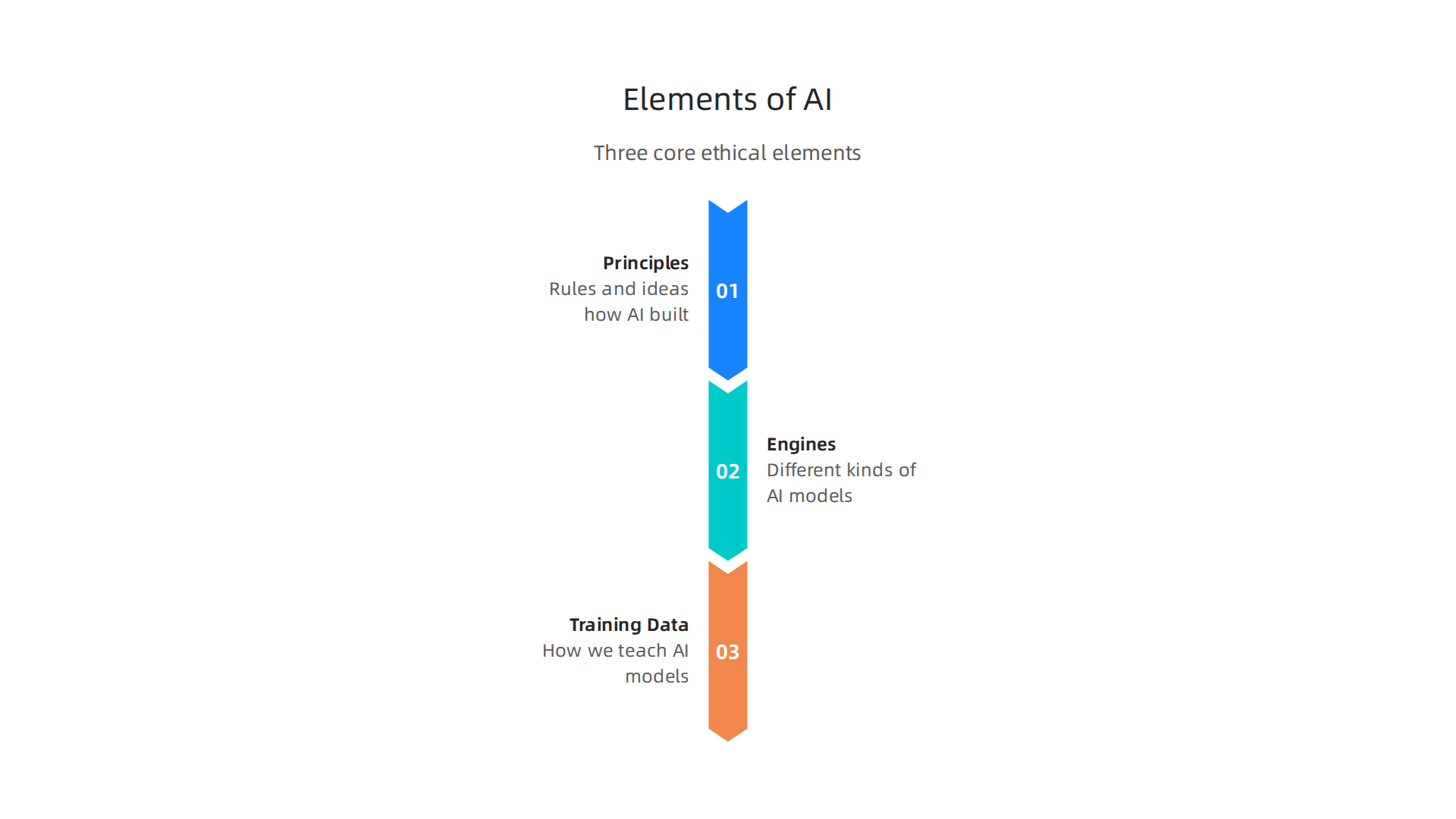
- Elements (Principles): These are the rules and ideas that guide how AI should be built. They include being fair, transparent, and respectful of people's privacy. For example, ensuring synthetic data is used ethically is a major concern today, as highlighted in reports on the Ethics of Synthetic Data and its legal implications Synthetic Data in AI: Challenges, Applications, and Ethical Implications.
- Engines (Architectures): This refers to the different kinds of AI engines or models that are built. How these models are designed affects how well they can learn and how trustworthy they become.
- Training (Data Practices): This is all about how we teach AI models. It covers where the data comes from, how it's prepared, and how we make sure it's fair and accurate. Poor data quality is a top reason why AI models fail, with insufficient data being a problem in 57% of cases, according to the 2026 State of Visual and Physical AI Survey.
These elements of AI are all connected to whether we can trust AI and how it affects society. We need to make sure AI helps people and improves our lives, rather than spreading misinformation or causing harm. This is where human-centric design comes in. It means putting people first when we create AI, making sure it reflects real human values and helps us build a more truthful digital world. To learn more about how ethical data practices lead to AI that can be trusted, consider reading about preparing high integrity data sets to build trustworthy AI.
The goal is to build AI that is not just smart, but also kind and reliable. This way, we can avoid the pitfalls of scraped public datasets and create AI systems that truly benefit everyone.

Core Elements of Ethical AI: Principles, Values, and Design Goals
To build AI that truly helps people, we need to think about its core elements like design goals, not just a list of things to check off. When we talk about ethical AI, we mean systems that are fair, open, responsible, and respect your privacy. They should always put people first.
Let's look at what these important elements of AI mean:
- Fairness: This means AI should treat everyone equally and not show favoritism or bias. For example, if an AI helps decide who gets a loan, it should not unfairly disadvantage certain groups of people. Making sure AI is fair even when it learns from changing data is a big challenge that researchers are working on, like exploring Fairness Evaluation and Inference Level Mitigation in LLMs.
- Transparency: You should be able to understand how an AI system makes its decisions. It's like knowing how a car works, even if you don't build it yourself. You need to know enough to trust it.
- Accountability: Someone needs to be responsible for what the AI does. If an AI makes a mistake or causes harm, we need to know who is in charge of fixing it. This also means having good rules for how AI data is used, as discussed in Governance Considerations for a Public Repository of Artificial Intelligence Training Datasets.
- Privacy: AI systems often use a lot of information. It's crucial that they protect your personal details and use data only in ways you've agreed to. This is especially important for the data used to train AI models.
- Human-Centricity: This is the idea that AI should be built to serve humans and make our lives better, not just to be the smartest AI possible. It means thinking about people's needs and values at every step of building new AI engines and deciding how to train AI models.
These important elements of AI don't always work perfectly together. Sometimes, being completely transparent might bump into privacy concerns. Or trying to be super fair might make the AI less efficient for some tasks. This is where good planning and careful choices come in. We need smart people to make trade-offs and set up rules for how these AI systems are developed and used. This is called governance, and it helps make sure AI stays on the right path. To truly build AI that earns trust from institutions, it's vital to Rethink AI: Learning to Build Trustworthy AI for Institutions from the ground up, with these principles as our guide.
AI Engines: Architectures, Inference Patterns, and Where Ethics Enters the Stack
We've talked about the big ideas for ethical AI. Now, let's look at how these ideas fit into the actual machines and programs that make AI work. We're going to dive into the brains of AI, which we call AI engines. These engines are built with different designs, known as architectures, and they follow certain patterns to make decisions, called inference patterns. Understanding these can show us where things can go wrong and where we can add ethical checks.
Think of an AI engine as a very complex machine. Its architecture is like the blueprint, showing how all the parts are put together. Different blueprints lead to different ways the AI learns and acts. For example, some designs, especially for powerful language models, are being developed to allow for better control and understanding of how they work, even across many computers. This helps make sure they act predictably and fairly, as new research in 2026 explores how to achieve Distributed Interpretability and Control for Large Language.
When an AI engine processes information to give an answer or make a choice, that's its inference pattern. This is when the AI uses everything it learned to do its job. For example, if an AI is asked to write a story, its inference pattern is how it chooses each word based on what it knows. This process can show hidden biases or privacy risks. If the AI learned from biased data, it might make unfair decisions during inference. Or, if it memorized parts of its training data, it could accidentally share private information.
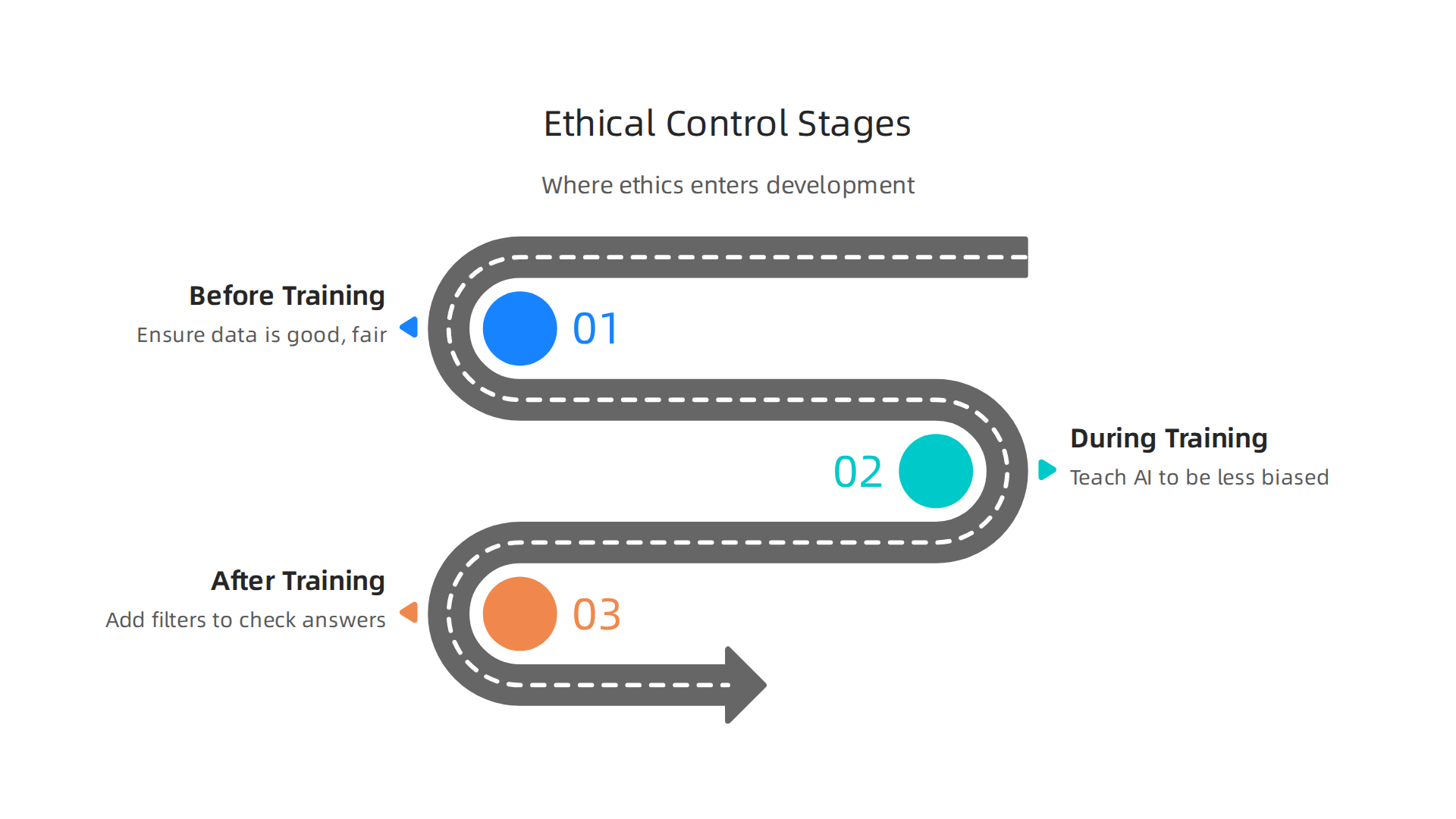
So, where can we put ethical rules into these AI systems? It's not just one place. We can add ethical controls at different stages:
-
Before Training (Pre-training): This is the very first step. It's about making sure the data used to teach the AI is good, fair, and respectful of privacy. If you use bad data, the AI will learn bad habits. It's like teaching a child with faulty information. To build trustworthy AI, you need to prepare high integrity data sets to build trustworthy AI from the start. This foundational step prevents many problems later on.
-
During Training (Fine-tuning): After an AI has learned the basics, we often "fine-tune" it. This means teaching it specific skills or making small adjustments. Here, we can specifically teach the AI to be less biased or to avoid certain harmful outputs. Ways to stop AI from repeating itself too much or making up facts are part of these advanced training steps.
-
After Training (Inference-time filters): This is when the AI is actually being used in the real world. Even if an AI was trained carefully, sometimes it might still produce unfair or unsafe answers. So, we can add filters that check the AI's answers before they reach people. These "inference-time interventions" can change the AI's behavior in the moment. For instance, new methods in 2026 are working on FairSteer: Inference Time Debiasing for LLMs with to quickly correct biases. Another way to add control is by using specific instructions, often learned through AI prompt engineer courses, to guide the AI's responses and keep them ethical. Also, to protect privacy, techniques like "MemFree decoding" can act as a filter to remove any memorized private information during the AI's output, as discussed in research on Detecting Memorization.
By placing ethical controls at each of these points, from how we collect data to how the AI delivers its final answers, we can make sure our AI engines are not just smart, but also responsible and helpful to everyone. It's about building trust into every layer of the technology.
Key Components of AI Engines: Data Pipelines, Models, Evaluation and Guardrails
We learned that adding ethical checks at different steps helps build trust in AI. Now, let's look closer at the main parts, or elements of AI, that make up these AI engines. Thinking about each part helps us see where problems can start and how to put safety checks in place.
Here are the key parts and how to keep them working ethically:
-
Data Pipelines: This is how data is collected, cleaned, and moved around. It's like the pipes that bring water to a house. If the water is dirty, everything else will be too. In AI, if the data is biased or incorrect, the AI will learn wrong things.
- Ethical Problems: Using data that isn't fair, is private without permission, or is just plain wrong. This can lead to AI making unfair choices.
- Safety Checks (Guardrails): We need strong rules about who can see the data (access controls). We also need to know where the data came from (provenance) to make sure it's good and ethical. Building these robust data pipelines is key to making AI trustworthy. You can learn more about how to build trustworthy AI with robust data pipelines.
-
Models: This is the "brain" of the AI engine. It's the set of rules and patterns the AI learns from the data. This is where the AI starts to understand things and make decisions. This is also where we focus on how to train AI models to be good.
- Ethical Problems: Models can hide biases they learned from data, or they might not be clear about why they make certain choices. Sometimes, they might even act in ways we didn't expect. This is why people in 2026 are looking closely at From Explainability to Control: The 2026 Executive View of ... for AI.
- Safety Checks (Guardrails): We need to regularly check these models for fairness and hidden biases. We also want to make them more "transparent," meaning we can understand how they think. This helps us control their actions better.
-
Evaluation: After we build and train an AI model, we need to test it to see how well it works. This is like giving a student a test after they've studied.
- Ethical Problems: If we don't test for fairness, privacy, and safety, we might not find the problems before the AI is used in the real world. A system might seem like the smartest AI, but if it's not fair, it's not truly smart.
- Safety Checks (Guardrails): We need special tests, called "evaluation suites," that specifically look for ethical issues. These tests check if the AI is fair to everyone, protects private information, and doesn't cause harm.
-
Overall Guardrails: These are the big rules and tools that protect the whole AI engine. They cover everything from setting up clear rules for how the AI should act to having human experts oversee the AI's work. It is important for large organizations to rethink AI learning to build trustworthy AI for institutions from the ground up.
By making sure each of these elements of AI has its own ethical checks and guardrails, we can build AI systems that are powerful and trustworthy.
Building trustworthy AI starts with good data. We talked about how important data pipelines are in the previous section. But here's a big problem many AI creators face in 2026: getting enough good, private, and fair data. This problem is called the "AI bottleneck."
The AI Bottleneck: Why Good Data is Hard to Find
Think of it like this: for an AI engine to learn about real life, it needs to see real-life examples. But much of the best, most truthful data belongs to people or companies and is private. Getting permission to use this private data for how to train AI models is often very hard or even impossible. This lack of permissioned, private data creates a major slowdown, or "bottleneck," for AI development.
Because of this bottleneck, many organizations turn to data that's already out there on the internet. This "scraped" data is often public, but it can be biased, incomplete, or not truly reflect human values. For example, a 2026 survey found that data issues like not having enough training data or having poor data quality are among the top reasons why AI models fail 2026 State of Visual and Physical AI Survey - Voxel51. When AI engines learn from this kind of data, they can pick up wrong ideas or unfair ways of thinking. We need to prepare high integrity data sets to build trustworthy AI.
Understanding Synthetic Drift: When AI Gets Lost
To get around the data bottleneck, some teams use "synthetic data." This is data that isn't real, but is made by computers to look like real data. While synthetic data can be helpful, it comes with its own risks. One big risk is called "synthetic drift."
Synthetic drift happens when the fake data, even if it looks good at first, slowly starts to get distorted. Imagine making a copy of a copy, and then another copy. Each new copy might lose a little bit of the original's truth. The same thing can happen with AI. When AI models are trained on synthetic data, or if the data they use changes over time, the AI can start to drift away from reality or from what we want it to do. This distortion can get worse over time, especially when AI systems use their own outputs to create new data or patterns. This is like a feedback loop where errors grow bigger. Researchers are already looking into the ethical issues and legal questions around using synthetic data Synthetic Data in AI: Challenges, Applications, and Ethical Implications.
This drift means the AI might no longer align with human values or be able to tell what's true. It can lead to models that seem like the smartest AI but actually spread misinformation or make poor decisions based on flawed data. Preventing synthetic drift is crucial for any organization that wants to build reliable and responsible AI. Learning about ethical multimodal AI strategies to combat synthetic drift is a key step.
To truly build AI that we can trust, we must address these data challenges head-on. It means finding ethical ways to gather and use data, or being very careful about how we create and use synthetic data, to make sure our elements of AI stay connected to real human truth.
To truly build AI that we can trust, we must address these data challenges head-on. It means finding ethical ways to gather and use data, or being very careful about how we create and use synthetic data, to make sure our elements of AI stay connected to real human truth.
Measuring and Mitigating Synthetic Drift: Signals, Tests, and Monitoring
Since synthetic drift is a big worry, how do we spot it and stop it? It's like checking a car for problems before a long trip. For AI, we need clear signals and regular checks to make sure the AI is still on the right path.
Spotting the Signals of Synthetic Drift
We can look for a few key signals to see if our AI is drifting.
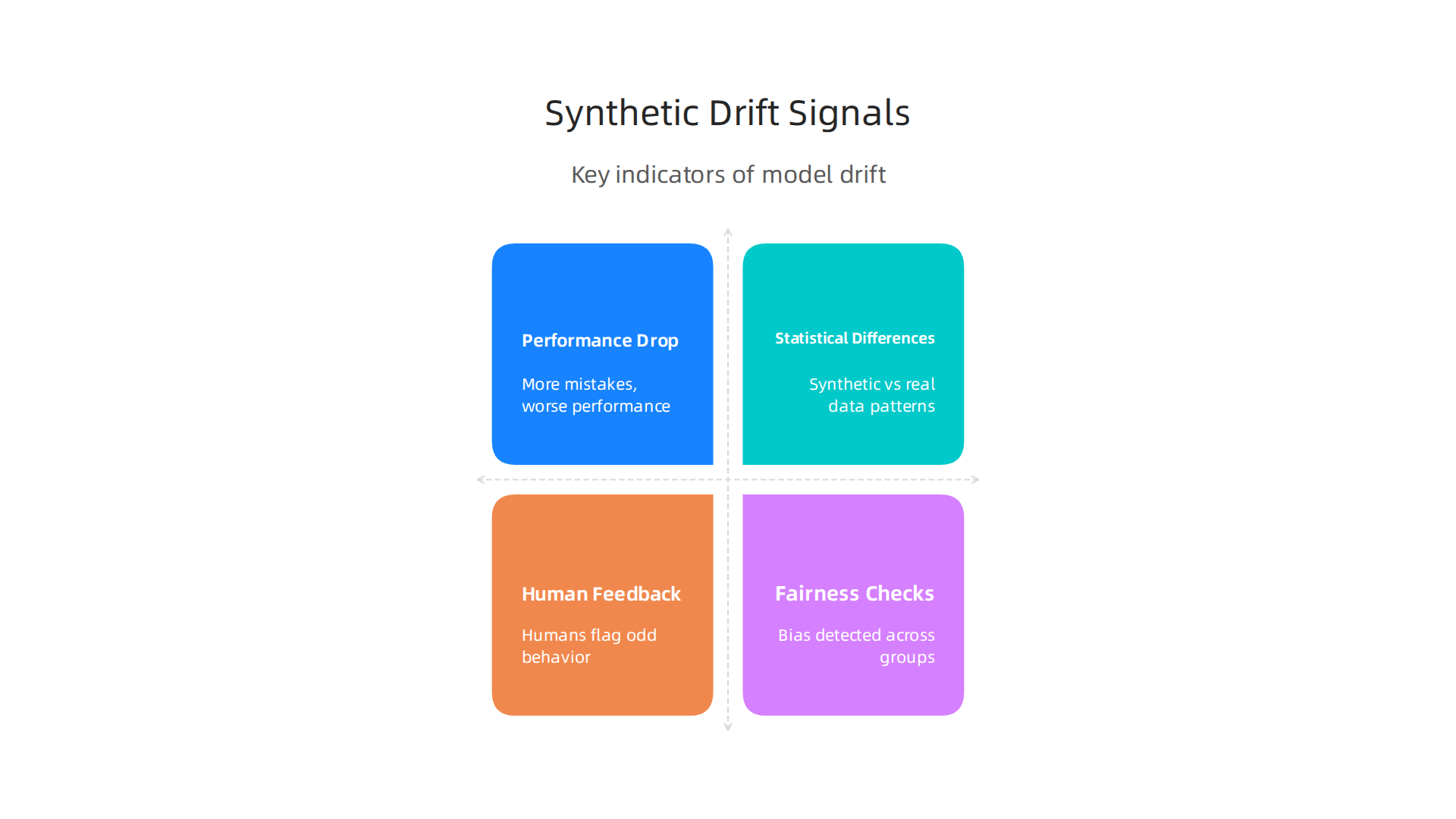
- Performance Drop: The easiest signal is when the AI starts making more mistakes or performs worse at its job. If an AI that was once accurate suddenly isn't, that's a red flag.
- Statistical Differences: We can compare the fake data (synthetic) to the real data we wanted it to mimic. Tools can check if the patterns and relationships in the synthetic data are still very close to the real-world data. Researchers found that checking how much the data distribution changes can help improve the quality of synthetic data Measuring the gap: correlating synthetic-to-real drift with PHI ....
- Human Feedback: Sometimes, a human looking at the AI's output can tell right away if something feels "off" or wrong. This feedback is very important.
- Fairness Checks: If an AI starts showing biases it didn't have before, or if it treats different groups unfairly, this can also be a sign of drift. Keeping fairness in check is a key goal in AI.
These signals help us understand if the elements of AI are still working as intended, or if the AI engines are starting to learn incorrect lessons.
Keeping an Eye on AI: Monitoring Strategies
To keep synthetic drift at bay, we need ongoing watch. This means putting systems in place that regularly check the AI models.
- Automated Monitors: Special programs can watch the AI's performance and data quality all the time. If they see a signal of drift, they can alert us right away. This is like a smoke detector for your AI.
- Regular Audits: We should regularly review the data used to how to train AI models and the decisions the AI makes. Think of it as a periodic health check. This helps catch issues that automatic systems might miss.
- Data Pipeline Checks: Since data pipelines are where data flows into the AI, we need to monitor these pipelines closely. Making sure no bad data gets in is the first step to preventing drift. Building robust data pipelines is crucial for trustworthy AI.
- Benchmarks: We can set up specific tests or "benchmarks" to measure how well the AI is doing against what we expect. If the AI falls below a certain score, it could mean drift is happening.
Regular monitoring helps us ensure that the smartest AI systems we build continue to serve us well and don't stray from their purpose. For more ideas on managing these issues, consider reading about AI security challenges building trust for large organizations.
Stopping the Drift: Mitigation Approaches
Once we spot drift, what can we do? Here are ways to fight back and keep AI trustworthy:
- Use Curated Permissioned Datasets: The best way to prevent drift from bad data is to use good data from the start. This means using real data that people have agreed to share. This kind of ethical data capture helps ground AI in real human values and makes it less likely to drift. Organizations should look into Prototype Governance Framework for a Public Repository of Artificial Intelligence Training Datasets for guidance.
- Human-in-the-Loop Validation: This means having real people regularly check the AI's work. Humans can correct mistakes and guide the AI back to the right path if it starts to drift. This helps keep the AI connected to human understanding and truth.
- Counterfactual Evaluation: This is a fancy way of saying "what if" tests. We can ask the AI, "What if this small piece of data was different? How would your answer change?" If the AI's answers change too much in unexpected ways, it might be drifting. These tests help ensure the AI reacts predictably and logically.
- Continuous Learning with Real Data: Instead of just training an AI once, we can keep feeding it small amounts of new, real-world data over time. This helps the AI stay fresh and adapt to new situations without relying too much on old, possibly drifted, synthetic data.
By actively measuring and managing synthetic drift, we can ensure the elements of AI we create truly reflect human truth and help us build a more trustworthy digital world.
We've talked about how to spot if our AI is going off track and how to fix it. But to really keep our AI systems trustworthy, we need clear rules and people in charge. This is what we call governance, policy, and compliance. It's all about setting up the right structure to make sure our elements of AI always stay on the ethical path.

Setting Up Roles and Rules for Ethical AI
Just like a company has different leaders for different jobs, good AI needs special roles and rules. These help guide how we build, use, and check AI.
- Special Roles: Some companies now have a Chief AI Officer (CAIO) or a Chief Data Officer (CDO). These leaders make sure AI is used responsibly and that data is handled with care. They help decide how to train AI models so they are fair and helpful. There are also ethics boards, which are groups of people who think about the moral side of AI and make sure it aligns with human values.
- Clear Processes: We need steps for everything. This includes doing risk checks to see what could go wrong with an AI, keeping good records of how AI was built and changed, and regular audits. Audits are like checks to make sure everyone is following the rules. This helps keep even the smartest AI systems accountable.
These roles and processes help to make sure that the elements of AI are always being thought about with care, from the very first idea to how they are used every day.
Following the Rules: Policies and Compliance
Governments and big organizations around the world are creating rules and guidelines for AI. These are important for making sure AI helps society instead of harming it.
- National Guidelines: In 2026, many countries are working on national plans for AI. For example, the U.S. has a National Policy Framework Artificial Intelligence with suggestions for laws, and India has also adopted its own AI Governance Guidelines to guide safe AI. These guides help companies and public groups understand what's expected.
- Building Trust: Following these policies is key to building trust in AI. Organizations are creating their own rules, like an Artificial intelligence governance policy for government, or specific frameworks like the AI Risk Management Framework from NIST. These frameworks make sure that the AI engines are not just powerful, but also safe and fair. You can learn more about how organizations are managing their AI systems by reading about Lucidchart AI transforms AI governance and trustworthy systems.
By having strong governance, clear policies, and making sure everyone follows them, we can build AI that we can truly rely on. This helps keep our AI from drifting away from what's good and right, making our digital world a safer place.
Practical Roadmap: From Elements to Implementation — Tools, Teams, and Timelines
Now that we know how important good rules and people are for ethical AI, let's talk about how to put all these ideas into action. Think of it like building a house. You need a plan, the right tools, and people to do the work. The same goes for making sure all the elements of AI are used in a good way. We need a clear roadmap to guide us.
To really get ethical AI working, companies need to think about what they will do in the short term, medium term, and long term. This helps make sure that every step, from how we collect data to how we train AI models, is done with care.
Short-Term Actions (Now to 6 Months)
First, we need to get organized.
- Roles and Responsibilities: Set up a team or committee just for AI ethics. This might include a Chief AI Officer or an AI Ethics Officer. These people will make sure that AI projects follow ethical rules. It's important to define who is in charge of what, as outlined in guides like the AI Governance Framework 2026: Enterprise Implementation Guide.
- Tools and Checks: Start by looking at all the AI systems your company uses. Make a list of them and figure out what risks they might have. This early step helps you see where you need to focus. You should also start using a Responsible AI checklist to make sure things like fairness are being considered from the start.
- Data and Training: Lay down clear rules for how data is collected and used. This includes preparing high-quality, ethical data. Learn how to identify and fix any unfairness in the data or how the ai engines are set up.
Medium-Term Actions (6 to 18 Months)
Once the basics are in place, you can start building more detailed plans.
- Organizational Growth: Create an official code of ethics for AI. Make sure everyone in the company understands it. Offer training so people know how to work with AI responsibly.
- Process Improvements: Implement ways to make sure AI systems are clear about how they work. This means showing how decisions are made and doing checks to protect people's privacy. A good Enterprise AI Ethics & Compliance Checklist 2026 can help track these steps.
- Data and Training Focus: Think carefully about how to train AI models so they are fair and helpful. This includes designing ways for people to oversee what the AI does. Making sure the data is of high integrity is key to building trustworthy AI. You can find more information on how ethical data analysis builds trust in AI.
Long-Term Actions (18 Months and Beyond)
For the long run, it's all about making ethical AI a natural part of everything you do.
- Full Integration: Make sure ethical AI is built into your company's main goals. It shouldn't just be an add-on, but a core part of how you do business.
- Advanced Monitoring: Set up ongoing systems to watch your AI. This will help you catch any new problems or biases that might come up. This is how you ensure even the smartest AI systems continue to be trustworthy.
- Continuous Improvement: Regularly review and update your AI policies and practices. This includes looking at new guides and frameworks, like the new open-source framework for responsible AI implementation that helps companies with their ethical AI journey. The world of AI changes fast, so your approach needs to change too. Making sure your team has strong AI learning courses focused on ethics and data integrity for enterprise teams will keep them ready for what's next.
By following this kind of roadmap, organizations can make sure that all the elements of AI they use are not just powerful, but also fair, safe, and truly serve people.

Quick Checklist: First 90 Days and First Year Priorities
Moving from the bigger roadmap, let's look at what needs to happen right away and in the first year. Think of it as a quick list of important jobs to do. These steps help make sure all the parts, or elements of AI, are used fairly and safely from the very start.
First 90 Days Priorities
Here's what your team should focus on in the first three months:
- Set Up Your AI Ethics Team: Decide who will lead the effort for ethical AI. This person or group will make sure everyone follows the rules. This step is about setting up your AI governance, which is key for success, as highlighted in guides on AI Governance and Regulation 2026: A Complete Guide to Global Frameworks.
- Find All Your AI Systems: Make a list of every AI system your company uses. Figure out what data each system uses and what big choices it helps make. This is called an AI system inventory. You need to know what you have to manage it well, as suggested in the Enterprise AI Compliance & Governance Guide 2026.
- Check for Risks: For each AI system, think about what could go wrong. Could it be unfair? Could it share private information? This helps you see where to focus your efforts. Mapping out your AI systems and their risks is a first step in Implementing Ai Ethics In....
- Start with Good Data: Begin making rules for how you collect and use data. Ensure the data is fair and accurate from the start. You can learn more about how to prepare high-integrity data sets to build trustworthy AI. This is super important because good AI engines depend on good data.
First Year Milestones
After the first 90 days, your focus will shift to building on those first steps:
- Write Down Your AI Rules: Create clear, written rules for how your company will use AI in an ethical way. Make sure everyone knows these rules. This builds on the first 90 days by making things official.
- Pilot Ethical AI Projects: Start small projects using these new ethical rules. This lets you test how well your rules work in real life. It helps you see what works and what needs changing. Many pilot projects fail without clear strategy, notes the AI Implementation Roadmap: Why Most Pilots Fail in 2026.
- Train Your People: Teach your teams how to use AI responsibly. Training helps everyone understand the ethical elements of AI and how to work with the AI engines properly.
- Keep Watching Your AI: Put systems in place to watch your AI for any problems, like being unfair or giving wrong answers. This way, even the smartest AI can stay on the right path.
This structured approach helps companies start strong with ethical AI. It makes sure that every step taken helps build trust and fairness, setting the stage for long-term success.
Summary
This article explains why the core elements of AI—principles, engines (architectures), and training (data practices)—matter more than ever in 2026, when data shortages and low‑quality scraped datasets create an