Home


Menu

Close

Develop Your Enterprise Data Science Bootcamp for Trustworthy AI in 2026
Published:
August 5, 2026
Why a principled foundation in data science matters for enterprises, government, and non-profits
In 2026, many big companies, government groups, and non-profit organizations are using smart computer programs, often called AI. These programs help them make choices and work better. But there's a big problem happening behind the scenes. We call it the "AI bottleneck." This means that AI systems need a lot of good, true information to learn from. However, getting this data in the right way is very hard. Much of the data available for AI to learn from comes from public sources that can be twisted or not fully true.
When AI tools learn from data that isn't completely accurate or gathered ethically, they can start to drift away from the truth. This is known as "synthetic drift." It's like a car slowly going off course because its steering is a little bit broken. This drift can cause big issues, making AI systems less trustworthy and sometimes even spreading wrong information. For example, the Federal Data Strategy Data Ethics Framework tells us that we should focus on human needs when we build and use AI.
This is very important.
So, how we teach people about data science really matters. If someone is learning to be a data scientist through a data science bootcamp or even pursuing a full data science degree, they need to know about these dangers. They must learn how to find and use data in a way that is ethical and truthful. This helps make sure that when they become a junior data analyst or an AI expert, the solutions they build are good for everyone. Teaching people about ethical multimodal AI strategies to combat synthetic drift is key.
This article will give you a clear plan for learning and practical steps for creating training programs. These programs will help companies, governments, and non-profits teach their teams how to make AI systems that are based on strong, ethical data. Our goal is to make sure AI works for people, not against them, by focusing on data integrity and good outcomes for humans.

Foundations: Ethics, Data Integrity, and the AI Bottleneck
To truly make sure AI helps people and builds trust, we must start with a strong base: how we get and use data. You see, the kind of data we feed into AI tools today makes a huge difference. Many AI systems learn from information pulled from the internet. This is called "scraped public data." The problem is, this data can often be confusing, not fully true, or even biased. It's like building a house on shaky ground.
Ethical Data: Getting Permission, Not Just Taking
Instead of just scraping data from anywhere, we need to focus on ethical data sourcing.
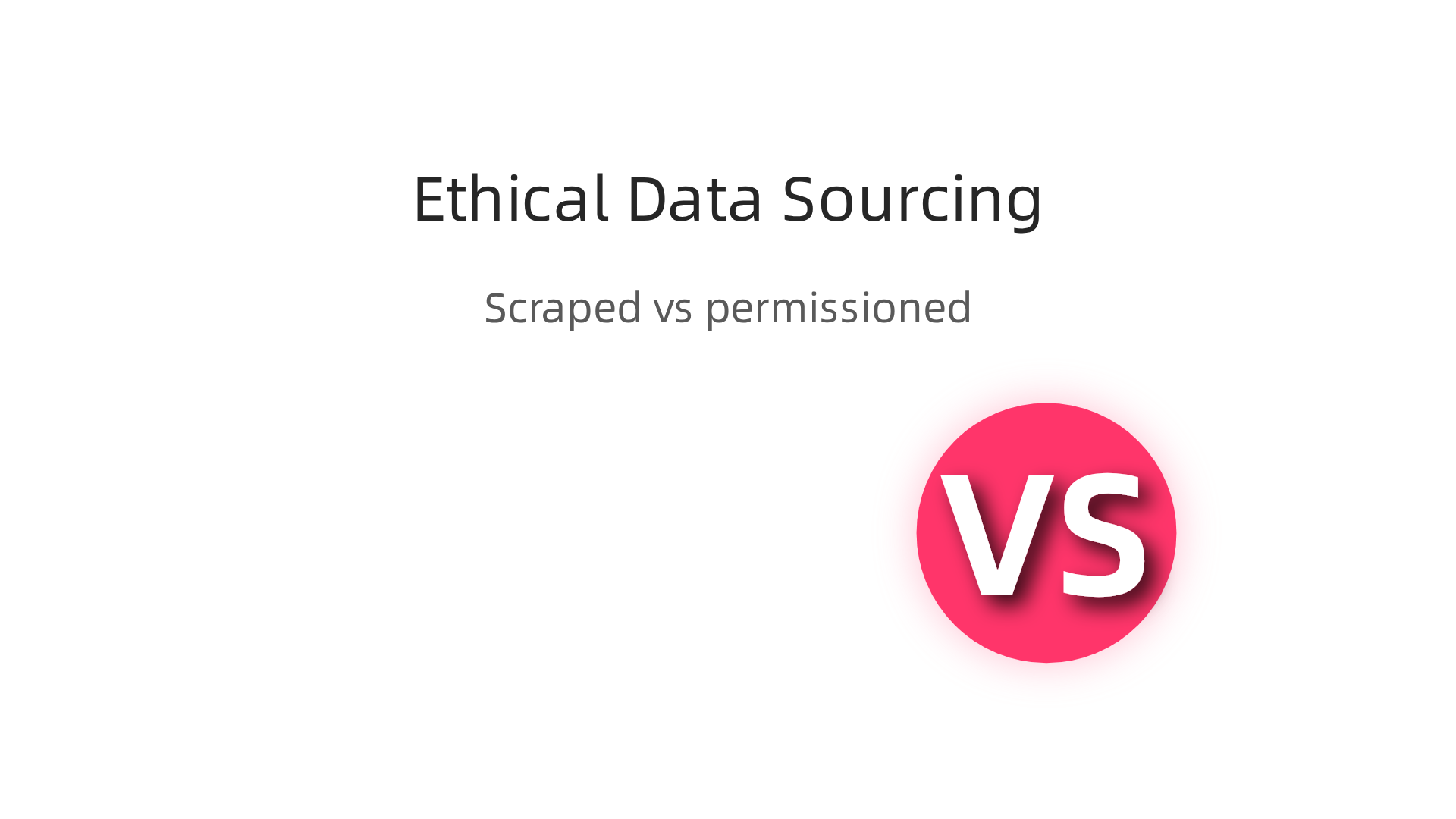
This means getting data in a way that is fair and respectful. A big part of this is getting permission. Imagine asking someone if you can use their thoughts or actions to teach a computer. That's what consent is all about. When we gather data with clear consent, it becomes "permissioned private data." This kind of data is much more reliable because people have agreed to share it, and it often comes directly from real experiences, not just public chatter that might be twisted.
Governments, for instance, are looking into careful ways to create and use data ethically, making sure they think about privacy and how accurate the data is Ethical considerations relating to the creation and use of synthetic data.
This careful approach helps reduce the "AI bottleneck," which is that big challenge of finding good, clean data for AI to learn from. By using permissioned private data, companies, government groups, and non-profits can give their AI tools a much better foundation. This helps us overcome the problem of relying on unclear or biased public information. Actually, understanding how generative AI assistants need this kind of private data to avoid problems is a key part of responsible AI why generative ai assistants need permissioned private data to avoid synthetic drift.
What Happens When Data Goes Wrong: Synthetic Drift
When AI systems learn from data that isn't true or has hidden biases, a serious problem called "synthetic drift" can happen. Think of it like this: if you teach a child using incorrect facts, they will start believing and spreading those wrong facts. AI tools do the same thing. If their training data is poor, the AI's understanding of the world starts to drift away from reality.
This drift is made worse because poor training data can spread bad ideas across many systems. For example, if an AI learns about people mostly from social media posts that show only one type of person, it might start to make unfair choices about everyone else. This causes value and truth distortions. The AI's decisions might not reflect what is actually fair or true in the real world. A report on building AI-ready datasets points out the importance of having clear rules for data, including checking for bias and knowing where the data came from Guidelines and best practices for making government ....
The US National Institute of Standards and Technology (NIST) even talks about looking at how much AI-generated data is in the training set to avoid "model collapse," which is when AI models become less effective because they've learned too much from other AI-made data Artificial Intelligence Risk Management Framework. This shows how serious synthetic drift is. It breaks down trust in what AI tools say and do. It can even lead to AI spreading misinformation or making unfair decisions. This is why ethical data gathering and analysis are so important for building trust in AI how ethical data analysis builds trust in ai.
To fight synthetic drift and ensure AI works for human good, training is key. Programs like a specialized data science bootcamp or a full data science degree need to teach future data scientists and junior data analyst professionals how to spot bad data and how to gather and use ethical, permissioned data. This knowledge is crucial for anyone who wants to build trustworthy AI tools and ensure that what data scientists do truly benefits society in 2026 and beyond. Ethical electronic data gathering is truly the only fix for this growing AI data crisis ethical electronic data gathering and retrieval is the only fix for ai data crisis.
To truly build trustworthy AI, as we talked about, it takes more than just good data. It also takes skilled people to work with that data. In 2026, being a data scientist means you need a lot more than just knowing how to code.
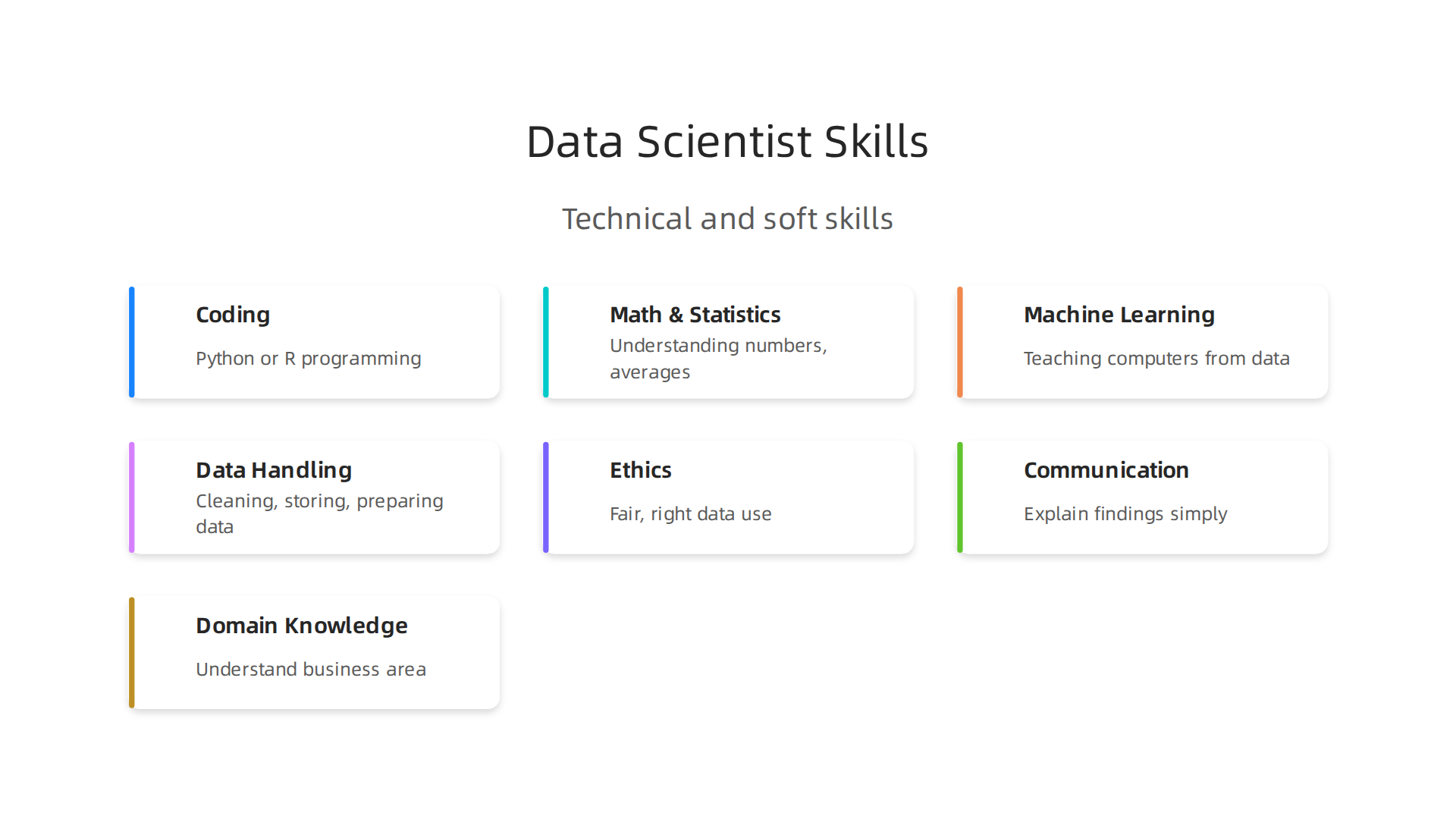
It's about a whole mix of skills that help make AI tools useful and fair.
What Data Scientists Do: Technical Skills
First, let's look at the basic "building block" skills. A data scientist needs to be good with computers and numbers. This includes:
- Coding: Knowing how to program in languages like Python or R. These are like the tools in a builder's belt for working with data.
- Math and Statistics: Understanding numbers, averages, and probabilities helps them make sense of big datasets.
- Machine Learning: This is about teaching computers to learn from data without being told every single step. These are the smarts behind many
AI tools. - Data Handling: Cleaning up messy data, storing it, and getting it ready to be analyzed.
Many people learn these skills through a good data science bootcamp or by getting a full data science degree. These programs teach students how to do things like data analysis, data engineering, and data management. For example, some frameworks clearly list skills like analytical techniques and data storage as key parts of what a data scientist does Data Science Competency Framework. It's a bit like a roadmap, showing the essential skills needed for important jobs in 2026 Data Science Roadmap 2026: Essential Skills for Decision ....
Beyond Coding: Soft Skills for Trustworthy AI
But here's the thing: being a good data scientist is not just about writing code. The best data scientists do much more than that.

They also need "soft skills" that help them work with people and make good decisions.
- Ethics: As we discussed before, understanding how to use data in a fair and right way is super important. This means thinking about privacy and avoiding bias, especially when training
AI tools. - Communication: Data scientists need to explain complicated findings in simple words so that everyone can understand. Imagine trying to tell a business owner what their data means without using big, confusing words. This is a vital part of the job.
- Domain Knowledge: This means understanding the business or area they are working in. If a data scientist is working for a hospital, they need to know a little about health care. If they're working for a bank, they need to understand finance. This helps them ask the right questions and find useful answers in the data.
Even a junior data analyst needs to have good communication skills and a strong sense of ethics to contribute to building trust in AI. These non-technical skills are what truly help ensure that AI systems reflect human values and are seen as trustworthy. We need to focus on ethical AI design for everyone. If you're looking to learn more about setting up your AI teams with the right mindset, you might find this helpful: how to design ai machine learning courses for trustworthy enterprise ai.
Learning and Growing for the Future
The world of data and AI changes very quickly. Because of this, data scientists must keep learning new things all the time. Companies and organizations want people who not only have strong skills but also understand that their work affects others. They look for data scientists who care about building ethical AI and supporting social good. This is part of what we call Corporate Social Responsibility (CSR).
When data scientists keep their skills sharp and always think about ethical practices, it helps build trust in the AI tools they create. This continuous learning is key for anyone working with data in 2026 and beyond, making sure that AI helps society in the best way possible.
To keep up with the fast-changing world of AI, people need good ways to learn these special skills. In 2026, there are three main paths to becoming a data scientist or working with AI: short-term bootcamps, longer degree programs, and special training given by companies.
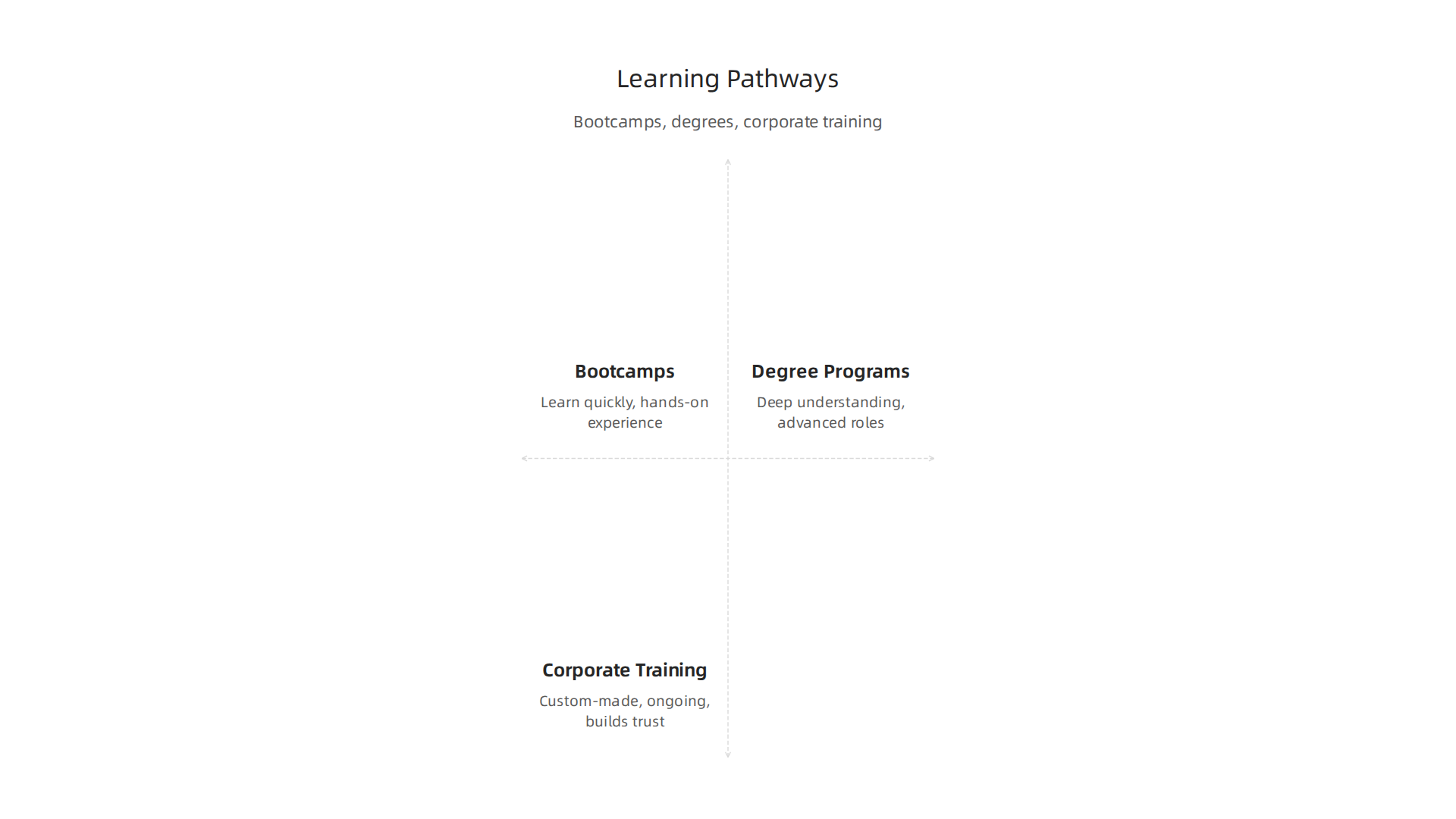
Each path has its own good points and not-so-good points.
Data Science Bootcamps: Fast Learning for Quick Results
A data science bootcamp is usually a short, intense program. Think of it like a sprint race. They teach practical skills you can use right away. Bootcamps are great for people who want to:
- Learn quickly: You can finish a bootcamp in a few months.
- Get hands-on experience: They focus a lot on projects and real-world problems.
- Change careers: If you already have some skills and want to switch to data science, a bootcamp can help you make that jump fast.
The main idea of a bootcamp is to get you ready for a job as a junior data analyst or a similar role quickly. People who finish bootcamps often know how to use specific AI tools and methods because that's what bootcamps focus on.
But, bootcamps might not go as deep into the math and theory behind data science. You might learn how to do something, but not always why it works that way.
Data Science Degree Programs: Deep Dive for Broad Knowledge
A traditional data science degree, like a bachelor's or master's degree from a university, takes much longer. These programs are like a long journey, giving you a very strong and broad understanding. They are good for people who want to:
- Understand deeply: You learn a lot of theory, math, and many different ways to solve problems.
- Aim for advanced roles: If you want to be a research scientist, lead a team, or invent new AI methods, a degree helps a lot.
- Explore many areas: You get to study many parts of data science, not just the most popular ones.
The downside is that a degree takes more time (often several years) and can cost more money. Also, sometimes what you learn might not always be the very newest tools used in companies right now.
Corporate Training: Tailored Learning for Company Needs
Many large companies and government groups also have their own training programs for data science and AI. This is called corporate training. It's special because:
- It's custom-made: The training teaches exactly what the company needs its workers to know, like how to use their special data systems or
AI tools. - It's ongoing: Learning doesn't stop. Companies often offer new training as technology changes.
- It builds trust: When training focuses on ethics and how to use data responsibly, it helps everyone build more trustworthy AI.
This type of training is super useful for making sure a whole team knows what to do and how to work together. It also helps companies stay updated on the latest ideas, like those in the Data Science Competence Framework (CF-DS), which helps define the key skills data scientists need. If you're looking for guidance on ethical AI learning within your company, there are specialized AI learning courses focused on ethics and data integrity for enterprise teams that can help.
Choosing Your Path
So, how do you choose?
- If you need to start working quickly and want practical skills, a
data science bootcampis a great choice.

- If you want a very deep understanding, plan for a long career in research or leading roles, a
data science degreeis better. - If you're already working, or if your company is building its own AI team, corporate training is key to making sure everyone is on the same page and building ethical
AI tools.
Many people even mix and match. For example, someone might get a degree, then do a short bootcamp to learn a new skill quickly. Or, a company might send its employees to a data science bootcamp for core skills, then follow up with its own special training. This mix-and-match approach is very popular in 2026 because it helps people keep learning and adapting in the fast-paced world of data and AI. This way, whether you're wondering what do data scientists do or aiming to be an expert, there's a learning path for you.
When companies and government groups need their teams to learn new data science skills quickly, a special kind of data science bootcamp comes in handy. Unlike bootcamps for individuals, these "enterprise-grade" bootcamps are made just for a company's unique needs. In 2026, building such a bootcamp means thinking about what to teach, how to give access to data safely, and how to make sure ethics are built into everything from the start.
Curriculum: Essential Skills with Ethics-by-Design
An enterprise data science bootcamp needs to teach practical skills that workers can use right away. This includes the basics like programming (Python or R), understanding numbers (statistics), and how to make computers learn (machine learning) for example. A Data Science Roadmap for 2026 often includes these core skills.
But for companies, it's more than just technical skills. A good bootcamp also teaches specific tools and ways of thinking that fit the company's work. Most importantly, it must teach "ethics-by-design." This means learning how to build AI tools and use data in a fair, safe, and responsible way. People should learn to think about how their work affects others and avoid making unfair systems. This helps to build trustworthy AI from the ground up.
Hands-on Projects with Permissioned Data
Learning data science is best done by doing. So, projects are a big part of any data science bootcamp. For companies, these projects need to use data that is real but also safe. Using a company's actual, private information can be tricky because of rules about privacy and security.
Here's where smart data use comes in. Bootcamps can use "synthetic data," which is made-up data that looks and acts like real data but doesn't have any private information in it. It's a great way for students to practice without putting real people's privacy at risk. The UK government even has ethical considerations for synthetic data to guide this. Another way is to use real data that has been carefully hidden or changed so no one person can be identified. These projects teach future junior data analyst roles how to work with data responsibly.
Governance and Stakeholder Involvement
For a company bootcamp to work well, there needs to be clear rules for how data is used and how AI is developed. This is called "data governance." It's like having a rulebook for everyone to follow. This rulebook makes sure that AI tools are used ethically and in line with company values.
It's also important for different parts of the company to be involved. Leaders, legal teams, and even people who don't work with data directly (stakeholders) should help shape what's taught and how projects are managed. This helps everyone agree on the ethical path for AI. Good AI training should always keep ethics and data integrity in mind. The Federal Data Strategy Data Ethics Framework emphasizes putting human-centered development first.
Operational Details for a Successful Bootcamp
To run an enterprise data science bootcamp, companies need to think about a few important things:
- Data Provisioning: How do students get the data they need for projects? Companies use special tools to give access only to those who need it, following what's called "least-privilege" access. This is part of strong enterprise data security practices.
They also use methods like "zero trust" to make sure all data access is checked and secure, even within the company's own network.
- Privacy-Preserving Techniques: Beyond synthetic data, other ways to keep data private include encrypting it (like putting it in a secret code) and taking out sensitive parts. These techniques are vital for creating AI-ready datasets in a safe way.
- Instructor Qualifications: The teachers for these bootcamps need to be experts. They should understand not just data science and
AI tools, but also the specific business challenges of the company and the ethical ways to solve them. - Hands-on Assessments: To see if students have learned, tests should be practical. Instead of just quizzes, students might have to solve real company problems with data, showing they can apply their skills while also thinking about ethical choices. This ensures they truly understand how ethical data analysis builds trust in AI.
By focusing on these points, an enterprise data science bootcamp can create a strong team ready to use AI powerfully and responsibly in 2026.
To truly know if an enterprise data science bootcamp is working, companies need clear ways to check what people have learned. This means using different kinds of tests and ways to give credit for new skills. It also means seeing how these new skills help the company do better business.
How We Check Learning: Assessments
There are two main kinds of checks, or assessments, in a good data science bootcamp:
- Formative Assessments: These are like small checks along the way. They happen while people are still learning. Think of them as practice quizzes, quick talks with a teacher, or feedback on a small part of a project. They help learners know if they are on the right track and what they need to work on. For
data science bootcampparticipants, this might be a code review or a chat about how they handled a data privacy question. - Summative Assessments: These are bigger tests at the end of a learning part or the whole bootcamp. They show what someone has learned overall. These often involve bigger projects where learners have to use all their new skills.
A good assessment measures three key things:
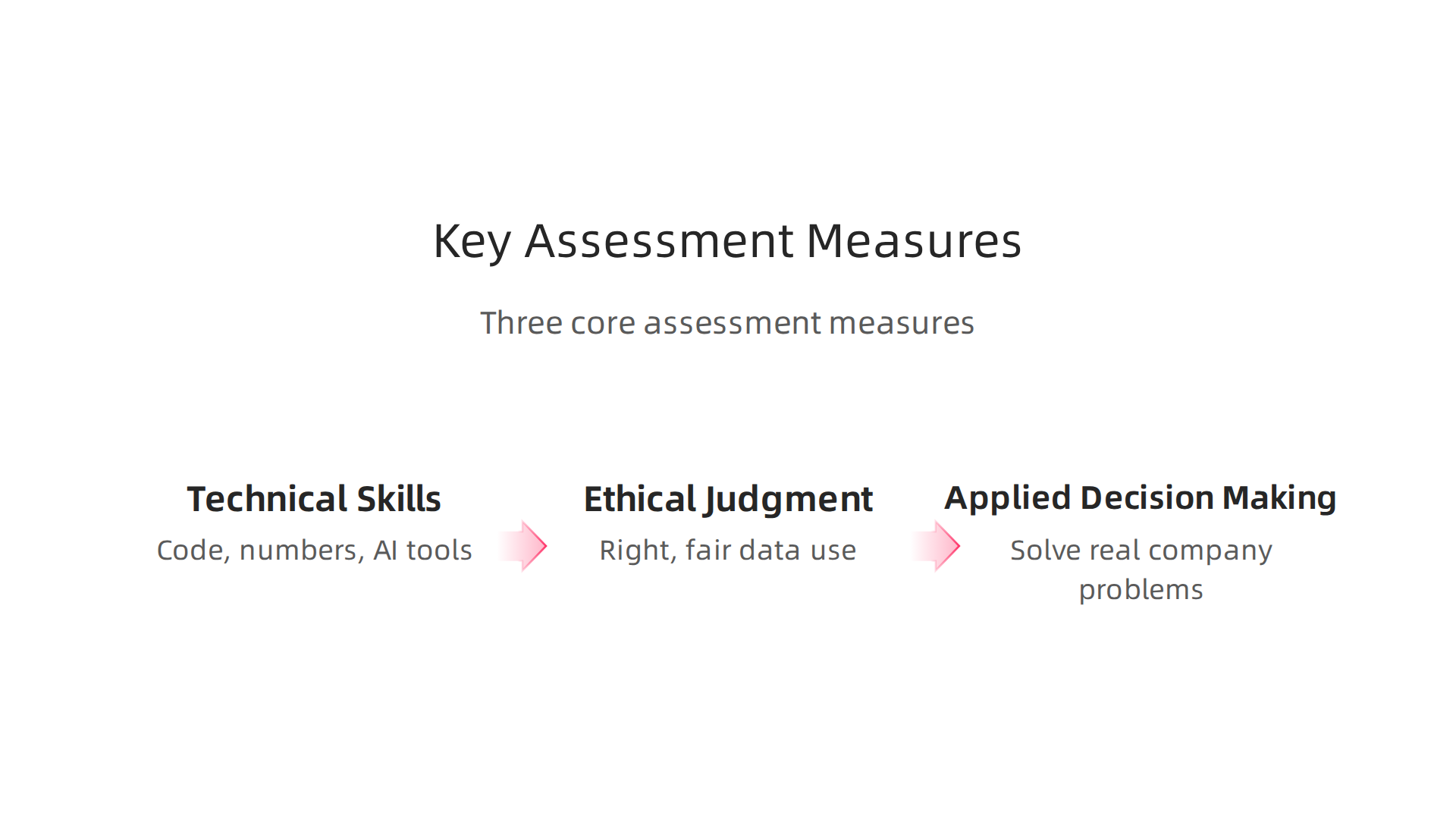
- Technical Skills: Can the person really code, understand numbers, and use
AI tools? This is about how well they handle the tools of the trade. - Ethical Judgment: Can they think about what's right and fair when using data and building AI? Do they make choices that protect people's privacy and avoid bias?
- Applied Decision-Making: Can they use data science to solve real company problems? This means taking all their skills and judgment to make good choices for the business.
For these assessments to be helpful, they must be "valid" and "reliable." Validity means the test actually measures what it's supposed to measure. For example, a test for coding skills should not just be a memory game, but show if someone can actually write code to solve problems. Experts say that validity is about whether a measure "captures what it is supposed to measure" Validity in Survey Research – From Research Design to .... Reliability means that if someone took the same test again, they would get similar results, meaning the results are consistent Measuring test validity and reliability: A guide.
Showing What You Know: Credentialing
After finishing a data science bootcamp, people need something to show what they've learned. This is called credentialing.
- Micro-credentials and Certificates: These are like mini-degrees that show a person has mastered a specific skill, such as a special type of machine learning or ethical data handling.
- Internal Badges: Companies can also give out their own digital badges. These are like awards that show someone has completed certain training or can do specific tasks, like being a great
junior data analyst.
These credentials are important because they help people feel good about their learning. They also help the company know who has which skills. This helps leaders choose the right people for new projects that involve AI tools and data.
How Do We Know It's Working? Measuring Impact
The biggest question for any company investing in a data science bootcamp is: Did it make a difference? To measure this, companies look at business outcomes.
- Are projects using data science finished faster?
- Are the decisions made with AI more accurate and fair?
- Are there fewer problems with data privacy or ethical concerns because people are better trained?
- Is the company more trusted for how it uses data?
By linking the skills learned in the bootcamp to real improvements in how the business runs, companies can see the true value of their investment. This makes sure that the training doesn't just teach new things, but actually helps the company grow and do better. To design courses that truly build trustworthiness, it helps to understand how to design AI machine learning courses for trustworthy enterprise AI.
Scaling Learning: From Pilot to Organization-wide Capability
After seeing how a data science bootcamp can help a small group, the next big step is to make those benefits available to the whole company. This is called scaling. It means taking what worked in the first try, or "pilot," and spreading it out to more teams and people. This journey needs a clear plan, from how you first test things to how you keep making them better.
Start with a Smart Pilot Program
Before a company rolls out a data science bootcamp to everyone, it's wise to run a smaller test. This pilot program lets you check if the training is right for your company's needs. You can see which parts work well and which need changes. This way, you don't spend a lot of time and money on something that might not be perfect yet. Think of it as perfecting the training for your future junior data analyst roles. This helps make sure the content about what do data scientists do is truly helpful.
Getting Everyone on Board: Stakeholder Buy-in
For any big change to work, people need to be on board. This includes top bosses, team leaders, and the people who will actually take the data science bootcamp. You need to show them how this training will help the company grow and improve. This is especially true for learning about new AI tools and how to use data fairly. When everyone understands the value, they're more likely to support the effort and make it a success.
Setting the Rules: Governance
As more people learn data science, the company needs clear rules about how they use these new skills and AI tools. This is called governance. It's about making sure data is handled safely, respecting privacy, and building AI systems that are fair and trustworthy. Good governance helps prevent problems and makes sure everyone is working towards the same goals for ethical AI. For example, setting up clear rules for who can access what data is a key part of Enterprise Data Security in 2026 and Data Protection Strategies for 2026. It's also important to have a plan for Trustworthy AI Governance in Practice as more employees become data-savvy.
Handling the Human Side: Cultural and Change Management
Bringing new data science skills into a company isn't just about teaching technology. It's also about changing how people work and think. Some people might be excited, while others might feel worried about learning new things or how AI tools will change their jobs. It's important to help everyone through this change. This means talking openly, giving lots of support, and creating a culture where using data and AI responsibly is a normal and valued part of daily work. This helps ensure that the new data science bootcamp leads to a stronger, more trusting work environment.
Always Getting Better: Measurement and Continuous Improvement
Even after scaling a data science bootcamp across the whole company, the work isn't done. Technology changes fast, and so do business needs. Companies should always keep checking how well the training is working. Are people using their new skills? Is it helping the business outcomes? By regularly looking at results and asking for feedback, companies can make the training even better over time. This continuous improvement ensures the data science education stays relevant and valuable in the long run. Building a Trust first AI strategy becomes business imperative in 2026 when the organization supports constant learning and ethical practices.
Summary
This article explains why a principled foundation in data science is essential for enterprises, government, and non-profits to build trustworthy AI and overcome the
Related Blogs
No Similar Blogs found
