Home


Menu

Close

Cybersecurity Specialist in 2026: AI Threats, Key Skills, and Evolving Roles
Published:
August 20, 2026
Why cybersecurity specialists matter now — and what’s changed
In 2026, the digital world moves faster than ever. This means our online spaces and valuable information face more dangers than before.

Think about all the new things artificial intelligence (AI) can do. While AI helps us in many ways, it also opens new doors for bad actors to try and steal data or cause problems. This makes the job of a cybersecurity specialist more important than ever.
Actually, the way we protect computer systems has changed a lot. Today, many risks come from AI itself. For example, AI can create very real-looking fake messages that trick people into giving away secrets. It can also help hackers find weak spots in systems much faster. This new landscape brings up big questions about how we keep our data safe and true.
One of the biggest problems we face right now is what some people call the "AI bottleneck." This isn't about AI being slow. Instead, it means there's a real shortage of good, ethical data to train AI systems. When AI learns from bad or misleading data, it can make mistakes or even spread false information, a problem known as "Synthetic Drift." This makes it hard to build AI systems we can truly trust. For cybersecurity, this means protecting the very core information that AI relies on. Without proper data protection services, even the smartest AI can become a weak point.
Because of these new challenges, companies really need expert help. They need people who understand how AI works and how to protect against new kinds of attacks. This is where a skilled cybersecurity specialist comes in. These specialists help identify and fix weak points in computer networks and systems. They work to protect important information from being lost or stolen. Some even work as a [cybersecurity consultant], helping large businesses figure out their best defense plans.
Many companies, even the [biggest cybersecurity companies], are struggling to find enough skilled people to fill these important roles. There's a big need for experts who can handle everything from protecting cloud systems, like those needed for [cloud engineer jobs], to understanding how to stop AI-driven attacks. This also includes knowing about different cybersecurity roles, which can range from AI Security Engineer to Data Security Engineer, as outlined in frameworks like The CyberSN Taxonomy.
This article will be your practical guide. We will look closely at the different kinds of jobs in cybersecurity for 2026, what skills you need, how to set up rules for safety (called governance), and smart ways to hire the best cybersecurity specialists. We'll explore how to master cybersecurity AI skills for enterprise security in 2026 and how AI-powered security solutions combat synthetic drift and build trust in today's complex digital world.
1) Role taxonomy: types of cybersecurity specialists and where they fit
To truly understand how to protect against new digital dangers, we need to know the different kinds of cybersecurity jobs out there. The field is growing fast, and there are many paths a cybersecurity specialist can take. In 2026, companies need many types of experts to keep their digital information safe. Some helpful guides, like the one from Penligent, help us understand how cybersecurity jobs are grouped today, focusing on key areas like defense and detection for real-world career planning in 2026.
Let's look at some common kinds of cybersecurity specialists and what they do:
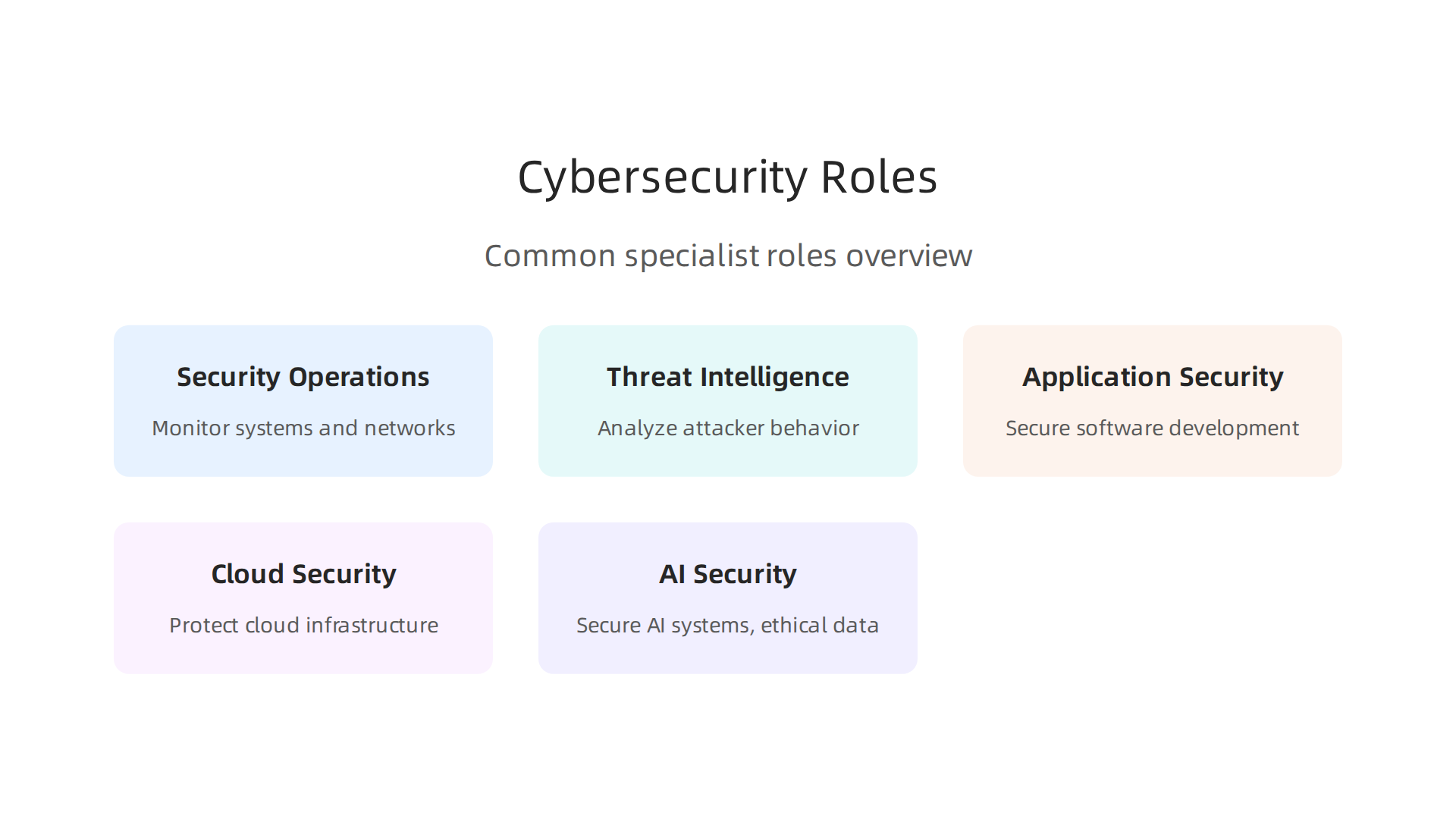
- Security Operations: These specialists are like the first line of defense. They watch computer systems and networks all the time. If something suspicious happens, they jump into action to stop problems. This includes responding to cyber incidents quickly.
- Threat Intelligence: These experts are like detectives. They study how hackers work, find out about new dangers, and figure out what tricks might be used next. This helps companies get ready before an attack happens. The CyberSN Taxonomy lists roles like Cyber Threat Intelligence Analyst as part of the defense category, showing how vital this job is to staying ahead of threats.
- Application Security: This area focuses on making sure all the computer programs and apps we use are built safely from the start. It's much easier to put safety features in place while making software than to try and fix big problems later.
- Cloud Security: More and more companies store their data and run their systems in the "cloud," which means on the internet through big data centers. A cloud security expert, similar to someone in [cloud engineer jobs], makes sure that this cloud data and these systems are protected from unauthorized access. You can learn more about how to use cloud security tools to secure AI data and build trust in 2026.
- AI Security: This is a very important and growing area in 2026. These specialists make sure that AI systems themselves are secure and that the data they learn from is ethical and trustworthy. They help stop things like "Synthetic Drift," where AI might spread false information. This role often involves working closely with AI and data teams.
These different types of cybersecurity specialists do not work alone. They often work together with other teams in large organizations. For example, AI security experts will partner with AI and data teams to make sure new AI models are safe and fair. They also work with ethics and compliance teams to ensure all security efforts follow the rules and laws, which is especially important with new AI regulations. Many also work with product engineering teams to build safety into new products from the ground up.
Even the [biggest cybersecurity companies] are looking for people who can fill these varied and important roles. Being a [cybersecurity consultant] means you might help many different companies find and fix their weak spots. Mastering cybersecurity AI skills for enterprise security in 2026 is now key for many of these jobs.
2) Core technical and human skills for cybersecurity specialists in the era of AI
Now that we know about the different kinds of cybersecurity jobs, it's time to talk about the skills needed for these roles. In 2026, with more and more AI being used everywhere, cybersecurity specialists need both strong technical know-how and important human skills. Reports in 2026 show that new challenges mean new skills are needed for the same jobs.
Let's look at the key skills:
Important Technical Skills
To protect against new digital dangers, especially with AI, cybersecurity specialists need to master these technical areas:
- Threat Modeling: This is like drawing a map of all the possible weak spots in a system. It helps experts figure out where bad actors might try to attack and how to stop them before they even start.
- Secure Machine Learning (ML) Practices: AI systems use machine learning. Cybersecurity experts must know how to build and use these systems so they are safe from the start. This means making sure the AI itself isn't tricked or broken.
- Data Lineage: It's super important to know where all the data comes from and how it has changed over time. If data is used by AI, knowing its full history helps make sure it's good, real data and not fake. You can learn more about how to master data protection and AI access.
- Privacy-Preserving Techniques: With so much personal data online, cybersecurity specialists need to know how to keep it private. This includes using special ways to share or use data without giving away private details.
- Cloud Security: Many companies use the "cloud" to store their information. Knowing how to protect this online storage and the systems that run there is a must. This keeps company data safe from bad access.
Critical Human Skills
Beyond technical smarts, certain human skills are now more important than ever.
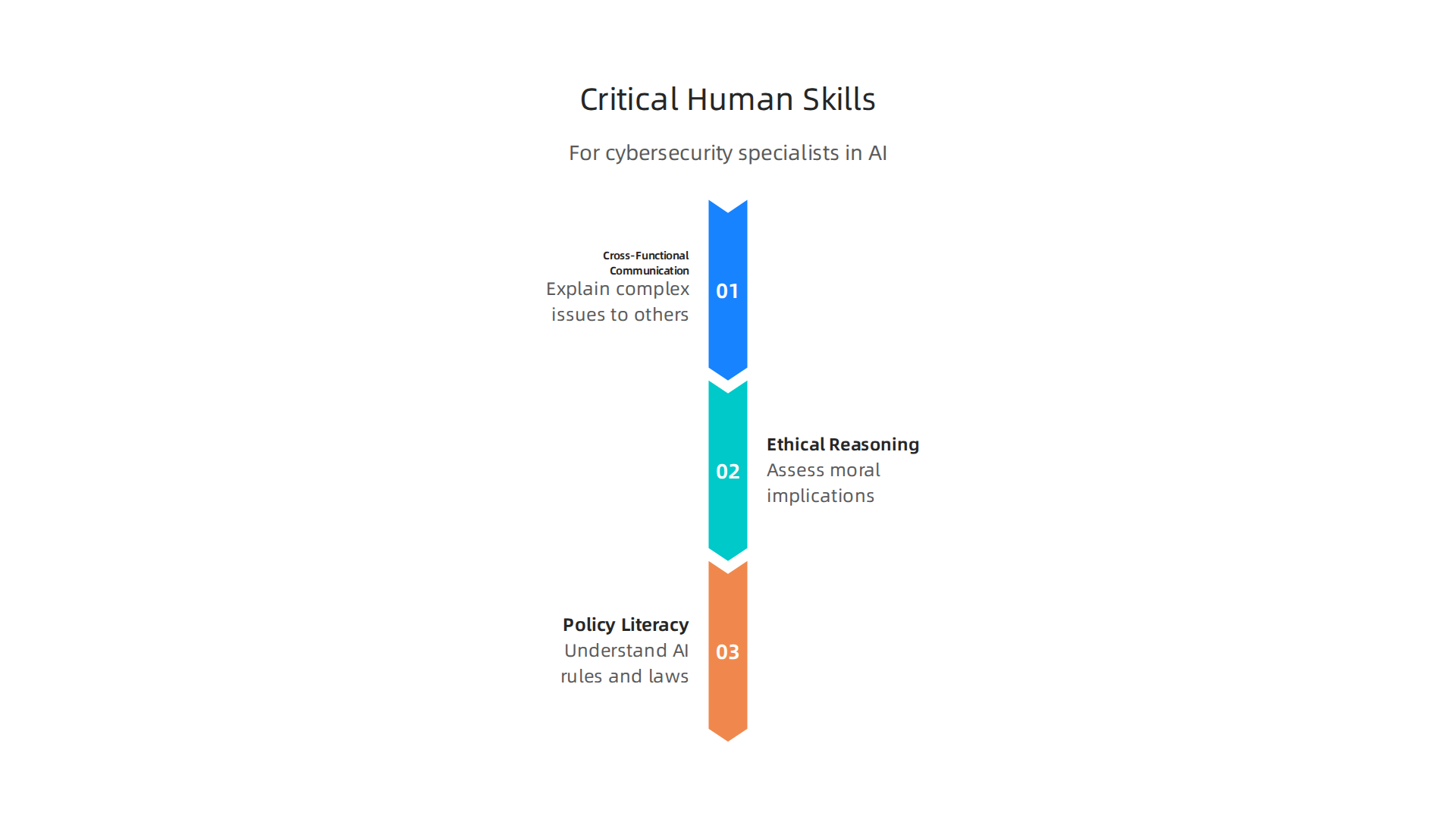
These help cybersecurity specialists work better with people and handle tricky situations, especially when dealing with AI's impact on trust. For example, a report from Cyberbit in 2026 highlights that strong hands-on experience and wide-ranging skills are becoming more important than just having many certifications.
- Cross-Functional Communication: Cybersecurity isn't just about computers. It's also about talking to people.

Experts need to explain complex security issues to people who don't understand tech, like leaders, legal teams, or even marketing. Good teamwork is key.
- Ethical Reasoning: AI can make big choices, and these choices must be fair and right. Cybersecurity specialists need to think carefully about the good and bad parts of AI systems and make sure they act ethically. This helps build trust in AI.
- Policy Literacy: There are many rules and laws about data and AI, and more are being made all the time. Knowing these rules helps cybersecurity experts make sure their company follows the law and avoids problems. This is especially important for fighting against "Synthetic Drift," which is when truth gets twisted as it spreads online. Learning how to tackle this issue is vital for overcoming synthetic drift and building trustworthy AI.
Together, these skills help a cybersecurity specialist not only protect systems but also build trust in our digital world. The biggest cybersecurity companies are always looking for people with this mix of talents. This means a cybersecurity consultant with these skills can help many different businesses stay safe.
With the right skills in hand, it's important to know the new kinds of dangers that artificial intelligence (AI) brings. In 2026, a cybersecurity specialist faces threats that are very different from older types of cyber attacks. These AI-specific dangers need careful thought and new ways to protect systems.
Let's look at some key AI threats:
- Data Poisoning: This is when bad actors feed fake or harmful information into an AI system during its training. This can make the AI learn wrong things, leading it to make bad choices or allow security holes. Imagine teaching a guard dog to let strangers in. Data poisoning can spoil the AI's ability to tell good from bad, and it’s a big problem in AI security [^1].
- Model Exfiltration: An AI model holds a lot of valuable "knowledge" that it learned. Model exfiltration is like stealing this knowledge from the AI itself. Bad actors might try to trick the AI into giving away its secrets or even the data it was trained on. This is part of a larger issue where AI systems are becoming new targets for attacks [^2].
- Data Drift and Model Decay: AI models learn from data, but the real world changes all the time. Data drift happens when the data the AI sees every day starts to look different from the data it was trained on [^3]. This can make the AI less accurate or less secure over time, a process called model decay [^4]. Cybersecurity teams must watch out for this to keep AI working right.
- Dataset Provenance Failures: This means not knowing the true origin or history of the data used by an AI. If you don't know where the data came from, it's hard to trust it. Problems in the data supply chain, which includes how data is collected and used, can create big security risks for AI systems [^5].
How Cybersecurity Roles Must Adapt
To handle these new threats, a cybersecurity specialist needs to take on new duties.

Organizations must clearly define who is in charge of what:
- Data Lineage Ownership: Someone needs to be responsible for tracking where all data comes from and how it changes. This makes sure that the data used by AI is real and hasn't been tampered with. It's about ensuring data integrity throughout its journey [^6].
- Model Monitoring: Experts must constantly watch AI models to make sure they are still working as expected. This includes looking for signs of data drift or other issues that could make the AI less effective or insecure [^7]. Regular checks are a must.
- Adversarial Testing: Cybersecurity teams need to actively test AI systems by trying to attack them. This "adversarial testing" involves trying things like prompt injection, where attackers try to trick the AI with specific inputs to get bad results [^8]. This helps find weaknesses before real attackers do.
- Trust Metrics and Ethical AI Oversight: It's not just about stopping attacks, but also making sure the AI is fair and trustworthy. Roles need to focus on how to build trust into AI systems. This means having people who check that AI decisions are ethical and that the AI isn't spreading misinformation or "synthetic content," which can be used for fraud [^9]. Ensuring AI alignment with human values is key for any cybersecurity consultant.
By giving these responsibilities to specific roles, companies can better protect their AI systems. This helps build a stronger defense against new threats and ensures that AI is used safely and wisely. To dive deeper into securing AI, learn more about mastering cybersecurity threats to AI systems in 2026.
[^1]: PMC. "Modeling Threats to AI-ML Systems Using STRIDE - PMC." 2026. [^2]: Checkpoint. "AI Security Report 2026." 2026. [^3]: media.defense.gov. "Joint Cybersecurity Information AI Data Security." 2026. [^4]: GOV.UK. "Cyber security risks to artificial intelligence - GOV.UK." 2026. [^5]: Alston. "NSA, CISA, FBI Joint International Guidance on AI Data Security." 2026. [^6]: ijcat.com. "The Intersection of Artificial Intelligence and Cybersecurity." 2025. [^7]: NIST. "Cybersecurity Framework Profile for Artificial Intelligence." 2026. [^8]: capgemini.com. "New defenses, new threats." 2026. [^9]: NIST. "[PDF] Reducing Risks Posed by Synthetic Content." 2026.
4) Organizational models and hiring strategies for enterprise cybersecurity teams
Now that we understand the new jobs a cybersecurity specialist must do, let's talk about how companies set up their teams to handle these important tasks. In 2026, finding the right way to organize and hire security experts is very important for keeping AI systems safe.
Different Ways to Organize Security Teams
Companies can set up their security teams in a few different ways:
- Centralized Teams: This is like having one big security team that handles everything for the whole company. All security checks and plans come from this one team. This can be good for smaller companies or those with very strict rules because it keeps things consistent [^1]. But, it can also slow things down if everyone has to wait for this one team [^2].
- Federated Teams: With this model, each part of the company (like different departments or regions) has its own small security team. These smaller teams work on their own, but they still follow main rules set by a central group [^3]. This way, security can be faster and better fit the needs of each department, while still keeping overall standards [^4].
- Embedded Security Liaisons and Matrixed Structures: This means putting cybersecurity specialists right into the teams that build AI or other products. Think of a security expert working side-by-side with the AI developers. This helps catch problems early and makes sure security is thought about from the very start. It means the cybersecurity consultant is truly part of the building process, not just checking things at the end. For complex AI systems, this approach is becoming more and more common.
Companies often choose the model that best fits their size and how quickly they need to move. It's about finding the right balance for their security program [^5].
How to Hire the Right Cybersecurity Talent
Finding good cybersecurity specialists for these new roles needs a smart plan. Here's some advice for companies:
- Clearly Define the Job: Before hiring, companies need to be very clear about what the cybersecurity specialist will do. Will they focus on AI data, model testing, or something else? Knowing this helps find the best person. If you're looking for roles focused on new AI challenges, you might need to look for someone with specific skills in AI Engineer Roles Defined Key Skills Ethics and Team Structure for 2026.
- Look for Technical and Ethical Judgment: It's not just about knowing how computers work. A good cybersecurity specialist needs strong technical skills, but also a clear understanding of what's right and wrong. They must think about how their work impacts people and trust. Some might come from IT help desks, while others might be software developers who learned about security [^6]. You can explore different Cybersecurity Career Paths: Choose Your Specialisation to see the skills needed.
- Speed Up Onboarding: When a new cybersecurity specialist joins, companies should help them get started quickly. This means giving them the right tools and training so they can make an impact right away. In today's fast-changing world, businesses need their new team members to be effective very fast.
The biggest cybersecurity companies are always looking for people with these skills. Making sure teams are set up well and hiring the right talent are key steps to staying safe in 2026. A strong Security Operating Model: Building a Modern Security Program helps make sure these new hires can do their best work.
When a cybersecurity specialist joins a company, their journey often starts with foundational roles and grows into more specialized areas. It's like climbing a ladder, with each step bringing new challenges and skills.

Common Career Paths for a Cybersecurity Specialist
For someone new to the field, a common starting point is a Security Operations Center (SOC) Analyst. Here, they watch for threats and respond to basic security problems. From there, a cybersecurity specialist can move up to become a Security Analyst, then a Security Engineer. These roles involve more complex problem-solving and designing security systems. Further up the ladder, you might find a Security Architect or a Security Manager. The highest positions include Director of Security or even a Chief Information Security Officer (CISO), who leads all security efforts for the company Cybersecurity Career Path in 2026: Roles, Salaries & Tracks.
In 2026, many new roles are popping up that mix cybersecurity with AI or machine learning. These are called hybrid roles. A cybersecurity consultant in such a role helps oversee AI systems to make sure they are safe and fair from the very beginning. This includes making sure AI data is protected and that the AI models themselves are not used for harm.
Certifications and Training That Help You Grow
Getting special certifications is a big step for anyone wanting to grow in cybersecurity. These certifications prove you have certain skills and knowledge. For example, entry-level jobs often look for certifications that cover general security basics, while more advanced positions might require certifications like CISSP. These help a cybersecurity specialist prove their expertise Cybersecurity Career Guide 2026: Roles, Certs, Salary, Path.
Companies are also investing heavily in training. A 2026 report from Fortinet shows that certifications are still very important, and a huge 92% of organizations plan to put money into AI-related cybersecurity training 2026 Cybersecurity Skills Gap - Fortinet. This highlights how important it is to keep learning.
Closing the AI-Security Skill Gap
Even with many people interested in cybersecurity, there's still a noticeable gap in the special skills needed, especially for AI security Cybersecurity Skills Gap Statistics 2026. This means training programs, mentorship, and real-world experience are incredibly important. Companies are looking for more than just certifications. They want people who can apply security ideas to new technologies like AI. They also need to understand ethical data handling, which is crucial for building trustworthy AI.
Many of the biggest cybersecurity companies are now training their existing teams or bringing in cybersecurity consultants who specialize in these areas. The main goal is to build strong teams ready for all the new challenges that AI brings. In-house training and hands-on projects are key ways to close this skill gap and keep up with how fast technology changes The Cybersecurity Career Roadmap 2026. A cybersecurity specialist today might also need to understand cloud engineer jobs and how security works in the cloud, as many AI systems are built there. To truly master cybersecurity AI skills for enterprise security in 2026, continuous learning is a must.
A cybersecurity specialist doesn't just stop at protecting systems; they also make sure everything follows the rules and builds trust. In 2026, this means focusing a lot on AI governance, making sure these powerful new tools are used ethically and safely.
Governance, compliance, and measuring trust: what leaders should ask for
A key part of a cybersecurity specialist's job is helping companies set up and follow important rules. This means putting security policies into action to make sure AI systems work properly and fairly. They also help make sure a company is ready for checks, known as audits, which prove that all the rules are being followed.
Data governance is especially critical for AI. This is about making sure the data AI uses is correct and protected. Sadly, AI models can lose their effectiveness over time due to changes in the data they receive, a problem called concept drift Cyber security risks to artificial intelligence. Also, the input data for AI can change a lot from what it was first trained on, which is called data drift Joint Cybersecurity Information AI Data Security. Cybersecurity experts must also watch out for synthetic content, like fake images or voices, which can be used in attacks Reducing Risks Posed by Synthetic Content. Keeping data accurate and consistent throughout its life is super important for AI security The Intersection of Artificial Intelligence and Cybersecurity.
These specialists work to match security controls with bigger ethical guidelines. For example, the NIST AI Risk Management Framework (NIST AI RMF) helps companies manage AI-related risks NIST AI Risk Management Framework (United States, 2026 ...). It is a way for companies to build trustworthiness into their AI systems, even if it's voluntary in the US What is AI Governance? 2026 Framework Guide | Kong Inc.. There's also the EU AI Act, which is a new law that outlines rules for AI AI Act | Shaping Europe's digital future - European Union. A cybersecurity consultant helps organizations understand and follow these kinds of rules. To keep pace with these rules, you might want to look at courses that focus on these topics, such as AI learning courses focused on ethics and data integrity for enterprise teams.
When it comes to trust, leaders need clear ways to measure it. This means moving beyond just reporting on security failures. Boards and regulators want to see how security helps meet human-focused goals. For example, are AI systems fair? Are they helpful? Cybersecurity specialists help create reports that show how well AI systems are doing in terms of trustworthiness, linking security work to these bigger goals. This also involves watching out for direct threats to AI, like data poisoning and prompt injection attacks New defenses, new threats. The biggest cybersecurity companies are focusing on these areas to ensure safe and reliable AI.
Summary
This article explains why cybersecurity specialists are critical in 2026 as AI reshapes threats and expands attack surfaces. It describes the key types of security roles—from security operations and threat intelligence to cloud and AI security—and the technical and human skills those roles now require, such as threat modeling, secure ML, data lineage, cross‑functional communication, and ethical reasoning. The piece also outlines new AI-specific dangers like data poisoning, model exfiltration, and synthetic drift, and shows how teams must adopt responsibilities like model monitoring, adversarial testing, and data provenance ownership. Readers learn practical organizational models (centralized, federated, embedded), hiring and onboarding best practices, training and certification priorities, and governance approaches to measure and build trust in AI systems. By the end, hiring managers and practitioners will understand what to look for in candidates, how to structure teams, and which controls and metrics help protect and govern AI-driven systems.
Related Blogs
No Similar Blogs found
