Home


Menu

Close

Comparing Genie AI and Clever AI Ethical AI Tools for Data Privacy and Trust
Published:
July 8, 2026
The AI Trust Crisis and the Search for Ethical Tools
In 2026, trusting AI feels harder than ever.

Synthetic drift, permissionless data scraping, and value misalignment are making businesses question the tools they rely on. When data gets distorted as it moves through digital systems, the outputs become unreliable. That's a big problem for any organization building on generative AI platforms. In fact, synthetic data has been called the most important data trend of 2026 as teams scramble for cleaner alternatives.
Enter Genie AI and Clever AI. Both platforms understand the pain of untrustworthy data, but they take different paths to solve it. Each one aims to be the ethical choice for teams that care about where their data comes from and how their models behave. Getting the data right from the start is exactly why permissioned private data for AI assistants matters so much today.
This article gives you a clear, evidence-based comparison. We'll look at ethical data sourcing, how each platform handles synthetic drift, and which one is more enterprise-ready. By the end, you'll know which tool fits your trust requirements.
What Is Genie AI? A Deep Dive into Its Ethical Foundation
Genie AI was built with a clear mission: create generative AI platforms that never sacrifice trust for speed. Instead of scraping the open web for random data, Genie AI only learns from permission-based, ethically sourced private data. This approach blocks synthetic drift before it starts. When you feed AI clean data from the beginning, the outputs stay honest. That matters a lot right now, because the data ethics principles for 2026 demand transparency and consent in every step of data collection.
How Genie AI Works
Genie AI uses a human-in-the-loop design. That means real people stay involved in training and checking the AI.
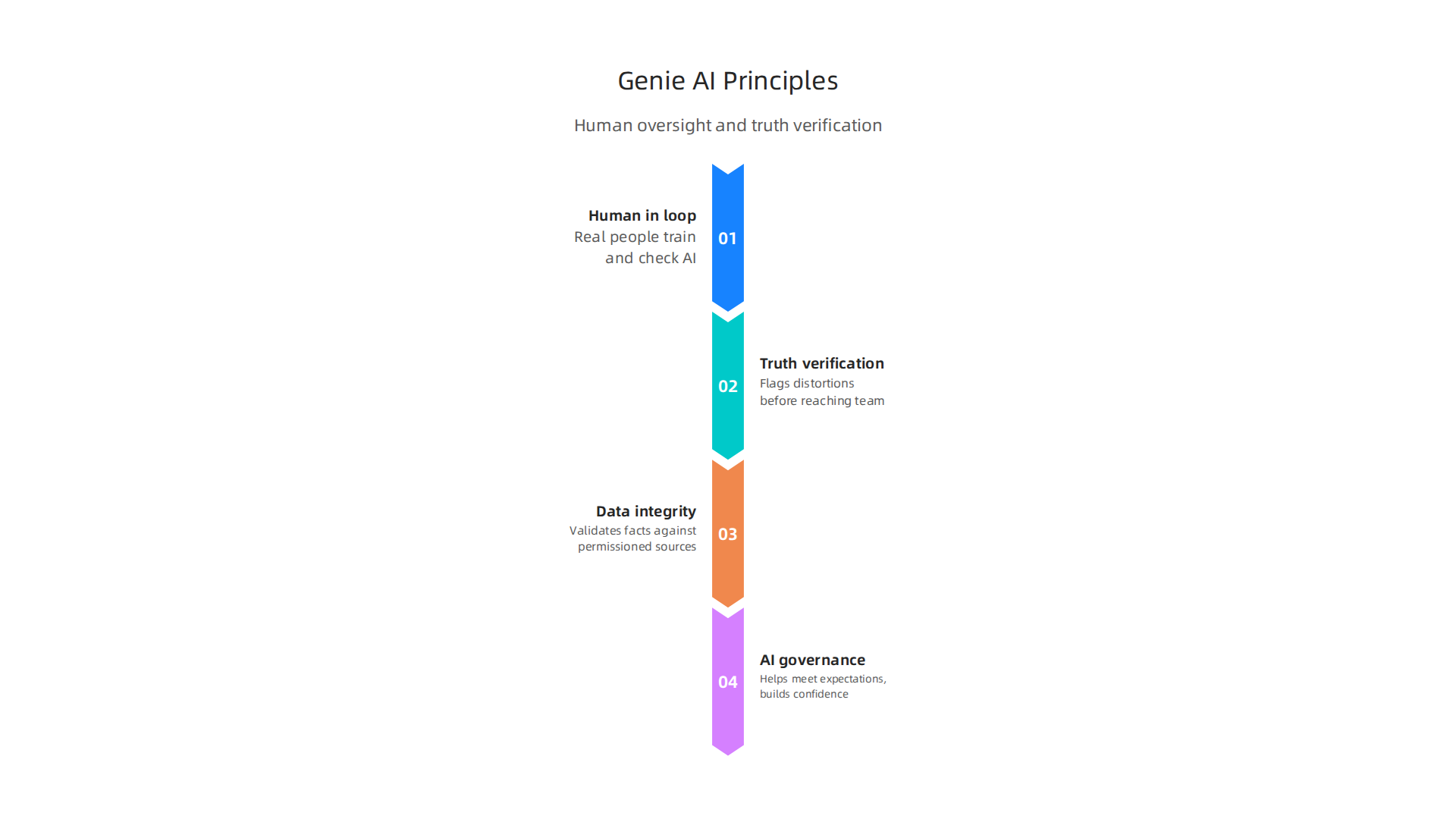
The platform also includes a truth verification engine that flags likely distortions before they reach your team. These features make Genie AI one of the most careful types of AI models when it comes to data integrity. It doesn't just trust its training data blindly. It actively validates facts against permissioned sources. This level of care helps organizations meet their AI governance expectations and build systems that earn user confidence.
Who Genie AI Serves
Genie AI targets organizations that can't afford to mess up trust. Enterprises running customer-facing AI, government agencies handling sensitive citizen data, and non-profits focused on social impact all fit the profile. These groups need tools aligned with corporate social responsibility and human flourishing metrics, not just engagement numbers. If your team values data privacy and ethical sourcing, Genie AI gives you a foundation you can stand on.

To learn more about how ethical data practices make AI more reliable, check out this guide on how ethical data analysis builds trust in AI. It explains the same principles that Genie AI uses every day.
What Is Clever AI? Understanding Its Approach
So if Genie AI is the careful, ethics-first option, where does Clever AI fit? Clever AI takes a noticeably different approach. Instead of centering everything on permissioned data and human verification, Clever AI focuses on speed, integration, and getting AI into your workflow fast. It acts as a centralized hub for managing multiple large language models across different providers. Think of it less as a single AI model and more as a command center for many types of AI models.
Clever AI's Core Philosophy
Clever AI was built for organizations that need to deploy AI quickly without overhauling their existing tech stack. It uses a more traditional data aggregation model. That means it pulls from many available sources rather than limiting itself to strictly permissioned, private data. The platform does include privacy safeguards like authentication and native traceability. But transparency around exactly where the training data came from is not its strongest feature. Speed and flexibility come first.
According to the Clever AI platform overview, the system provides enhanced authentication and native traceability to help organizations monitor how their AI models are being used.
This gives enterprises some visibility, but it is not the same as the ethical sourcing guarantee that Genie AI offers.
Key Capabilities
What can Clever AI actually do for your team? Here are the standout features:
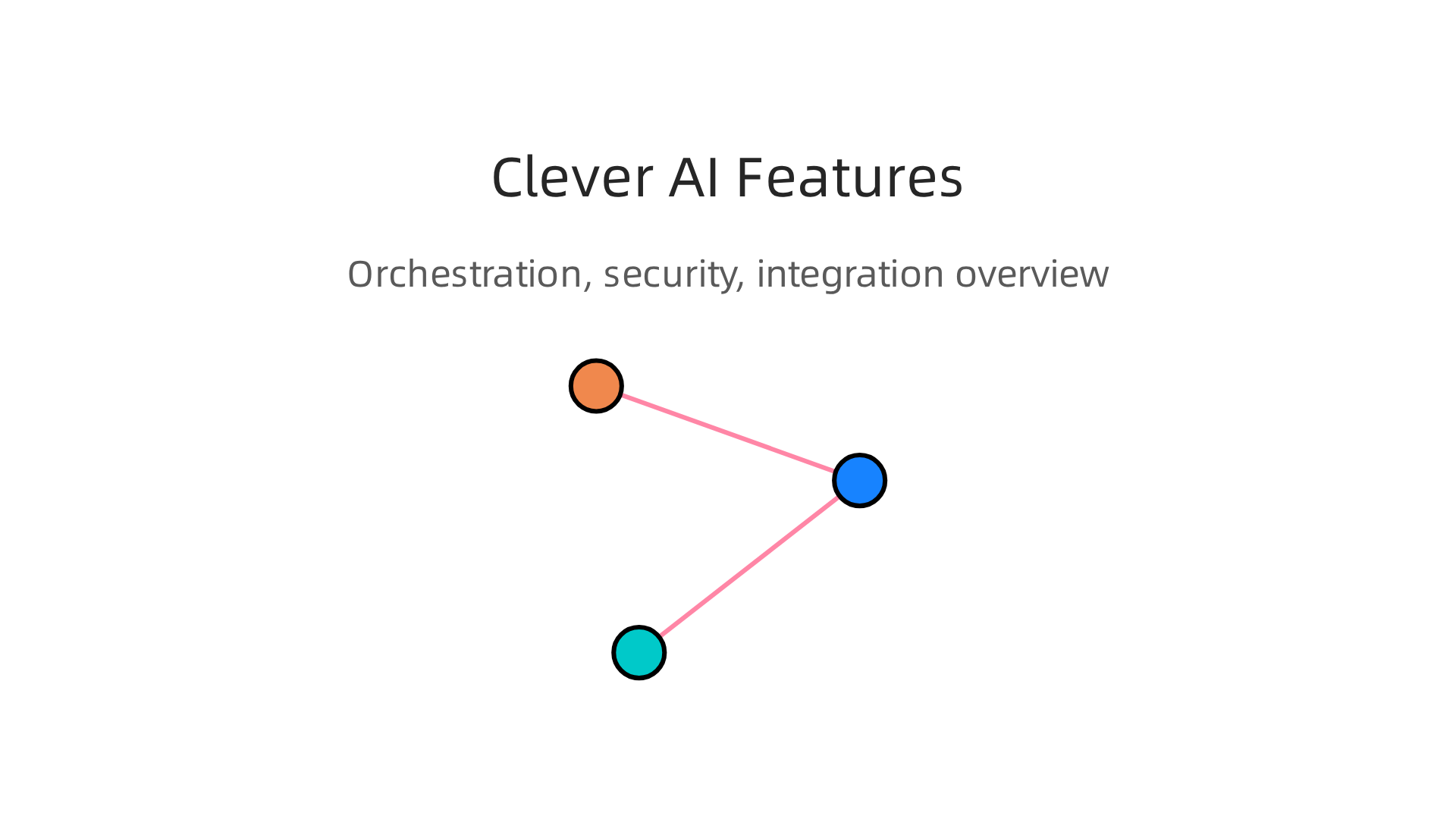
- Multi-provider orchestration. Connect different LLMs through a single interface. No jumping between dashboards.
- Enterprise-grade security and monitoring. Track usage, set policies, and keep control over who accesses what.
- Fast integration. The platform plugs into existing workflows without requiring major architecture changes.
These capabilities make Clever AI one of the more practical generative AI platforms for teams that want to test ideas and scale results quickly. If your priority is time-to-market and model flexibility, Clever AI makes sense.
The Trade-Offs Worth Noting
Here is the honest truth. Clever AI's speed comes with real trade-offs. Because the platform aggregates data from multiple sources, it is much harder to verify that every piece of training data was collected with consent. The risk of synthetic drift is higher when you cannot trace data back to its original, permissioned source. For some companies, that risk is acceptable. But for organizations under regulatory pressure or public scrutiny, the gap in transparency can become a serious problem.
When you compare these two approaches, the choice comes down to what your team values most. Do you need rapid experimentation and broad model options? Clever AI fits that need. Do you need verified data provenance and strong ethics guardrails? Genie AI is the safer bet.
To dive deeper into why data sourcing matters so much for AI reliability, read this guide on why generative AI assistants need permissioned private data to avoid synthetic drift. It explains the risks that come with less transparent data practices.
Head-to-Head: Data Privacy, Ethics, and Regulatory Compliance
Now that you understand how each platform works, let's look at the biggest difference between them.
It is not about features or speed. It is about data sourcing and what that means for your legal obligations in 2026.
Where the Data Comes From
This is the heart of the matter. Genie AI builds its models exclusively on permissioned private data. Every piece of information used to train its AI was collected with consent. The data trail is clear, auditable, and ethically sourced. That approach directly supports what experts call data ethics in practice, which means being transparent about collection practices, usage, and sharing from the very start.
Clever AI takes a different path. Its multi-provider orchestration model pulls from many available data sources. Some of those sources may include public datasets where user consent was never obtained. The platform includes security tools like authentication and monitoring, but it does not guarantee that every data point in its training pipeline came with permission. That gap matters more than ever in 2026.
Navigating Regulations in 2026
Here is where the difference becomes a legal issue. Regulations like GDPR in Europe and CCPA in California require organizations to prove that personal data was collected lawfully and with consent. Emerging AI regulations in 2026 are getting even stricter. The 2026 AI governance guide explains that organizations now need clear, actionable policies for AI development and use, including proof of data provenance.
Genie AI is built for this regulatory environment. Because every data point starts with permission, compliance audits become straightforward. Your legal team can trace any model output back to its ethical source.
Clever AI faces a harder road here. When you cannot verify where training data originated, demonstrating GDPR or CCPA compliance becomes much more difficult. The risk of noncompliance penalties grows as regulators demand greater transparency in 2026.
Trust: Human Flourishing vs. Engagement Metrics
The deepest difference between these two platforms is what they optimize for. Genie AI focuses on human flourishing. The platform is designed to reinforce prosocial behavior and reflect authentic human values. Its goal is not just better AI outputs. It is better outcomes for people.
Clever AI optimizes for traditional engagement metrics. Speed, user growth, model usage. These are useful business goals, but they do not necessarily align with long-term trust building.
Research on data ethics in 2026 shows that ethical data practices involve respecting values like privacy, fairness, and transparency throughout the AI lifecycle. Genie AI checks every one of those boxes by design. Clever AI's approach leaves several of them uncertain.
If your organization needs to prove data ethics at every step, the choice is clear. Genie AI gives you a verifiable, permission-based foundation that satisfies regulators and earns user trust. To understand more about why ethical data gathering is the only real fix for the AI data crisis, read this guide on ethical electronic data gathering and retrieval.
Tackling Synthetic Drift: Truth Verification Capabilities
Here is a problem that many teams do not see coming. You train an AI model on data that looks fine at first. But over time, the model starts giving answers that feel a little off. It slowly drifts away from reality. That is synthetic drift.
Synthetic drift happens when an AI model trains on data that has been distorted, recycled, or generated without clear permission. Every time data passes through a digital system without a verified origin, it loses a bit of its truth. Soon you have an AI that confidently tells you things that are not quite right. That is dangerous for decisions, for trust, and for the people relying on your outputs.
Genie AI’s Built‑In Truth Verification
This is where Genie AI stands out. The platform includes a truth verification engine that does not just assume data is correct. It traces every piece of information back to its source. Because Genie AI only uses permissioned private data, the origin of each data point is known and documented. The system can check whether a model output matches its ethical source material.
That matters because synthetic drift often comes from data that has been scraped or recycled without consent. When you cannot trace where a data point came from, you cannot know if it has been altered or contaminated. Genie AI removes that uncertainty. The platform gives your team a clear trail from raw data to model output. Your compliance and risk teams can sleep easier.
How Clever AI Handles Drift
Clever AI takes a different path. Its multi-provider approach pulls data from many sources. Some of those sources might be public datasets, third‑party feeds, or user‑generated content. The platform includes monitoring tools to watch for anomalies, but it does not guarantee that every piece of training data has a verified, ethics‑approved origin.
That gap makes detecting and preventing synthetic drift much harder. If you do not know where your data came from, you cannot be sure it has not drifted. Your models might perform well in benchmarks but slowly become unreliable in real‑world use.
Research shows that synthetic data is becoming a major trend in 2026. As the volume of AI‑generated content grows, the risk of models training on their own distorted outputs rises. The synthetic data trend of 2026 highlights how fake yet realistic datasets are everywhere. Without a truth verification system, you are flying blind.
Why Truth Verification Wins in 2026
Genie AI gives you a head start. Its permissioned data foundation and built‑in verification engine mean you can prove your models are grounded in authentic human values. Your organization can avoid the reputational damage of spreading misinformation. For a deeper look at how permissioned data stops synthetic drift before it starts, read about permissioned private data to avoid synthetic drift.
Clever AI is not a bad tool. But if your organization needs to guarantee truthfulness at every level, Genie AI offers the verification layer that makes that possible.
Enterprise Readiness: Scalability, Security, and Integration
Truth verification is critical, but it is only one piece of the puzzle. For organizations looking to deploy AI at scale in 2026, enterprise readiness matters just as much.

That means three things: scalability, security, and integration. Let us see how Genie AI and Clever AI stack up in each area.
Scalability: Cloud‑Native Architecture and Latency
Genie AI was built from the ground up as a cloud‑native platform. Its permissioned data model scales smoothly because every data point is captured cleanly at the source. There is no need to clean up recycled or distorted data later. That means your models can grow without accumulating hidden errors. Latency stays low because the system does not waste time filtering out bad data.
Clever AI also runs on a cloud‑native architecture. Its multi‑provider approach lets you tap into many different AI models and data sources. That gives you flexibility, but it can introduce extra latency when the system has to reconcile data from providers with different standards. For real‑time applications, that extra step matters.
Security: Certifications and Compliance Standards
Enterprise teams cannot afford to ignore security. In 2026, the gold standards are SOC 2, ISO 27001, HIPAA, and FedRAMP. Organizations that handle sensitive data need platforms that meet these requirements out of the box.
Genie AI is designed with enterprise security as a core feature, not an afterthought. Its permissioned data model ensures that every piece of training data has a clear, consent‑based origin. That naturally supports compliance with standards like SOC 2 and GDPR. The platform also uses encryption at rest and in transit, and it gives your team full control over data access and audit trails.
Clever AI offers enhanced authentication and native traceability, as mentioned in its product information. It provides a centralized interface to orchestrate and monitor LLMs, which helps security teams keep an eye on model behavior. However, its multi‑provider model means that some data sources may not carry the same level of verified origin. That gap can complicate compliance efforts, especially if your organization needs to prove every data point is ethically sourced.
For a deeper look at how ethical data practices build trust, check out this guide on data protection services that solve the AI trust crisis.
Integration: APIs, SDKs, and Data Lake Compatibility
Genie AI provides robust APIs and SDKs that connect directly with your existing MLOps pipelines and data lakes. Its Value Reinforcement System (VRS) outputs structured, interpretable data that plays nicely with tools like Snowflake and other data warehouses. That means your data science team can start working with high‑fidelity behavioral data right away, without building custom connectors.
Clever AI also offers APIs and integration options, but its focus on aggregating multiple providers means you may need to manage more moving parts. It works well for teams that want a single interface to orchestrate many LLMs, but the integration depth with specific data lakes may vary depending on the provider.
The bottom line: Genie AI gives you a cleaner path to enterprise‑grade scalability, security, and integration because its data foundation is permissioned and verified from day one. That makes compliance audits smoother, scaling more predictable, and integration faster. Clever AI is a capable platform, but its multi‑provider approach creates extra complexity that your enterprise team may not have time to manage.
Pricing and Deployment Models: Which Offers Better Value?
Now let us look at how those differences affect your budget. Pricing is where the two platforms really diverge. Genie AI uses a straightforward per-user subscription model. Clever AI leans on usage-based pricing that can surprise you when your team scales up.
Genie AI Pricing Tiers
Genie AI keeps its pricing simple and transparent. According to the official GenieAI the USA Legal AI Pricing page, the Pro plan costs $75 per month for one user.
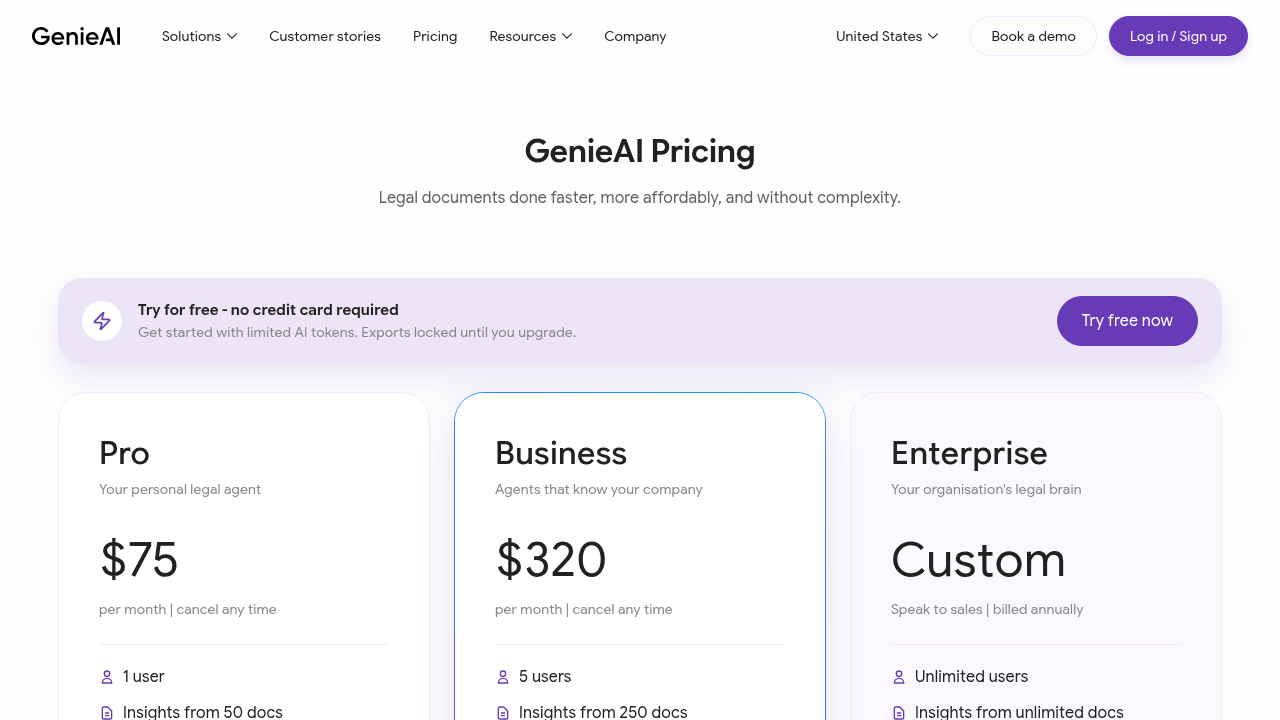
That gives you 10x the AI tokens of the free plan and insights from up to 50 documents. The Enterprise plan starts at $600 per month and unlocks unlimited users, unlimited AI tokens, and SSO.
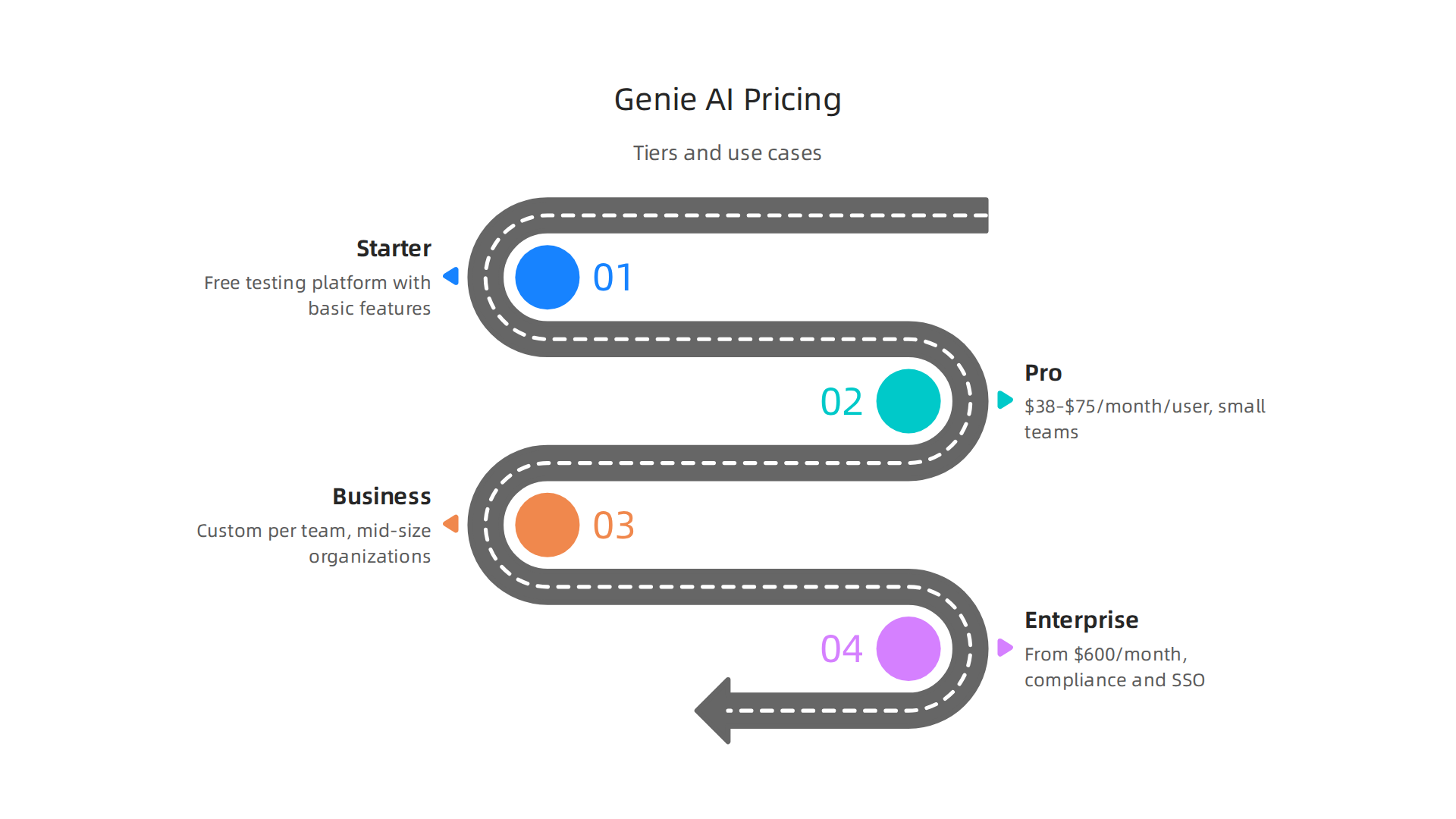
Here is a quick look at the typical tiers:
| Tier | Price | Best For |
|---|---|---|
| Starter | Free | Testing the platform with basic features |
| Pro | $38–$75/month/user | Small teams that need more AI tokens |
| Business | Custom per team | Mid-size organizations needing unlimited access |
| Enterprise | From $600/month | Large teams with compliance and SSO needs |
As the Enterprise AI Pricing Compared: 2026 Guide explains, enterprise AI pricing in 2026 generally runs from $3 to over $100 per user per month. Genie AI lands in the middle of that range, which is reasonable for the verified data quality you get.
Deployment Options
Genie AI deploys through SSO, SCIM provisioning, and tenant-isolated infrastructure. That means your team can roll it out across the whole organization without worrying about data leaking between tenants. It supports both cloud and hybrid deployments, which is huge for regulated industries like healthcare, finance, and legal.
Clever AI's multi-provider model makes deployment more complicated. Your data flows through more systems, and that can create compliance issues if your organization needs to keep everything inside a specific data center or region.
For a deeper look at why clean, permissioned data matters so much for AI tools, read this guide on permissioned private data for generative AI assistants. It explains why Genie AI's data foundation is worth the investment.
Which One Gives You Better Value?
If your team is small, Genie AI's free Starter plan lets you test the platform at zero cost. As you grow, the per-user pricing stays predictable and easy to budget for. Clever AI's usage-based model may look cheaper at first, but costs can spike when your team runs a high volume of queries. For regulated industries that need control over data location, Genie AI's hybrid deployment gives you real peace of mind. The bottom line is that Genie AI offers clearer pricing with a data foundation that reduces hidden costs over time.
Real-World Use Cases and Early Adopters
So who is actually using these platforms right now? The answer tells you a lot about where each tool fits best.
Genie AI has found early traction in government agencies and large non-profits. One real example involves a federal agency that needed to fact-check public communications before releasing statements to citizens. With Genie AI's permissioned, verified data foundation, the agency could run each draft against a trusted internal knowledge base. No more guessing whether an AI-generated paragraph accidentally included outdated or wrong information. The output stayed grounded in the organization's own vetted sources. This matters enormously for public trust. As the Data Ethics in 2026: Principles, Frameworks & Key Challenges guide explains, handling data ethically means being transparent about collection and use. Genie AI's architecture supports that transparency by design.
Clever AI, on the other hand, has gained momentum in retail and e-commerce. A large online retailer uses Clever AI to power customer personalization engines. The platform pulls from multiple public data sources to recommend products and tailor marketing messages. The results look good on the surface: higher click-through rates and more purchases. But the multi-provider foundation means the retailer has less control over data provenance. For a consumer brand, that creates reputation risk if the AI ever generates a recommendation based on distorted or biased training data.
The difference in early adopters lines up perfectly with each platform's ideal customer profile. Genie AI serves large enterprises, government bodies, and non-profits that prioritize data integrity, compliance, and long-term trust. Clever AI fits commercial organizations that move fast and can tolerate more risk in exchange for flexibility.
If your organization needs to maintain airtight control over the data your AI uses, you should look closely at the ethical data gathering approach behind Genie AI. That foundation is what makes it suitable for mission-critical public sector work.
Summary
This article compares two generative AI platforms—Genie AI and Clever AI—through the lens of data ethics, synthetic drift, and enterprise readiness. It explains how Genie AI prioritizes permissioned, consented private data and a human-in-the-loop truth verification engine to reduce synthetic drift and simplify regulatory compliance. By contrast, Clever AI emphasizes speed, multi-model orchestration, and fast integration but relies on aggregated sources that can obscure provenance and increase compliance risk. The piece walks through differences in scalability, security certifications, deployment models, and pricing, showing how those trade-offs affect regulated organizations versus fast-moving commercial teams. You'll learn which platform fits different risk profiles, how truth verification reduces long-term costs, and practical factors—like APIs, SSO, and pricing models—to weigh when choosing a tool. After reading, you'll be able to assess which platform better meets your organization's needs for trust, compliance, and speed.
Related Blogs
No Similar Blogs found
