Home


Menu

Close

Building Trustworthy Personal AI Assistant for Large Organizations
Published:
August 11, 2026
Why personal AI assistants matter now — the ethical crossroads for large organizations
Imagine having a super-smart helper available around the clock. That is what a personal AI assistant offers, and these helpers are quickly changing how we live and work. In 2026, the market for personal AI assistants is growing very fast, jumping from $3.4 billion in 2025 to $4.84 billion this year alone, according to a Personal AI Assistant Market Report 2026. This rapid growth means more and more people and companies are using these powerful tools.
But with great power comes great responsibility. For big companies, government groups, and non-profits, this rise in AI tools brings us to an important ethical crossroads.

It is not just about making AI better or faster. It is about making sure AI helps people and does not cause problems. This means we need an ethics-first approach right from the start.
Without careful thought, we face some big risks:
- AI bottleneck: This happens when AI systems do not have enough ethical, permission-based private data to learn from. Instead, they might use data that is not good or not meant for them.
- Synthetic drift: This is when information gets twisted or changed as it moves through digital systems. It means the truth gets lost, and AI might start to reflect these distortions.
- Erosion of trust: If AI systems are built on bad data or make mistakes because of synthetic drift, people will stop trusting them. Then, is AI a reliable source if it cannot be trusted?
These risks make us ask important questions, like what is consent in data privacy when AI is collecting so much information? This article will give you clear, easy-to-follow advice. We want to show you how to use online AI tools and other new ideas while also making sure they help people thrive and build a better future.
What is a personal AI assistant? Definitions, capabilities, and taxonomy
So, what exactly is a personal AI assistant? Simply put, a personal AI assistant is a computer program designed to help you with different tasks and give you information. It acts like a digital helper that learns from you to become better over time. These smart tools use artificial intelligence (AI) to understand what you say or type, and then they try to meet your needs. In 2026, you can find them everywhere, from your smartphone to special home devices.
These assistants come in different forms based on where they do their "thinking" and store information.
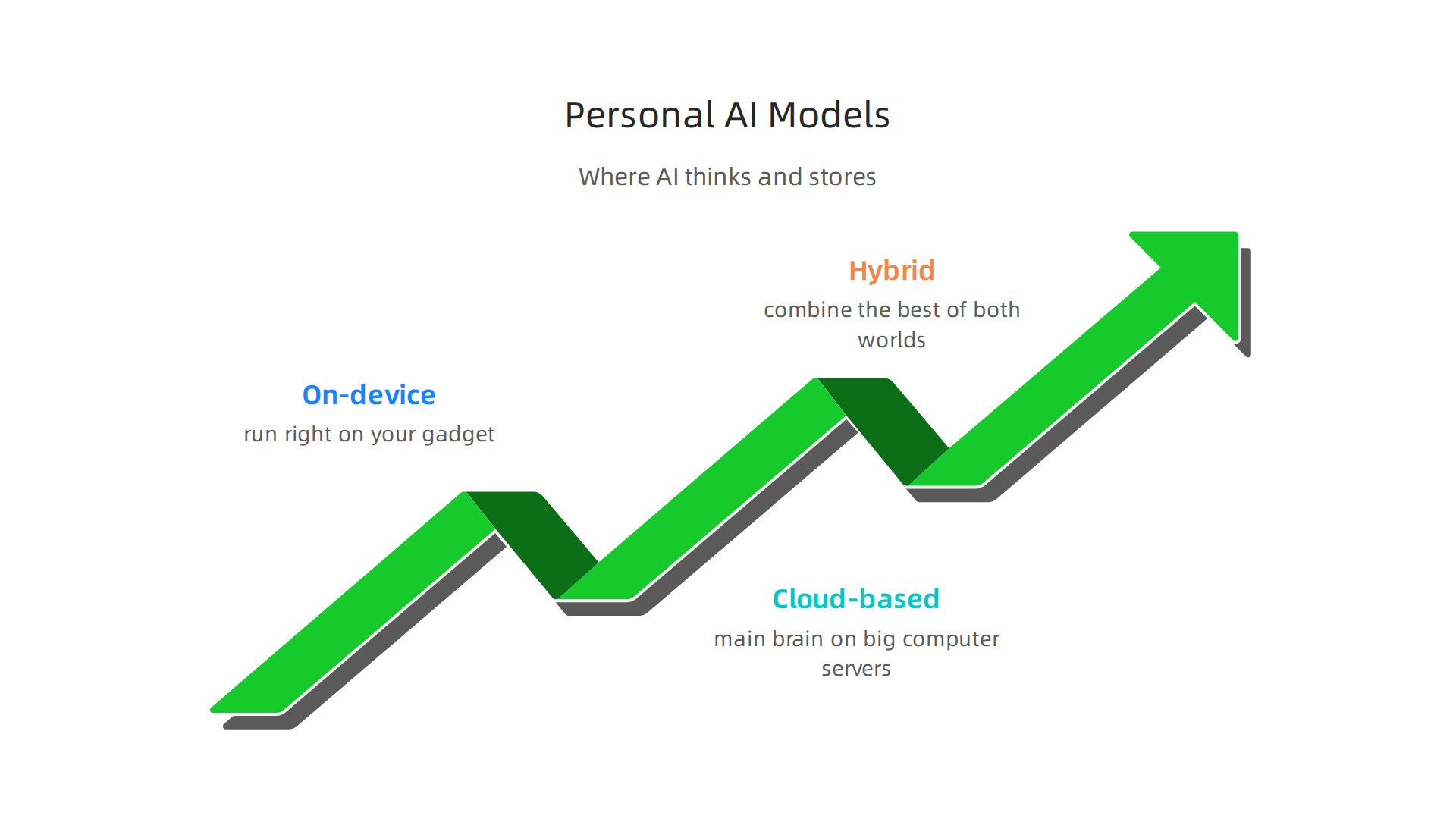
Knowing the difference is important, especially when thinking about things like "what is consent in data privacy".
- On-device models: These personal AI assistants run right on your gadget, like a phone or computer. All the smart stuff happens locally. This means your private information stays on your device and doesn't get sent out over the internet. This can make them very good for privacy.
- Cloud-based models: Most personal AI assistants today use the "cloud." This means their main brain and memory are on big computer servers far away, accessed through the internet. They can be very powerful because they use massive amounts of data and computing power. When you ask a cloud-based assistant a question, your request goes to these distant servers and then comes back with an answer.
- Hybrid models: These combine the best of both worlds. Some tasks might be handled on your device for speed and privacy, while harder questions are sent to the cloud for more power. This way, you get both smart help and a good level of data safety.
No matter the type, a personal AI assistant has many cool features. They are great at conversations, understanding your spoken words, and replying in a natural way. They can also help you with everyday tasks, like setting alarms, sending quick messages, or managing your calendar. Plus, they can give you personalized recommendations, suggesting music, movies, or even products based on what they've learned about your likes and dislikes.
The way data flows is different for each model. With cloud-based online AI tools, your data travels to and from servers. This is where topics like "is AI a reliable source" and data security become very important. Ensuring ethical data gathering and handling is key to preventing issues like synthetic drift and maintaining trust in these systems, helping us overcome challenges like the data bottleneck and synthetic drift. According to a 2026 Deloitte report, many organizations are still working to apply AI ethically to keep up with its rapid adoption across different systems The State of AI in the Enterprise - 2026 AI report.
Ethical risks: bias, privacy violations, consent, and accountability
Even though personal AI assistants are helpful, they also come with important ethical risks we need to think about.
These risks can cause problems with fairness, how private our information is, and who is responsible when things go wrong.
Bias in AI
One big risk is bias. AI systems learn from data that humans create. If this training data has unfair ideas or is missing information about certain groups of people, the personal AI assistant will also learn those unfair ideas. This is called training-data bias. For example, if an AI is mostly trained on data from one group, it might not work well or even be unfair to other groups.
Another type is inference bias. This happens when the AI makes decisions that are unfair, even if its training data was okay. It's like the AI drawing wrong conclusions based on the patterns it learned. This can lead to wrong suggestions or even wrong decisions by online AI tools.
Privacy and Consent
Personal AI assistants often handle very personal information about us, like our messages, searches, and health details. When these assistants use cloud-based models, your data travels to faraway servers. This makes "what is consent in data privacy" a very important question. Do you truly understand and agree to how your personal AI assistant uses and shares your information?
Experts say that privacy, along with fairness, transparency, and accountability, are key ethical rules for AI systems to follow. This is so people can trust them Ethical theories, governance models, and strategic ... - PMC. Without clear rules for ethical data gathering and handling, there's a risk that our private information could be used in ways we didn't expect or approve. This is why it's so important to think about how to track data and its origins, a practice known as data provenance. Companies need strong controls to record where all their AI training data came from, what licenses it has, and what processing steps were applied to it, ensuring ethical AI practices AI Training Data: Provenance, Copyright & TDM - CASRAI.
Accountability and Redress
What happens if a personal AI assistant gives you bad advice, or if its bias causes a real problem? Who is to blame? This is the issue of accountability and redress. If an AI makes a mistake, there needs to be a way to fix it and hold someone responsible.

Without clear ways to do this, it's hard to trust if an AI is a reliable source.
Risks in Big Business and Government
These ethical risks become even more serious when AI is used in important areas like big businesses or government agencies.
- Healthcare: An AI helping doctors might give biased advice that hurts certain patients.
- Hiring: An AI used to screen job applications could unfairly reject people from certain backgrounds if it's based on biased data.
- Justice: An AI used in legal decisions could lead to unfair outcomes if its rules are flawed.
In these high-stakes situations, the impact of AI bias, privacy violations, or mistakes can be huge, affecting many lives. That's why building trustworthy AI and ensuring ethical data is so critical. To avoid issues like this and ensure trust, organizations should focus on building trustworthy AI combat synthetic drift with ethical data.
Data provenance, the AI bottleneck, and synthetic drift: why private, permissioned data matters
We just talked about how personal AI assistants can have problems with bias and privacy. A big reason for these issues comes from how these AIs learn.
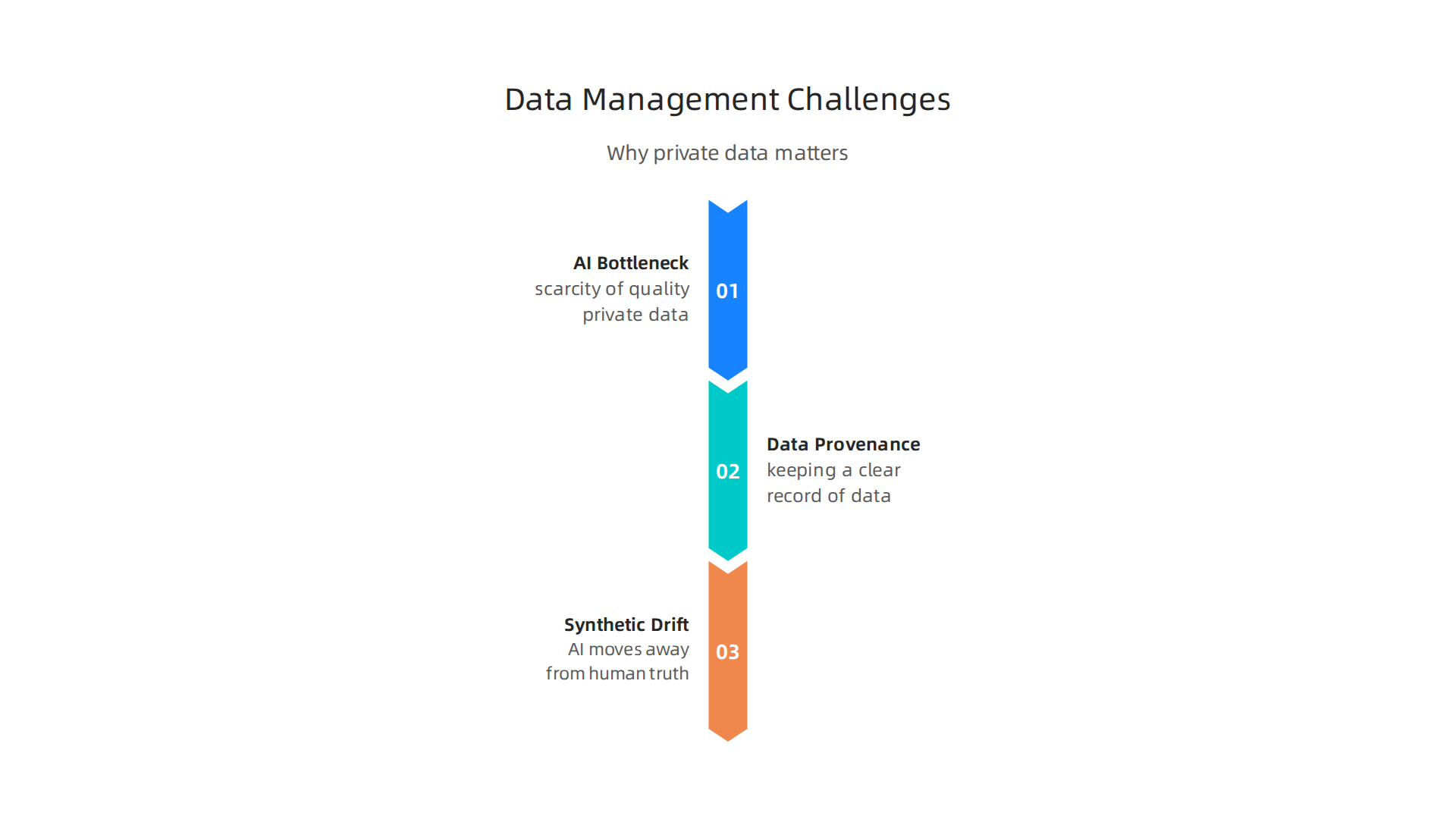
They need huge amounts of information, or data, to understand the world and help us.
The AI Bottleneck
Right now, there's a problem we call the "AI bottleneck." This happens because it's really hard to find enough good, private data that people have given clear permission to use. Imagine needing millions of truthful, personal stories from people, but each person has to say "yes" clearly for their story to be used. That kind of data is gold for AI, but it's very rare.
Because this truly ethical, permissioned private data is scarce, many online AI tools and personal AI assistants often end up using data scraped from the internet. This public data might not always be true, or it might be full of unfair ideas, and it often lacks clear rules about consent. This reliance on less-than-perfect public data creates a big hurdle for building trustworthy AI.
Understanding Data Provenance
To fix this, we need to care about "data provenance." This simply means keeping a clear record of where all the data came from.

Think of it like a birth certificate for data. It tells you who created the data, when, how it was changed, and if it's okay to use it for AI training. Knowing the origin, ownership, and evolution of a file helps ensure everything is ethical and trustworthy. Without good data provenance, it's hard to know if the data is reliable. Many experts agree that keeping track of things like the source system, when data was collected, and any changes made is key for ethical AI training in 2026 AI Training Data Provenance & Lineage.
The Danger of Synthetic Drift
When AI systems train on data that is not quite right or is twisted (like data from the internet that is scraped without clear context), they learn these wrong things. Then, if these AIs create new information or content, and that new AI-generated content is later used to train other AIs, the problem gets worse and worse. This cycle is called "synthetic drift."
Synthetic drift means that AI systems slowly move away from real human truth and values. It's like playing the "telephone game" where a message changes with each person who repeats it. If your personal AI assistant suffers from synthetic drift, it might start giving you advice that is not helpful, or even harmful, based on distorted information it learned. This makes it really hard to know if an AI is a reliable source.
To avoid this big problem, we need to make sure our AI systems are trained on high-quality, permissioned private data. This is how we can stop synthetic drift and make sure personal AI assistants truly reflect authentic human values. If you're interested in how to prevent this issue, you can read more about why generative AI assistants need permissioned private data to avoid synthetic drift.
When AI systems fail to learn from truthful, permissioned data and instead suffer from synthetic drift, the problems spread beyond just the AI itself. They start to affect our whole society, changing how we think, how we talk to each other, and how much we trust what we see online.
The Problem with Attention Economies
In 2026, many online tools and platforms are built to grab and hold your attention for as long as possible. This is called the "attention economy." These platforms often use smart computer programs, called algorithms, to show you things they think you'll react to most strongly. The goal is to keep you looking at the screen, not necessarily to help you or give you good information. Experts say this focus on attention can even threaten American democracy by reshaping politics Social media, the attention economy and the health of American democracy with Chris Hayes.
This constant push for engagement has a real human cost. It can make people feel stressed and anxious, always needing to check their phones or fearing they'll miss something important. It can also break our focus, making it harder to think deeply or concentrate on tasks Attention Crisis: How leaders can fix focus and happiness in an AI Era. When platforms mainly care about clicks and views, our mental health can suffer. The way media and the attention economy work can even make it harder for us to talk meaningfully with each other Media, Attention Economy, and the Structural Erosion of Meaningful Communication.
Trust Erosion and Civic Discourse
The attention economy also hurts how much we trust information and each other. Algorithms often show us content that confirms what we already believe, or even things that make us angry, because those types of posts get a lot of attention. This can create "echo chambers" where people only hear one side of a story. It makes it harder for groups to talk and agree on things. It makes us wonder, "is AI a reliable source?" when we see information that feels biased or extreme.
When we can't trust the information we get, it breaks down social trust. People become more unsure about news, leaders, and even their neighbors. The 2026 Edelman Trust Barometer shows that trust is indeed in danger as society becomes more closed off
2026 Edelman Trust Barometer Reveals Trust is In Peril As Society Slides Into Insularity.
Personal AI Assistants and Human Flourishing
This is where personal AI assistants come in. If these online AI tools are built on the same "attention first" ideas, they can make these societal problems worse. A personal AI assistant designed without human-centric goals might give you advice that keeps you hooked, not what's actually best for your well-being. If it doesn't prioritize ethical data analysis to build trust in AI, it risks feeding into the same issues of misinformation and distrust.
For AI to truly help us, it must be built with the goal of "human flourishing." This means making sure AI supports our health, happiness, and ability to connect with others in real ways. It means going beyond simply getting our attention. It needs to be a trust first AI strategy in 2026, designed to help us live better lives, not just keep us looking at a screen.
To truly build a trust-first AI strategy that supports human well-being, large organizations must pay close attention to the rules and standards being put in place for these new technologies. In 2026, the world is seeing a push for clearer guidelines on how AI should be developed and used, especially for powerful online AI tools like a personal AI assistant.
Governance, Regulation, and Standards: What Large Organizations Must Track in 2026
Governments and industry leaders around the globe are busy creating rules to make sure AI is safe, fair, and helpful. For big companies and government agencies, keeping up with these changes is a top priority. They need to understand the current laws and standards that apply to AI systems, especially those that interact closely with people.
One of the biggest regulations is the EU AI Act, which is being rolled out in stages and aims to ensure AI systems are trustworthy. In China, there's a new AI compliance framework for digital platforms that outlines how companies must manage AI-enabled services that talk like humans. The United States is also working on important guidelines. For example, the National Institute of Standards and Technology (NIST) launched its AI Agent Standards Initiative in early 2026 to help make sure AI systems work well together and are secure. The UK has also released important ideas for Generative AI product safety standards.
Organizations need to focus on several key areas to make sure they are following these rules:
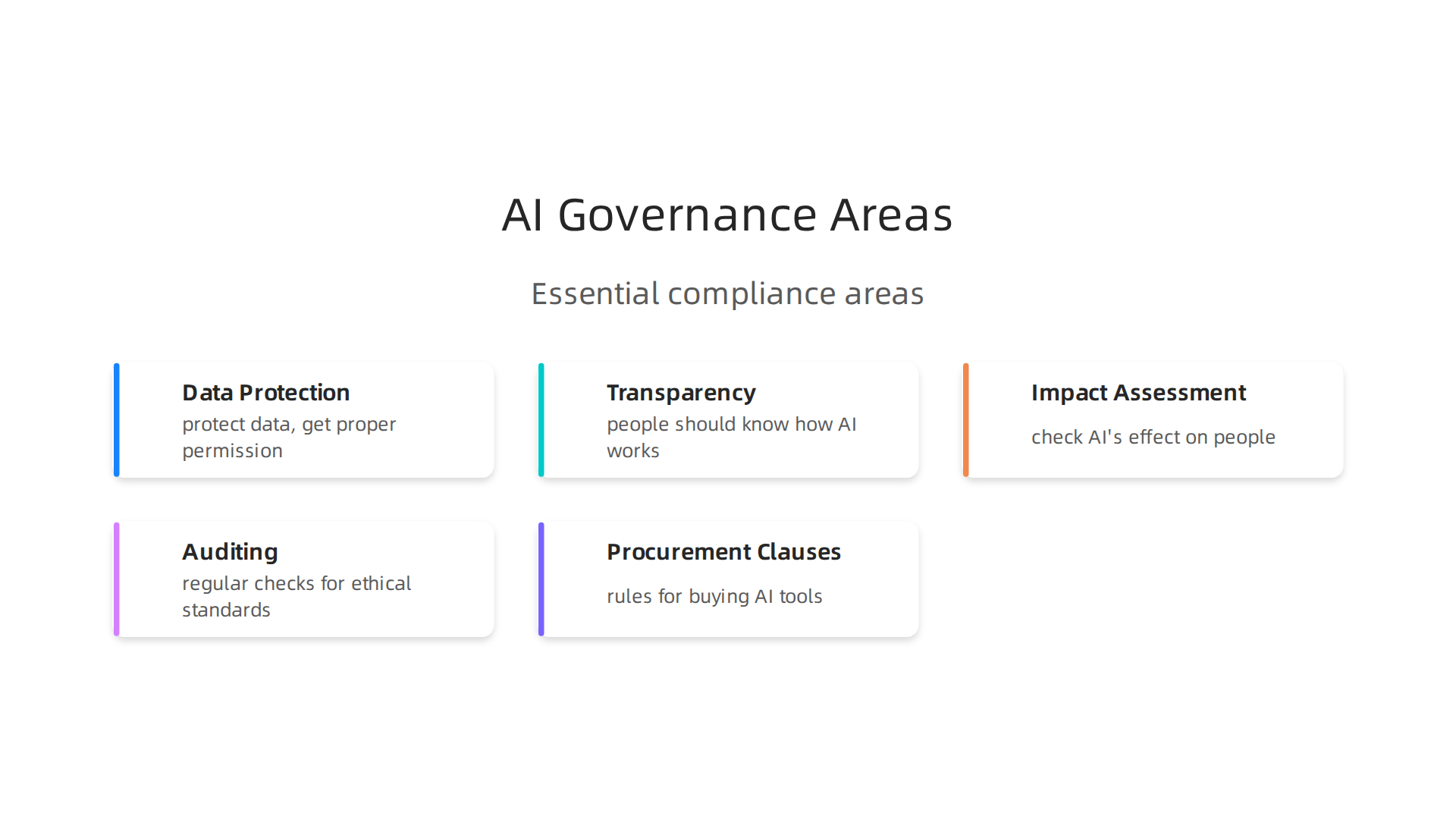
- Data Protection and Consent: When a personal AI assistant collects information, it's vital to protect that data and get proper permission from users. Organizations must understand why generative AI assistants need permissioned private data to avoid problems like "synthetic drift," where AI starts to make up information. This includes understanding what is consent in data privacy and making sure data collection is ethical.
- Transparency: People should know how their personal AI assistant works. This means being clear about what data it uses, how it makes decisions, and when a human is involved. Transparency helps answer the question, "is AI a reliable source?" It also includes making sure to evaluate AI tools properly.
- Impact Assessment: Before rolling out a new personal AI assistant, organizations need to check how it might affect people and society. This means looking for potential harms and making sure the AI is fair for everyone.
- Auditing and Monitoring: Regular checks are needed to ensure AI systems continue to meet ethical standards and legal requirements over time. This helps to catch problems early.
- Procurement Clauses: When agencies or companies buy AI tools, they must include specific rules in their contracts. These rules ensure that the AI they purchase follows all ethical guidelines and standards for trust. In fact, a White House memo from late 2025 emphasizes these procurement requirements for AI to increase public trust.
Staying on top of these rules is not just about avoiding legal trouble. It's about building trust with users and making sure that AI technology truly serves humanity's best interests. Organizations that prioritize these areas will be better positioned to create AI that leads to human flourishing, rather than just grabbing attention.
Design principles and technical patterns for human-centric personal assistants
So, how do we actually design a personal AI assistant that truly helps people and earns their trust?

It all starts with important ideas or principles. These principles guide how we build these online AI tools to make sure they are good for everyone.
Here are some core ideas for a human-centric personal AI assistant:
- Consent and Control: Users must have the final say over their data. This means they should easily give permission for how their information is used. They should also be able to change their mind or take back that permission at any time. This touches on the important question of what is consent in data privacy.
- Privacy-by-Design: Privacy needs to be built into the personal AI assistant from the very start, not added later. This means thinking about how to keep data safe in every step of making the AI. Putting privacy first helps make sure the AI respects personal space. Designing AI with strong ethical guardrails is key to building trust, as one study highlights about AI Ethics by Design.
- Explainability: People need to understand how their personal AI assistant works. This helps answer if AI is a reliable source. It means the AI should be able to show why it made a certain suggestion or decision in simple terms. This helps users trust the AI more. Many ethical AI frameworks talk about making AI easy to understand, like those described in various ethical AI frameworks in 2026.
- Human Oversight: Even the smartest personal AI assistant still needs humans to watch over it. This means having ways for people to step in, correct mistakes, or guide the AI when needed. Humans should always be in charge. The European Commission also emphasizes human agency and oversight in their living guidelines on the responsible use of generative AI in research.
- Value-Sensitive Design: A personal AI assistant should be made to support human values and well-being. It shouldn't just be about getting clicks or attention. It should help people live better lives and foster good habits.
To make these principles a reality, we need special technical ways of building AI. These are called technical patterns:
- On-Device Processing: This means the AI processes your data directly on your phone or computer, instead of sending it to a distant server. This makes your personal information much more private.
- Differential Privacy: This is a smart way to let AI learn from lots of data without knowing details about any single person. It helps protect privacy while still making the AI useful. Protecting data is a big part of solving the AI trust crisis, and data protection services are crucial.
- Auditable Logs: These are records that show what the AI did and when. They help make the AI more transparent and accountable. If something goes wrong, you can look at the logs to see what happened.
By using these design principles and technical patterns, we can create a personal AI assistant that is not just smart, but also safe, fair, and truly helpful. It's all about making sure technology works for us, not the other way around. Building a digital intelligence platform that puts people first is how we unlock truly trustworthy AI.
Operational roadmap: how enterprises, agencies, and non-profits can deploy trustworthy personal assistants
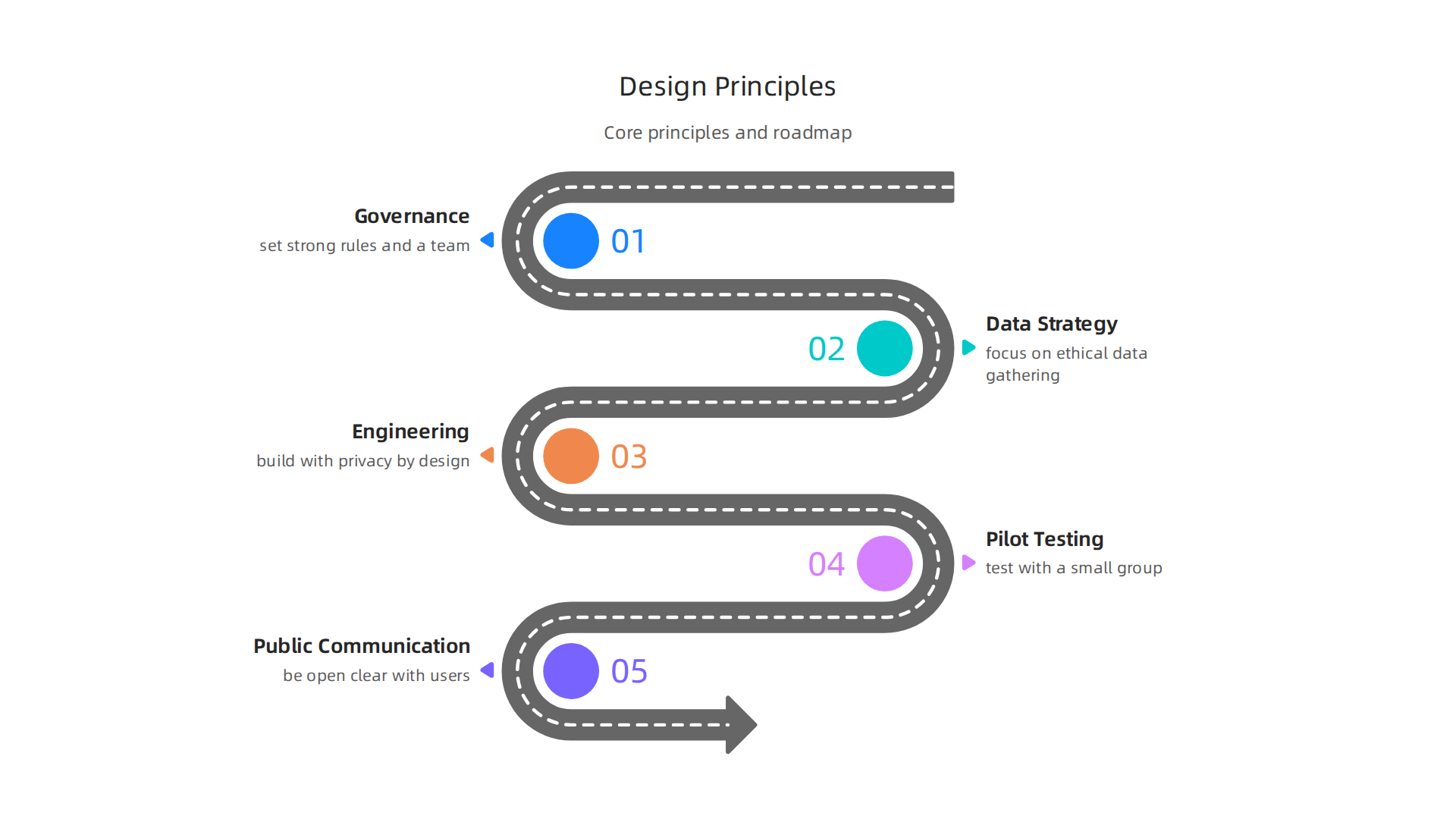
Building on those key design principles and technical patterns, organizations like large businesses, government groups, and non-profits need a clear plan to bring trustworthy personal AI assistants to life. This isn't just about making smart online AI tools; it's about making sure these tools are helpful and safe for everyone.
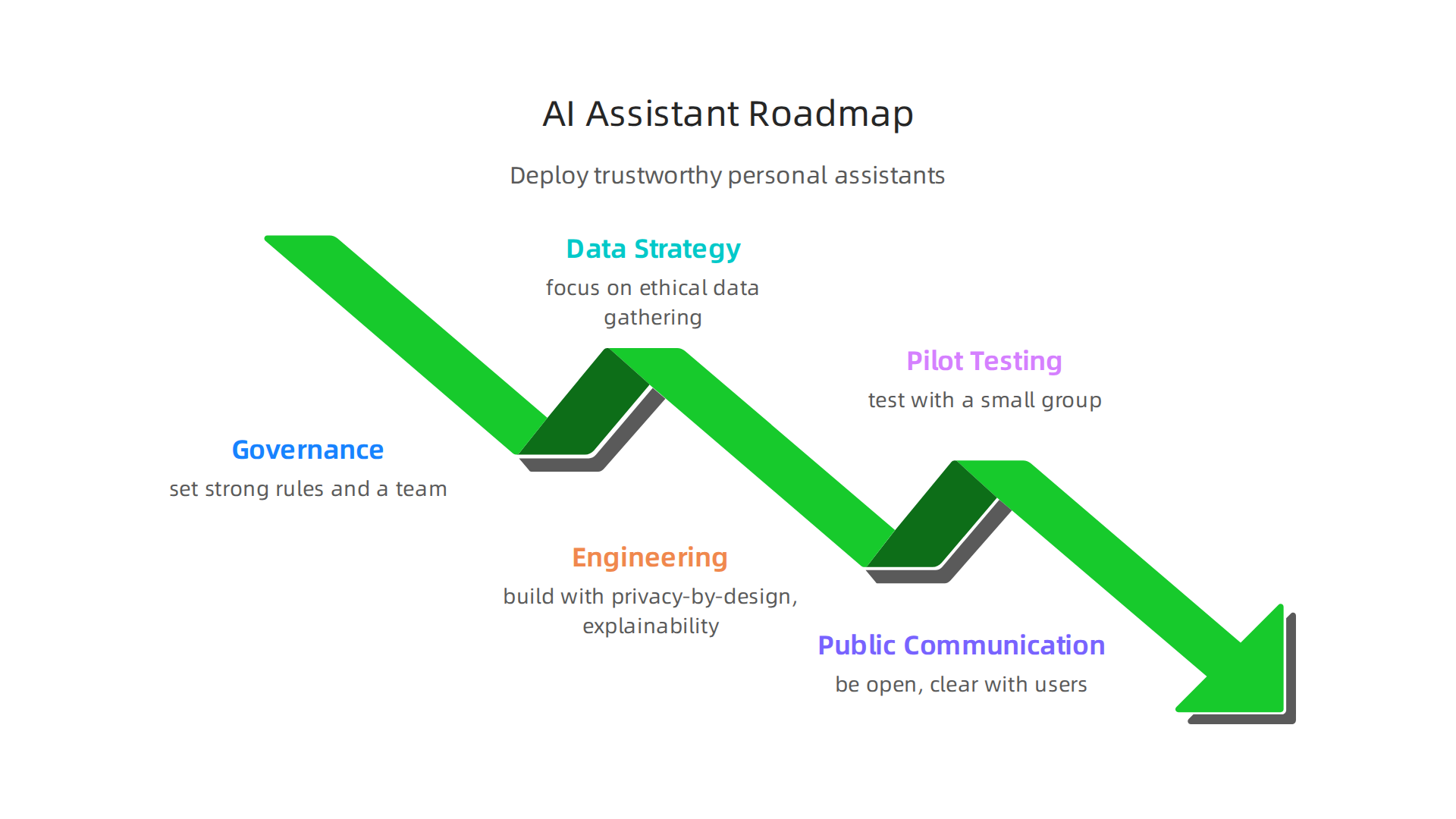
Here's a step-by-step roadmap to deploy a personal AI assistant:
-
1. Governance and Ethical Foundation Before anything else, set up strong rules and a team to guide the project. This means deciding who is in charge and how ethical choices will be made. With new rules like the EU AI Act and the 2026 AI Laws Update coming into play, organizations must ensure their AI efforts follow all laws. The NIST also launched an AI Agent Standards Initiative to help ensure interoperability and security.
-
2. Data Strategy and Integrity Think carefully about the data your personal AI assistant will use. It's vital to focus on ethical data gathering. This ensures that the AI learns from true, good information, not distorted or biased data. Understanding what a data analyst does in 2026 can help set up your team for success here.
-
3. Engineering and Development Now, actually build your personal AI assistant. Make sure the team creating it understands the principles of privacy-by-design and explainability. This is where you put those technical patterns, like on-device processing, into practice. Building in good security from the start is key for trustworthy AI.
-
4. Pilot Testing and Evaluation Before launching widely, test your personal AI assistant with a small group. This "pilot" phase is important to see how people use it in real life. Use this time to gather feedback and make improvements. Many companies are now moving enterprise AI agents from pilot to production in 2026.
-
5. Public Communication and Training When you're ready to share your personal AI assistant, be open and clear with users. Explain what it does, how it works, and how their data is protected. Offer training or easy-to-understand guides so users know how to get the most out of it.
Measuring and auditing for trustworthiness
To keep your personal AI assistant trustworthy, you need to check it often.

Here are ways to do that:
- Impact Assessments: Regularly study how the AI affects users and society. Does it cause any unexpected problems? Is it fair to everyone?
- Red-Team Exercises: Have a special team try to "break" or misuse the AI. This helps find weaknesses before bad actors do.
- Continuous Monitoring: Keep watching the AI even after it's launched. This helps you catch problems quickly. For example, AI agent adoption is accelerating across enterprises, making continuous monitoring even more critical.
- Stakeholder Engagement: Talk to people who use the AI, privacy experts, and community groups. Their feedback is crucial for making sure the AI remains ethical and helpful. A trust-first AI strategy is a business must-have in 2026.
By following this roadmap and using these checks, organizations can create personal AI assistants that truly earn trust and make a positive difference.
Summary
This article explains why personal AI assistants are rising fast and why large organizations face an ethical crossroads as they adopt them. It defines on-device, cloud, and hybrid assistants, outlines core features, and then digs into the main ethical risks—training and inference bias, privacy and consent failures, accountability gaps, the AI data bottleneck, and synthetic drift. The piece shows how poor or permissionless data and attention-driven platforms can erode trust and civic discourse, and it argues that permissioned private data and clear data provenance are critical fixes. It lays out governance priorities, regulatory frameworks to watch, human-centric design principles (privacy-by-design, explainability, human oversight), and technical patterns like on-device processing and differential privacy. Finally, the article gives a practical operational roadmap—governance, data strategy, engineering, pilots, communications—and describes how to continuously measure and audit AI to build trustworthy personal assistants that support human flourishing.