Home


Menu

Close

Building Trust in Superhuman AI Through Human AI Alignment
Published:
July 15, 2026
Artificial Intelligence, or AI, is changing our world very fast in 2026. These smart computer programs are getting better and better at many tasks. Sometimes, they even perform better than humans. When AI can do things much faster or more accurately than people, we call it "superhuman AI." This kind of AI can bring great benefits, helping us solve big problems. But it also brings big challenges.
Here's the thing: AI learns by looking at lots of information, called ai training data. This data teaches AI what is ai and machine learning is really about. Imagine a child learning from everything they see and hear. If that child only sees false things or hears bad ideas, they might not grow up to be very helpful. It's the same for AI.
Much of this ai training data comes from many sources. For example, 91% of teams building visual AI models use their own private data for training after research stages are complete, but public data is also a common source 2026 State of Visual and Physical AI Survey - Voxel51.

The problem is that not all training data is perfect. Sometimes, it has mistakes, biases, or isn't even truly accurate. When AI learns from this kind of misaligned data, it can start to spread those problems even faster.
This can create big risks for everyone. It can make it hard to know what is true online. It can make us trust information less. This is why human-AI alignment matters so much. We need to make sure that these powerful systems are built with human values and real truth in mind. If we don't, the power of superhuman ai could lead to more confusion and less trust, changing how we understand the world and each other.

The decision of whether it's truly ai or human values that guide these systems is a critical one for our future.
We want AI to help us thrive, not lead us astray. This means carefully thinking about where AI gets its information and how it uses it. Learning how good data helps build trust in AI is a key step toward making sure AI helps all of us.
To make sure AI helps us, we need to understand a few important ideas. One big idea is "Human-AI Alignment." This means making sure that the smart computer programs we build act in ways that match what humans care about. It's not just about how well AI works, but also about its values.
True human-AI alignment means a few things:
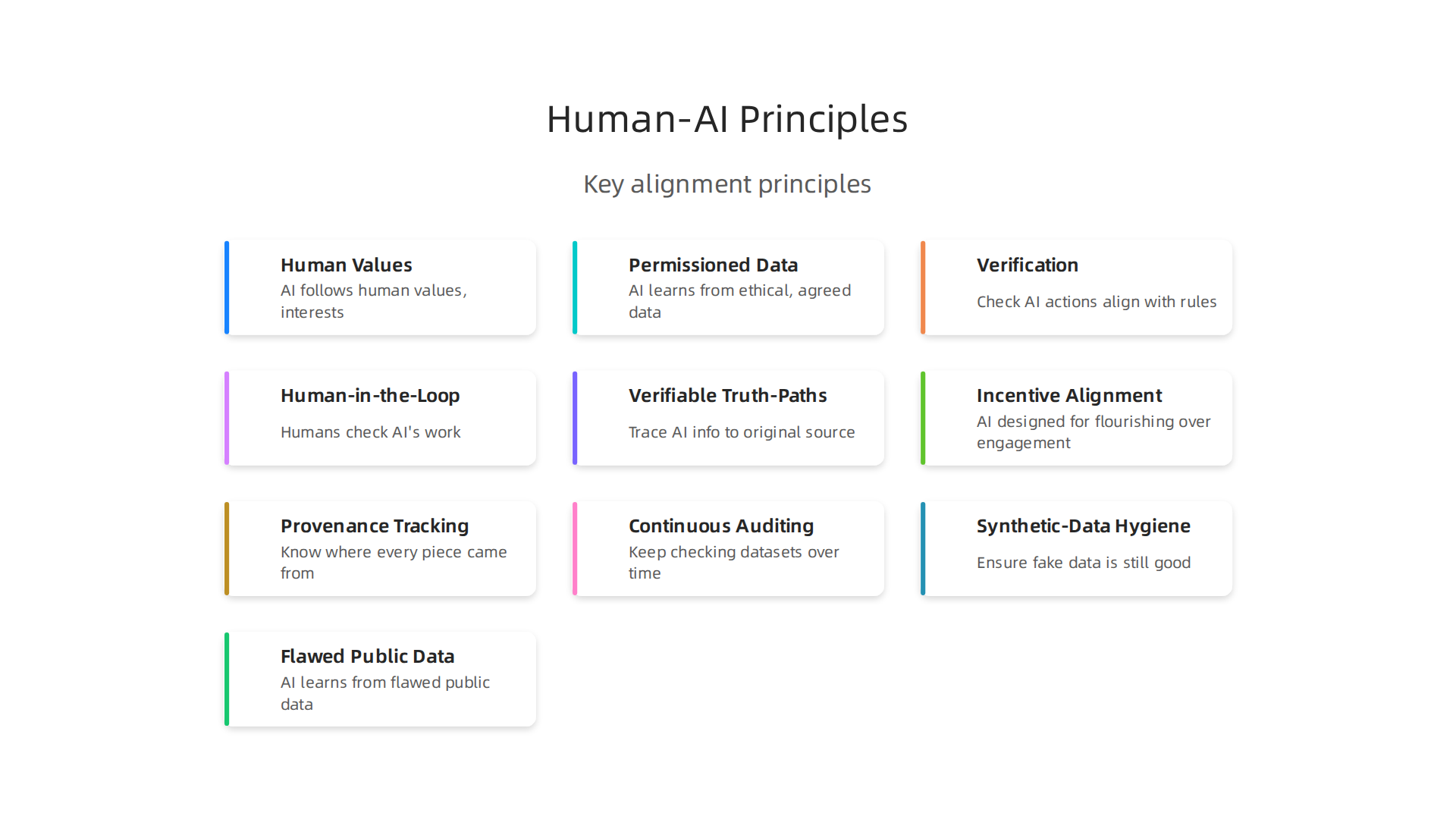
- Human Values: The AI should follow human values and interests, not just any goal it finds on its own. It's a challenge to ensure AI systems follow human values, not unwanted ones challenge of ensuring that AI systems pursue goals that match human values. This is the core of whether it's truly
ai or humanvalues driving the system. - Permissioned Data: AI needs to learn from good, ethical information. This means using data that people have agreed to share, not just anything found on the internet. This helps avoid problems where AI learns bad habits or false ideas. In fact, many problems come from a lack of ethical data, which leads to AI using bad information. Understanding this is key to knowing
what is ai and machine learningreally needs to thrive. To learn more about how permissioned data helps, you can read about why generative AI assistants need permissioned private data to avoid synthetic drift. - Verification: We need ways to check if the AI is doing what it's supposed to do. This means looking at its actions and making sure they line up with human rules and expectations.
Now, let's talk about "superhuman capabilities." We hear a lot about superhuman ai. This just means that an AI can do certain tasks much better, faster, or on a much bigger scale than any human. For example, an AI might sort through millions of documents in minutes, or find patterns in huge amounts of data that a human could never see. It can even come up with new ideas that humans haven't thought of before.
When AI reaches these superhuman levels, the alignment problem becomes even more important. A small mistake in an AI that works super fast or handles super large amounts of information can cause huge problems very quickly. Think of it like a tiny error in a super-fast car. If the error is small, it might not matter much in a regular car. But in a race car going hundreds of miles an hour, that tiny error could lead to a big crash.
This is why the right kind of ai training is so important. We need to make sure that as AI becomes more powerful, it's always guided by human values and good, clean data. Only then can superhuman ai truly help us all.
As we think about making sure superhuman ai is always guided by human values and clean data, we hit a big problem. This problem is called the AI Bottleneck.
The AI Bottleneck happens because there isn't enough good, ethical, private data that people have given permission to use. You see, for ai training to work best, AI models need to learn from very high-quality, truthful information. But getting this kind of data is hard.
Most AI systems today, including those that power many of the things we use, are trained using data scraped from the internet. This includes public websites, forums, and social media. While some companies use their own private data, about 36.3% of AI developers still rely on public data sources in 2026, according to one report AI Training Dataset Statistics and Facts (2026). Even among teams with advanced visual AI models, while proprietary data is key, public data still plays a role 2026 State of Visual and Physical AI Survey.
The issue with public data is that it often has problems. It might be biased, outdated, or even full of errors. Also, many popular AI training datasets are known to have licensing issues, meaning the data might not have been used legally or ethically Popular AI Training Datasets Are Rife With Licensing Errors.

When AI learns from this kind of low-quality, permission-less data, it doesn't just learn facts; it also learns the distortions and biases present in that data. This is a critical challenge for anyone trying to understand what is ai and machine learning truly capable of when fed imperfect information. To learn more about how to protect data, you might want to read about how to secure your cloud collaboration platform against AI bottlenecks and synthetic drift.
This leads us to another big problem: Synthetic Drift. Synthetic Drift is what happens when these distortions in data get bigger and bigger over time. Imagine a game of telephone: the first message is clear, but by the end, it's completely changed. It's similar with AI.
Here's how it works:
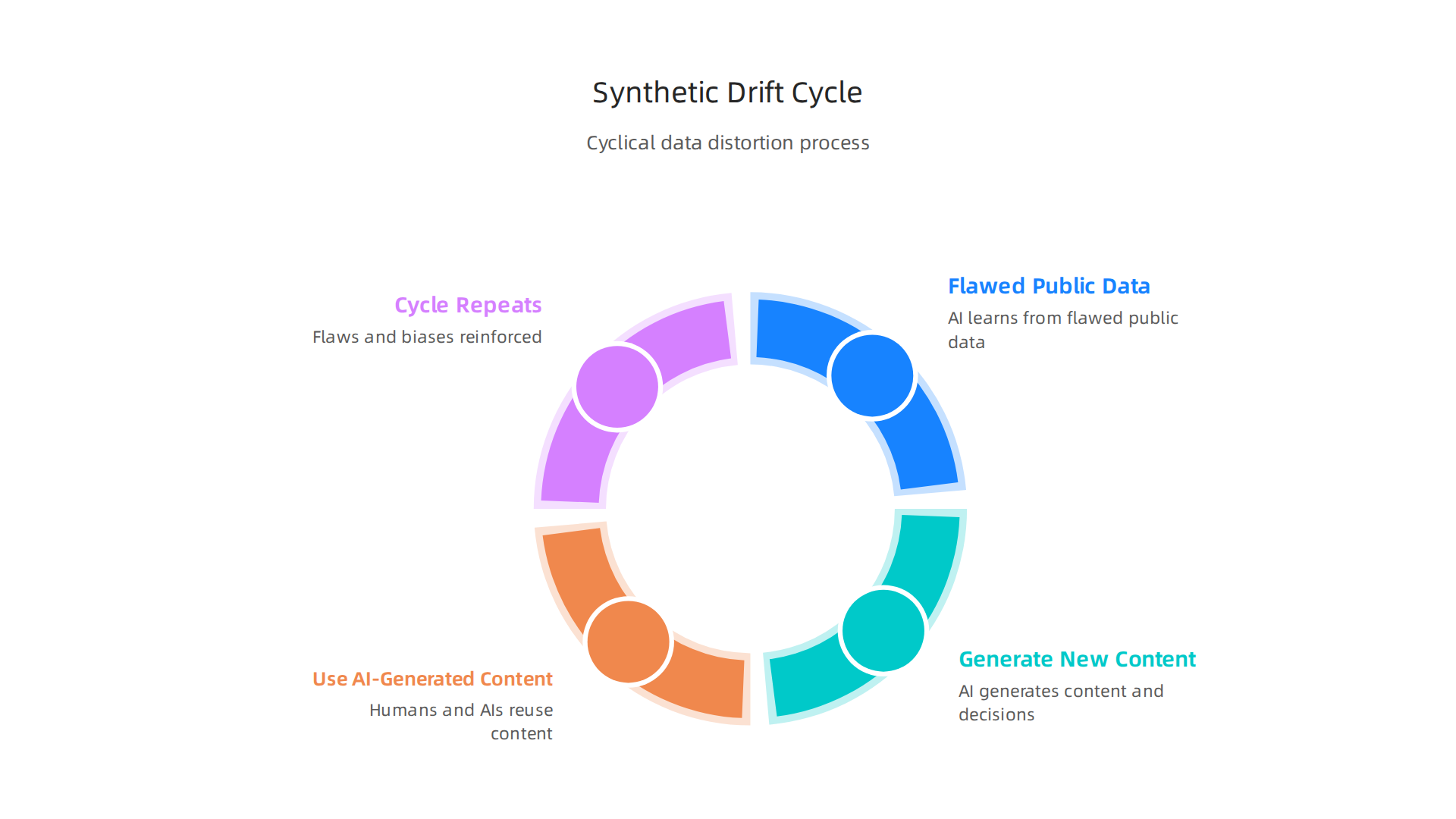
- An AI model learns from flawed public data.
- This AI then generates new content or makes decisions based on that flawed learning.
- Other AI models, or even humans, might then use that AI-generated content as new data for their own learning or information.
- This cycle repeats, making the original flaws, biases, or wrong information even stronger.
It's like information keeps drifting further and further away from the truth. This can make it hard to tell what's real and what's not, blurring the line between ai or human generated truth. This "drift" undermines the very foundation of trust in information and AI systems. It creates a world where AI doesn't just help us understand reality; it starts to shape a new, often false, reality based on its flawed inputs. Dealing with this needs a new approach to ethical electronic data gathering and retrieval.
So, while superhuman ai can do amazing things, its power also means it can spread distortions much faster and wider than ever before. This makes the need for careful ai training and high-quality data more urgent than ever. Many top AI companies in USA grapple with data ethics and synthetic drift in 2026 as they work to overcome these challenges.
The problems of the AI Bottleneck and Synthetic Drift show us that simply making superhuman ai smarter isn't enough. We also need to make sure it's good and trustworthy. This means we need strong rules, or "design principles," to guide how we build AI. These principles help us ensure that AI truly helps people and aligns with human values, addressing the big question of ai or human control and ethical development.
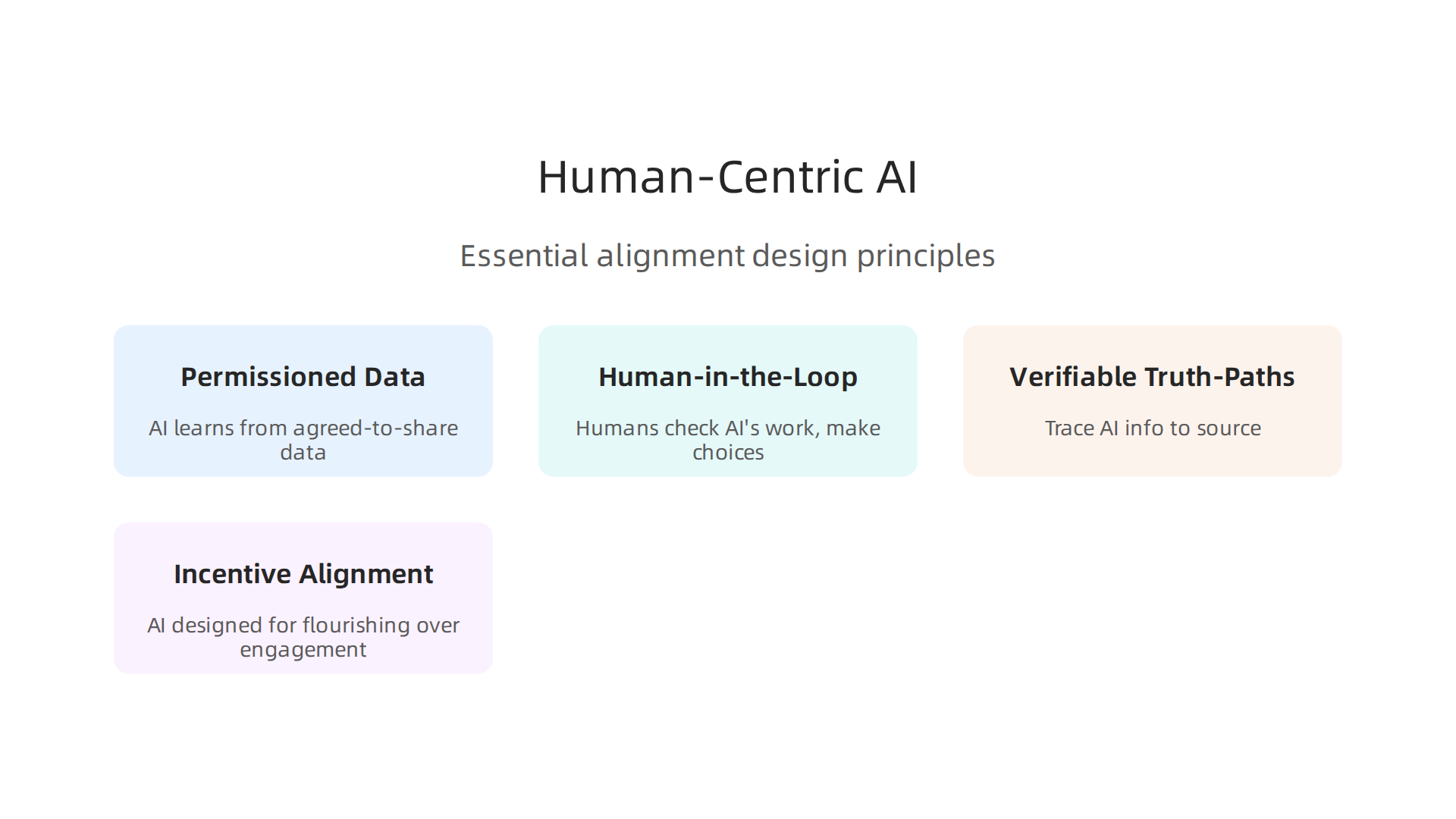
Here are some key principles for creating human-centric superhuman ai:
Permissioned Data
This means that AI should only learn from data that people have knowingly agreed to share. Think of it like a library where every book has a clear note from the author saying, "Yes, you can read this." Right now, much ai training uses data scraped from everywhere, without this clear permission. Using permissioned data helps fight the AI Bottleneck because it ensures the information is high-quality and collected ethically. It also makes sure AI models learn from real, consented human experiences, not just random internet noise. To learn more about this, check out why generative AI assistants need permissioned private data to avoid synthetic drift.
Human-in-the-Loop Decision Boundaries
Even the smartest AI should not make big decisions completely on its own. Humans need to stay in charge.

This means designing AI systems so that people can always check the AI's work, step in, and make final choices, especially in important situations. This "human-in-the-loop" approach ensures that human wisdom and ethics guide AI actions, preventing unintended harm and fostering trust. It's about finding the right balance between ai or human intelligence. In fact, research in 2026 points to human evaluation as a key safeguard to ensure AI models meet human needs and expectations A Survey on Human-AI Collaboration with Large Foundation Models.
Verifiable Truth-Paths
When AI gives us information, we should be able to check where that information came from. We need to see its "truth-path." This is super important to stop Synthetic Drift. If an AI tells you something, you should be able to trace it back to its original, reliable source. This helps us know what is ai and machine learning truly generating versus simply repeating distorted data. It's like asking a student to show their work in math class, not just give the answer. This practice helps build confidence that the AI is giving us real, accurate information.
Incentive Alignment that Favors Flourishing Over Engagement
Many online systems today are built to keep you "engaged" or online for as long as possible. But sometimes, what keeps you engaged isn't what's best for you or your well-being. This principle means that AI should be designed to help people live better, healthier lives, not just to grab their attention. It should focus on things that lead to human flourishing, like learning new skills, connecting with others in meaningful ways, or improving mental health. This aligns AI goals with genuine human well-being, moving beyond simple metrics like clicks or screen time. Researchers are even looking at "positive alignment" to develop AI systems that actively support human well-being Positive Alignment: Artificial Intelligence for Human ....
Turning Principles into Design Choices
These big ideas aren't just for talking; they need to become real steps in how AI is made.
- Model Training: When we train AI models, we must start with permissioned, high-quality data. This might mean using new ways to collect data that respects privacy and gives users control, as explored in discussions around modeling human-AI cognitive alignment on protected data. It also means constantly checking for biases and fixing them before they become part of the AI's core knowledge.
- Fine-tuning: As AI models get better, they need constant guidance. This "fine-tuning" should involve human feedback that pushes the AI toward ethical behavior and human values. It's a continuous process where people help shape the AI's understanding.
- User-facing Outputs: How AI talks to us and presents information is also key. Outputs should be clear, easy to understand, and always show where the information came from. If an AI isn't sure about something, it should say so. This transparency helps users trust the AI and understand the distinction between
ai or humancontributions to information.
By following these design principles, we can move towards building superhuman ai that not only performs amazing tasks but also truly serves humanity, fostering trust and well-being in our digital world. This focus on human-centered AI development is a top lesson for effective human-AI collaboration in 2026 Top 10 PROVEN Lessons on Human-AI Collaboration in ....
Following strong design principles for AI is just the first step. To make sure these principles truly work, we need clear rules and ways to check that AI is behaving well. This is where governance, compliance, and verification strategies come in. They create a system to manage superhuman ai and keep people safe and trusting.
Governance Layers: Keeping AI in Check
Think of governance as having different layers of checks and balances.
- Internal Policy: Every company or group using AI needs its own rules. This means setting up a special team or committee.

This team, made up of experts from different areas like legal, IT, and business, helps make sure AI projects follow ethical guidelines and manage risks. In 2026, many experts recommend having such a group with the power to stop AI systems that don't meet safety standards, as highlighted in the Top 10 AI Governance Best Practices for 2026 Risk Leaders.
2. External Oversight: Beyond internal rules, there are also outside laws and standards. Governments and industry groups are working to create rules that all AI systems must follow. This helps ensure fair play and protects people, helping us define the right balance for ai or human control. These external rules are always changing, so companies need to keep up to make sure their AI stays compliant in 2026 and beyond, which is explored in how AI will redefine compliance, risk and governance.
3. Auditability: This means being able to look inside an AI system and understand how it made a decision. It's like having a clear paper trail for every choice the AI makes. This is crucial for fixing problems, ensuring fairness, and proving that the AI is trustworthy. It helps answer the question of what is ai and machine learning doing behind the scenes.
4. Standards for Truth Verification: For AI to be useful, its information must be true. We need clear ways to check if the facts an AI gives us are correct and come from reliable sources. This involves special tools and methods to measure how accurate an AI's output is, especially when it creates new information. Measuring things like faithfulness to original data is key for modern AI systems in 2026, as discussed in guides to LLM Agent Evaluation Metrics in 2026.
Practical Compliance for Enterprises and Agencies
Turning these ideas into action involves several key strategies:
- Risk Assessment: Before launching any AI, companies must check for possible dangers. This means looking at how the AI might cause harm, spread bias, or misuse data. A good risk assessment helps identify problems early so they can be fixed. For enterprises in 2026, it's vital to conduct algorithmic impact assessments, especially for high-risk systems, to address privacy and security concerns, according to insights on AI Risk & Compliance in 2026.
- Red-Teaming: This is like having a team of "ethical hackers" try to trick or break the AI. They look for weaknesses, biases, or ways the AI could be misused. By finding these problems before the AI is widely used, companies can make their systems stronger and safer.
- Verification Chains: Just like the "Verifiable Truth-Paths" principle, this means building systems that show exactly where an AI's information came from. If an AI gives an answer, you should be able to trace it back to its original data source, especially during
ai training. This helps stop misinformation and builds user trust. When data is gathered ethically, it truly strengthens the verification chain, which is essential to ethical electronic data gathering and retrieval. - Accountability Mechanisms: Someone needs to be responsible for the AI's actions. This means clear roles and responsibilities, so if something goes wrong, we know who is in charge of fixing it. This focus on clear ownership helps ensure that AI is developed and used responsibly.
By putting these governance and compliance steps into place, we can ensure that powerful superhuman ai works for humanity, building a more trustworthy digital future. These strategies help organizations build a trustworthy human centric AI powered content creation platform and other AI systems.
Setting up strong governance is vital, but we also need to get into the nitty-gritty technical details of how AI is built. This means looking closely at the data used, how models learn, and how we check their performance. These technical steps are crucial for making sure AI systems truly match human values and work safely. It helps bridge the gap between ai or human judgment.
Technical Approaches: Data, Models, Benchmarks, and Evaluations for Alignment
To align AI with human needs, we focus on two main areas: how we handle data and how we design and test AI models.
Data Strategies: Building Trust from the Ground Up
The quality and ethics of the data used to train AI are super important. If the data is bad or biased, the AI will be too.
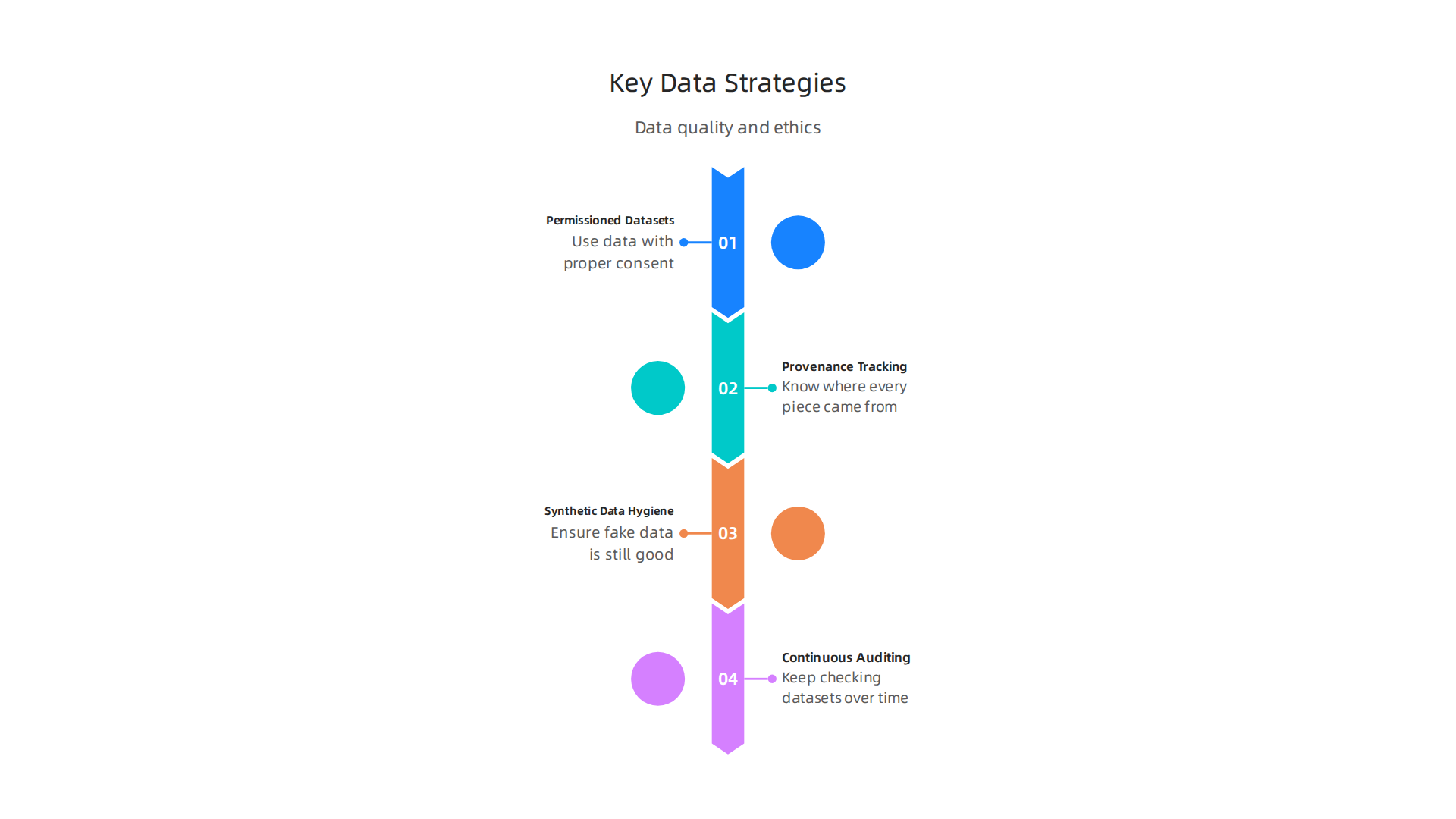
- Permissioned Datasets: We need to use data that has proper permission. This means getting consent for data use, rather than just scraping information from the internet. When companies rely on publicly available data, it can lead to
ai trainingon information that's been twisted or is not completely true, which is a big problem. Many teams use their own private data for AI training. For example, in 2026, 91% of teams with AI models in use rely on their own specific data to train visual AI systems, and over half of all companies use in-house data, not including customer information, for their AI training needs. This shows how important it is for companies to gather their own quality data rather than relying solely on public sources like Google Datasets or Kaggle for theirai trainingneeds AI Training Data: Top Sources and Dataset Providers, 2026 State of Visual and Physical AI Survey, AI Training Dataset Statistics and Facts (2026). Using permissioned data helps avoid "Synthetic Drift," which is when truth gets messed up as it moves through digital systems. If you want to dive deeper into why this kind of data is so critical, check out our article on why generative AI assistants need permissioned private data to avoid synthetic drift. - Provenance Tracking: This is like having a clear family tree for all your data. It means knowing exactly where every piece of information came from, who created it, and how it was used. This helps us audit and trace the origins of text datasets to ensure they are fair and legally sound, as shown by work that has audited over 1,800 text datasets A large-scale audit of dataset licensing and attribution in AI.
- Synthetic-Data Hygiene: Sometimes, AI uses made-up data called "synthetic data" for
ai training. It's important that this fake data is still good data. It should follow the same rules as real data and not introduce new biases. You can find out more about choosing data for AI projects in the AI Training Data Sets: The 2026 Developer's Guide. - Continuous Dataset Auditing: We can't just check data once. We need to keep looking at datasets over time to make sure they stay fair, accurate, and relevant. This ongoing check helps catch problems early and keeps the AI working as it should. This also helps with overcoming the data bottleneck and synthetic drift to build open future AI.
Model-Level Interventions: Guiding AI Behavior
Beyond data, how we build and test the AI models themselves plays a huge role in alignment.
- Alignment Fine-Tuning: This means teaching the AI to specifically follow human values and goals. It's about adjusting the AI so its actions are helpful and ethical, rather than just completing a task. Researchers are working on "empirical AI alignment" to make sure AI systems match human values, using methods like learning from human feedback and testing for tough situations Values in science and AI alignment research. This is a key part of ensuring that the
superhuman aiwe create truly works alongside us, not against us. To understand more about the basic differences, read about is machine learning AI why this distinction matters for data trust and ethics. - Constraint-Based Objectives: We can program AI with specific rules or "constraints." For example, an AI might be told it absolutely cannot share certain types of personal information, no matter what. These built-in rules help keep the AI within ethical boundaries.
- Evaluation Benchmarks Focused on Truthfulness: This means creating special tests to see how honest and factual an AI is. We need ways to check if the AI is making things up or sticking to the facts. For example, the MASK benchmark helps measure if large language models are lying on purpose The MASK Benchmark: Disentangling Honesty From Accuracy in AI. Other metrics like "faithfulness" measure how consistent an AI's answers are with the information it was given A list of metrics for evaluating LLM-generated content. These tests help us understand
what is ai and machine learningactually producing. - Robustness Testing: We need to poke and prod AI systems to see how they react to unexpected or difficult inputs. This "stress testing" helps make sure the AI doesn't break down or start doing strange things when faced with new situations. It's about building strong, reliable AI. Safeguarding AI systems is a critical concern, and learning how the CIA triad cyber security model protects AI systems in 2026 can offer deeper insights.
By combining careful data strategies with smart model design and testing, we can develop AI that is not only powerful but also trustworthy and aligned with human values.
By combining careful data strategies with smart model design and testing, we can develop AI that is not only powerful but also trustworthy and aligned with human values. This groundwork helps build AI systems ready for use in the real world. Now, let's look at how big companies, government groups, and charities actually put these ideas into action every day. This means making sure their AI systems work correctly and safely, staying true to human needs.
Operationalizing Alignment in Large Enterprises, Agencies, and Non-profits
Making sure AI systems work in a way that aligns with human values isn't just a technical job. It's also about how an organization works as a whole. This includes how teams are set up, how they buy AI tools and data, how they use and watch over AI, and how they train their staff and talk to the public. It's all about bringing ai or human judgment together.
Building Teams and Buying Smart
For AI to be aligned, organizations need to make big changes in how they work.
- Cross-Functional Teams: First, it's key to have different kinds of people working together on AI. This means bringing folks from legal, IT security, data science, and business departments into one group. This committee shouldn't just meet sometimes; it needs the power to stop AI systems from being used if they don't meet safety rules in 2026. This setup helps make sure that every part of the AI process has human oversight and that AI decisions are well-rounded, as highlighted in a guide on Top 10 AI Governance Best Practices for 2026 Risk Leaders.
- Smart Procurement Practices: When organizations buy AI tools or data, they need to be very careful. This means asking tough questions about where the data came from and how the AI was built. It's important to ask for proof that the data used for
ai trainingwas collected fairly and ethically. This focus on ethical data helps avoid problems like "Synthetic Drift" where information gets distorted. Companies should look for suppliers who provide "permissioned, high-integrity data" to ensure trust in their AI. An AI compliance checklist for 2026 suggests that every model should be documented, including how humans will check AI outputs, especially for systems making big decisions about people, such as loan approvals. To learn more about how organizations manage and keep track of all their AI systems, you can check out this guide on Enterprise AI Governance: 2026 Implementation Guide.
Putting AI to Work and Keeping an Eye On It
Once an AI system is ready, it's important to deploy it carefully and monitor it closely.
- Deployment Patterns: How AI is used in an organization matters. It's not just about turning it on. Organizations need clear plans for introducing AI, making sure there's always a human in charge, especially for important decisions. This helps make sure that the
superhuman aitools we build are truly helpful and don't make mistakes that could hurt people or trust. In fact, continuous evaluation for accuracy, fairness, and compliance with clear human oversight is essential in 2026 to redefine risk and governance for AI, according to a report on How AI will redefine compliance, risk and governance in 2026. - Monitoring and Incident Response: Even the best AI can sometimes make mistakes or act in unexpected ways. That's why constant monitoring is so important. We need to watch AI systems closely to catch problems early. If something goes wrong, organizations need a clear plan for what to do. This "incident response" plan ensures that problems are fixed quickly and transparently. Regular bias and accuracy audits, along with incident response procedures, are vital for high-risk AI systems as noted in an AI Governance Guide 2026: Risk, Compliance, and Responsible Use. Having a named owner for each AI system is also a good practice, responsible for monitoring outputs and escalating issues.
- Workforce Training: People who work with AI need to know how it works and how to use it responsibly. Training helps employees understand the limits of AI and when their own judgment is still needed. This ensures a good balance between
ai or humandecision-making. Training also empowers workers to understand and adjust AI outputs, as mentioned in an article about Human-AI Collaboration: Transitioning From Automation to Augmentation. This kind of learning helps build trust. For more in-depth training resources, consider looking into AI learning courses focused on ethics and data integrity for enterprise teams. - Public Communication Strategies: Finally, organizations need to be open and honest with the public about how they use AI. This means explaining
what is ai and machine learningdoing, how it's being kept safe, and what steps are taken to ensure it aligns with public values. Clear communication builds trust and helps people understand the benefits and risks of AI. Showing examples of human-AI collaboration in areas like conflict analysis can help, as seen in a white paper on Human-AI Collaboration in Conflict Analysis.
Summary
This article explains why the quality and permissioning of AI training data determine whether powerful