Home


Menu

Close

Build Trustworthy AI Using Data Annotation Alternatives
Published:
September 10, 2026
Data Annotation Alternatives: Solving the AI Bottleneck and Synthetic Drift
Making smart AI tools is super important in 2026. But there's a big problem: AI needs a lot of good, true information to learn from.
Think of it like a student needing good books and teachers to learn well.
Right now, a lot of AI gets trained on information that's just "out there" on the internet. This information isn't always checked for truth, and sometimes it's even fake or twisted. We call this problem the "AI bottleneck." It means AI can't get enough truly ethical and correct information because it's hard to find or collect in the right way.
When AI learns from bad or twisted information, it can start to make mistakes or even spread wrong ideas itself. We call this "synthetic drift." It's like a whisper game where the message gets changed each time it's passed along. This can make people stop trusting AI. Large companies, government groups, and charities must find ways to get better, more trustworthy data. This is why we need ethical electronic data gathering and retrieval to fix the AI data crisis.
So, what do we mean by "data annotation alternatives"? Simply put, these are new and smarter ways to get and prepare data for AI. Instead of just grabbing whatever data is available, these methods focus on getting data that is ethical, has permission from people, and is truly useful. This helps create better AI data pipelines that feed AI with quality information. For example, some new ways of learning, like federated learning, help AI models learn from many different sources without needing to gather all the private data in one place. This makes sure personal information stays safe while still training powerful AI systems, as experts shared in a paper about federated learning for privacy-preserving, secure and scalable data.
Overcoming the AI bottleneck and stopping synthetic drift is a big deal. In this article, we'll show you practical ways to get and prepare data that you can trust. We'll also talk about the rules and plans needed to make sure your AI uses data in a fair and safe way. This will help your AI tools be truly helpful and trustworthy.
Why data annotation alternatives matter for trustworthy AI
Making AI tools that people can truly trust is a big goal in 2026. But for AI to be trustworthy, it needs really good data to learn from. The way AI often gets its data now can cause problems. Many AI systems learn from information scraped from the internet. This public data isn't always checked for facts and can sometimes be full of wrong ideas or unfair views.
When AI learns from this kind of bad data, it can start to spread misinformation and show bias. This leads to what we call "synthetic drift." Think of it like this: if you teach a student with broken lessons, they will give broken answers. When AI does this, it can make big companies, government groups, and charities face real trouble.
These problems can hurt an organization in many ways:
- Rules and laws: If AI acts unfairly, it can break important rules about privacy or equality.
- Bad name: People stop trusting a company or group if their AI spreads wrong or biased information.
- Work problems: AI that makes bad decisions because of flawed data can mess up important jobs and services.
This is why data annotation alternatives are so important. These new ways of preparing data help solve the issues of bad information. They focus on finding and using data that is fair, accurate, and gathered with permission. By doing this, we build better AI data pipelines that feed AI with only high-quality information. This careful work means AI tools are less likely to be biased or spread misinformation.
Choosing to use these smarter data methods makes AI more dependable. It helps make sure that AI tools truly help people and improve their lives, rather than causing harm or confusion. For example, using methods like "weak supervision" can help label lots of data more efficiently and correctly. When companies like Domino Data Lab use strong tools for data science, they can better manage and process data to make sure it's top-notch.
By being a good "data scout" and choosing quality over quantity, organizations can reduce risks and build a stronger foundation for their AI. This commitment to better data helps us create AI that we can all rely on, making sure it aligns with human values and works for a better future. To really combat synthetic drift and build dependable AI, it is important to focus on building trustworthy AI combat synthetic drift with ethical data.
Inventory of data annotation alternatives: methods and when to use them
To really combat synthetic drift and build dependable AI, we need to look at different ways to prepare data that don't rely on old, flawed methods. These new options are called data annotation alternatives. They help make sure AI systems learn from good, clear information, which is key for trustworthy AI in 2026. Let's explore some of these smart methods and when to use them.
Different Ways to Prepare AI Data
Here are some helpful data annotation alternatives that can make your AI data pipelines stronger:
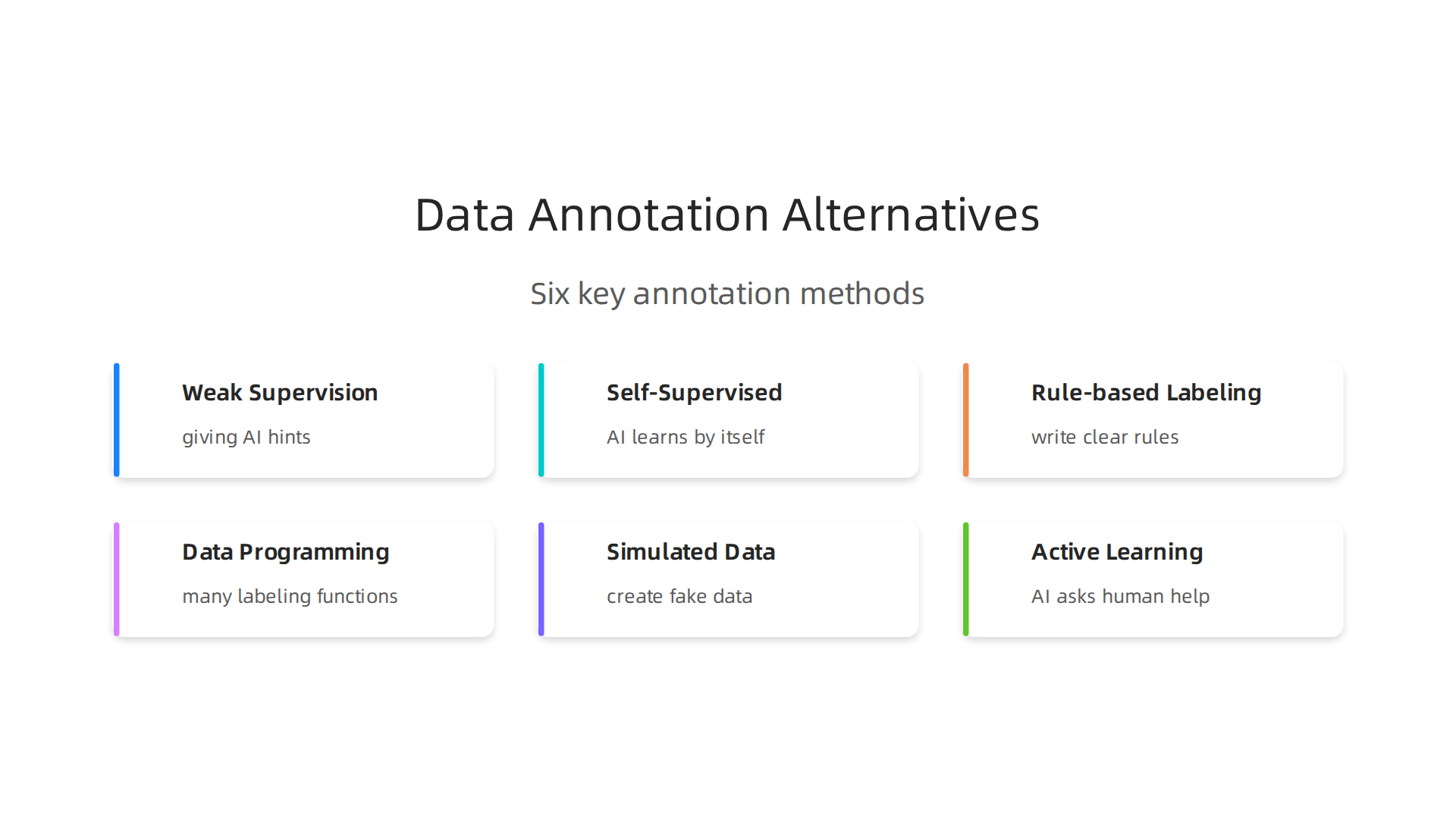
- Weak Supervision: This is like giving AI "hints" instead of perfect answers. You can use simple rules or other models to label lots of data quickly, even if the labels aren't always 100% correct. It's a way to get started when you have little hand-labeled data. Studies show that combining weak supervision with other methods can lower the cost of getting data ready for AI models and improve how well they work Enhancing Active Learning with Weak Supervision and ....
- Self-supervised Learning: Imagine AI learning by itself, without any human help at all. This method lets AI create its own tasks and labels from unlabeled data. It's great for when you have a huge amount of data but no easy way to get human experts to label it all. This approach is all about the AI making its own lessons from the data itself DISCERNING SELF-SUPERVISED LEARNING AND WEAKLY ...openreview.net › pdf.
- Rule-based Labeling: For some simple tasks, you can write clear rules to label data automatically. For example, if you want to find all emails that contain the word "urgent," you can write a rule for that. This is fast and cheap for very specific jobs.
- Data Programming: This takes rule-based labeling a step further. Instead of just one rule, you write many simple "labeling functions." These functions might sometimes disagree, but a special system helps combine their ideas to get the best possible label. This is a powerful way to label large amounts of data without needing to manually go through it all.
- Simulated or Synthetic Data: Sometimes, you can just create fake data that looks real. This is useful when real data is hard to get, too private, or very expensive. For example, self-driving cars can learn from simulated videos of roads and traffic.
- Active Learning with Selective Human Review: With this method, the AI is like a smart student that knows when it needs help. It picks out the data it's most unsure about and asks a human expert to label just those tricky bits. This saves a lot of time and effort because humans only label what truly matters WeakAL: Combining Active Learning and Weak Supervision. It makes human effort count more.
Choosing the Right Method
Picking the best data annotation alternatives depends on a few things:
- Privacy Rules: If your data is very private (like medical records), you'll want methods that don't need humans to see every piece of information. Synthetic data or strict rule-based systems might be best.
- How Accurate You Need to Be: For some AI, getting everything perfect is super important. For others, a few mistakes are okay. If you need very high accuracy, active learning with human checks is a good choice.
- How Fast You Need Labels: If you need to label huge amounts of data very quickly, weak supervision or self-supervised learning can speed things up.
- How Complex Your Data Is: Simple data might work well with rules, but complex data (like understanding human emotions in text) will likely need more advanced methods or human review.
Being a good "data scout" means you know these different tools and can pick the right one for each job. This helps you build trustworthy AI systems that truly serve people well.
When we talk about picking the right way to prepare AI data, privacy is a huge deal, especially in 2026.

If your data is very private, like health records or personal messages, you need special data annotation alternatives that keep that information safe. It's about finding smart ways for AI to learn without revealing private details.
Here are some top methods that help protect privacy:
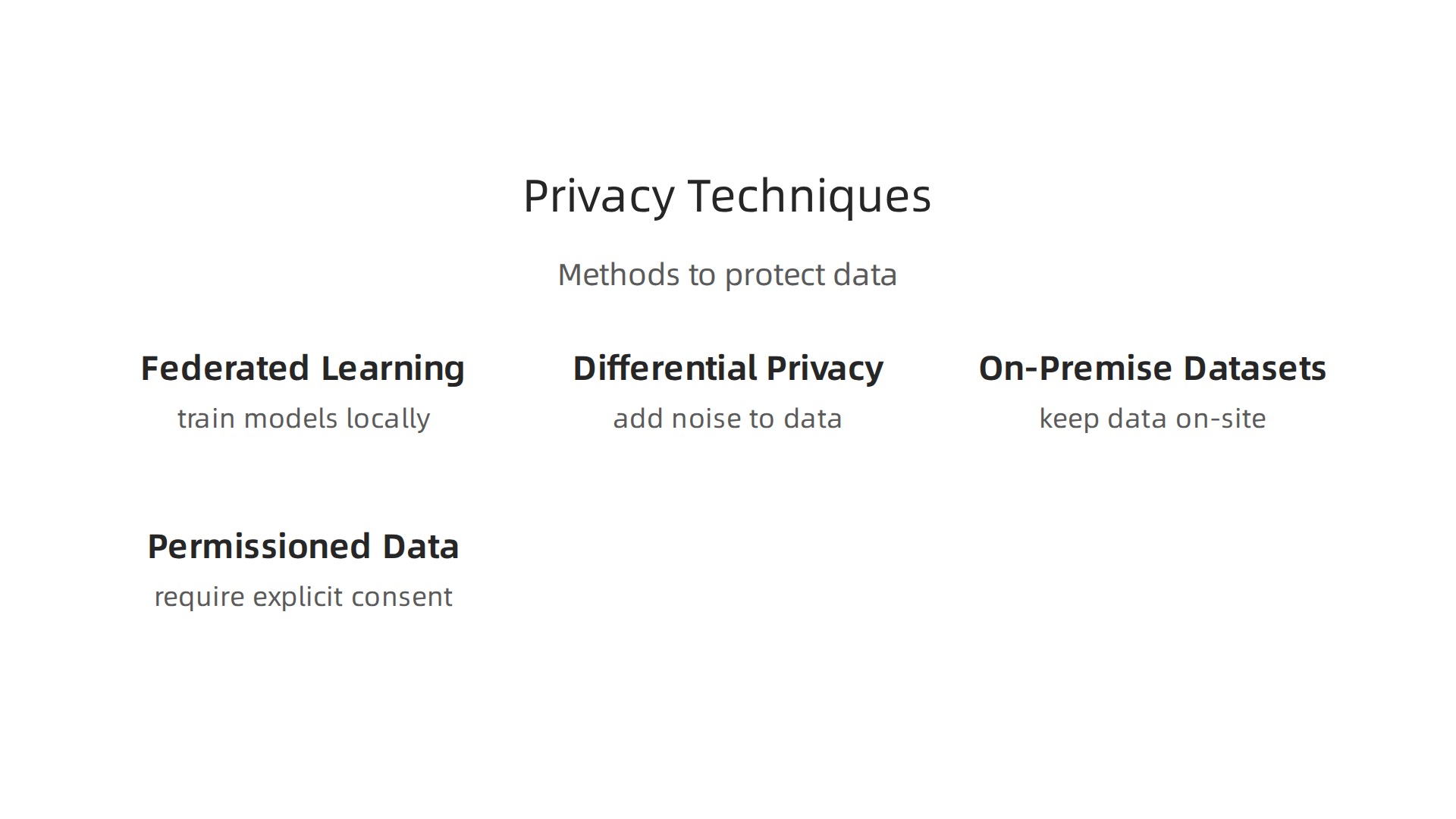
Federated Learning
Imagine many different hospitals or banks all have their own private patient or customer data. Instead of sharing all that sensitive information in one big place, federated learning lets the AI model travel to each hospital. The AI learns from the data right there, on the spot, and then only shares its learnings or updates back to a central system, not the raw data itself. This way, private data never leaves its original safe place. It is a powerful way to train AI across many data sources while keeping personal information private.
Differential Privacy
This method adds a little bit of "noise" or random changes to your data before it's shared or used. It's like blurring a photo just enough so you can't recognize individual faces, but you can still tell if it's a picture of a crowd or a single person. This makes it very hard to connect any single piece of data back to a specific person, even if someone tries to reverse-engineer the information. The catch is that adding this noise can sometimes make the data a little less accurate for the AI. It's a careful balance between how much privacy you want and how useful the data remains for training the AI. Experts measure this balance between utility and privacy when evaluating synthetic data Beyond Realism: A Utility-Fidelity-Privacy Framework for ....
On-Premise Curated Datasets
Sometimes, the best way to protect very sensitive data is to simply keep it "on-premise," meaning right within your own secure computer systems. You create and manage datasets internally, often without sending them to outside cloud services or third parties. This gives you full control over who sees the data and how it's used. These datasets are carefully looked after, or "curated," by your own team. This approach is often used for highly secret or legally restricted information, where strong security is the main goal.
Balancing Privacy and Usefulness
Picking these privacy-first data annotation alternatives means you're always trying to find a good balance. If you protect privacy too much, the data might lose some of its usefulness, and your AI might not learn as well. This is often called the "utility loss" versus "privacy protection" trade-off. A good data scout understands these technical and operational trade-offs to ensure the AI still performs its job accurately while respecting people's privacy.
The Power of Permissioned Data
A big part of privacy in 2026 is how data is collected in the first place. Using data annotation alternatives that rely on permissioned, consented datasets means you have clear permission from individuals to use their data. This is much different from using "scraped" data, which is often gathered from the internet without direct consent. When you use permissioned data, you lower ethical and legal risks a lot. It also builds trust with the people whose information you are using. This ethical way of gathering data is crucial for building trustworthy AI systems that respect human values. In fact, generative AI assistants especially need permissioned private data to avoid synthetic drift. These techniques are vital for strong AI data pipelines that keep trust at their core.
Choosing the right data annotation alternatives to prepare AI data means we have to think about different types of data. We talked about how important privacy is with real, private datasets. But what about data that isn't real? Let's look at made-up data, called "synthetic data," and compare it to carefully kept "curated private datasets." Both have good points and bad points when you're trying to build strong AI.
What is Synthetic Data?
Synthetic data is information that computers make up. It looks like real data but doesn't come from actual people or events. Imagine you need lots of pictures of houses, but you don't want to use real photos of people's homes for privacy reasons. A computer can create new, fake pictures of houses that look very real. This lets AI learn without touching any private, real-world information. The goal is for this made-up data to be as close to real data as possible. Experts often check how much the synthetic data matches the original data, a measure they call fidelity Benchmarking the Fidelity and Utility of Synthetic ....
Curated Private Datasets: A Quick Look Back
On the other hand, curated private datasets are made of real information, like medical records or customer purchases. But these datasets are managed very carefully, often kept "on-premise" within a secure system, and used only with clear permission. They are looked after by a team to make sure they are correct and private. This approach gives you full control over sensitive information.
Differences in How They Work
When choosing between synthetic data and curated private datasets, there are a few important things to think about:

- How real they feel (Fidelity): Real, curated data is, by nature, perfectly real. Synthetic data tries to be real, but it's very hard for made-up data to be exactly like actual data. There will always be small differences.
- Fairness (Bias Risk): Synthetic data can accidentally copy and even make worse any unfairness or biases that were in the original real data used to create it. It's like a copy machine that copies flaws, too. This is a big challenge, as synthetic data can amplify existing biases Synthetic data, synthetic trust: navigating data challenges in ... - PMC. You still need to check curated private datasets for bias, but at least you're starting with real information.
- Checking the facts (Auditability): With curated private datasets, you can often trace where each piece of information came from. This makes it easier to check its accuracy and how it was collected. For synthetic data, it can be harder to fully check its source because it was generated, not collected. Having a strong framework for checking AI models helps track these things, as highlighted in the AI Model Governance Framework: 2026 Enterprise Playbook.
Smart Choices for Your AI
A good data scout knows that both types of data have their place. Using synthetic data can be great for testing new AI ideas or for sharing data with others without privacy worries. It can help you to unlock trustworthy AI systems with AI-ready data when real data is scarce or too sensitive.
But for AI systems that need to be super accurate and trusted, especially with important decisions, curated private datasets are often best. This is because they directly reflect the real world. Many companies also need to follow strict rules like SOC 2 and ISO 27001 to show they handle data safely. When picking a vendor or a way to get data, these checks on security, privacy, and following rules are very important in 2026, according to a Vendor Selection Criteria: A 2026 Strategic Framework.
Sometimes, the best solution is to use both. You can create synthetic data that's "seeded" or started with a small amount of real, curated data. Or you can use synthetic data to add to and expand your curated datasets, making them even richer. This mix-and-match approach helps you get the best of both worlds: good privacy with enough helpful data for your AI to learn well. It's all about finding the right data annotation alternatives to master data annotation to build trustworthy AI.
We've seen that picking between made-up (synthetic) data and real, private data is key for building good AI. But what about the role of people? It's not just about labeling everything by hand anymore. In 2026, smart data annotation alternatives mean humans work with AI, not just for it.
New Ways for Humans to Help with AI Data
Instead of doing simple, repeated tasks, people are now taking on more important roles in setting up ai data pipelines:
- Watching Over AI's Work: Humans act like helpful supervisors. They check the answers AI gives and fix mistakes. This is called "oversight-focused review." It makes sure the AI learns the right things.
- Rewarding Good Checks: People get special tasks to check small bits of data that AI finds tricky. These "verification tasks" are more fun and important than labeling thousands of images.
- Experts Making Data Perfect: Sometimes, you need really smart people to look at the data. These "expertise-driven curation" tasks mean a "data scout" with deep knowledge makes sure the data is super high quality and clear.
- Getting Group Permission: For sensitive data, instead of asking each person, we can use "cohort-based consent models." This means groups of people give permission for their data to be used in ways that protect everyone's privacy.
These new ways help keep data quality high without boring tasks. This is because humans are doing higher-level work that AI can't do well, like making judgment calls or ensuring ethical use. Modern data practices often involve keeping track of data from start to finish, which is part of what makes data governance strong in 2026, as noted in a guide about What Modern Data Governance Actually Looks Like in 2026.
Working Together: AI and Humans
The best way forward is often a mix, called hybrid workflows. AI can do the first pass, labeling most of the data.

Then, humans step in for "targeted human verification." They only check the parts AI isn't sure about or the parts that are most important. This saves time and still makes sure the data is correct and fair.
Using these kinds of data annotation alternatives helps build AI systems that we can trust. It also makes sure that the valuable data going into companies like Domino Data Lab is reliable. It's about securing ethical AI with trustworthy data. If you want to dive deeper into how good data forms the backbone of AI, you can learn more about building trustworthy AI with robust data pipelines.
Putting these new ways of working with AI into practice in a big company means having the right setup. It's not just about smart ideas; it's about building the strong bones and good habits for how data is handled. This is how big businesses can truly use modern data annotation alternatives and build AI they can trust.
Making AI Alternatives Work for Big Companies
For large organizations, making these advanced methods for working with AI data happen means looking at three main areas:
1. The Tech Setup Imagine how water flows through pipes in your house. Data also moves through special "pipes" called ai data pipelines. For AI, these pipelines need to be extra strong and clear. This means:
- Keeping Track of Everything: Companies must know exactly where data comes from and how it changes over time. This is called "provenance tracking." It's like knowing the family tree of your data. An AI Model Governance Framework for 2026 highlights that this tracking should go from the raw data all the way to the AI's final answer.
- Labels for Data: Each piece of data needs good labels or information about it. This is "metadata." Think of it as a library card for every book in a huge library. It helps everyone understand what the data is.
- Building Data Again and Again: You need to be able to build the same dataset many times in the exact same way. This helps make sure AI models are fair and can be checked easily.
2. How the Company Works Even with the best tech, people make the difference.
- Special Leaders: Big companies have leaders like Chief Information Officers (CIOs) and Chief Data Officers (CDOs). They also have people focused on ethics. These groups work together to make sure data practices are fair and follow rules.
- Picking Partners: Sometimes, a company needs help from outside experts. When choosing these partners, known as vendors, companies look for things like how secure their data handling is and if they follow privacy rules. A 2026 strategic framework for vendor selection stresses looking at security, privacy, and how they meet rules like SOC 2 and ISO 27001. A smart data scout might even be involved in finding the best external talent.
3. Checking How Things Are Doing It's important to keep an eye on how well the AI and data systems are working.
- Measuring Quality: Companies need to know if the data used for AI is good. They check things like how accurate the data labeling is and if the AI is still performing correctly over time.
- Spotting Changes: Sometimes, data can change in unexpected ways, which can make AI models less accurate. This is called "data drift." Companies need ways to measure this and fix it fast. There are specific data governance metrics for 2026 that help track important things like data quality and how well policies are followed.
- Looking at the Bigger Picture: Beyond just numbers, companies also think about the wider impact of their AI. They check if it's fair to everyone and if it helps society.
By paying attention to these three areas, companies can use advanced data annotation alternatives to build trustworthy AI systems at a large scale.
To build truly trustworthy AI systems using advanced data annotation alternatives, big companies must also think about governance, ethics, and how their AI affects society.

It's not just about making the technology work; it's about making sure it works for good.
Governance, ethics, and measuring societal impact
Making sure AI helps everyone means having clear rules and ways to check what's happening. This is called governance.
It's like having a clear roadmap and traffic laws for your AI data pipelines and models.
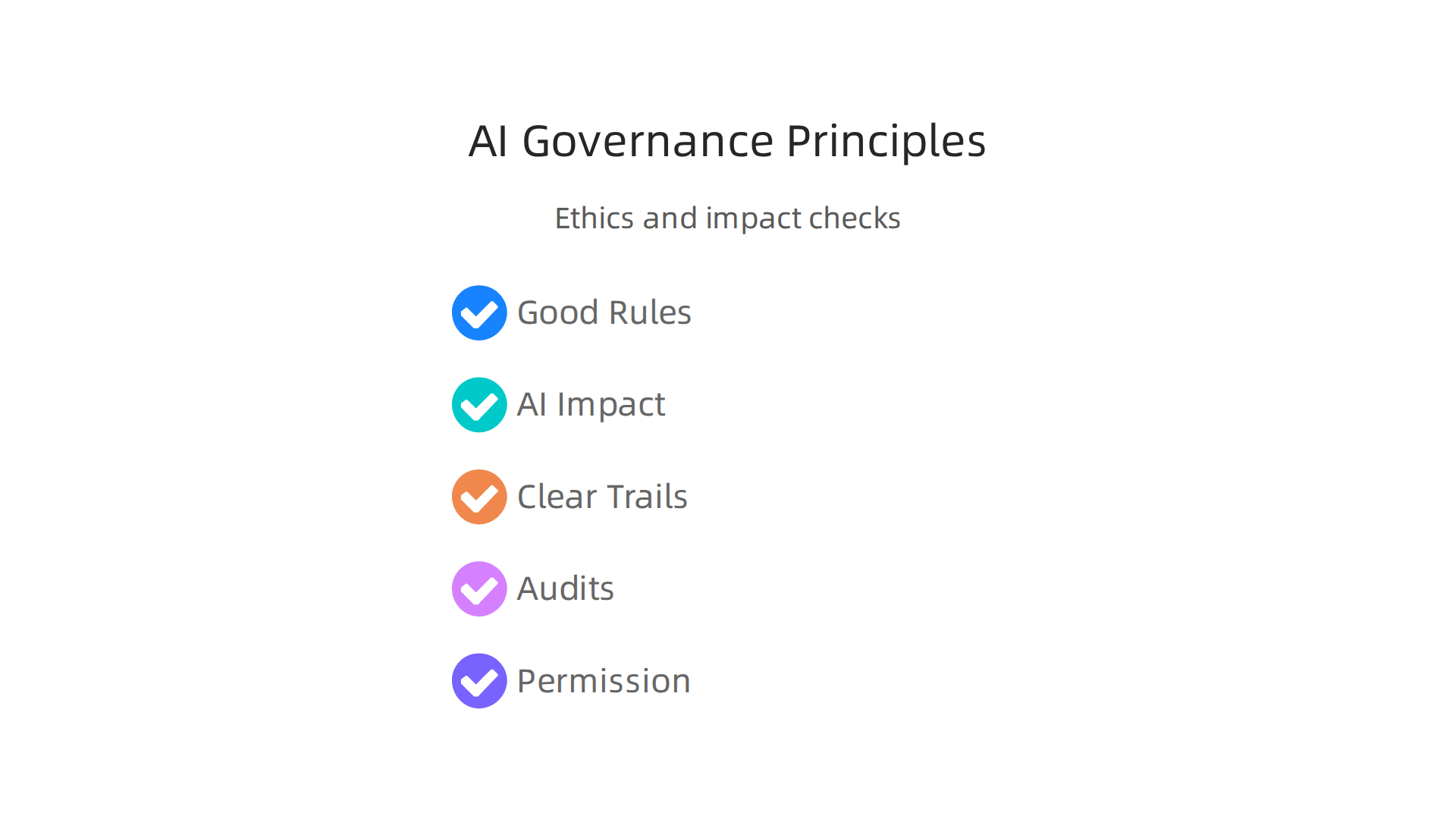
Good Rules and Ethical Choices
Companies need to set up rules that match their own values and what's best for people. These rules guide how data is collected, prepared, and used for AI. The goal is to make sure the AI is fair and doesn't cause harm. For example, some frameworks help leaders check their current practices and improve how they manage AI, making sure it's fair and open. An International Framework: Good Governance in the Public Sector gives principles for leaders to make sure things are done right. In 2026, many governments are also setting up guidelines to ensure public data is ready for ethical AI use, focusing on quality, how data is managed, and making sure human checks are in place. These new rules help make sure data used for AI is ethical and reliable.
Checking How AI Affects People
It's important to do more than just check if an AI model is accurate. We also need to see if it's actually helping society or if it might be causing problems. This means looking at bigger picture effects, like if the AI is fair to all groups of people or if it's making life better. For instance, new approaches for building datasets, especially those used by governments, are built on ideas like making data easy to find, use, and understand, all to make AI more fair and effective for everyone. There are clear guidelines and best practices for making government datasets ready for AI, which helps ensure the data supports positive societal outcomes.
Being Open and Taking Responsibility
Trust in AI comes from being open about how it works and who is responsible for it. This means:
- Clear Trails: Knowing where all the data came from and every step it took to get ready for AI. This is called data provenance. It's like having a detailed history book for your data. Being transparent about data lineage is key for audits and rules. The expanding role of Chief Data Officers in 2026 emphasizes transparency with end-to-end data lineage for AI models.
- Checking Things Out: Having regular checks or "audits" to make sure the AI is still following the rules and working as it should.
- Getting Permission: Keeping good records of when people gave their permission to use their data. This makes sure privacy is respected.
By focusing on strong governance, ethical choices, and transparency, companies can use modern building trustworthy AI combat synthetic drift with ethical data to build AI that truly benefits everyone.
Summary
This article explains how the AI data bottleneck and synthetic drift arise from low-quality, scraped datasets and why switching to data annotation alternatives is essential for trustworthy AI in 2026. It surveys practical methods—weak supervision, self‑supervised learning, rule‑based labeling, data programming, synthetic data, active learning and federated learning—and shows when each method fits based on privacy, accuracy, scale, and complexity. The piece compares synthetic data with curated private datasets, highlights the privacy tradeoffs (including differential privacy and on‑premise curation), and describes human roles that focus on oversight and expert curation rather than repetitive labeling. For organizations, it outlines the technical, operational, and governance changes needed—provenance tracking, metadata, repeatable dataset builds, vendor checks, and ongoing metrics—to prevent drift and maintain ethical AI. Readers will come away able to choose appropriate annotation alternatives, design hybrid human-AI workflows, and implement governance practices that reduce risk and improve model trustworthiness.