Home


Menu

Close

Build a Trustworthy Human-Centric AI-Powered Content Creation Platform
Published:
July 12, 2026
AI has greatly changed how we make content. In 2026, many businesses use an [AI-powered content creation platform](https://www.clarity-ventures.com/artificial-intelligence-ecommerce/ai-content-generation-tools) to write, plan, and optimize their messages. These tools can create a lot of content quickly, which helps save time and money. Experts say that AI makes content creation faster and more personalized, making work much smoother [The Future of Content Creation: AI Trends for 2026](https://www.floodlightnewmarketing.co.uk/blog/future-of-content-creation). From writing text to building websites, AI offers powerful ways to make more content.
But with this power comes a big problem. We face what some call the "AI bottleneck." This happens because AI needs good, clean data to learn from. However, much of the data AI uses is not always ethical or permission-based. It's often scraped from the internet, which can be full of misleading information. This leads to "synthetic drift," where the truth gets twisted as it passes through digital systems, making AI outputs less reliable. This is especially important for systems that aim to make [AI to human](https://deangrey.org/weblish-blogs/why-generative-ai-assistants-need-permissioned-private-data-to-avoid-synthetic-drift) interactions feel more real.
This problem is very urgent for big organizations like enterprises, governments, and non-profits. They need to create content that people trust. If their [AI-powered content creation platform](https://www.linkedin.com/pulse/ai-powered-content-marketing-strategies-you-must-use-2026-baig-lxhvf) uses bad data, it can spread wrong information. This can harm their name and make people lose faith in what they say. Imagine [faceless AI tools](https://www.brandedagency.com/blog/best-ai-content-tools) creating content that quietly pushes false ideas. It's a real danger that affects institutional and civic trust.
The good news is that we can fix this. We need to reset how these platforms work. This means building AI content systems that put people first.

We must use fair data principles and get "human truth" ethically, with permission. This article will show you a practical, evidence-based roadmap. It will guide you in designing systems that are trustworthy, focused on human well-being, and able to avoid synthetic drift. It's about making AI work for us, showing real values, and not just trying to get more clicks. You can learn more about [overcoming the data bottleneck and synthetic drift](https://deangrey.org/weblish-blogs/overcoming-the-data-bottleneck-and-synthetic-drift-to-build-open-future-ai) to build a better AI future.
What an 'AI powered content creation platform' actually is (technical and product anatomy)
To truly build trustworthy AI content systems, we first need to understand what an [ai powered content creation platform](https://www.jasper.ai/blog/ai-content-creation) really is. Think of it as a smart helper that plans, writes, and makes content using artificial intelligence. In 2026, these platforms are made of a few key parts that work together to create everything from blog posts to website designs. Here's how these platforms are typically built: 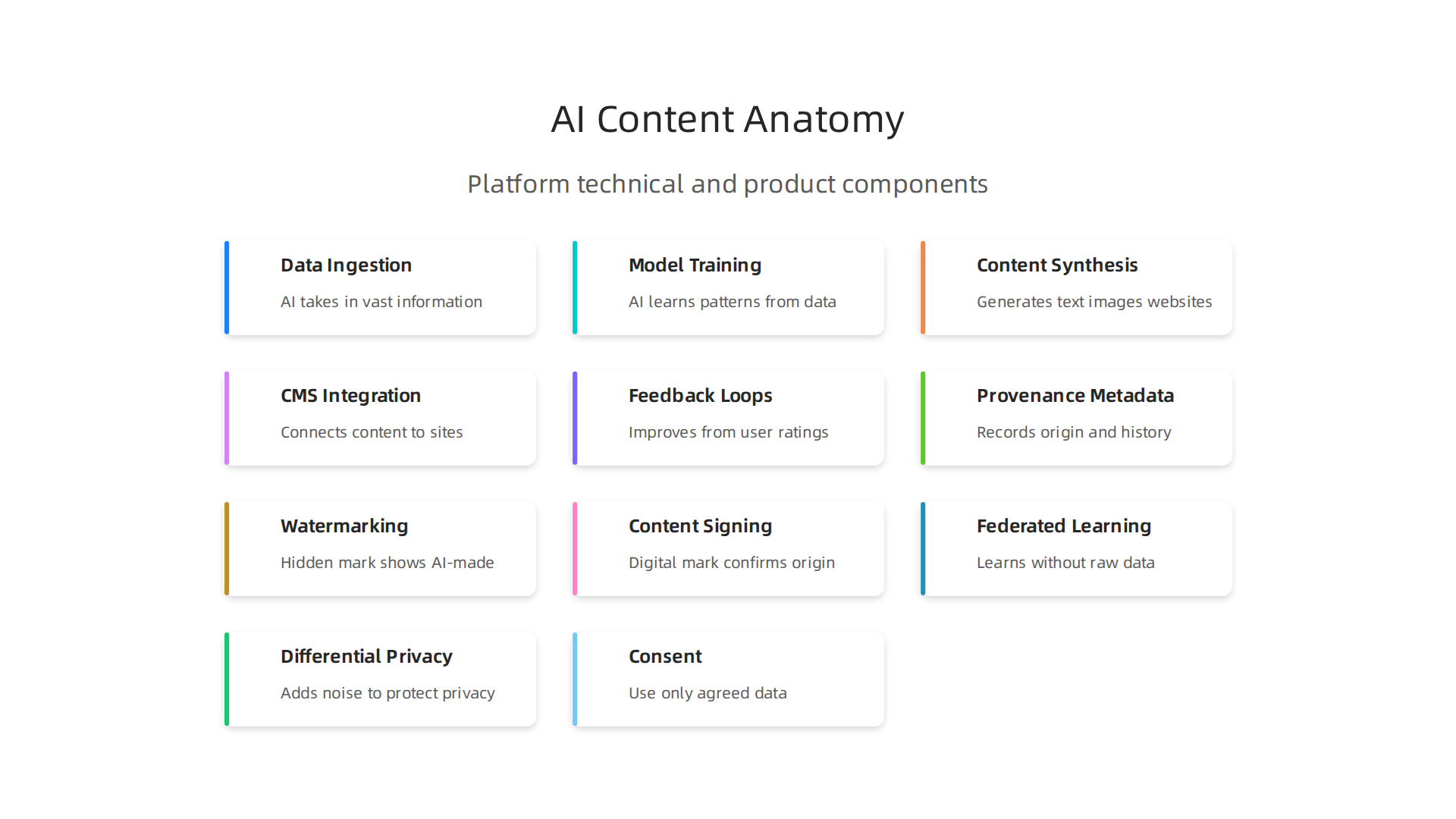 * **Data Ingestion**: This is where the AI takes in information. It's like the AI "eating" vast amounts of text, images, or sounds. For the AI to be trustworthy and follow [fair data principles](https://deangrey.org/weblish-blogs/ethical-electronic-data-gathering-and-retrieval-is-the-only-fix-for-ai-data-crisis), this data must be collected with permission and be of good quality. * **Model Training**: After gathering data, the AI system "learns" from it. This training helps the AI understand patterns and how to create new content based on what it has seen. It's like teaching a student by showing them many examples. * **Content Synthesis**: This is the part where the AI actually makes new things. These are the [faceless AI tools](https://www.brandedagency.com/blog/best-ai-content-tools) that write text, create images, or even put together parts of a website. They use what they learned during training to generate content. * **CMS Integration**: Many [AI powered content creation platform](https://www.linkedin.com/pulse/ai-powered-content-marketing-strategies-you-must-use-2026-baig-lxhvf) tools can connect directly to your website's content management system (CMS). This means the AI can send its newly made content right to your website or other digital spots. * **Feedback Loops**: This is how the AI gets smarter over time. When people review the content the AI makes and give it ratings or suggestions, the AI learns what works well and what doesn't. This helps make the [AI to human](https://deangrey.org/weblish-blogs/why-generative-ai-assistants-need-permissioned-private-data-to-avoid-synthetic-drift) interactions smoother and more accurate. These platforms also come in different types, each with its own way of handling data and keeping it safe: * **Enterprise On-Premise**: Big companies sometimes choose to keep their entire AI system on their own computer servers. This means they have a lot of control over their data, which is vital for privacy and security. It helps them make sure their data stays private, without sharing it widely, by using methods like [private federated learning](https://community.ibm.com/community/user/ai-datascience/blogs/nathalie-baracaldo1/2019/11/15/private-federated-learning-learn-together-without). * **Cloud-Hosted**: Most platforms today live on the internet, using services like Google Cloud or Amazon Web Services. They are easy to set up and use from anywhere. However, companies need to be careful about data protection and choose a provider they trust to [secure your cloud collaboration platform against AI bottlenecks and synthetic drift](https://deangrey.org/weblish-blogs/secure-your-cloud-collaboration-platform-against-ai-bottlenecks-and-synthetic-drift). * **Hybrid**: Some organizations use a mix of both. They might keep very sensitive data on their own servers, while using cloud services for other parts of the AI content creation process. This offers a good balance between control and ease of use.Data Sourcing, Provenance, and the Problem of Synthetic Drift
We have talked about how an AI powered content creation platform works and how it takes in data. But where does this data come from? And why does it matter so much? Actually, the way AI systems get their information is one of the biggest challenges facing AI today.The AI Bottleneck: Too Little Good Data
The biggest issue is what we call the "AI bottleneck." This means there's not enough private data that has been gathered with clear permission from people. This kind of data, collected fairly and ethically, is like gold for AI. It helps AI understand real human behaviors and values. Without it, many AI systems have to rely on information found all over the internet, often without proper checks or permissions. This scraped public data can be full of biases or simply not reflect real-world truth. Using more ethical data collection methods is key to fixing this issue, helping AI systems follow strong [fair data principles](https://deangrey.org/weblish-blogs/ethical-electronic-data-gathering-and-retrieval-is-the-only-fix-for-ai-data-crisis). Businesses are working to overcome this problem, as a major trend for 2026 is for AI to remove bottlenecks in content workflows and improve efficiency, but only if the data is sound [The Future of Content Creation: AI Trends for 2026](https://www.floodlightnewmarketing.co.uk/blog/future-of-content-creation).What is Synthetic Drift?
When an AI system learns from poor or biased data, it starts to get things wrong. This is called "synthetic drift."  Imagine you teach a student by showing them many pictures, but half the pictures are blurry or fake. Over time, the student might start to draw blurry or fake things too, even if they're trying their best. Synthetic drift happens when the data used to train the AI changes or becomes distorted over time. This makes the AI's predictions and content less accurate [Data drift: How to tackle it with synthetic data - MOSTLY AI](https://mostly.ai/blog/data-drift). This issue becomes worse when AI models start creating new data that is then fed back into other AI models. The original "truth" gets stretched further and further with each step. This means the content created by these AI powered content creation platform tools, even the popular [faceless AI tools](https://www.brandedagency.com/blog/best-ai-content-tools), can slowly lose its connection to reality. It can start to spread misinformation or simply be less trustworthy. This erosion of truth impacts how we, as humans, interact with and rely on AI. It makes the [AI to human](https://deangrey.org/weblish-blogs/why-generative-ai-assistants-need-permissioned-private-data-to-avoid-synthetic-drift) exchange less reliable.The Impact of Synthetic Drift
Synthetic drift is a big problem because it can make AI systems less helpful and even harmful. If an AI is supposed to give you factual information, but it's been trained on distorted data, its answers won't be true. This can affect everything from news articles to healthcare advice. It's crucial for building trust in AI that we address how data is sourced and how it changes over time. Understanding and tackling this drift is vital for building AI systems that are truly trustworthy and helpful in 2026 and beyond. To learn more about how to make AI systems trustworthy and avoid these problems, you can explore information on [overcoming the data bottleneck and synthetic drift to build open future AI](https://deangrey.org/weblish-blogs/overcoming-the-data-bottleneck-and-synthetic-drift-to-build-open-future-ai).Trust, Verification, and Provenance: Technical and Operational Strategies
The problem of synthetic drift makes it clear: we need to find ways to make sure AI content is trustworthy. This means knowing where the information comes from and checking if it's true. Luckily, there are ways to do this, both with technology and with smart work processes.Technical Ways to Check AI Content
Imagine you're trying to figure out if a story is real. You'd ask, "Who wrote it? Where did they get their facts? Is there proof?" AI content needs these same kinds of checks. Here are some technical ways we can do this: 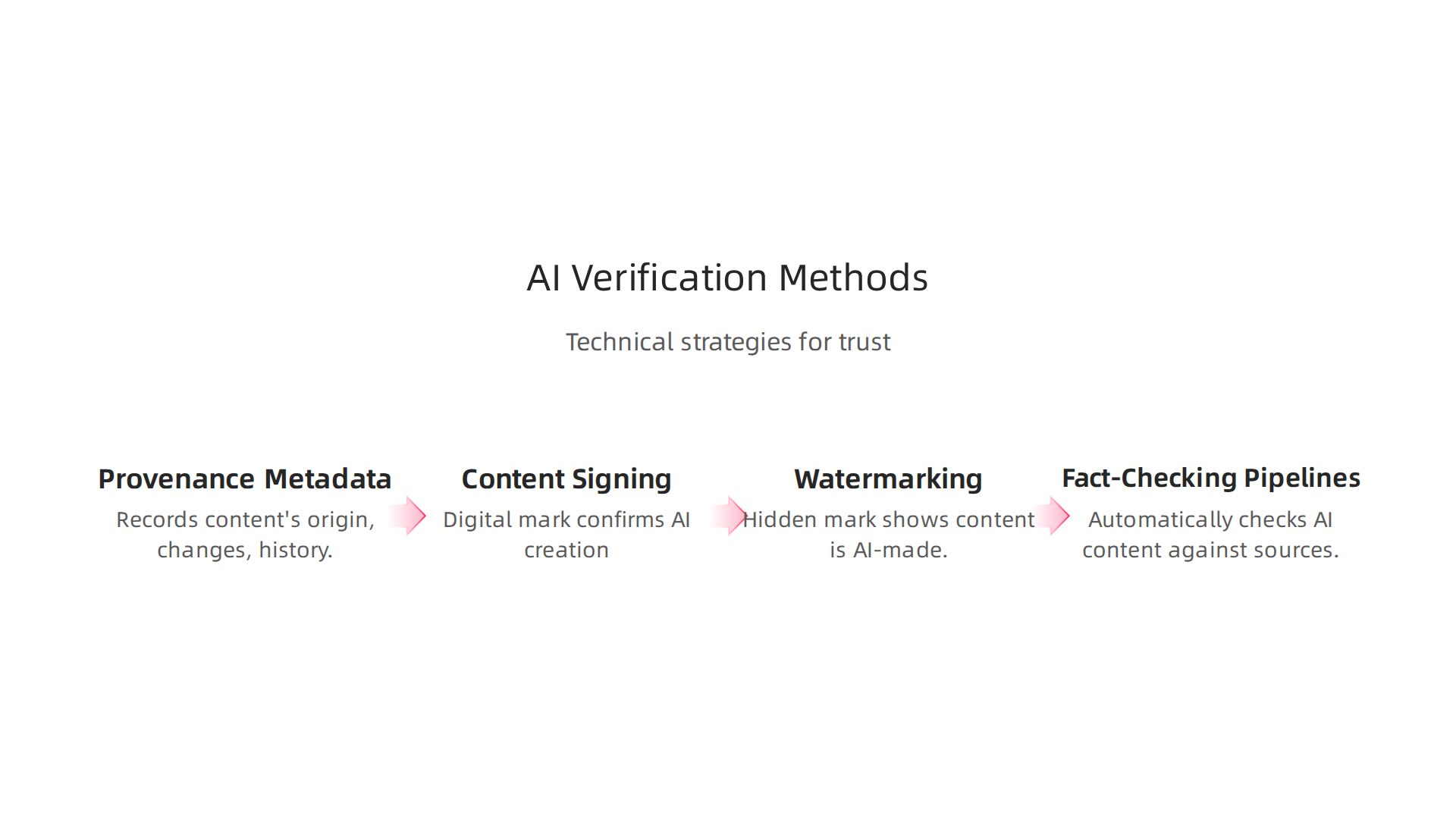 * **Provenance Metadata:** This is like a digital birth certificate for content. It records where the data came from, how it was changed, and who touched it. This helps us see the full history of a piece of AI-generated content, from start to finish. Knowing the origin of content, also called provenance, is a big focus for groups working on authenticating AI information in 2026  [Authenticating AI-Generated Content](https://www.itic.org/policy/ITI_AIContentAuthorizationPolicy_122123.pdf). * **Content Signing:** Think of this as a digital signature. When AI creates something, it can put a special digital mark on it. This mark confirms that the AI system truly made it and that it hasn't been changed since. This helps with verifying its authenticity. * **Watermarking:** This is like putting a hidden mark on a picture or document that tells you it's AI-made. Some tools can embed tiny, almost invisible signals into AI-generated content [Making it easier to understand how content was created and edited](https://blog.google/innovation-and-ai/products/identifying-ai-generated-media-online/). Even if someone tries to copy or change the content, the watermark can often remain. Companies like Steg.AI use watermarks to show where content came from and prove it's real [Content Provenance & C2PA Verification for Digital Media - Steg.AI]. While useful, watermarking can sometimes be removed, so it's best used with other methods [AI Watermarking: Why Big Tech is Betting on AI Provenance, and ...](https://www.pangram.com/blog/ai-watermarking). * **Fact-Checking Pipelines:** These are systems that automatically check facts in AI content against trusted sources. It's like having a team of digital detectives always on the job, comparing new information to what we know is true. This helps catch errors or misinformation before it spreads. These technical steps help us see the digital trail of content, giving us clues about its truthfulness. For building reliable AI systems, it's important to understand how to keep them safe and secure, which includes how to protect them using methods like those in the [how the cia triad cyber security model protects ai systems in 2026](https://deangrey.org/weblish-blogs/how-the-cia-triad-cyber-security-model-protects-ai-systems-in-2026) guide.Operational Ways to Build Trust
Technology alone isn't enough. We also need smart ways for people to work with AI content platforms. * **Human-in-the-Loop Workflows:** This means humans are always involved in checking the content an AI powered content creation platform makes. For important decisions or sensitive topics, a person reviews the AI's output before it goes live. This helps ensure that the final content meets ethical standards and human values. * **Escalation Paths:** What happens when an AI makes a mistake, or when a human reviewer isn't sure about something? An escalation path is a clear set of steps for reporting and fixing these problems. It ensures that issues get to the right people quickly so they can be solved. * **Audit Trails for Content Decisions:** Every time a human reviews or changes AI content, that action should be recorded. This audit trail is like a detailed logbook. It shows who made which decision and why. This helps everyone understand how content was approved and allows for learning and improvement over time. It also helps businesses comply with new laws, such as the [2026 AI Laws Update: Key Regulations and Practical Guidance](https://www.gunder.com/en/news-insights/insights/2026-ai-laws-update-key-regulations-and-practical-guidance) now in effect. By using both technical tools and smart work plans, we can build more reliable AI systems. These steps help ensure that the content we get from AI is not only helpful but also something we can truly trust. For organizations working with AI, it's important to have strong strategies for managing risk, which is a key part of [Global AI Governance Overview: Understanding Regulatory ... - arXiv](https://arxiv.org/html/2512.02046) discussions. Building on ways to make AI content trustworthy, it's also really important to design these systems with people at their heart. This means thinking about how humans interact with an AI powered content creation platform and making sure those interactions are positive and clear. In 2026, creating "human-centric" AI is a big goal.Design principles for human-centric AI content platforms
When we design an AI powered content creation platform, we want it to feel helpful and fair, not like a mysterious machine. This means we need some key rules or "principles" to guide us. These principles help make sure the AI respects people and works for their benefit. Here are the main rules for building human-centric AI tools: 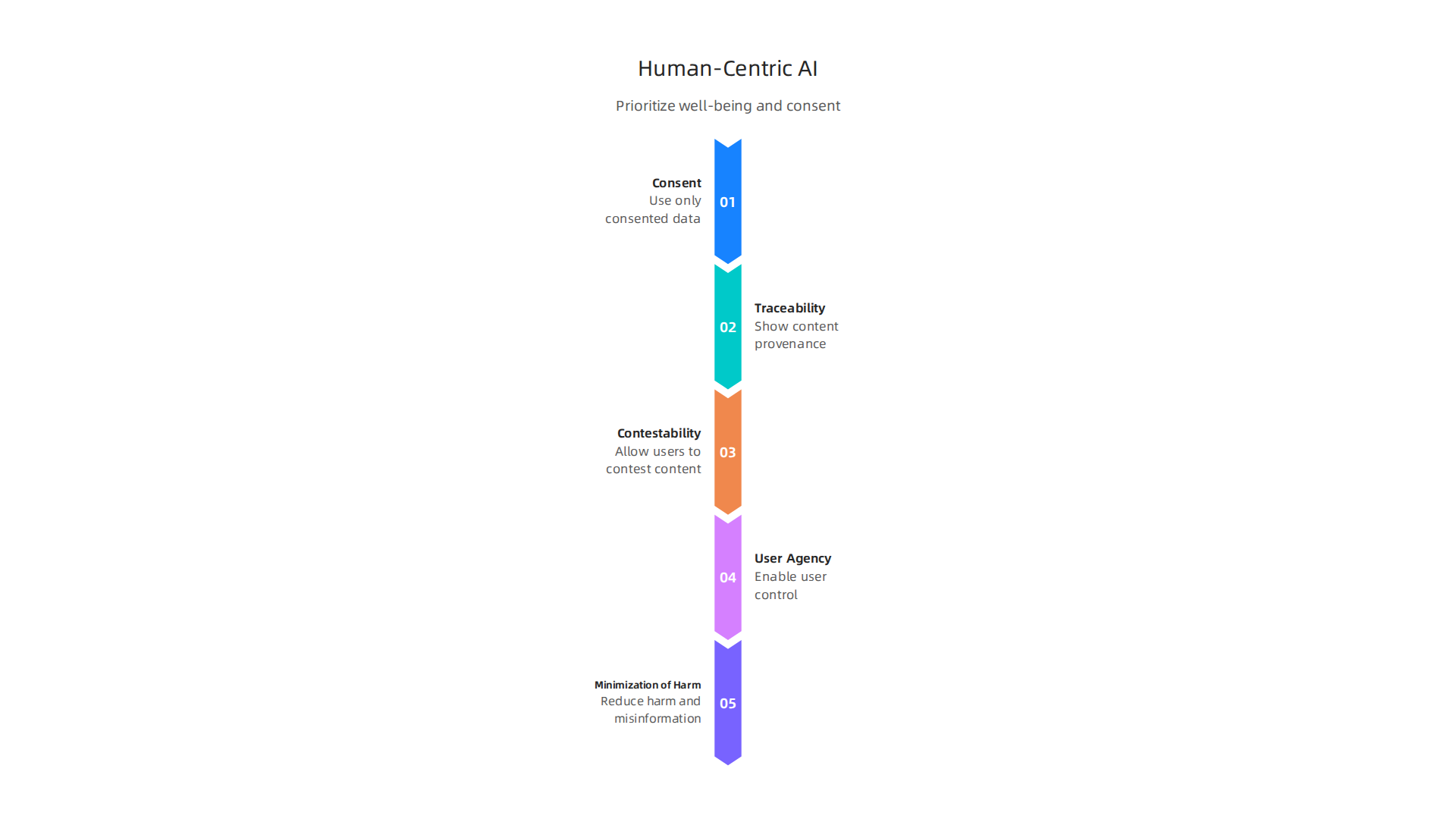 * **Consent and Permission:** This is about respecting people's choices. An AI platform should only use data that people have agreed to share. Think of it like asking for permission before using someone's photo. This idea is part of "fair data principles," where data is collected and used in a way that is open and respectful. One way to do this is through [federated learning](https://pair.withgoogle.com/explorables/federated-learning/). This method allows AI models to learn from many different sources of data without anyone having to share their private information directly. It's like having many separate kitchens all making a recipe without sharing their secret ingredients, as explained in resources like [Private federated learning: Learn together without sharing data](https://community.ibm.com/community/user/ai-datascience/blogs/nathalie-baracaldo1/2019/11/15/private-federated-learning-learn-together-without). This approach helps avoid the problem of AI learning from distorted or scraped public data, a issue that makes [generative AI assistants need permissioned private data to avoid synthetic drift](https://deangrey.org/weblish-blogs/why-generative-ai-assistants-need-permissioned-private-data-to-avoid-synthetic-drift). * **Traceability:** Users should be able to see where the AI's information came from. If an AI creates a news summary, people should know which news articles it used. This helps users decide if they can trust the content and helps fight "synthetic drift," where information gets twisted over time. * **Contestability:** If an AI makes content that a user thinks is wrong or unfair, they should have a way to challenge it. It's like having a button that says, "I don't agree with this, tell me why it said that." This gives users a voice and a way to correct errors. * **User Agency:** This means users should feel in charge of how they use the AI. They shouldn't feel like a faceless AI tool is telling them what to do. Instead, they should have options and controls, letting them guide the AI to meet their needs. This makes the interaction more like "ai to human" collaboration. * **Minimization of Harm:** The platform should be built to avoid causing any negative effects, such as spreading misinformation or creating harmful content. This includes thinking about who might be affected by the AI's output and how to keep them safe.Turning Principles into Products
These principles sound good, but how do we actually build them into an AI powered content creation platform? * **Consented Datasets:** For data consent, AI developers need to use systems that get clear permission from people before using their data. This also means being very clear about how that data will be used. Methods like [machine learning without sharing data using federated learning](https://www.marin.nl/en/research/artificial-intelligence-applications/machine-learning-without-sharing-data-using-federated-learning) are key here, allowing AI to learn without gathering all data in one place. You can even [train ML models without sharing your data](https://www.youtube.com/watch?v=z1KAMQthr8M) using frameworks like Azure ML. Ensuring [ethical electronic data gathering and retrieval is the only fix for AI data crisis](https://deangrey.org/weblish-blogs/ethical-electronic-data-gathering-and-retrieval-is-the-only-fix-for-ai-data-crisis). * **Explainability Features:** This means designing the AI so it can show its work. Instead of just giving an answer, the AI might explain *why* it came up with that answer, or what sources it looked at. This makes the AI less of a "black box" and builds more trust in the "ai to human" exchange. * **User Experience (UX) for Dispute Resolution:** The platform needs easy-to-find buttons and clear steps for users to report problems, ask questions, or challenge AI content. This could be a feedback form, a way to flag content, or a clear pathway to human review. This helps in building trust with [ethical AI tools for data privacy and trust](https://deangrey.org/weblish-blogs/comparing-genie-ai-and-clever-ai-ethical-ai-tools-for-data-privacy-and-trust). By focusing on these design principles and turning them into real product features, we can create AI powered content creation platforms that are not just powerful, but also truly respectful and helpful to people. This is how [ethical data analysis builds trust in AI](https://deangrey.org/weblish-blogs/how-ethical-data-analysis-builds-trust-in-ai). Building on those good design ideas, it's also really important to have clear rules and ways to check that AI systems are used safely and fairly, especially when big companies or government groups use them. This is called "governance and compliance," and it helps make sure an [ai powered content creation platform](https://deangrey.org/weblish-blogs/generative-ai-programs-depend-on-ethical-data-to-earn-user-trust) works well for everyone.Governance, compliance, and standards for enterprise & public-sector adoption
In 2026, there are many rules and guidelines for how AI should be used. These help make sure AI tools, like an [ai powered content creation platform](https://deangrey.org/weblish-blogs/how-to-build-apps-with-ai-that-earn-trust-through-ethical-data-annotation), are trustworthy and don't cause harm. Here are some key things to know about these rules: * **Data Protection Laws:** These rules are all about keeping your personal information safe. When an AI tool uses data, it must follow strict laws about how it collects, stores, and uses that data. This is part of the [fair data principles](https://www.gsa.gov/artificial-intelligence/resources/ai-strategies-and-compliance-plan) we talked about earlier. In the U.S., states like California and Colorado have their own rules, and a national framework from the White House also guides how AI should be used responsibly. You can learn more about these guidelines in the [2026 AI Laws Update: Key Regulations and Practical Guidance](https://www.gunder.com/en/news-insights/insights/2026-ai-laws-update-key-regulations-and-practical-guidance). * **Buying Standards (Procurement):** When government groups or large businesses want to buy an AI powered content creation platform, there are special rules. These rules make sure they choose AI that is fair, secure, and transparent. The U.S. government has set up a [Government-Wide Policy Provides Federal Agencies Governance Structure and Standards for Use of Artificial Intelligence](https://www.beneschlaw.com/insight/government-wide-policy-provides-federal-agencies-governance-structure-and-standards-for-use-of-artificial-intelligence/) to guide federal agencies. * **Rules for Different Jobs:** Some industries, like healthcare or banking, have their own extra rules for how AI can be used because the information they handle is very sensitive. Also, countries like those in the European Union have created big laws, like the [AI Act](https://digital-strategy.ec.europa.eu/en/policies/regulatory-framework-ai), to address AI risks and make sure AI-generated content is easy to identify. * **Voluntary Standards:** Even without a law, many companies choose to follow their own good rules. These often focus on making sure AI is transparent, fair, and doesn't show bias. Many global groups are working on these kinds of rules to help build trust in AI everywhere, as discussed in a [Global AI Governance Overview](https://arxiv.org/html/2512.02046).Making Sure AI Follows the Rules
For an organization to truly trust an [ai powered content creation platform](https://deangrey.org/weblish-blogs/overcoming-the-data-bottleneck-and-synthetic-drift-to-build-open-future-ai), they need good ways to keep track of it. * **AI Steering Committees:** These are special groups of people from different parts of a company or government agency. They meet to make big decisions about how AI is used, set ethical rules, and ensure the AI doesn't feel like a [faceless AI tool](https://deangrey.org/weblish-blogs/ai-learning-courses-focused-on-ethics-and-data-integrity-for-enterprise-teams) but rather supports good [ai to human](https://deangrey.org/weblish-blogs/data-protection-services-solve-the-ai-trust-crisis) interactions. * **Compliance Audits:** Just like checking financial records, companies need to check their AI systems regularly. These "audits" make sure the AI is following all the rules, from data protection to ethical guidelines. * **Outside Experts:** Sometimes, it's helpful to have people from outside the company look at the AI systems. These third-party assessments can offer an unbiased view and help build even more trust in how the AI is being used. By having these clear rules and ways to check on AI, organizations can use powerful AI tools with confidence, knowing they are doing so in a safe and responsible way. This makes sure AI benefits everyone and helps avoid problems. Following those clear rules and ways to check on AI, it's also important to have smart technical methods to handle data itself. This means setting up special paths for private data and making sure it stays safe. When an organization wants to use an AI powered content creation platform, it needs these systems to truly build trust and keep sensitive information protected. Here are some technical ways to make sure data is handled ethically and securely: 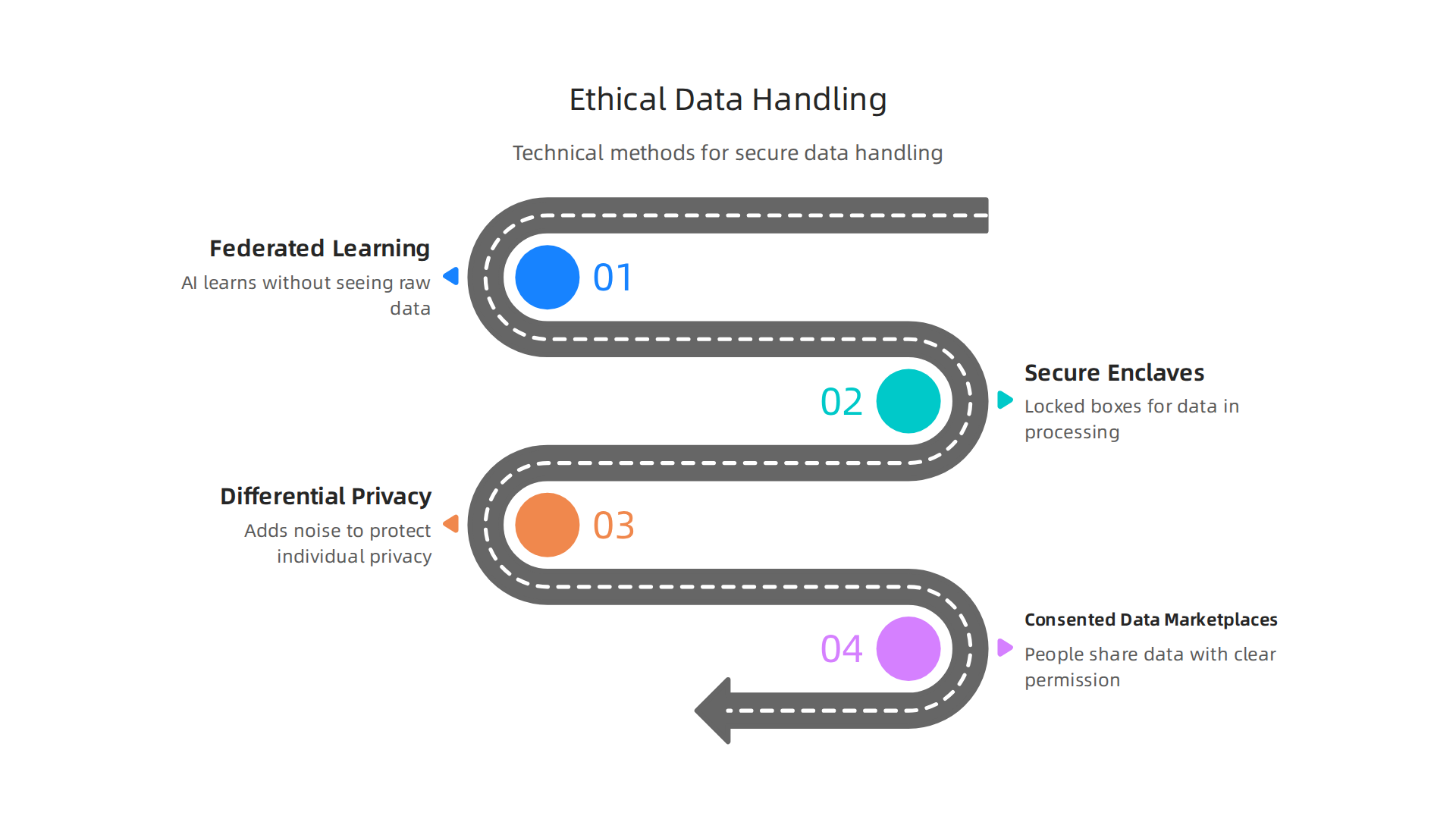 * **Federated Learning:** This is a clever way for AI to learn without ever seeing all the raw data in one central spot. Instead, the AI model goes to where the data lives, learns from it there, and then brings back only what it learned, not the data itself. This helps keep personal information private while still making the AI smarter. It's like learning from many different teachers without any student papers leaving their schools. This method lets AI models train together without sharing sensitive data directly, which is great for privacy, as IBM explains in their overview of [private federated learning](https://community.ibm.com/community/user/ai-datascience/blogs/nathalie-baracaldo1/2019/11/15/private-federated-learning-learn-together-without). * **Secure Enclaves:** Think of these as super-secure, locked boxes inside a computer's processor. Data can be put into these enclaves, used for AI tasks, and then taken out, all without anyone outside the enclave being able to peek in. This keeps the data safe even if other parts of the computer are not. * **Differential Privacy:** This technique adds a tiny bit of "noise" or random changes to data. It's done in a way that makes it very hard to figure out details about any single person in the data, but the overall patterns for a large group stay clear. This helps protect individual privacy while still allowing for useful data analysis, supporting [fair data principles](https://deangrey.org/weblish-blogs/ethical-electronic-data-gathering-and-retrieval-is-the-only-fix-for-ai-data-crisis). * **Consented Data Marketplaces:** These are places where people can choose to share their data for specific uses. They give clear permission for how their data can be used, knowing what will happen to it. This makes sure that data used by an AI powered content creation platform is collected with full agreement, leading to more trustworthy [AI to human](https://deangrey.org/weblish-blogs/how-ethical-data-analysis-builds-trust-in-ai) interactions. Beyond these technical patterns, there are also important steps for how companies operate to keep data safe: * **Data Contracts:** These are agreements that clearly state how data will be used, who can access it, and for what purpose. They help make sure everyone involved understands the rules from the start. * **Provenance Tracking:** This is like having a detailed history book for every piece of data. It tracks where the data came from, who used it, and what changes were made over time. This helps to make sure that data used by AI isn't some [faceless AI tool](https://deangrey.org/weblish-blogs/secure-your-cloud-collaboration-platform-against-ai-bottlenecks-and-synthetic-drift) but has a clear, trustworthy past. * **Versioning:** Just like saving different drafts of a document, versioning means keeping track of different versions of data and AI models. If something goes wrong or needs to be checked, you can go back to an earlier version. This also helps in understanding how data or models change over time, and a YouTube video explains this well in terms of [data drift versus concept drift](https://www.youtube.com/watch?v=r4RWj8kpYFw). * **Access Controls:** These are rules that limit who can see or use certain data. Only people with the right permissions can get to the data they need for their content workflows. This is a basic but very important part of keeping data secure. By putting these technical and operational steps in place, organizations can ensure that their AI systems, including any AI powered content creation platform, use data responsibly and safely. This builds a strong foundation of trust and protects privacy for everyone. Once systems for handling data are carefully put in place, the next big question is: how do we know they are actually working? It is not enough to just have good rules and technical setups. To truly build trust and make sure an AI powered content creation platform helps people, we need to measure its impact.  This means looking at certain key performance indicators, or KPIs, to see if things are going well. Here are the main kinds of things to measure: ### Trust Metrics These show how much people trust the AI system. Do users feel safe sharing their thoughts or data? Do they believe the information the AI gives them? Ways to measure this can include: * **User surveys:** Asking users directly about their trust levels. * **Feedback loops:** How often do users report issues or share praise? * **Engagement rates:** Are people interacting with the AI because they find it reliable? When an AI system feels like a [faceless AI tool](https://deangrey.org/weblish-blogs/secure-your-cloud-collaboration-platform-against-ai-bottlenecks-and-synthetic-drift), trust can be very low. Measuring trust helps make sure the AI is seen as a helpful partner. ### Information Quality Metrics This checks if the content made by the AI is true, helpful, and free from bad information. An AI powered content creation platform should always aim for high quality. * **Accuracy rates:** How often is the information correct? * **Relevance scores:** Is the content useful for the user's needs? * **Originality checks:** Is the content new and not just copied? * **Bias detection:** Is the content fair and not leaning too much one way? This helps ensure ethical data is used to earn user trust. ### User Well-being Indicators This is a very important part of making sure AI helps people live better lives. Does the AI make users feel more calm, connected, or informed? Or does it make them feel stressed, confused, or lonely? The Organization for Economic Co-operation and Development (OECD) highlights the need for governments to design AI systems that focus on the needs of all users, stressing a user-centered approach to [Governing with Artificial Intelligence](https://www.oecd.org/en/publications/2025/06/governing-with-artificial-intelligence_398fa287.html). * **Sentiment analysis:** Looking at how users talk about their experience. * **Usage patterns:** Are users spending healthy amounts of time, or too much? * **Self-reported impact:** Asking users how the AI affects their mood or daily life. This helps foster positive [AI to human](https://deangrey.org/weblish-blogs/how-ethical-data-analysis-builds-trust-in-ai) experiences. ### Compliance Measures These checks make sure the AI system follows all the rules and laws. In 2026, there are many new laws about AI that companies must follow. * **Audit logs:** Checking that all data use follows privacy rules. * **Regulatory adherence:** Making sure the AI meets specific government rules, such as those discussed in the [2026 AI Laws Update: Key Regulations and Practical Guidance](https://www.gunder.com/en/news-insights/insights/2026-ai-laws-update-key-regulations-and-practical-guidance). * **Security assessments:** Regularly testing the system for weaknesses. ### How to Use These Measures For these KPIs to truly work, a few things need to happen: * **Measurement Cadence:** You should check these numbers regularly. Some things, like security, might need daily checks. Others, like user trust, could be looked at monthly or every few months. * **Governance and Ownership:** Someone in the company needs to be in charge of each metric. They need to understand what the numbers mean and what to do if they are not good. This creates clear responsibility. * **Tie to Procurement and SLAs:** When you work with other companies or buy AI tools, make sure their contracts (procurement) and service agreements (SLAs) include these KPIs. This means they must also meet your standards for trust, quality, and user well-being. This way, everyone works towards the same goals and helps in [overcoming the data bottleneck and synthetic drift to build open future AI](https://deangrey.org/weblish-blogs/overcoming-the-data-bottleneck-and-synthetic-drift-to-build-open-future-ai). By using these clear ways to measure, organizations can make sure their AI powered content creation platform is not just smart, but also good for people and trustworthy.Summary
This article explains how AI-powered content creation platforms work and why ethical data and strong governance are essential to keep their outputs trustworthy. It describes the platform components—data ingestion, model training, content synthesis, CMS integration and feedback loops—and shows how poor or scraped data creates an "AI bottleneck" and leads to synthetic drift, which gradually degrades truthfulness. The piece outlines technical fixes like provenance metadata, content signing, watermarking and fact-checking pipelines, and operational controls such as human-in-the-loop workflows, escalation paths and audit trails. It also translates human-centric principles (consent, traceability, contestability, user agency, harm minimization) into product features and explains privacy-preserving techniques like federated learning, secure enclaves and differential privacy. The article covers governance needs for enterprises and public bodies—procurement standards, compliance audits and steering committees—and recommends KPIs to track trust, information quality, user wellbeing and regulatory compliance. Readers will come away with a practical roadmap to design, procure and measure AI content platforms that prioritize ethical data, reduce synthetic drift and earn user trust.
Related Blogs
No Similar Blogs found
