Home


Menu

Close

Best Cyber Security Certifications for 2026 A Data Driven Guide
Published:
June 22, 2026
Introduction
Every day, another headline warns about a data breach, a ransomware attack, or an AI-powered hack. You feel the pressure. You know the world needs more people who can stop these threats. But where do you start? How do you prove to an employer you can actually do the job?

That's where cyber security certifications come in. They are the fastest way to show companies you have real, tested skills. And right now, the demand for certified professionals is exploding.
The global market for cyber security certifications is expected to grow from roughly $3.98 billion in 2024 to over $8 billion by 2030, according to the latest Cybersecurity Certification Market Report 2024-2030. That is huge growth. Companies are spending more because they have to. The threats keep getting worse, and the rules keep getting stricter.
Here is the hard truth the data shows: there is a global shortage of over 3.5 million cybersecurity experts. At the same time, a recent study found that 89% of IT decision-makers prefer to hire candidates with professional certifications over those with traditional degrees alone. You can read more about this shift in the Why Cybersecurity Certifications Are Now a Business Imperative report.
Certifications are no longer just a nice extra on your resume. They are a trust signal. Employers, clients, and even insurance companies look for them before doing business. If you want to work as an intelligence analyst, pursue cybersecurity awareness training programs, or land one of the growing ai specialists jobs, the right certification is your ticket in.
But with so many options, it is easy to feel lost. Should you get a general cert or specialize? What is actually worth your time and money in 2026?
This guide takes a data-driven look at the best cyber security certifications for 2026. You will learn how to pick the right one based on your goals, how long it takes to prepare, and what the real costs are. No fluff. Just clear, practical advice to help you move forward.
Let's break it down.
Why Cybersecurity Certifications Matter in 2026
You might wonder if certifications are really that important. Here is the truth: in 2026, they are not just a nice bonus. They are often a requirement.
First, certifications build trust. When you hold a recognized credential, employers know you have proven your skills through a tough exam. Clients, partners, and even cyber insurance companies look for certified teams before signing contracts.

If your organization handles sensitive data, having certified staff can make the difference between winning a deal and losing it.
Regulations are also driving this shift. Frameworks like NIST, ISO 27001, and government contracts often require organizations to have certified professionals on their teams. Without the right credentials, companies cannot prove they meet these standards. The increasing complexity of rules around data privacy and security is pushing more businesses to demand certified workers. As one market report explains, the Rising demand for certified cybersecurity professionals is being fueled by growing cyber threats and stricter regulations.
The skills gap is another big reason certifications matter. Even though more people are entering the field, the gap between open jobs and qualified workers stays wide. This means companies are fighting over certified talent. If you hold a respected credential, you become a top candidate for roles like intelligence analyst or one of the growing ai specialists jobs. Employers know you can hit the ground running.
Certifications also support broader security efforts. Many organizations invest in cybersecurity awareness training programs for their employees. Having a certified leader who understands both technical skills and human behavior makes those programs much more effective. In fact, Cybersecurity hiring and compliance expectations in 2026 continue to rise, with companies prioritizing candidates who can handle cloud security, AI risks, and incident response.
In short, certifications are no longer optional. They are your proof that you have what it takes to protect systems, data, and people. They open doors to better jobs, higher pay, and more trust from everyone you work with.
Overview of Top Cybersecurity Certifications for 2026
Now that you see why credentials matter, let's break down the most recognized cyber security certifications for 2026. Choosing the right one depends on your experience level and career goals. Some certifications open doors to entry-level roles. Others signal that you are ready for leadership.
Foundational Certification: CompTIA Security+
For anyone new to the field, CompTIA Security+ is the starting point most employers look for. It covers the basics of risk management, threats, vulnerabilities, and defense techniques. Many government contractors and federal jobs require it because it meets the DoD 8140 framework. As one career guide notes, Security+ is "the most recognized baseline" and pairs well with IT experience.
If you are coming from IT support or another technical role, Security+ gives you a solid foundation. It typically takes one to three months to prepare, and the exam costs between $400 and $700. After earning it, you can apply for roles like security analyst or junior cybersecurity specialist. It also sets you up for more advanced certs later.
The Gold Standard for Leadership: CISSP
The Certified Information Systems Security Professional (CISSP) from ISC2 is widely seen as the gold standard for senior security roles. Security managers, architects, and consultants all pursue this credential. It covers eight domains including security and risk management, asset security, and software development security. Many job postings for leadership positions list CISSP as required or strongly preferred.
According to Forbes, CISSP is one of the most in-demand certifications in the U.S. cybersecurity job market. The exam costs about $749, and most people spend three to six months preparing. Once you hold it, you can step into roles like security architect or chief information security officer.
Management and Governance: CISM
If your path leans toward management rather than deep technical work, the Certified Information Security Manager (CISM) from ISACA is a strong choice. CISM focuses on governance, risk management, and compliance. It fits well if you want to lead a security team or oversee a company's security strategy.
CISM is often compared with CISSP, but the two serve different purposes. CISSP covers both technical and management topics broadly. CISM drills down into the management side. Career guides for 2026 highlight that governance-focused certifications like CISM have a talent shortage, meaning less competition for jobs.
Offensive Security and Ethical Hacking: CEH and Beyond
For those drawn to offensive security, the Certified Ethical Hacker (CEH) from EC-Council is a popular middle step. It teaches you how to think like a hacker so you can find weaknesses before attackers do. CEH is ideal for roles like penetration tester or red team member. The cost is higher — between $1,200 and $2,500 — and it usually takes two to four months to prep.
More advanced offensive certs include the Offensive Security Certified Professional (OSCP), which is known for a hands-on, grueling exam. And GIAC certifications like GCIH (incident handling) are well respected in technical circles.
How to Choose Your Path
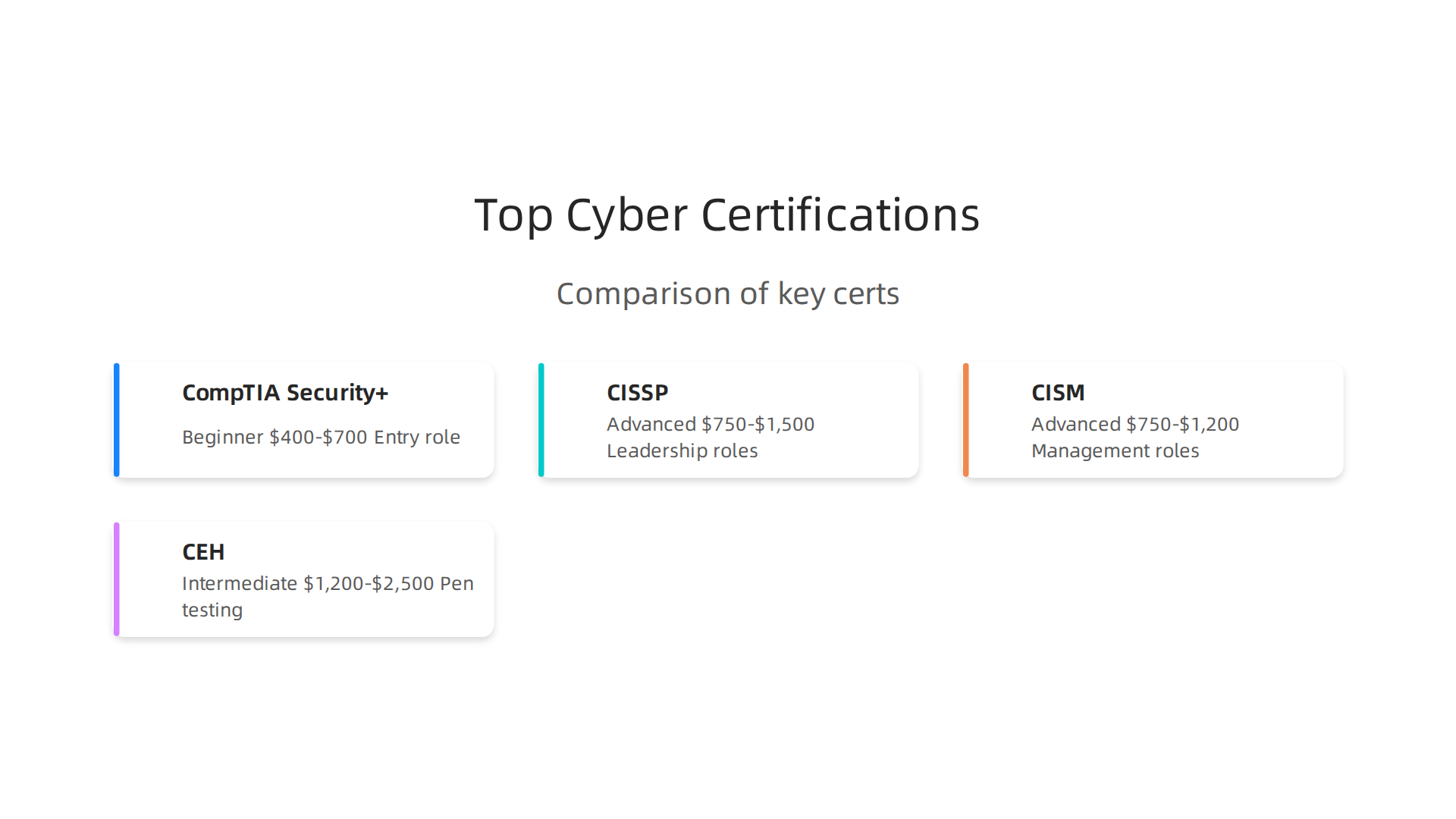
Here is a quick comparison of the key certifications mentioned:
| Certification | Level | Cost Range | Best For |
|---|---|---|---|
| CompTIA Security+ | Beginner | $400 to $700 | Starting out in cybersecurity |
| CISSP | Advanced | $750 to $1,500 | Security leadership roles |
| CISM | Advanced | $750 to $1,200 | Security management and governance |
| CEH | Intermediate | $1,200 to $2,500 | Ethical hacking and penetration testing |
If you are just starting, get Security+ first. If you already have experience and want to move into management, go for CISSP or CISM. If you love breaking things and finding bugs, CEH or OSCP is your path.
Each credential builds on the last. You do not have to pick one and stop. Many professionals stack certifications over time to grow their skills and value.
Vendor-Neutral vs. Vendor-Specific Certifications: Which Path Is Right for You?
So you have looked at the big names like CISSP and CISM. But there is another big choice to make. Should you go with a general, vendor-neutral certification? Or should you pick one that is tied to a specific company's technology? This is a common fork in the road for anyone chasing cyber security certifications in 2026.
Vendor-neutral certifications teach you principles that work anywhere. Think of them as a universal language for security. CISSP, CISM, and CompTIA Security+ are great examples. They cover concepts like risk management, governance, and defense strategies that apply no matter what tools or platforms a company uses. If you want to be a security leader or a consultant who works with many different clients, these are a strong foundation. According to a leading expert guide on the Best Cybersecurity Certs for 2026, vendor-neutral options build a broad base of knowledge that transfers across environments.
Vendor-specific certifications go deep into one ecosystem. The most popular ones in 2026 are for cloud platforms like Amazon Web Services (AWS), Microsoft Azure, and Google Cloud. For example, the AWS Certified Security Specialty or the Microsoft SC-900 are highly valued if you plan to work in a company that uses those specific tools. These certs show you know the exact security settings, services, and best practices for that platform. The Forbes list of the 15 Best Cybersecurity Certifications In 2026 highlights that cloud security skills are in high demand. So if your dream job is to secure a cloud-based company, a vendor-specific cert might be the smart move.
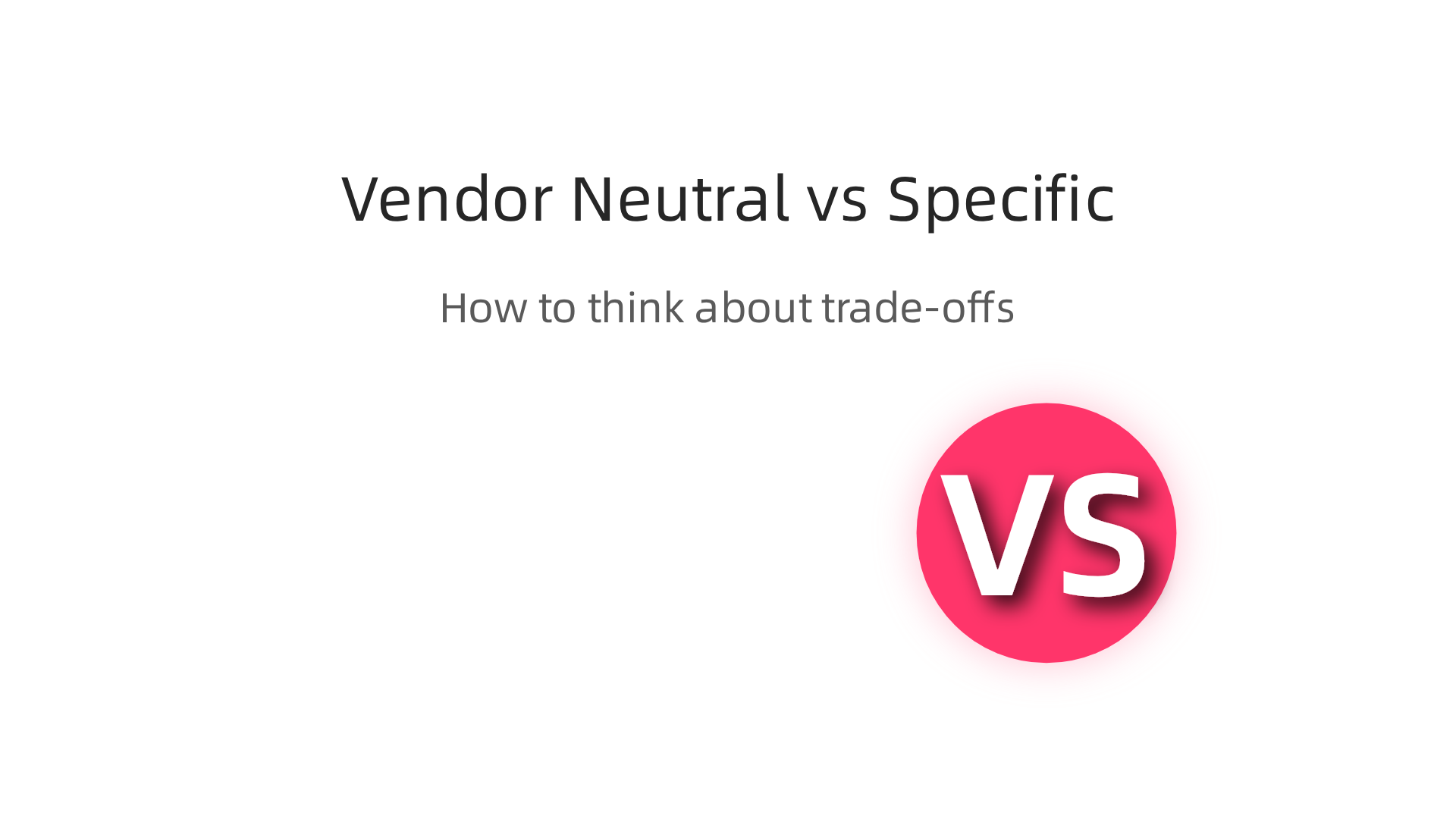
How to Think About the Trade-Off
| Type | Main Advantage | Best Career Fit |
|---|---|---|
| Vendor-Neutral | Works everywhere, good for broad strategy | Leadership, consulting, management |
| Vendor-Specific | Deep expertise in one platform | Cloud security, specialized tech roles |
The Smart Path: Stack Them Both
You do not have to pick one and stay stuck there. Many of the most successful professionals combine both. Start with a vendor-neutral cert like Security+ to get the foundation. Then add an AWS or Microsoft cert to specialize. This combo makes you flexible and deeply skilled. A 2026 career guide on Choosing a Cybersecurity Certification in 2026 encourages professionals to stack credentials for the biggest impact.
Think about the roles you want. For AI specialists jobs in security, vendor-specific certs on AI cloud platforms are becoming crucial. For roles like intelligence analyst, a vendor-neutral cert often fits better because it teaches broad analytical and risk assessment skills. Also, do not forget that cybersecurity awareness training is a key part of many governance and compliance areas, which are typically covered by vendor-neutral certs like CISM.
The best answer is usually not one or the other. It is a strategic mix that matches your career path.
How to Choose the Right Certification for Your Career Path
You have looked at the big names and figured out vendor-neutral versus vendor-specific. Now comes the hardest part: picking the one that actually fits your future job. Every certification path looks different depending on whether you want to be an analyst, an engineer, an architect, an auditor, a manager, or a Chief Information Security Officer (CISO). The right cyber security certifications for you depend on the role you are chasing.
Match the Certification to the Job Role
Different jobs need different skills. Here is a simple way to connect common roles with their most valued certs:
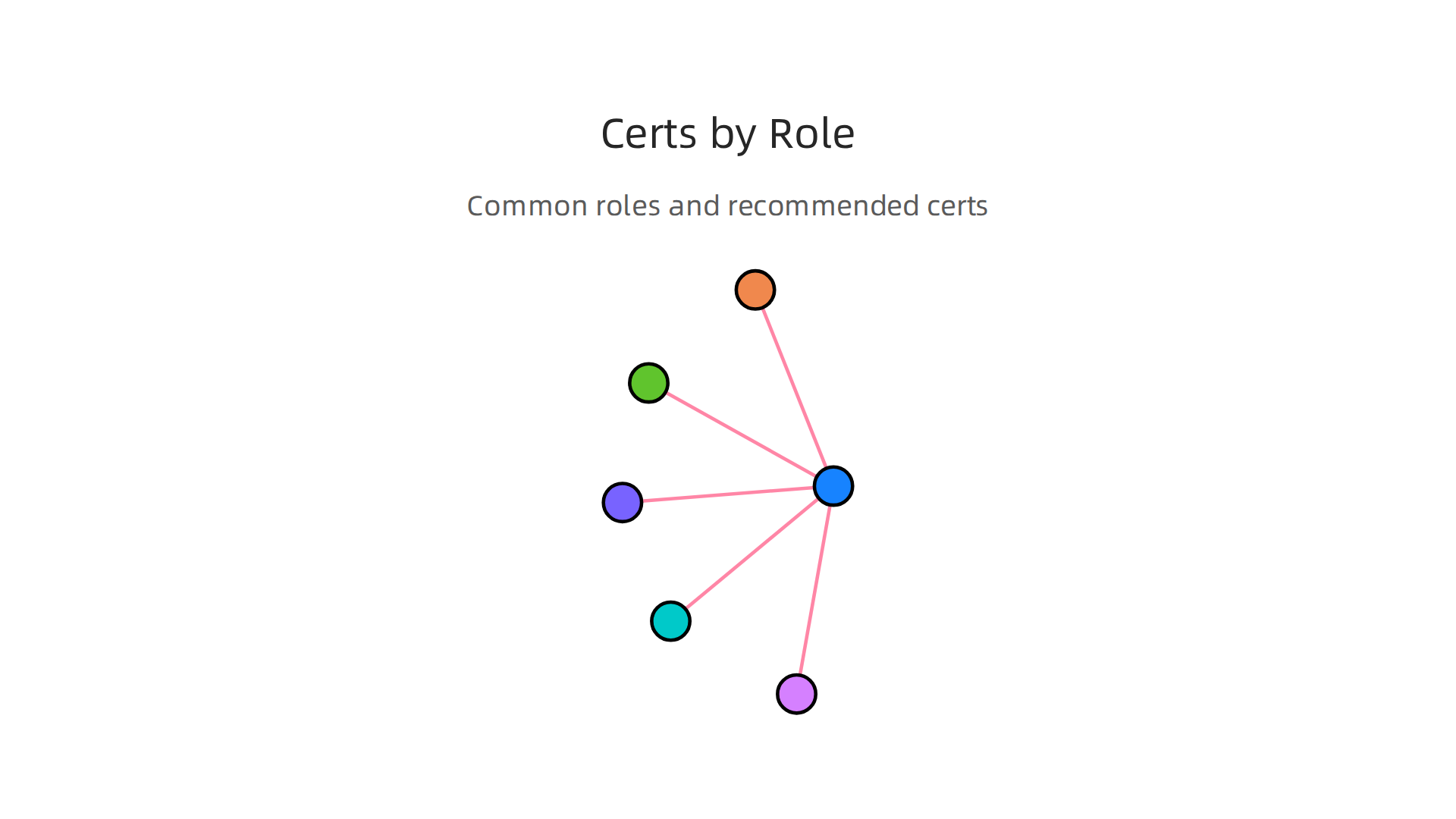
- Security Analyst: Start with CompTIA Security+ to get the basics. Then move to CySA+ for threat detection skills. The CompTIA Cybersecurity Career Pathway lays out this exact progression.
- Security Engineer: You need deeper technical knowledge. CISSP or vendor-specific cloud certs like AWS Certified Security Specialty are common choices.
- Security Architect: This role designs the whole security system. CISSP and the ISC2 CCSP (for cloud) are strong picks. The Cybersecurity Certification Roadmaps Guide can help map out the steps.
- IT Auditor: The ISACA CISA certification is the gold standard here. It teaches you how to verify controls and find gaps.
- Security Manager or CISO: These leadership roles need big-picture thinking. CISM and CISSP are the top choices because they cover governance, risk, and compliance.
- Incident Responder: Look at the EC-Council Certified Ethical Hacker (CEH) or the GIAC Certified Incident Handler (GCIH) for hands-on response skills.
The ISC2 guide on Cybersecurity Career Paths emphasizes that self-assessment is the first step. Ask yourself what kind of work excites you most: analyzing data, breaking into systems, or planning strategy.
Consider Prerequisites, Cost, and Time
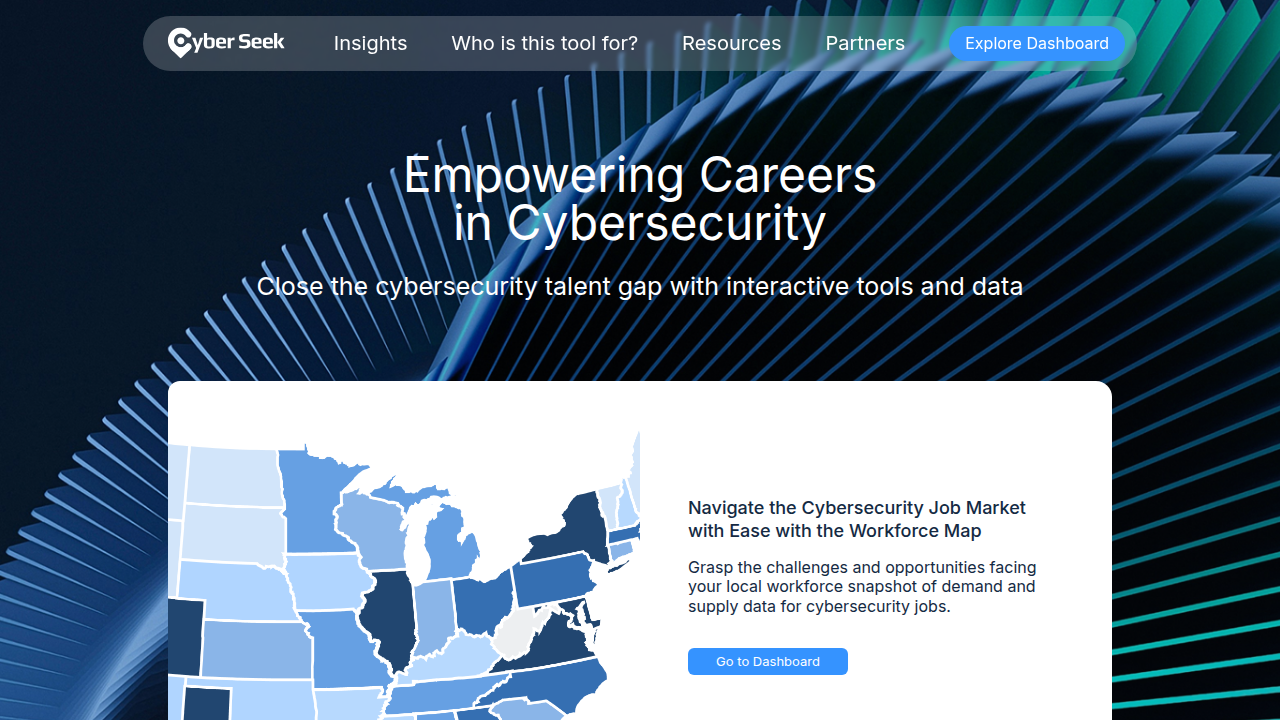
Every certification comes with its own set of requirements. Some, like CompTIA Security+, have no formal prerequisites. You can take the exam with self-study. Others, like CISSP, demand five years of paid work experience before you can become fully certified. The CyberSeek Cybersecurity Career Pathway is a free tool that shows what level of experience employers typically ask for each role.
Cost matters too. Entry-level certs like Security+ cost a few hundred dollars. Advanced certs like CISSP or CISM can run over a thousand dollars for the exam alone, plus training materials. Time commitment varies from a few weeks of study to many months. Plan your budget and schedule before committing.
Align with Long-Term Goals and Industry Demand
Think about where the cybersecurity field is heading in 2026. Cloud security, artificial intelligence, and identity management are growing fast. If you see yourself working in AI security, look for certs that cover AI risk, like CompTIA SecAI+, or vendor-specific cloud certs. For AI specialists jobs, these credentials open doors.
If you prefer analyzing data and spotting patterns, the intelligence analyst path fits well. Start with Security+ and then add CySA+ or even the Certified Threat Intelligence Analyst (CTIA) from EC-Council. These focus on reading logs, understanding threats, and reporting.
Don't forget that cybersecurity awareness training is also a growing field. If you enjoy teaching others and building security culture, certs like CISM or the ISACA Certified in Risk and Information Systems Control (CRISC) can prepare you for governance roles that include awareness programs.
The NIST Cybersecurity Career Pathway Resources provides a detailed breakdown of skills needed at every level. Use it as a roadmap to see what comes next after your first certification.
The best certification for you is the one that lines up with your daily work preferences, your current experience level, and where you want to be five years from now. Take time to research each option, talk to people in the roles you want, and stack your certs step by step.
Exam Preparation Strategies and Resources
You have picked the perfect certification. Now comes the real work: passing the exam. A solid study plan makes all the difference. People who use structured study methods and practice exams pass at a much higher rate. It is not about luck. It is about preparation.

Build a Structured Study Plan
Start by looking at the exam objectives. Every certification body publishes a detailed list of what the test covers. Use that list to build your schedule. Break the material into small chunks. Study one domain at a time. Give yourself at least four to six weeks for entry-level certs and two to three months for advanced ones. Block out study time on your calendar just like a work meeting. Consistency beats cramming every time.
The NICE Framework can help you connect exam topics to real job skills. The article on Navigating Your Cybersecurity Career Path with the NICE Framework shows how to identify the competencies each role requires. When you know the skills employers want, you can focus your study on what matters most.
Use the Right Study Resources
Official study guides are a safe bet. They are written by the certification body and cover exactly what the exam tests. Book vendors like Sybex and Pearson also publish third-party guides that are well reviewed. Many people combine a study guide with video courses from platforms like Udemy, Pluralsight, or LinkedIn Learning. Boot camps are another option. These are intensive, instructor-led sessions that run over a few days or a week. They work well for people who need structure and hands-on guidance.
Practice exams are a must. They show you the question style and point out your weak spots. Use them early to guide your study and again near the end to check your readiness. Most official certification sites sell their own practice tests. Third-party sites like ExamCompass or ProProfs offer free options too.
Tap into Community Support
You do not have to study alone. Online communities like Reddit's r/CompTIA, r/cissp, or TechExams.net are full of people preparing for the same exams. Study groups on Discord or LinkedIn let you ask questions, share tips, and stay motivated. Real world advice from people who just passed the test is often more practical than any book.
Even if your career path does not focus on cybersecurity awareness training, the study process for governance certs like CISM or CRISC will teach you how to build security culture. That knowledge helps in any role where you work with non technical teams.
Remember to take care of yourself too. Get enough sleep, eat well, and take breaks. A tired brain does not retain information well. You have already chosen the right cyber security certifications for your goals. Now it is time to earn them.
Maintaining Your Certification: Continuing Education and Renewal
Passing your exam is a big win. But it is not the finish line. Most cyber security certifications require ongoing work to stay valid. You earn a credential, and then you keep it alive through continuing education. Let us look at how that works.
What Continuing Education Looks Like
Almost every major certification body asks you to earn Continuing Professional Education (CPE) credits. These credits prove you are staying current with new threats, tools, and best practices. For example, CISSP holders need 120 CPE credits every three years. You must earn at least 40 credits each year to stay on track. This detailed Cybersecurity Certifications Reference breaks down the exact requirements for CISSP, CISM, CEH, and CompTIA. It is a great resource to bookmark after you pass your exam.
CISM follows a similar pattern. You need 120 hours of continuing education over three years. The CISM certification requirements for 2026 page explains that you also need a minimum of 20 hours each year. Missing that yearly minimum puts your credential at risk.
CompTIA certifications like Security+ are a bit different. They use Continuing Education Units (CEUs). You need 50 CEUs every three years. There is also an annual maintenance fee of about 50 dollars.
Renewal Cycles and Fees Vary
Renewal cycles usually last one to three years. CompTIA, CISSP, and CISM all run on a three-year cycle. But the fees are different. CompTIA charges a yearly maintenance fee. ISACA and (ISC)² charge a larger fee every three years when you renew. Always check the official site for your specific cert so you do not get surprised by a bill.
What Happens If You Let It Lapse
Here is the honest truth. If you do not meet your CPE requirements, your certification can be suspended or revoked. That is a big deal. Employers check for active credentials. A lapsed certification can slow down job applications, promotions, or contract renewals. It can even end your eligibility for certain roles, especially in government or defense where certifications are mandatory.
How to Earn Your Credits Without Stressing
You do not need to sit in a classroom for hours. CPE activities are flexible. You can earn credits by attending industry conferences, watching webinars, completing online courses, publishing articles, teaching others, or even mentoring. Some bodies also give credit for hands-on labs and approved volunteer work. The key is to spread your learning across the three-year cycle. Do not wait until the last six months. Small, steady effort works much better.
Earning CPEs also helps you grow your skills in areas like cybersecurity awareness training. That knowledge is useful whether you end up as an intelligence analyst or in one of the new ai specialists jobs popping up everywhere. Staying certified keeps you relevant in a fast moving field.
A Quick Look at Common Renewal Requirements
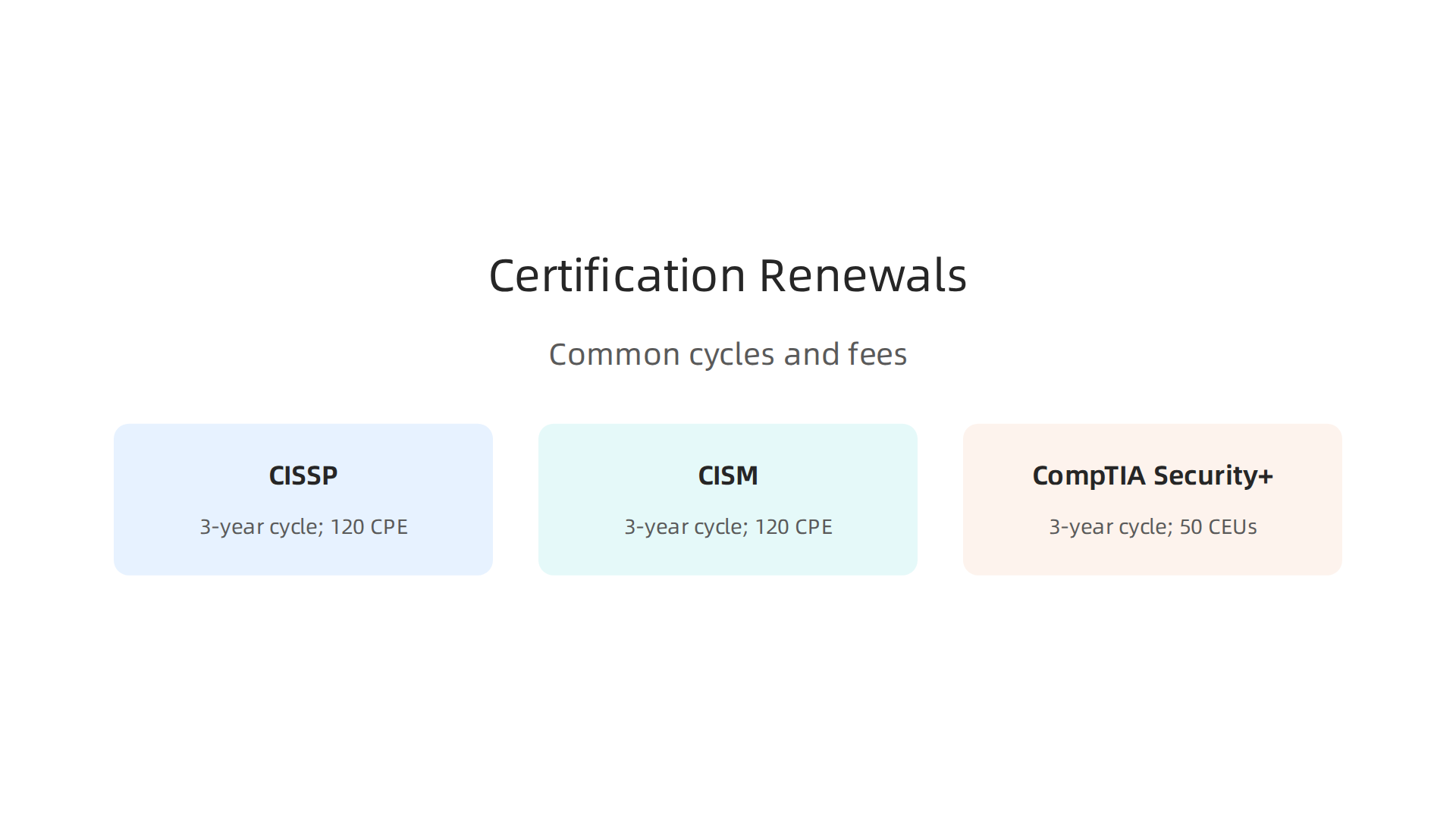
| Certification | Renewal Cycle | CPE or CEU Requirement | Typical Fee Structure |
|---|---|---|---|
| CISSP | 3 years | 120 CPE credits (min 40 per year) | Pay fee at renewal |
| CISM | 3 years | 120 CPE hours (min 20 per year) | Pay fee at renewal |
| CompTIA Security+ | 3 years | 50 CEUs | Annual maintenance fee |
For a full comparison of popular credentials including their renewal rules, check out the 10 Must-Have Cybersecurity Certifications In 2026 list. It covers CISSP, CISM, CEH, and CompTIA side by side.
Your certification is an investment. Treat it like one. Plan your CPE activities early, track your credits, and pay your fees on time. That way your cyber security certifications stay active and your career keeps moving forward.
The Role of AI and Emerging Tech in Cybersecurity Certifications
The cybersecurity world does not sit still. Every year brings new threats, and right now artificial intelligence is driving the biggest changes. Attackers use AI to launch smarter phishing campaigns, create deepfakes, and automate malware. Defenders need to understand these tools to fight back. That is why many cyber security certifications are updating their exam blueprints to include AI topics.
How Certifications Are Adapting
Major certification bodies like (ISC)², ISACA, and CompTIA are weaving AI into their domains. For example, the CISSP now covers AI security in its software development and risk management domains. The CISM certification addresses AI governance and risk. Even entry-level certs like Security+ include questions about AI-driven threats. This shift means you cannot ignore AI if you want to stay certified and effective.
New dedicated certifications are also appearing. The Cloud Security Alliance (CSA) offers an AI Security certification focused on securing AI systems. These credentials help professionals prove they understand how to protect machine learning models, manage AI data pipelines, and respond to AI-specific incidents. A good resource to see how all these certs compare is the cybersecurity certifications for IT managers in 2026 guide, which explains which certs now cover emerging tech.
Ethics and AI in Security Operations
AI is not just a technical topic. It raises hard ethical questions. Who is responsible when an AI system makes a wrong security decision? How do you ensure AI tools do not introduce bias into threat detection? Certification bodies are adding ethics modules to address these issues. For instance, ISACA's CISM requires adherence to a code of ethics that now includes guidance on AI use. Understanding these ethical frameworks is becoming a key part of cybersecurity awareness training for teams. As AI becomes more common in security operations, these ethical skills will set you apart.
What This Means for Your CPE Plan
Remember those CPE credits we talked about? AI is a great topic to use for your continuing education. You can take webinars on AI security, attend conferences focused on machine learning threats, or complete online courses from (ISC)² or ISACA. These activities earn you credits while making you more valuable in roles like intelligence analyst or in the growing number of ai specialists jobs opening up across industries. Many employers now expect their security staff to understand AI risks, so building this knowledge helps your career as much as your certification. To find approved training that covers AI topics, check the CompTIA Security+ CEU renewal options page. It lists many activities that count toward renewal, including those related to emerging tech.
Staying current with AI is no longer optional for cybersecurity professionals. Whether you go for a dedicated AI security cert or just update your existing knowledge, the effort will pay off. Your cyber security certifications will stay relevant, and your skills will match the threats of tomorrow.
Real-World ROI: Salary, Promotion, and Career Advancement
When you invest time and money into earning a certification, you want to know it will pay off. The good news is the numbers speak for themselves. Certified cybersecurity professionals earn noticeably more than their peers who lack credentials. And the benefits go beyond the paycheck.
The Salary Bump Is Real
Industry data shows that holding a relevant certification can boost your income by 10 to 20 percent compared to someone with similar experience but no certification. For some advanced credentials, the gap is even wider. According to the 2026 cybersecurity salary guide from Redbud Cyber, a CISSP certification adds $25,000 to $35,000 to your annual salary on average. A CISM brings $20,000 to $28,000 extra. Even an entry-level Security+ can give you a $5,000 to $10,000 lift. These are not small numbers. Over a few years, that extra income more than covers the cost of the exam and study materials.
Some professionals have found that combining the right certifications with strategic career moves can quickly double their earnings. The resource How to Double Your Cybersecurity Salary in Under 24 Months explains that certified professionals often see salary increases of 20 to 40 percent, especially when they switch companies or move into specialized roles.
Promotions Come Faster
Certifications do more than boost your paycheck. They signal to employers that you have the knowledge and drive to handle bigger responsibilities. Many companies list certifications as a requirement for senior roles like security architect, lead analyst, or manager. Without the right credential, you might not even get an interview.
Entry-level certifications help you land your first security job. Mid-level certs like the CySA+ or CEH qualify you for roles such as threat hunter or penetration tester. Advanced certs like CISSP or CISM are often expected for management positions, including roles like intelligence analyst or security director. As threats grow more complex, employers trust certified professionals to lead the response.
Proof of Commitment
When a hiring manager sees a certification on your resume, it shows you took the time to learn and pass a tough exam. It proves you are serious about the field. In a market where new ai specialists jobs appear every month, having a certification helps you stand out. It also makes it easier to move into emerging areas like AI security or cloud security, where demand is high but qualified people are scarce.
The bottom line: certifications pay for themselves many times over. Whether you are aiming for a promotion, a higher salary, or a new career direction, the ROI of a good cyber security certifications strategy is hard to beat.

Summary
This guide explains which cybersecurity certifications matter in 2026, why employers increasingly require them, and how to pick the right credential for your career goals. It reviews top certifications — from entry-level CompTIA Security+ to leadership-focused CISSP and CISM, and technical offensive certs like CEH and OSCP — and compares vendor-neutral versus vendor-specific paths. The article outlines timelines, exam costs, prerequisites, and practical study strategies, plus how to maintain credentials through continuing education (CPE/CEU). It also covers how AI and emerging tech are changing exam blueprints and adds advice on stacking certs for maximum impact. Finally, it highlights real-world ROI: typical salary bumps, faster promotions, and why certifications are now a trust signal for employers, insurers, and regulators.
Related Blogs
No Similar Blogs found
