Home


Menu

Close

AI Tools for Product Managers Build Trust Halt Synthetic Drift
Published:
August 14, 2026
Why AI Must Serve Trust, Truth, and Human Flourishing — Not Just Engagement
In 2026, many companies are rushing to use AI, but they face big problems. One main issue is called the "AI bottleneck." This happens when AI systems don't have enough good, real, and private information to learn from. Instead, they often use data that has been gathered from public places, which can be twisted or changed. This leads to a bigger problem known as "synthetic drift."
Think of synthetic drift like making a photocopy of a photocopy. Each new copy gets a little less clear, a little further from the original. When AI is trained on data that is already a "copy" or even made up by other AIs, its outputs can start to drift away from real facts and human truths. This is a serious concern, as experts warn that using synthetic data can cause AI models to "collapse" and lose touch with reality over time Synthetic Data and AI 'Model Collapse' - Transparency Coalition. It also makes people trust AI less, especially when it comes to important decisions. For instance, in healthcare, this drift can make AI miss rare but important patterns in patient data, making it less useful or even harmful The Risk of Interpretative Drift in Recursive Medical AI.
Many ai tools for product managers are built to get more people to click or spend time on a product. But what if these tools accidentally push people towards things that aren't true or don't help them in the long run? We see a rising mistrust in AI-driven choices because of this focus on just "engagement." It's like building a bridge that looks nice but isn't safe. Product managers need to think about more than just clicks; they need to ensure their AI helps people thrive.
This is where the real challenge lies for product leaders today. We need to move past simply boosting engagement numbers. The goal for ai tools for product managers should be to build trust, uphold truth, and support human well-being.

This article will show you clear ways to choose your ai tools for product managers, create data systems you can count on, and measure the real good your AI does. We will look at actionable frameworks that help product leaders guide their teams to build trustworthy AI that truly helps people, stops synthetic drift, and uses ethical data from the start. Making sure lightchain ai and other creative ai tools are grounded in ethical practices is key. To learn more about how to set up these kinds of data systems, you can check out our guide on building trustworthy AI combat synthetic drift with ethical data.
1. The AI Bottleneck & Synthetic Drift: What Product Leaders Must Know
The fast speed of AI in 2026 brings big challenges for many companies. A main problem is what we call the "AI bottleneck." This happens when AI systems do not have enough good, real, and private information to learn from.
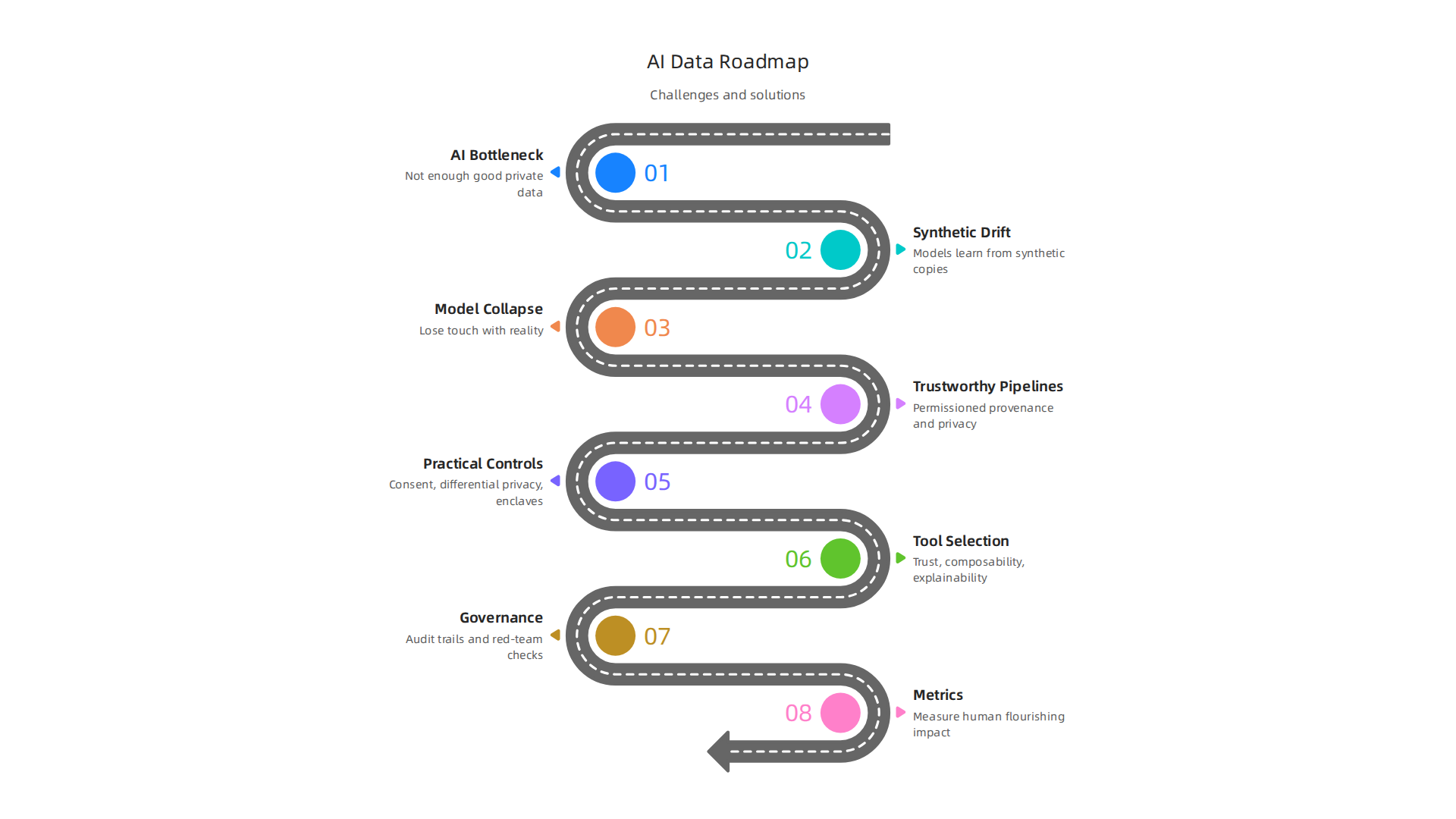
Instead, they often use data found in public places. This public data can sometimes be twisted or changed, which makes it less reliable.
This lack of good, original data leads to a bigger problem called "synthetic drift." Imagine you are trying to paint a picture of a tree, but you only have blurry photos of other paintings of trees, not the real tree itself. Each new painting made from those blurry photos will look less and less like a real tree. In the same way, when AI learns from data that is already a "copy" or even made up by other AIs, its outputs can start to move away from true facts and real human experiences. Experts warn that using too much synthetic data can even cause AI models to "collapse," making them lose touch with reality over time Synthetic Data for LLM Training: Decision Guide 2026.
This issue also makes people trust AI less, especially when it is used for important tasks. For example, trusting AI that learns from fake medical images could hide important details about real health problems. This kind of problem is called "interpretative drift" and it means the AI actively misses rare but important patterns, even if those patterns are common in the real world Synthetic data, synthetic trust: navigating data challenges in ... - PMC.
Many ai tools for product managers are built to get more people to click on things or spend more time using a product. But what if these tools accidentally push people toward things that are not true or helpful in the long run? When creative ai or an ai business plan generator uses data that has drifted from reality, it can make product choices that do not truly help people. This focus on just "engagement" creates a rising mistrust in AI-driven choices. It is like building a bridge that looks good, but is not safe to cross.
For product leaders today, the real challenge is clear. We must move beyond just making engagement numbers go up. The main goal for ai tools for product managers should be to build trust, stand up for the truth, and truly support human well-being. When data loses its connection to reality, it weakens the trust people have in AI products and the information they provide. This distortion of facts and human behaviors through digital systems is exactly what synthetic drift does. To truly build trustworthy AI that avoids these problems, it is important to understand and fix this data bottleneck. You can learn more about how to deal with these challenges in our guide on overcoming the data bottleneck and synthetic drift to build open future ai. Product managers need to make sure their AI helps people thrive, not just click.
To stop this problem, product leaders need to build strong ways to get and use data. This means creating "trustworthy data pipelines."

It is about making sure the information AI learns from is real, comes from the right place, and keeps people's privacy safe.
Permissioned Data and Provenance
First, let us talk about "permissioned data." This is information you use only after getting clear permission from the people it belongs to. Imagine if a creative ai tool needs to learn about how people interact with a new game. Instead of just looking at public online chats, you would ask players if their in-game actions can be used to improve the game. This direct permission makes the data much more real and trustworthy. It helps build ai tools for product managers that respect users and truly help them. To learn more about this, see Why Generative AI Assistants Need Permissioned Private Data to Avoid Synthetic Drift.
Next is "data provenance." This is like keeping a detailed history book for every piece of data. It tracks where the data came from, who touched it, and how it changed over time AI Data Provenance Strategy: Finalizing in 2026.

Why is this important? If an ai business plan generator gives you bad advice, you need to be able to look back and see if the data it learned from was faulty or changed. Knowing the data's story helps you trust the AI's outputs. In 2026, new rules like the OASIS Data Provenance Standards are helping companies track this information better Invitation to comment on DPS TC's Data Provenance .... This helps product teams ensure that their ai case study examples and other analytical outputs are based on solid ground.
Practical Controls for Product Teams
Product managers can use a few key tools and methods to make sure their data pipelines are strong:
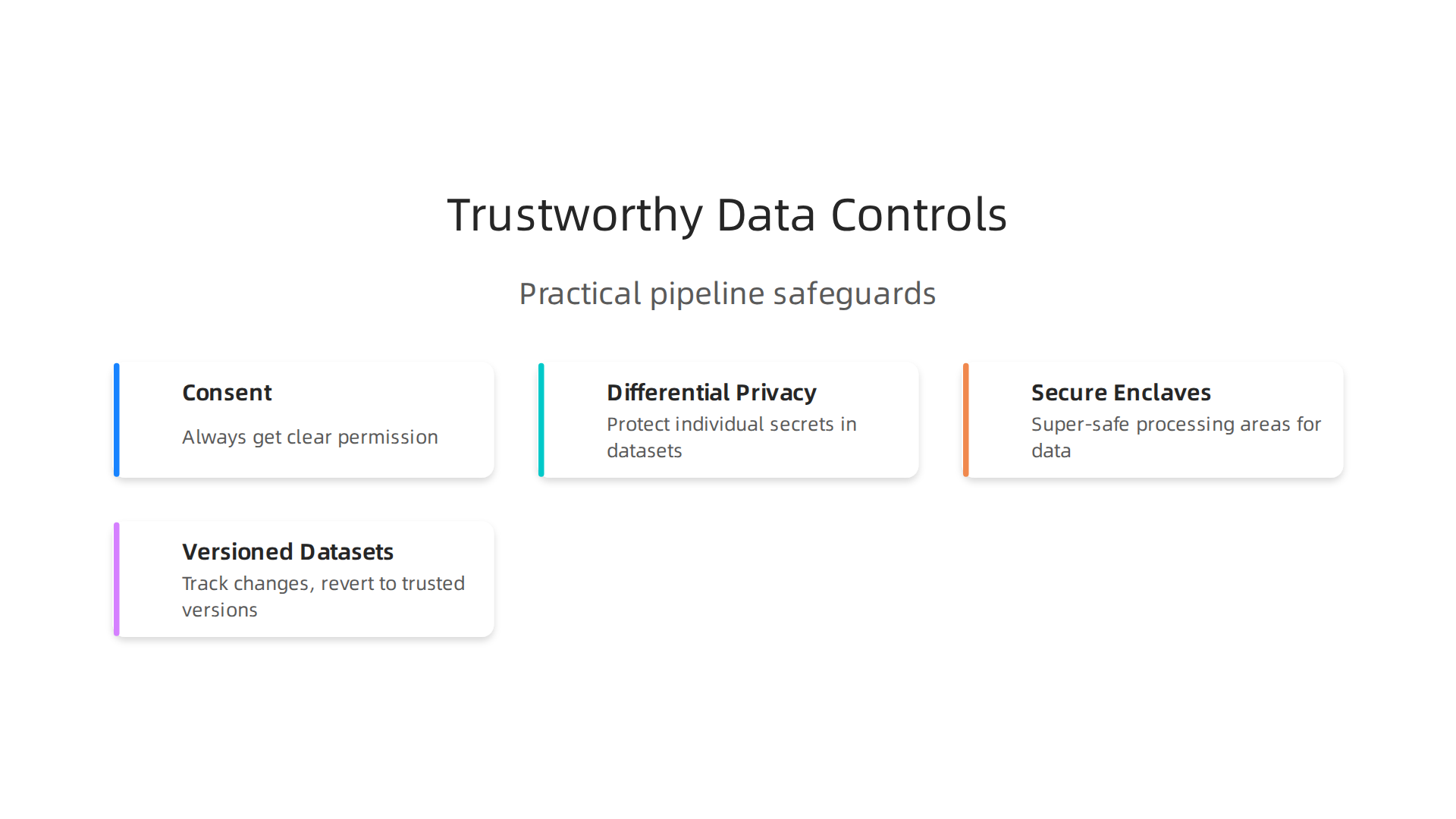
- Consent: Always get clear permission. This means telling people what data you are collecting, why you need it, and how you will use it. Make it easy for them to say yes or no.
- Differential Privacy: This is a smart way to mix data from many people so that no single person's details can be figured out, even while the AI can still learn overall patterns. It protects individual secrets in big datasets.
- Secure Enclaves: Think of these as super-safe, locked-down areas on computers where sensitive data can be processed without anyone outside being able to see it. It is like having a private room for your most important data work.
- Versioned Datasets: Just like you save different drafts of a document, you should save different versions of your data. This helps track any changes and lets you go back to older, trusted versions if needed. This is key for fixing mistakes and making sure your
lightchain aior other AI systems are always learning from the best possible information.
By using these steps, ai tools for product managers can move away from guessing and toward building real trust. This helps combat synthetic drift and ensures that AI helps people in truly meaningful ways, not just by chasing clicks. Ultimately, building strong data pipelines is about Building Trustworthy AI Combat Synthetic Drift With Ethical Data and making sure AI serves human well-being.
Now that we know how to build strong, trustworthy data pipelines, the next step is to choose the right AI tools to use with that data. It is not just about picking any tool. It is about finding the ones that fit your product needs, while still keeping trust and ethics at the front.
AI Tools for Product Managers: A Practical Selection Framework
In 2026, there are many ai tools for product managers out there. To pick the best ones, we need a smart way to look at them. Think of it like a map for choosing your tools. We can start by thinking about what part of the product's life cycle the tool will help with.
- Discovery: These tools help you understand what customers need and want. They can look at lots of feedback to find common ideas. For example, some AI can read through customer reviews and tell you what problems people talk about most. Tools like these might help a
creative aiteam brainstorm new features. - Experimentation: Once you have ideas, you need to test them. AI can help set up small tests and see what changes make a product better. This might involve A/B testing or trying out different versions of a feature.
- Personalization: These
ai tools for product managersmake products feel special for each user. They learn what a user likes and then show them things they might prefer, like recommended movies or products. - Measurement: After you launch something, you need to know how well it is doing. AI can track how users interact with your product and tell you if your changes are working. This can help you build an
ai case studyto show the impact of new features.
Many AI tools today fit into these roles, helping with everything from writing documents to analyzing user feedback Best AI Tools for Product Managers in 2026, by Workflow Stage | Blog.
Some tools are great for customer discovery, while others excel at roadmapping and prioritization 10 Powerful AI Tools for Product Managers in 2026 - G2.
When you are ready to pick specific ai tools for product managers, use this simple checklist:
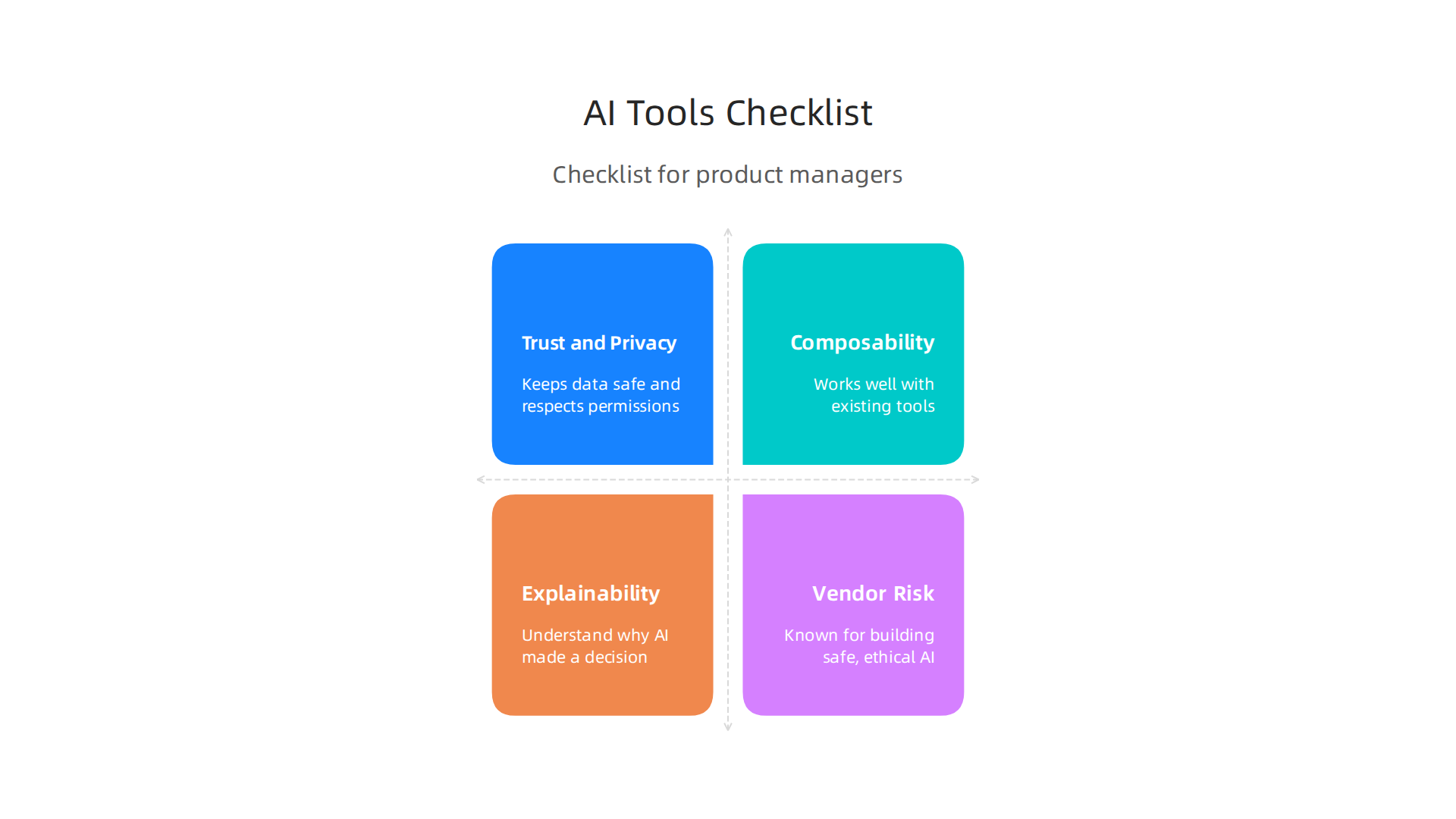
- Trust and Privacy Features: Does the tool keep data safe and respect user permissions? This is super important, as we learned before. A good tool will use permissioned data and show where its data comes from.
- Composability: Can the new AI tool work well with the tools you already use? It is like making sure new LEGO bricks fit with your old ones. You want tools that can connect and share information easily.
- Explainability: Can you understand why the AI made a certain suggestion or decision? If an
ai business plan generatortells you to focus on a new market, you should be able to see the data and logic behind that advice. This helps you trust the tool and explain it to others. - Vendor Risk Assessment: Who made the tool? Are they known for building safe and ethical AI? Look into the company's past work and how they handle data. Even for simple tools like a
lightchain aisolution, knowing the vendor's reputation matters.
By using this framework, product managers can make sure they are choosing ai tools for product managers that are not just powerful, but also align with strong values of trust and ethical data use. It is a smart way to evaluate AI tools with a framework for ethical data and trust, ensuring your AI strategy builds trust, which is becoming a trust first AI strategy becomes business imperative in 2026. This careful approach helps avoid problems like synthetic drift and leads to better products for everyone.
Now that we have chosen the right AI tools for our product needs, the next big step is to weave them into our product plans. This means putting AI ideas onto your product roadmap with care.

We want to make sure these AI projects are not just cool, but also helpful and trustworthy.
4. Integrating AI into Product Strategy and Roadmaps
Bringing AI into your product plans needs a smart approach. Think of it like a journey where you set clear goals, try things out, and have safety rules along the way. In 2026, many product managers are learning how to do this well.
Start with Clear Ideas and Tests
When you add an AI feature to your product roadmap, you should begin with a clear idea of what you want it to achieve. This is like a "hypothesis" or a smart guess. For example, "We believe using a new AI tool for product managers will help customers find products faster, which will make them buy more."
Every AI idea should be treated like a small experiment. You do not just launch it and hope for the best. You plan how you will test it, see if it works, and make sure it is safe. This means putting guardrails in place. Guardrails are like fences that keep the AI from going off track or doing things it should not.
For example, if you are using a creative ai tool to help users design things, your experiment might be: "If we give users AI design help, they will create more projects and spend more time on our app." The guardrail would be making sure the AI only suggests designs that are appropriate and do not steal from others.
Templates for Safe AI Rollouts
To make this easier, you can use simple templates for your AI projects.
- Minimum Viable Product (MVP) for AI: This is the smallest, simplest version of your AI idea that you can launch. It lets you test the core idea quickly without spending too much time or money. For example, a basic
ai business plan generatorthat creates outlines, instead of a full, complex plan. - Safety Checks: Before any AI feature goes live, it needs safety checks. These checks help prevent "synthetic drift." Synthetic drift is when AI starts to give out wrong or strange information because it was trained on bad or confusing data. You want to make sure your AI uses permissioned data and that its answers are clear and true.
- Rollout Plans with Human Oversight: Even with great
ai tools for product managers, humans still need to be in charge. Your rollout plan should include how people will watch over the AI. This means checking its work, making sure it is fair, and fixing problems. It is about keeping a human touch, even as AI helps more and more.
Measuring How Well AI is Doing
After your AI features are out there, you need to measure their success. This is not just about how many people use it, but also about how much they trust it and if it is helping them. Many companies are now looking at special metrics for AI products Evaluation Metrics for AI Products That Drive Trust.
Here are some things to measure:
- User Trust: Do people feel good about the AI's suggestions? Do they believe what it tells them? You can ask users directly or watch how they act. Measuring how users trust AI systems is very important for success How to Measure User Trust in AI Systems.
- Adoption Rate: How many users try the AI feature? More importantly, do they keep using it? High
ai case studysuccess stories often show high adoption and repeated use UX KPIs in AI Products: What to Measure Now. - Bias and Fairness: Is the AI fair to all users? Does it treat everyone equally? It is important to watch for any unfairness in what the AI does.
- Human Override Frequency: How often do people ignore or change what the AI suggests? If this happens a lot, it might mean the AI is not working as well as it should.
By planning carefully, testing often, and watching closely, you can add powerful ai tools for product managers to your products in a way that builds trust and truly helps your users. This careful work helps avoid problems like synthetic drift and ensures you are building trustworthy AI that improves everyone's experience.
After we put AI ideas into our product plans and test them with care, the next big step is to set up rules for the whole company. This is called governance, ethics, and compliance. It is like building strong fences around all your AI projects to make sure they are safe, fair, and follow all the rules. For big companies, this means having a clear plan for how all AI tools for product managers and other teams will be used in 2026.
5. Governance, Ethics, and Compliance: Enterprise Guardrails That Scale
You might remember we talked about "synthetic drift" and how AI can give wrong or strange information if not watched closely. To stop this from happening across an entire company, you need strong rules and ways to check the AI. This is where AI governance comes in. It is how organizations manage AI systems from start to finish, making sure they are approved, used, watched, and controlled correctly Enterprise AI Governance: Framework, Operating Model, and ....

Setting Up the Right Teams and Processes
Good AI governance starts with having the right people and the right steps in place.
- Model Risk Committees: These are groups of experts who look at how risky an AI model might be. They check for problems like bias or incorrect outputs before the AI is used widely.
- Ethics Review Boards: These committees make sure all AI uses are fair and respect people's privacy. They look at the ethical side of things, like if a new
creative aitool might accidentally create harmful content. - Cross-Functional Approval Workflows: This means that when a new AI feature is ready, many different teams must say "yes" before it goes live. This could include legal, security, and product teams. It helps ensure everyone agrees the AI is ready and safe. Setting up clear ownership and cross-functional boards helps avoid confusion and delays 7 AI Governance Best Practices for Enterprise AI Teams.
Rules and Checks for Your AI
Beyond the teams, companies need clear rules and ways to check their AI systems.
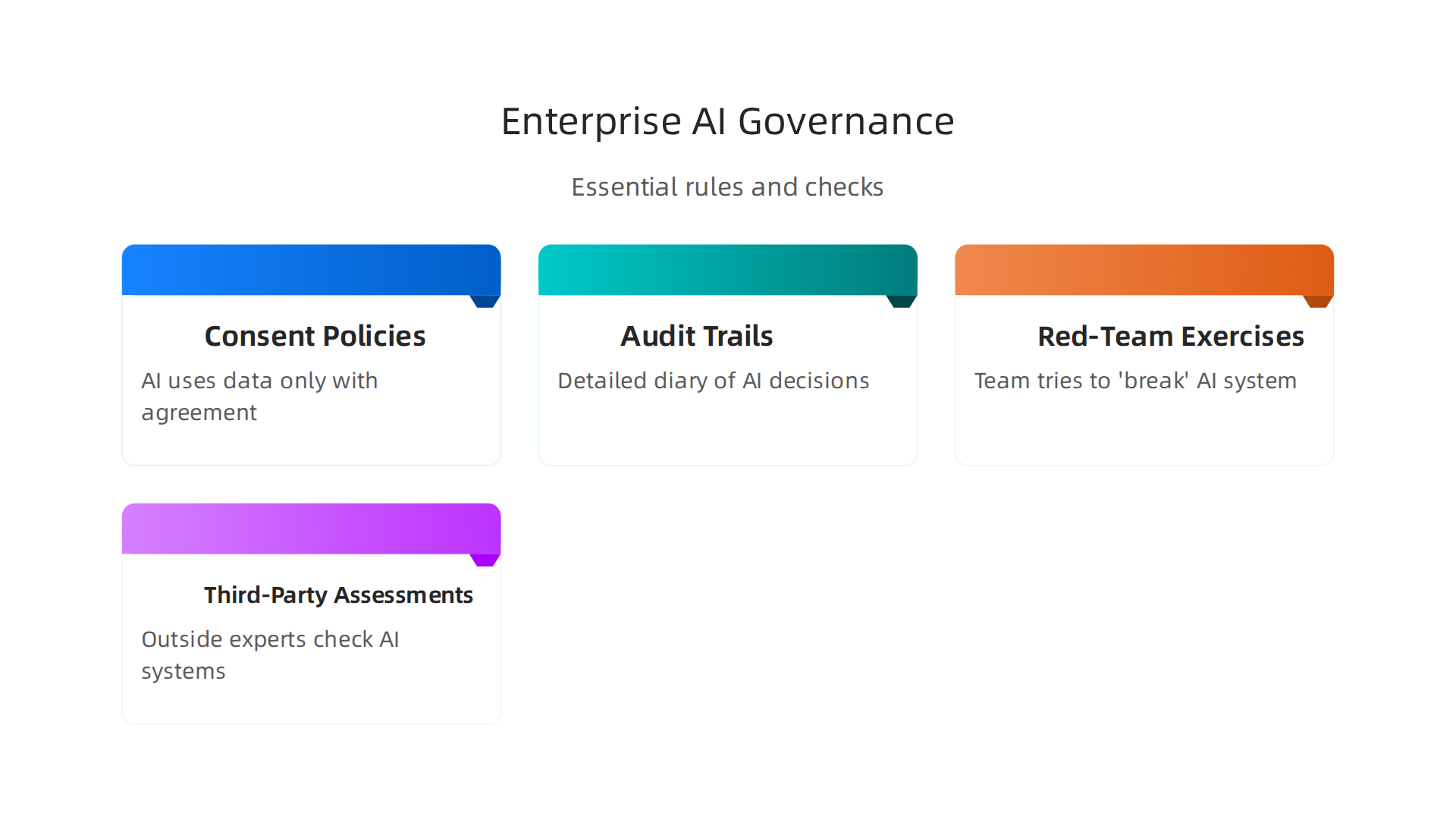
- Consent Policies: These rules make sure that if AI uses someone's data, that person has agreed to it. This is very important for building trust.
- Audit Trails: Think of an audit trail as a detailed diary of everything the AI does. It shows when the AI made a decision, what data it used, and why. This helps if you ever need to go back and check for problems.
- Red-Team Exercises: This is where a special team tries to "break" the AI system on purpose. They look for weaknesses, biases, or ways the AI could be tricked into doing something wrong. It is a proactive way to find problems before real users do.
- Third-Party Assessments: Sometimes, companies hire outside experts to check their AI systems. These experts can give a fresh look and make sure the AI is fair, safe, and works as it should.
By setting up these strong enterprise guardrails, companies can use powerful ai tools for product managers with confidence. This helps stop issues like synthetic drift and makes sure that AI serves people in the best way possible. It ensures that a trust first AI strategy becomes business imperative in 2026 for all businesses wanting to build helpful, trusted products.
Putting all those strong rules in place is great, but a big company still needs to learn how to use them every day. It's like having a great car with all the safety features. You still need to teach everyone how to drive it properly and take care of it. This is about helping teams grow, manage big changes, and work well together as AI becomes a bigger part of everything.
6. Scaling, Change Management, and Cross-Functional Capabilities
As companies bring more ai tools for product managers into their work, people need new skills. It's a big shift, and different teams need to learn different things to make sure the AI features are good and can be trusted.
Learning New Skills for AI Success
- Product Teams: Product managers need to understand what AI can and cannot do. They must learn how to ask the right questions when building AI features and how to spot potential problems like bias or unexpected results. They also need to know which of the many
ai tools for product managersare best for different tasks, like generating new ideas or making business plans. Tools like ChatGPT or Claude are often used for quick drafting, while others help with user research Best AI Tools for Product Managers in 2026: 14 Tools Ranked. - Designers: When AI is involved, designers have to think about new things. They need to make sure AI tools are easy for people to use and that the AI's actions are clear and understandable. This is especially true for
creative aitools, where the output might be surprising. - Engineers: Engineers already build complex systems, but with AI, they need to focus even more on making sure the AI is fair, secure, and works as expected over time. They help watch for "synthetic drift" and fix it quickly.
- Compliance Officers: These are the people who make sure all rules are followed. They must keep up with new laws and best practices for AI to ensure the company stays out of trouble and builds trust with customers.
To help everyone learn these new skills, companies need good training. It is important to set up AI learning courses focused on ethics and data integrity for enterprise teams so everyone can understand how to build and use AI responsibly.
Making Changes Smoothly
Bringing AI into a company can be a big change. To make it go smoothly, leaders use smart ways to help people adjust:
- Pilot Programs: Instead of changing everything at once, companies can start with small "pilot groups." A few teams try out new
ai tools for product managersor AI features first. They learn what works and what does not, then share those lessons with everyone else. This helps find problems early and builds confidence. - Training and Playbooks: Clear training programs are very important. They teach people not just how to use a new AI tool, but also why it's being used and what the rules are. "Playbooks" are like instruction manuals that give step-by-step guides for common tasks, making it easy for everyone to follow the right process.
- Incentives: Sometimes, giving people a reason to adopt new ways of working helps. This could mean praising teams that use AI ethically and effectively, or linking good AI practices to career growth. The goal is to make sure everyone wants to work towards making AI helpful and trustworthy for people.
By carefully planning for skill growth and managing these changes, companies can make sure their AI efforts truly help people and build a better future.
By carefully planning for skill growth and managing these changes, companies can make sure their AI efforts truly help people and build a better future. But how do we know if our AI is really doing good? It's not enough for AI to just work fast or make accurate guesses. We need to measure its true impact on people.

7. Measuring Impact: Metrics that Align AI with Human Flourishing
To make sure AI helps people grow and makes things better for everyone, we need to look beyond simple numbers like how "correct" the AI is. We need to think about metrics that truly show if AI is trustworthy, fair, and helpful in the long run.
Beyond Basic Numbers: What Else to Measure
- Trust: This is how much people believe in what the AI tells them or does. If people do not trust an AI tool, they will stop using it. Product managers using
ai tools for product managersshould track trust carefully. We can measure trust by asking users how they feel or by watching if they use the AI's suggestions or ignore them. Measuring user trust helps make sure AI systems are reliable How to Measure User Trust in AI Systems: A Practical .... - Fairness: AI should not be biased. It should treat everyone fairly, no matter their background. Measuring fairness means checking that the AI's actions are equal for all groups of people. For instance, if an
ai business plan generatorgives different advice based on someone's age or gender, that's a problem. - Long-Term Engagement Quality: We want people to keep using AI because it genuinely helps them, not just because it's new. Are they using it over time? Are their lives better because of it? This looks at how satisfied users are and if they keep coming back to the AI features, which shows real value Measuring Success: Defining Long-Term User Metrics in Enterprise AI Design.
- Social Impact: Does the AI help society? For example, does it reduce stress or help people make better decisions, as seen in some healthcare reports from 2026? This kind of measurement goes beyond just business goals to focus on human well-being.
How to Set Up Your Measurements
To truly align AI with human flourishing, companies should use smart ways to measure its effects every day:
- Leading Indicators: These are early warning signs. For example, if many users start changing the AI's suggested answers, that could be an early sign that they are losing trust. These early signs let teams fix problems before they get too big.
- Safety KPIs: Key Performance Indicators are specific numbers that show how safe and reliable the AI is. We can track things like how often the AI makes up false information (called "hallucination") or if it shows bias. These are important product-level metrics for building trust in AI products Evaluation Metrics for AI Products That Drive Trust.
- Feedback Loops: This means having ways for users to tell you what they think about the AI all the time. A simple "Was this helpful?" button or regular surveys can gather feedback. This helps companies make changes quickly and keep the AI helpful.
Building a trust-first AI strategy becomes business imperative in 2026 when you measure success in these broad ways. It helps teams evaluate AI tools by using a framework for ethical data and trust, ensuring the AI is truly beneficial evaluate AI tools with a framework for ethical data and trust.
Summary
This article argues that AI should prioritize trust, truth, and human flourishing over short-term engagement metrics, because bad data and ''synthetic drift'' can make models lose contact with reality and erode user trust. It explains the AI bottleneck — the scarcity of high-quality, permissioned data — and shows how training on public or synthetic content compounds drift and risk. The piece offers concrete practices for product leaders: use permissioned data, track provenance, apply differential privacy and secure enclaves, and version datasets to protect integrity. It gives a practical framework to choose AI tools (discovery, experimentation, personalization, measurement) and shows how to embed AI into roadmaps with MVPs, safety checks, and human oversight. It also covers enterprise governance—model risk committees, ethics boards, audits—and explains how to scale skills and change management. Finally, it recommends impact metrics beyond accuracy (trust, fairness, adoption quality, social impact) so product teams can build AI that truly helps people.
Related Blogs
No Similar Blogs found
