Home


Menu

Close

AI Startups Fueling Innovation: Building Trust with Ethical Data
Published:
August 7, 2026
Why AI Startups Matter Now — Opportunities and the Trust Imperative
In 2026, it's clear that the world of artificial intelligence (AI) is moving faster than ever. We're seeing a huge boom in ai startups, with lots of new companies popping up everywhere. To give you an idea, in just the first three months of 2026, over $255.5 billion was invested into AI startups. This is more money than was invested in all of 2025 combined! Actually, about 80% of all venture capital money in early 2026 went straight to these new AI companies, and there are now more than 70,000 ai startups operating around the globe. This incredible growth shows just how much excitement and potential there is in the AI world today. These numbers come from reports tracking the Global Rise of AI Startups and AI Startup Stats You Should Know in 2026.

Because of this fast growth, it's super important for big companies, government groups, and non-profit organizations to keep a close eye on these ai startups. They need to understand what's new and how these changes will affect everyone. But here's the thing: with all this excitement, there are some big problems we also need to think about.
One major issue is what we call the "AI bottleneck." This means there isn't enough good, ethical, and private data for AI systems to learn from. Many AI models end up using information found publicly, which might not always be true or fair. This leads to another problem: "synthetic drift." Synthetic drift happens when truth and human actions get twisted or changed as they spread through digital tools and platforms. This can make it hard to know what's real and what's not.
When information gets twisted, it naturally causes people to lose trust in AI systems and the digital world in general. We see more misinformation, and AI might not always act in ways that truly help people. That's why we need to focus on what we call "human-centric optimization."
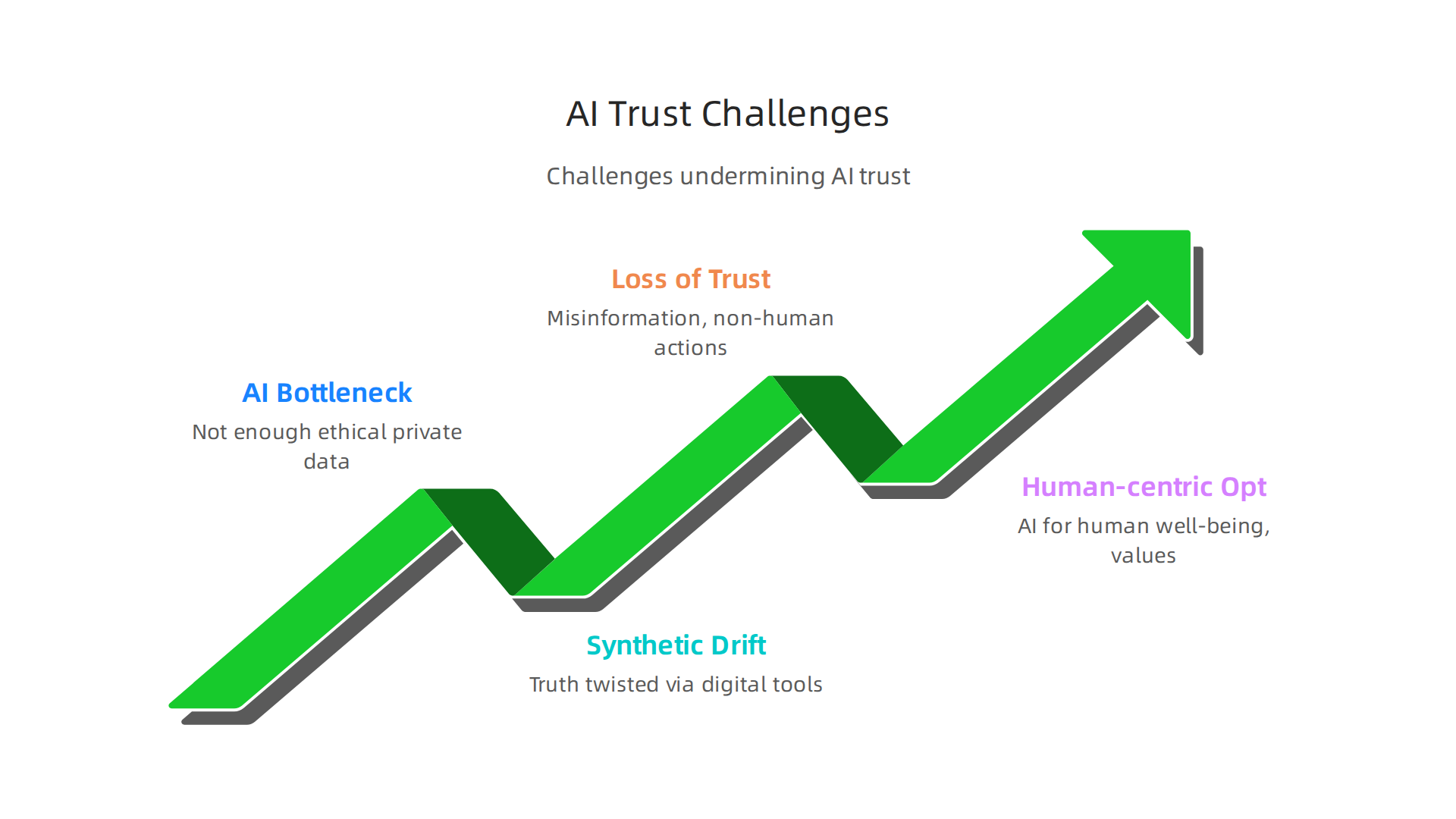
This means making sure that when we build and use AI, we always put human well-being and honest values first. It's about making sure AI helps us grow and thrive, not just get more clicks or attention. Understanding these challenges is the first step toward building a more trustworthy AI future. Learning how to deal with these problems, like the data bottleneck and synthetic drift, is key to building good AI for the future. You can learn more about Overcoming the Data Bottleneck and Synthetic Drift to Build Open Future AI to make sure AI helps everyone.
State of the Market: Funding, Talent, and Emerging Subsectors
The huge growth in AI we talked about isn't just about big numbers. It also shows how the market is changing how ai startups work and what they focus on. While tons of money is pouring in, where that money goes tells a bigger story.
For example, a big part of the funding in early 2026 didn't go to just any AI company. It went to a small group of very large AI companies. Reports show that a few major deals accounted for two-thirds of the capital invested in Q1 2026, and four companies alone soaked up around 65% of all venture capital dollars during that time. This means that while many ai startups exist, the biggest investments are centered around a few key players, often those creating foundational AI models or large platforms that others can build on, sometimes called "horizontal platforms" or "frontier labs" in the industry. This trend means that many smaller ai startups have to work harder to stand out and secure funding, often by focusing on very specific areas or niche problems. You can see more about these funding patterns in the Q1 2026 AI funding report.
Where the Talent Is Going
With so many ai startups and so much money flowing, there's also a big demand for smart people to build these AI systems. This "talent movement" is a key part of the market.

People with skills in AI engineering, data science, and ethical AI design are highly sought after. This competition for talent can sometimes push companies to speed up their work, which might make them less careful about how they get data or how they make sure their AI is fair and trustworthy. Keeping track of who is doing what in the AI world is a form of tracking AI, which helps us understand where the industry is headed.
New Areas for AI Startups
The AI market is also seeing new types of ai startups emerge. We're seeing more companies focus on:
- Platforms: These are companies that build the basic tools and services that other AI businesses use. Think of them as the building blocks for new AI applications.
- Vertical AI: These ai startups create AI solutions specifically for one industry, like healthcare, finance, or agriculture. Instead of making a general AI, they build one that's really good at a task in that one area. This could involve special agentic AI vs generative AI tools designed for very specific jobs.
- Embedded AI: This is about putting AI directly into everyday devices or software, making those things smarter without you even noticing it.
These new areas show that the market is maturing. It's not just about creating the biggest, most powerful AI models anymore. It's also about making AI practical, specialized, and integrated into our lives. The AI Startups & Technology Trends Report 2026-2027 gives a good look at these shifts, noting a move from raw model power to how AI is actually used and how much it costs.
How Market Forces Shape Priorities
The pressure to get funding, attract top talent, and quickly show results means ai startups often have to make tough choices. Sometimes, they might rush to get data from anywhere they can, even if it's not the most ethical or high-quality source. This can make the problems of "AI bottleneck" and "synthetic drift" even worse, as companies might prioritize speed and scale over careful, human-centric data practices.
The market also encourages AI companies to optimize for engagement, like getting more clicks or screen time. This can lead to AI systems that are designed to capture attention rather than truly help people or ensure information is truthful. The challenge is to shift this focus so that ai startups are rewarded for building AI that supports human well-being and honest values, not just quick profits. Understanding these market forces is important for anyone trying to figure out what is the best AI for a trustworthy future. If you want to dive deeper into how market dynamics influence data integrity, consider reading about ethical electronic data gathering and retrieval.
The constant push for new and better AI means that many ai startups are looking at clever ways to build their tools. They use special technologies that help make AI powerful, but also try to keep things fair and private. It's a balance between making AI do amazing things and making sure it's used in a good way.
Building Blocks for AI Startups
Today, ai startups use several key technologies as their foundation:
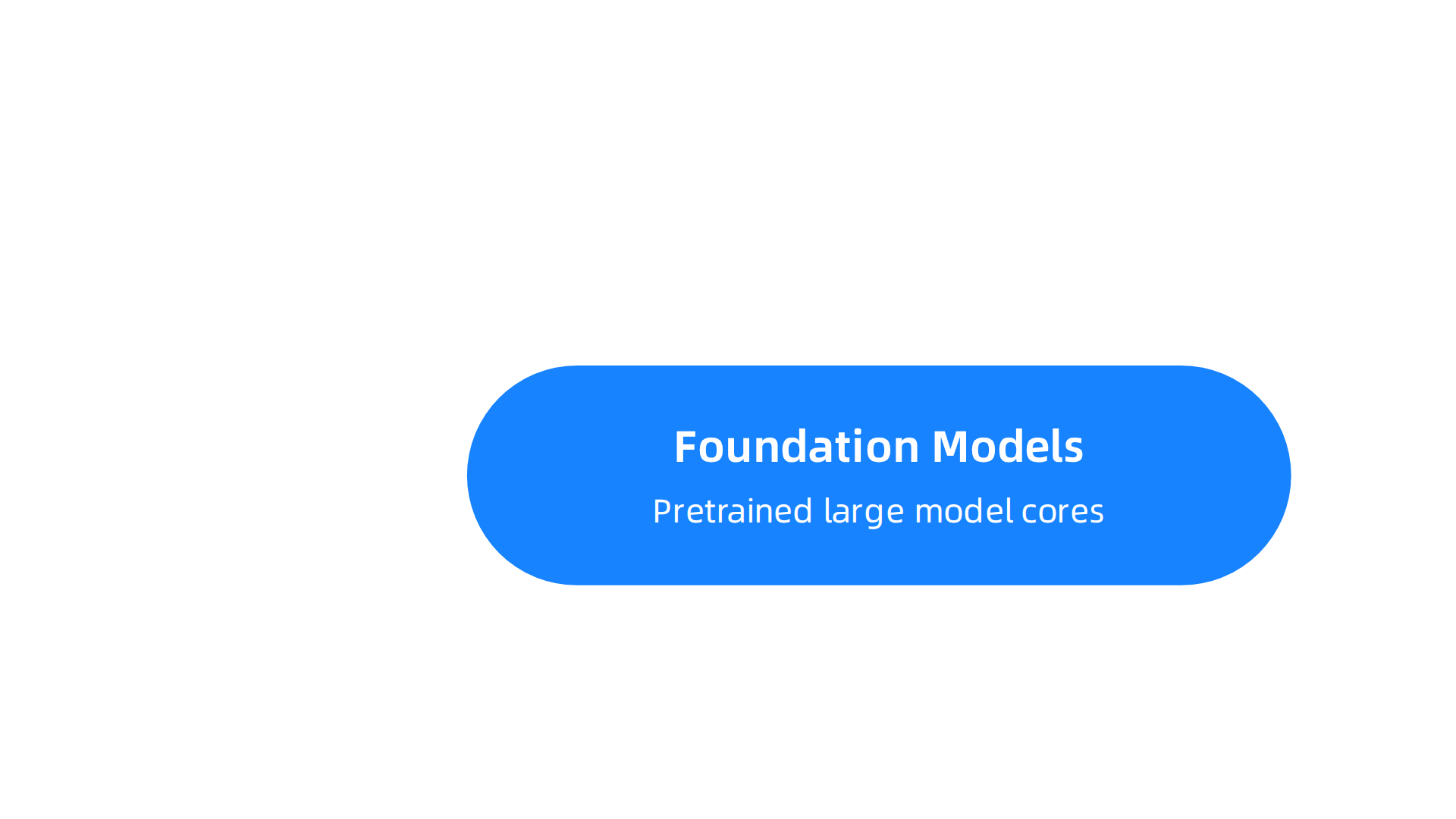
- Foundation Models: Think of these as super smart brains that can learn many different things. They are trained on huge amounts of data. Then, smaller ai startups can use these big brains and teach them a few more things to do very specific jobs. This saves a lot of time and effort. Many companies believe that understanding these models is key to figuring out what is the best AI for their needs.
- Federated Learning: This is a smart way to let AI learn from many different devices or computers without gathering all the personal information in one place. Imagine your phone learning how you type better, but without sending your private messages to a central company. It keeps your data on your phone while still helping the AI get smarter.
- Differential Privacy: This technology adds a tiny bit of "noise" or fake information to data. It's like mixing a small amount of harmless sand into a big pile of real sand. This makes it very hard for anyone to find out details about one person's information, even if they look at the whole pile. Yet, the AI can still learn general patterns from the data.
- Synthetic Data: Sometimes, companies don't have enough real data, or the real data is too private to use. So, they create fake data that looks and acts like real data but doesn't belong to any actual person. This "synthetic data" can then be used to train AI models safely. This helps overcome issues like the "AI bottleneck" where real, ethical data is scarce.
- Edge AI: This means putting AI brains directly into devices like smart cameras, robots, or even your phone. Instead of sending all the information to a far-away cloud computer, the device can think for itself right where it is. This makes AI faster and often more private because data doesn't have to travel far.
Making Smart Choices: Power vs. Privacy
When ai startups pick these technologies, they often have to make trade-offs. They want their AI to be super capable and do many things well. But they also need to be careful about where their data comes from and how they protect people's privacy.
For example, a big foundation model might be very powerful, but if it was trained on data that wasn't gathered ethically, it can lead to problems. This is where methods like federated learning and synthetic data come in. They help ensure that while the AI is strong, it's also built on a trustworthy base. It's about finding ways to build trustworthy AI that respects privacy.
Using privacy-preserving tools can sometimes make AI models a little less powerful at first. But for many ai startups, building trust with users and avoiding issues like "synthetic drift" is more important. They want to make sure their AI products do good and are fair to everyone. After all, ensuring that generative AI programs depend on ethical data to earn user trust is critical for long-term success. Over 70,000 AI startups are operating globally in 2026, many of whom are grappling with these challenges daily to create useful products for the future, according to AI Startup Stats You Should Know in 2026.
Many of the 70,000-plus AI startups operating globally in 2026 are facing a big challenge: they need a lot of good, ethical data to train their smart AI systems. This challenge is often called the "AI bottleneck."
The AI Bottleneck: A Data Shortage
The AI bottleneck happens because it's hard to get enough high-quality data that people have given permission to use. AI models, especially those that create new content like generative AI, learn from the data they are fed. If this data isn't carefully collected and given with consent, it can lead to problems. Many existing AI models have been trained on information scraped from the internet, which might not always be true or fair. This lack of good, ethical data slows down how fast and how well AI startups can develop their tools.
When startups can't get enough real, trustworthy data, they sometimes turn to other options, like creating "synthetic data." As we talked about earlier, synthetic data is fake data that looks like real data but doesn't come from actual people. While useful, it has its own challenges.
Understanding Synthetic Drift
Relying too much on synthetic data, or using real data that isn't truly representative, can lead to something called synthetic drift. Data drift simply means that the new data an AI model sees in the real world is different from the data it learned from during its training. This can make the AI less accurate over time. For example, if a model was trained on data from 2024 and then used in 2026, things might have changed a lot, making the model's decisions less helpful. This difference in data can make the AI's understanding "drift" away from what's true.
This problem is highlighted in research, where data drift is explained as changes between the information an AI model learns from and what it uses later on in the real world Data drift in medical machine learning: implications and ... - PMC. When the gap between synthetic data and real data gets too wide, or if the real-world data itself keeps changing, the AI can start to give wrong answers or make bad choices. This is especially true if the synthetic data isn't a perfect match for real-life situations, causing a specific kind of drift called "synthetic-to-real drift" Measuring the gap: correlating synthetic-to-real drift with PHI ....
Practical Challenges for AI Startups
Synthetic drift creates several big headaches for ai startups:

- Training Dataset Composition: Startups must carefully choose what data goes into their AI. If they use too much low-quality or untrustworthy data, their AI will learn bad habits. It's like teaching a child using wrong information; they won't grow up to be very smart or reliable.
- Labeling Quality: Every piece of data used to train AI often needs to be "labeled" or described. For example, if you show an AI pictures of cats, someone needs to say "this is a cat." If these labels are wrong or unclear, the AI will get confused. Poor labeling adds to drift and makes the AI unreliable.
- Long-Term Model Drift: Even if an AI model is good at first, it can become less useful over time. As the world changes, so does the data. For instance, new slang words, new products, or different user behaviors can make an AI model's understanding outdated. This means startups need ways for tracking AI and how it performs to know when it needs to be updated.
Overcoming these data challenges is vital for ai startups to build AI systems that people can trust. It means focusing on ethical ways to gather information and finding smart solutions to stop synthetic drift. Many companies are now looking for ways to overcome the data bottleneck and synthetic drift to build open future AI that truly serves human needs. Making sure your AI learns from the right stuff is key to its long-term success.
If making sure AI learns from the right stuff is key to its long-term success, then the next step is making sure that "right stuff" is also safe and follows rules. In 2026, governments and big companies are paying close attention to new rules about AI. These rules are being made to help build trust and safety around AI systems.
The Growing World of AI Rules
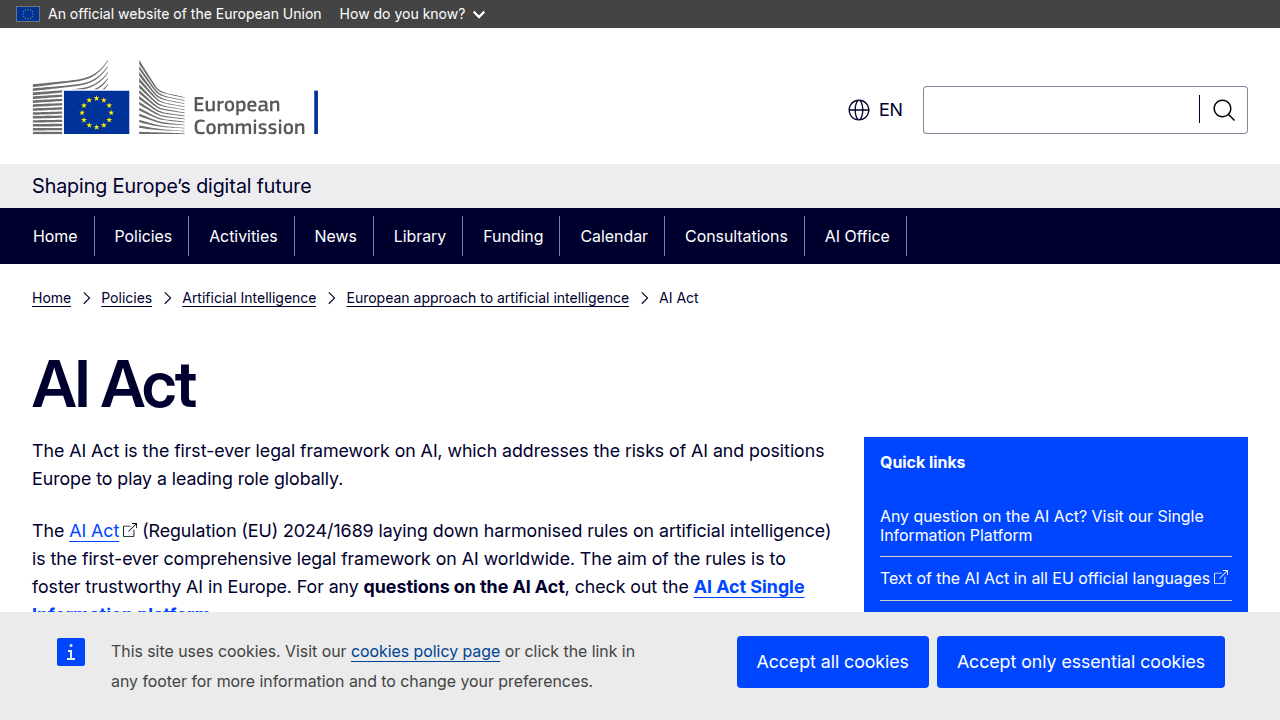
Around the globe, different groups are working on how to control AI. For example, the European Union has its important AI Act | Shaping Europe's digital future, which is a big set of rules to make AI safe and trustworthy.
These rules are very important for any ai startups that want to sell their products in Europe.
One key part of these new rules is about making sure people know when content is made by AI. For example, generative AI systems, which create new text, images, or sounds, must clearly mark their outputs. This helps you know if something you see or hear was created by a human or by a computer. This kind of transparency is covered in the EU AI Act's Transparency Rules to help avoid confusion and build trust. In June 2026, the EU Commission published a Code of Practice on Labelling AI Generated Content, which asks AI makers to use special markings like digitally signed metadata. This metadata is like a digital stamp that tells you the origin of the content and if AI played a part in making it.
What Big Companies and Agencies Need to Watch For
For large enterprises and government agencies, these rules mean they need to be very careful when choosing which ai startups to work with. They must make sure these startups follow all the new regulations. When an organization looks for the best AI solutions, they should ask about "provenance." This simply means checking the origin and history of the data used to train the AI NIST Generative AI RMF Draft. Knowing where the data comes from helps ensure it's ethical and reliable.
There's even a Verifiable AI Provenance Framework (VAP) being developed. This framework helps make sure that every decision an AI makes can be traced back to its data and how it was made. This is crucial for making AI systems that can be audited and trusted.
Enterprises and agencies should require ai startups to pass strict trust and safety checks. They need to ask important questions like:
- Is the AI model fair and does it avoid being biased?
- Can we easily understand how the AI makes its decisions?
- Was the data used to train the AI collected in a way that respects people's privacy and consent?
Building trustworthy AI is about more than just technology; it's about the people and processes behind it. That's why many organizations are looking to develop your enterprise data science bootcamp for trustworthy AI in 2026. Without clear rules and careful checks, it's hard to know if an AI system is truly reliable. This is especially true for generative AI, which creates new content. It needs permissioned data to avoid spreading misinformation and building distrust. Ultimately, an overall trust first AI strategy becomes business imperative in 2026 for any organization serious about the future of AI.
After ensuring AI systems are built on safe rules and transparent data, we also need to look at how businesses make money from AI. This is where business models come in. Sometimes, the way an AI startup earns money can get in the way of making AI that truly helps people. It's important for companies to think about how their goals align with what's good for society.
When Business Goals Don't Match Human Needs
Many ai startups use different ways to make money. Some rely on getting a lot of attention, like social media apps. Their goal is often to keep you on their platform for as long as possible. This "attention-driven" model can sometimes lead to AI systems that push out content meant to be shocking or divisive, just to keep you clicking. This can hurt people's well-being and spread misleading information.
Other ai startups focus on "Business-to-Business" (B2B) models, selling AI tools to other companies. Then there are "embedded AI" models, where AI is a small part of a bigger product, like a smart appliance. These models might seem safer, but they still need careful planning. If the main goal is just to boost sales or make things faster, the AI might not consider what's best for the people using it. This is where incentives can get twisted, leading to AI that doesn't fully support human flourishing.
Making AI Better for Everyone
To make sure AI truly helps us, businesses need to set up their systems so that AI success means human success. This is often called Human-Centered AI, or HCAI. It means putting people's needs, values, and skills first when designing AI tools. HCAI aims to create AI that works with people, not just for them, helping them do better and be more creative. Experts agree that human-centered AI is about developing technologies that prioritize human needs and values in their design and use What Is Human-Centered AI (HCAI)? — updated 2026.
For large organizations looking to buy AI solutions, it's key to have strong rules for choosing which ai startups to work with. They need to look beyond just what the AI can do and ask about its ethical design. Many companies use an AI Procurement Checklist: 47 Questions Before Buying AI Tools to make sure they pick the best AI that also aligns with good values.
Here are some ways businesses can make their AI more human-centered:
- Change how success is measured: Instead of just looking at how much time people spend on an app, businesses should also measure how the AI impacts mental health, learning, or real-world positive actions. This is like tracking AI not just for speed, but for good outcomes.
- Focus on ethical data: Make sure the information used to teach the AI is collected fairly and with permission. This helps stop "Synthetic Drift," which is when truth gets changed as it moves through digital systems. Learning about ethical multimodal AI strategies to combat synthetic drift can help.
- Build in clear values: Design the AI from the start to care about fairness, privacy, and making its decisions understandable. This creates a Digital Intelligence Platform Unlocking Trustworthy AI with Human-Centric Data.
By doing these things, businesses can build AI systems that are not only powerful but also truly good for people and society.
Building AI systems that truly help people also means making sure we can trust the information they give us. In 2026, with so much AI-generated content around, it's more important than ever to check facts and reduce false information. This is key to stopping "Synthetic Drift," where truth can get changed as it moves through digital spaces.
Verification, Fact-Checking, and Reducing Misinformation Risks
To build trust, we need good ways to check if AI-generated content is real or has been changed. Think of it like a detective checking clues. Here are some important ways to do this:
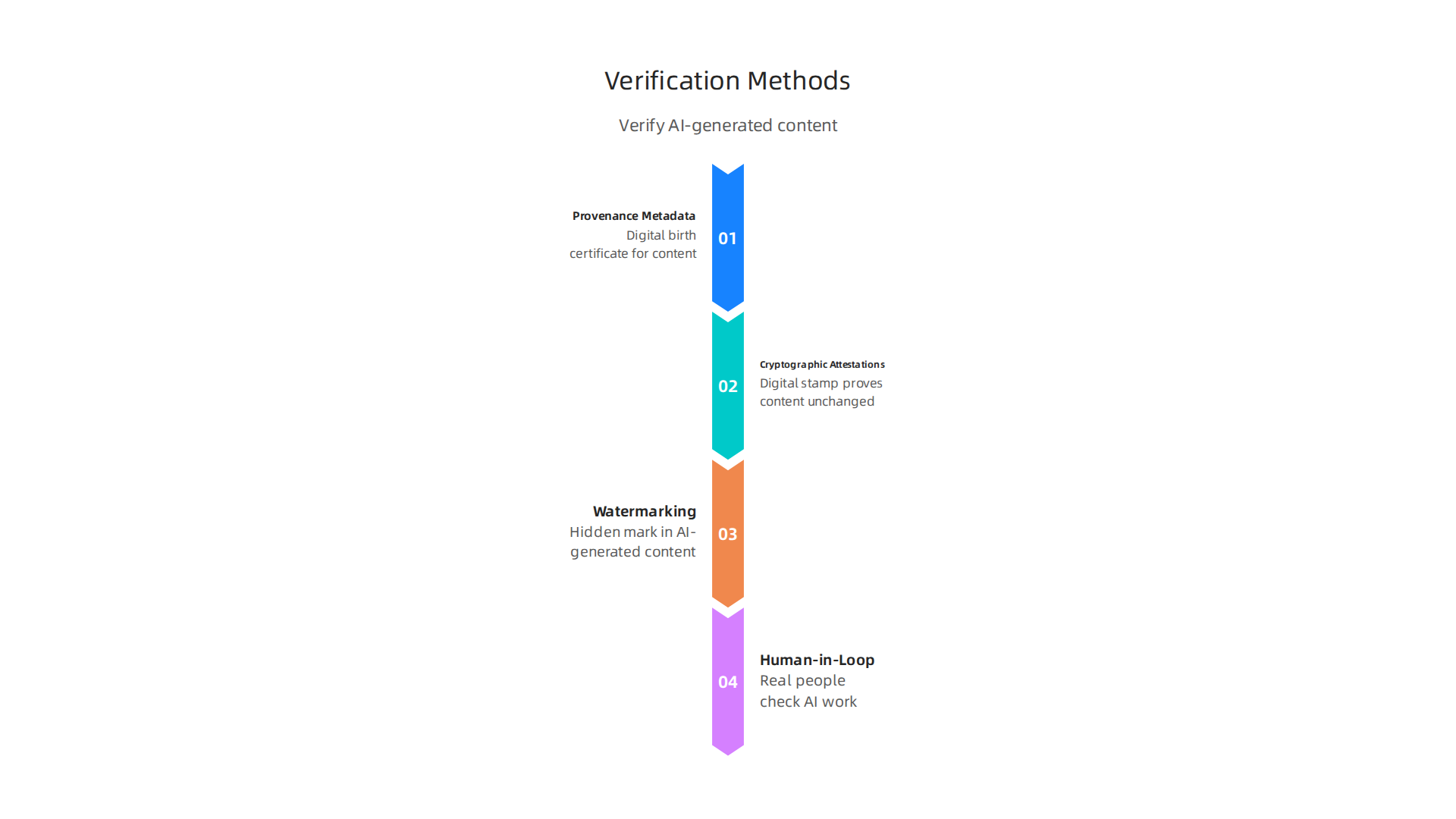
- Provenance Metadata: This is like a digital birth certificate for content. It tells us where the data came from, how it was made, and if any AI was used to create or change it. Knowing the origin and history of data helps us understand its journey, as explained in the NIST Generative AI RMF Draft. Many rules, like those from the European Union, now ask generative AI creators to put this kind of information into their content. For instance, the EU's Code of Practice suggests digitally signed, timestamped metadata that shows if content is AI-generated and includes an identifier EU AI Act: Second Draft of Code of Practice on Transparency ....
- Cryptographic Attestations: This is a fancy way to say that AI content can come with a special digital stamp. This stamp proves that the content hasn't been changed since it was created or approved. It uses strong digital safety tools to make sure the content's history is clear and cannot be faked. This kind of "Verifiable AI Provenance Framework" helps create trustworthy decision trails Verifiable AI Provenance Framework (VAP).
- Watermarking: This involves putting a hidden mark into AI-generated images, videos, or text. This mark can be invisible to our eyes but can be found by special tools. It's a way for AI providers to show that the content came from their system. The EU suggests using both digitally signed metadata and imperceptible watermarking together, because one method alone might not be enough European AI Office releases Code of Practice on ....
- Human-in-the-Loop Verification: This means having real people check the AI's work. While AI can do a lot, sometimes a human eye is still the best way to catch mistakes or misleading information. People can review AI outputs, correct them, and teach the AI to be better, adding a vital layer of fact-checking.
How AI Startups Can Integrate Verification
It's super important for ai startups to build these verification tools right into their products from the very beginning. This isn't just a good idea; it's becoming a requirement. For example, rules like the EU AI Act expect creators of generative AI systems to mark their outputs so they are clearly identifiable as AI-made The EU AI Act's Transparency Rules: A Practical Guide to ....
Ai startups should:
- Use standards like C2PA for embedding provenance information.
- Build systems that add watermarks to all AI-generated content.
- Create ways for users to easily see if content is AI-made.
- Make sure their data practices are ethical from the start. Learning how to build apps with AI that earn trust through ethical data annotation is a great step.
How Enterprises Can Demand Verifiable Outputs
Big businesses that buy or use AI tools from ai startups need to ask for these verification features. When choosing what is the best AI, they should not just look at what the AI can do, but also how trustworthy its outputs are. They should ask:
- Does this AI tool add provenance metadata?
- Can I verify if the content was changed?
- Does it use watermarking?
- Are there human checks in place?
By demanding these features, enterprises can push ai startups to create more responsible AI. This helps in building trustworthy AI combat synthetic drift with ethical data and makes sure that everyone can better track AI information. A "trust first AI strategy" is becoming a must-have for businesses in 2026 trust first AI strategy becomes business imperative in 2026.
As big companies ask for AI tools that they can truly trust, they also need to know how to pick the right partners. This means looking closely at how they team up with smaller, newer companies called ai startups. In 2026, choosing the right partners is more important than ever to make sure AI systems work well and are safe.
Partnerships, Procurement, and Due Diligence: How Large Organizations Should Engage Startups
When a large business decides to work with ai startups, it's like bringing a new member onto the team. You need to do your homework to make sure they're a good fit. This "homework" is called due diligence, and it helps you understand everything about the startup and its AI products.
Why Due Diligence is Key
Think about it: you want to make sure the AI tools you bring into your company are ethical, respect data, and align with your values. Without careful checking, you might end up with an AI that causes problems instead of solving them. Many organizations use checklists to guide their choices for AI tools, as seen in various government guidelines, including an AI Procurement Checklist from New Zealand.
A Checklist for Working with AI Startups
Here's a simple way for big companies to make sure they partner wisely:
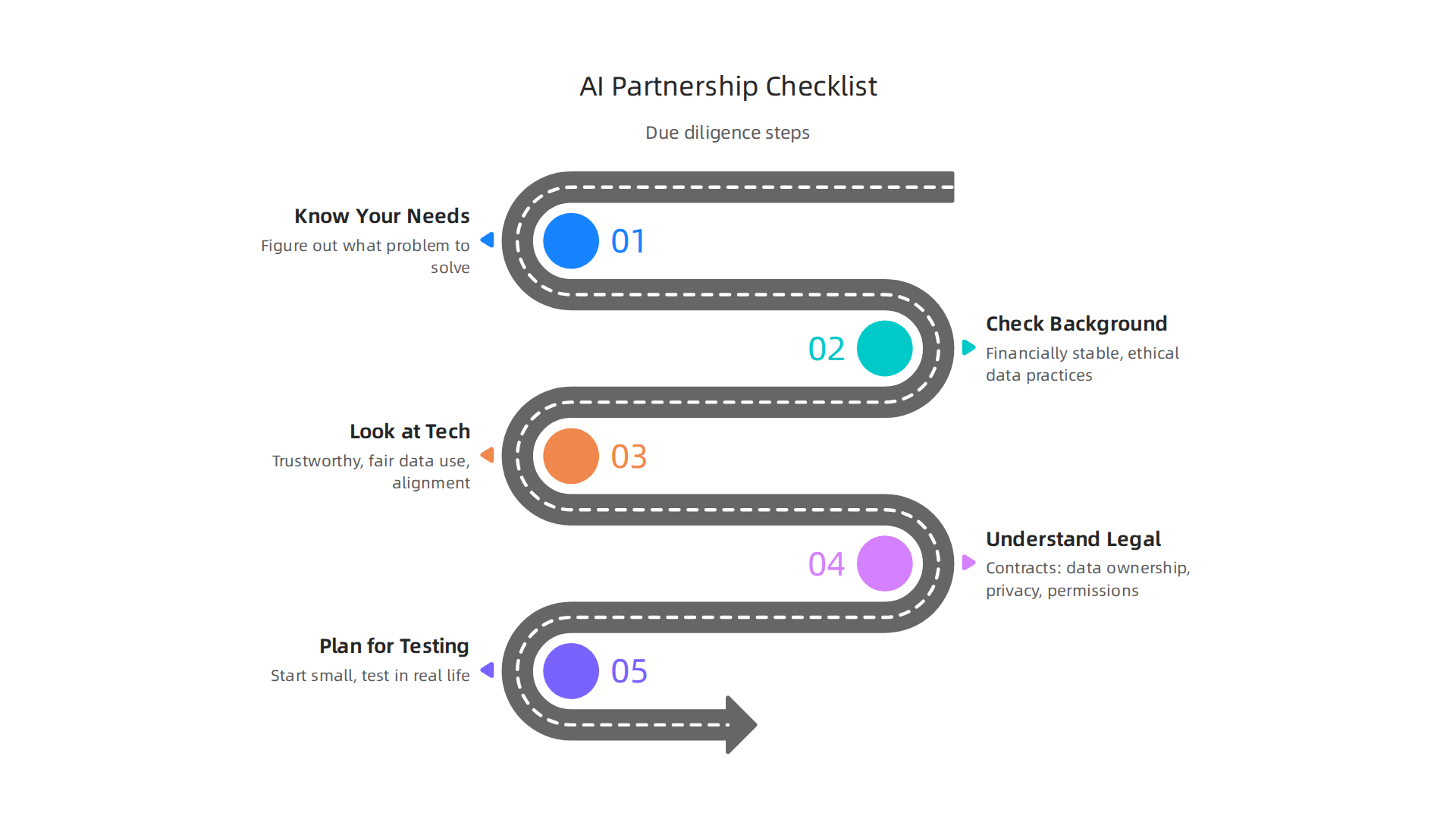
- 1. Know Your Needs First: Before looking at any ai startups, figure out what problem you need the AI to solve. What job will it do? What kind of data will it use? This helps you understand what is the best AI for your specific tasks.
- 2. Check the Startup's Background: Look into the startup itself. Are they financially stable? Do they have good reviews? How do they handle people's data? It's important that they follow ethical data practices, just like you would. Companies should ask key questions about their practices, such as those found in an Enterprise AI Procurement Due Diligence Checklist.
- 3. Look at the AI Technology:
- Trustworthiness: Does the AI offer ways to check if its information is real, like we talked about before (provenance, watermarking)?
- Data Use: How does their AI learn? Does it use data fairly? Will it use your company's data to train its models without your permission? It's vital for generative AI programs to depend on ethical data.
- Alignment: Does the AI's behavior fit with your company's values and goals? This is especially important when comparing different types of AI, like agentic AI vs generative AI, which have different ways of working.
- 4. Understand the Legal Stuff: This part is about contracts. Who owns the data the AI creates? What happens if the partnership ends? How will you protect privacy? An AI Procurement Readiness Checklist for SaaS Vendors can help with this. These contracts need to make sure you have clear data permissions and can always check the AI's work.
- 5. Plan for Testing and Review: Start small. Try the AI tool on a specific project before using it everywhere. This lets you see how it works in real life and helps with tracking AI performance.
By following these steps, large organizations can build strong, trustworthy partnerships with ai startups. This helps both sides succeed while ensuring that AI is used responsibly and ethically.
Summary
This article explains why AI startups are central to the 2026 tech landscape, driven by record funding, rapid talent movement, and new specialized subsectors. It outlines how market concentration toward a few large players changes funding dynamics and pushes smaller startups to focus on niche solutions. The piece examines the core technical building blocks—foundation models, federated learning, differential privacy, synthetic data, and edge AI—and the trade-offs between power and privacy. It highlights the twin challenges of the AI data bottleneck and synthetic drift, why they undermine trust, and which verification tools (provenance metadata, watermarking, cryptographic attestations, human oversight) can help. The article also covers evolving regulation and procurement expectations, and explains how business models should align incentives with human-centered outcomes. Readers will learn practical due-diligence steps to evaluate startup partners and concrete strategies for building or buying AI that is both powerful and trustworthy.
Related Blogs
No Similar Blogs found
