Home


Menu

Close

AI Security Challenges: Building Trust for Large Organizations
Published:
September 13, 2026
Why AI Security and Trust Are Urgent Priorities for Large Organizations
In 2026, artificial intelligence (AI) is everywhere. It helps businesses, governments, and people in many ways. But with all this new power comes big challenges. One of the biggest problems large organizations face is making sure their AI is both secure and trustworthy. If we don't fix this now, AI might not help us grow; it could even cause harm.

The AI Bottleneck: Too Much Reliance on Questionable Data
Think of AI as a student that learns from books. For AI to be smart and helpful, it needs to learn from good, true books. The big problem right now is that there aren't enough "good books" that are also ethical and private. This is what we call the "AI bottleneck." Many AI systems today are trained using information found all over the internet. This public data often has problems. It might be biased, wrong, or even made up by other AIs.
For example, a report in 2026 found that almost three-quarters of new web pages now have content created by AI, which then goes on to contaminate other training data The Synthetic Data Spectrum. When AI learns from this kind of low-quality, ethically ambiguous data, it can't be truly reliable. We need to focus on preparing high-integrity data sets to build trustworthy AI that works as expected.
The Harmful Effects: Synthetic Drift, Lost Trust, and Misalignment
When AI is trained on bad data, serious problems can happen. One major issue is called "synthetic drift." This means that as information gets passed around online and through AI systems, the original truth slowly gets twisted or lost. It's like playing a game of telephone where the message changes each time. This drift makes it very hard to know what's real and what's not, which chips away at public trust.
The problem affects not just how we see information, but also how AI helps people. If AI isn't built on true human values, it might make choices that don't actually help people live better lives. Instead, it might do things that lead to more anxiety or isolation. The 2026 State of AI Trust Report shows that public trust in AI is quite low in some places, partly due to issues like AI making up facts or showing harmful biases The 2026 State of AI Trust Report | Deep Heuristics.
This means that ensuring strong AI security isn't just about keeping systems safe from hackers; it's also about fostering trust and making sure AI helps humanity. Large organizations must tackle these ai and security challenges by rethinking how AI learns to build trustworthy AI for institutions. If we don't, we risk building an AI future that doesn't align with what truly makes people flourish.
To truly make AI help people flourish, we must understand the many ways it can be harmed. It's not just about bad data. There are also tricky attacks and bigger system issues that stop AI from being trustworthy. These are often called ai and security challenges.
Threats to AI trust: technical and systemic attack vectors
AI systems face dangers from many sides, both technical and from the way platforms are set up. Keeping AI safe is a huge part of ai security.
Technical Attacks: Sneaky Ways to Hurt AI
Imagine someone trying to trick your computer. AI systems can be tricked too. Here are some common technical attacks:
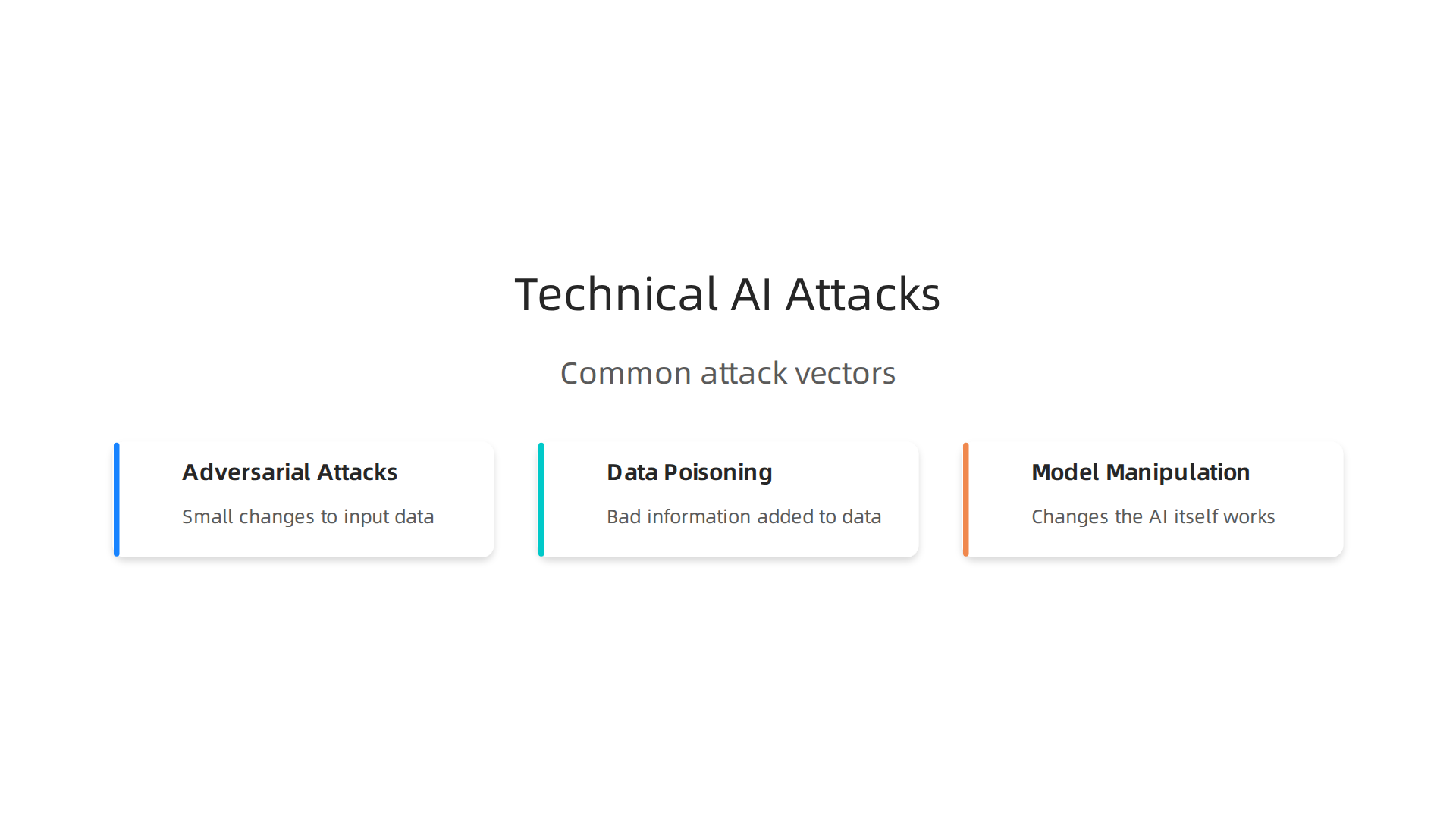
- Adversarial Attacks: This is like adding a tiny, hidden smudge to a picture that a human wouldn't notice, but it makes an AI think a stop sign is a yield sign. Attackers make small changes to the input data to fool the AI. This can lead to bad choices from the AI, which is a major concern for computer security in AI systems AI Security Best Practices: 12 Essential Ways to Protect ML.
- Data Poisoning: This happens when bad or false information is secretly added to the data an AI learns from. It's like a student learning from a textbook that has wrong answers hidden inside. If an AI learns from poisoned data, it will make wrong decisions later. This harms the AI's ability to be trustworthy from its very start.
- Model Manipulation: This is when someone changes the way the AI itself works. They might change its core programming so it acts in a way it shouldn't. Protecting AI models from these kinds of changes is a key part of AI model security, making sure the AI behaves as expected and remains reliable What Is AI Model Security? A Complete 2026 Guide.
To fight these technical threats, large organizations need strong defenses. This includes making sure the entire process of building and using AI is secure, from the first step of collecting data to the last step of monitoring how the AI works. Guidelines like the OWASP AI Security and Privacy Guide help companies understand how to protect their AI systems OWASP AI Security and Privacy Guide (International, 2026 ...). It's also important to have a plan for what to do when something goes wrong, much like a fire drill for AI incidents CISA AI Security Guidance: What Organizations Need in 2026. Businesses should also look into how to mastering cybersecurity threats to AI systems in 2026 enterprise defense.
Systemic Threats: How the System Itself Can Go Wrong
Beyond direct attacks, the very design of some AI systems can hurt trust. These are bigger, systemic problems.

- Platform Incentives: Many online platforms want to keep you engaged. They show you things that grab your attention, often by making you feel strong emotions. AI systems built on these platforms can learn to push content that is extreme or sensational, just to keep you clicking, instead of showing you what's true or helpful.
- Attention Optimization: This is a fancy way of saying that AI tries to get and keep your attention. While this might seem harmless, it can lead to information being twisted or exaggerated. If AI is always trying to make you look, it might not always show you the full, honest picture. This makes it harder for people to truly rethink AI learning to build trustworthy AI for institutions.
- How Metrics Distort Outcomes: What we measure is what we get. If an AI system is only measured by how much engagement it gets (likes, shares, clicks), it will work to boost those numbers. It won't care if the content it promotes is true, ethical, or good for people's mental health. This means the AI might do things that increase anxiety or make people feel more alone, even if that wasn't the original goal. These kinds of design choices make it very hard to build and maintain trust.
To overcome these bigger issues, companies need to focus on fostering trust by designing AI systems that care about human well-being and truth, not just engagement. This means we need to consider ethical data from the start and look at how to secure ethical AI with trustworthy data services. Building a strong modern AI cyber awareness program for 2026 threats is also crucial to protect against both technical and systemic vulnerabilities.
Building an AI system that everyone can trust begins with its very foundation: the data it learns from. After all, if the information is shaky, the AI will be too. A big challenge we face in 2026 is what many call the "AI bottleneck." This means there's a real shortage of good, private data that people have given permission to use. Because of this, many AI systems end up learning from public data found all over the internet.
The AI Bottleneck: Too Much Scraped Data, Not Enough Trustworthy Data
Think of AI as a student. If a student only learns from random books they find without knowing who wrote them or if they're true, they might learn a lot of wrong things. This is what happens when AI relies too much on data "scraped" from the internet. A big problem is that a lot of what's online today isn't even made by humans. In fact, by 2026, about 74% of new web pages have content made by AI itself, leading to a risk of "model collapse" where AI learns from its own bad creations The Synthetic Data Spectrum.
This overreliance on public data that isn't checked or permissioned causes two major headaches:
- Lack of Permission and Privacy: When data is just scooped up from the internet, there's no way to know if people agreed to have their information used. This is a huge privacy concern and makes it hard for organizations to build ethical AI. To overcome this, generative AI assistants especially need permissioned private data to avoid synthetic drift.
- Synthetic Drift: This is when AI systems start to learn from data that has been twisted or changed, often by other AI. It's like playing a game of telephone where the original message gets completely messed up. This distortion makes AI less reliable and harder to trust. This is a major aspect of ai and security challenges. We need to focus on overcoming the data bottleneck and synthetic drift to ensure AI development moves forward ethically.
The scarcity of truly good, original, and permissioned data acts as a bottleneck, slowing down the creation of trustworthy AI and highlighting serious ai security concerns.
Data Provenance and Lineage: Knowing Where Your Data Comes From
To fight the AI bottleneck and synthetic drift, we need to know the story behind our data. This is where "data provenance" and "data lineage" come in.

- Data Provenance is like a birth certificate and life story for your data. It keeps records about where data came from, who owned it, and how it changed over time A Data Provenance Framework for Generative AI Datasets - arXiv. It tracks all important information from when the data was first created, whether it was real or made by AI, all the way to its current form. Knowing this helps us see if the data is reliable.
- Data Lineage is about tracing every step your data takes, like a detailed map of its journey. It maps data from its very beginning, showing how information flows and changes within a system Data Lineage: Track Every Move Your Data Makes. This full picture helps us understand the data's history.
By tracking provenance and lineage, we can check the quality of data and make sure it's ethical. This helps us distinguish between truly licensed, real-world data and data that was simply scraped from public sources or even generated synthetically Synthetic Data as a Deal Asset: Ownership, Provenance, and Diligence Considerations in AI Acquisitions. This is a vital step in fostering trust in AI systems.
Reducing Synthetic Drift: Keeping Data Honest
One of the main goals of strong data provenance and lineage is to reduce synthetic drift. When AI models are trained on data, sometimes the real-world information they learned from changes over time, or the data itself becomes less useful. This is called "data drift," and it means the AI might not make good decisions anymore Sound Practices for Financial Institutions' Responsible AI ....
To keep AI honest and combat this, we need to:
- Always know the source: Every piece of data should have a clear origin story.
- Track changes: Any time data is changed, cleaned, or mixed with other data, it should be recorded.
- Use ethical data practices: This means getting proper permission for private data and clearly marking any data that is synthetic. Building trustworthy AI with robust data pipelines is key here.
By putting these measures in place, we can ensure AI learns from the best possible information. This improves computer security for AI and makes sure AI systems serve people in truly helpful and ethical ways.
When AI models are working, they can sometimes start to give bad or wrong answers. This is what we mean by "synthetic drift" in action, and it can also lead to misinformation. Think of it this way: if an AI was trained to tell the difference between cats and dogs, but over time it started seeing more pictures of foxes and less of cats, it might start thinking foxes are a type of cat. This drift means the AI isn't making good decisions anymore. It's not just about simple mistakes; it can be a serious problem for important jobs, leading to big ai and security challenges.
How We Find and Fix Drift in AI
To make sure AI stays helpful and trustworthy, we need ways to spot when it's drifting and then fix it. This is a key part of ai security in 2026.
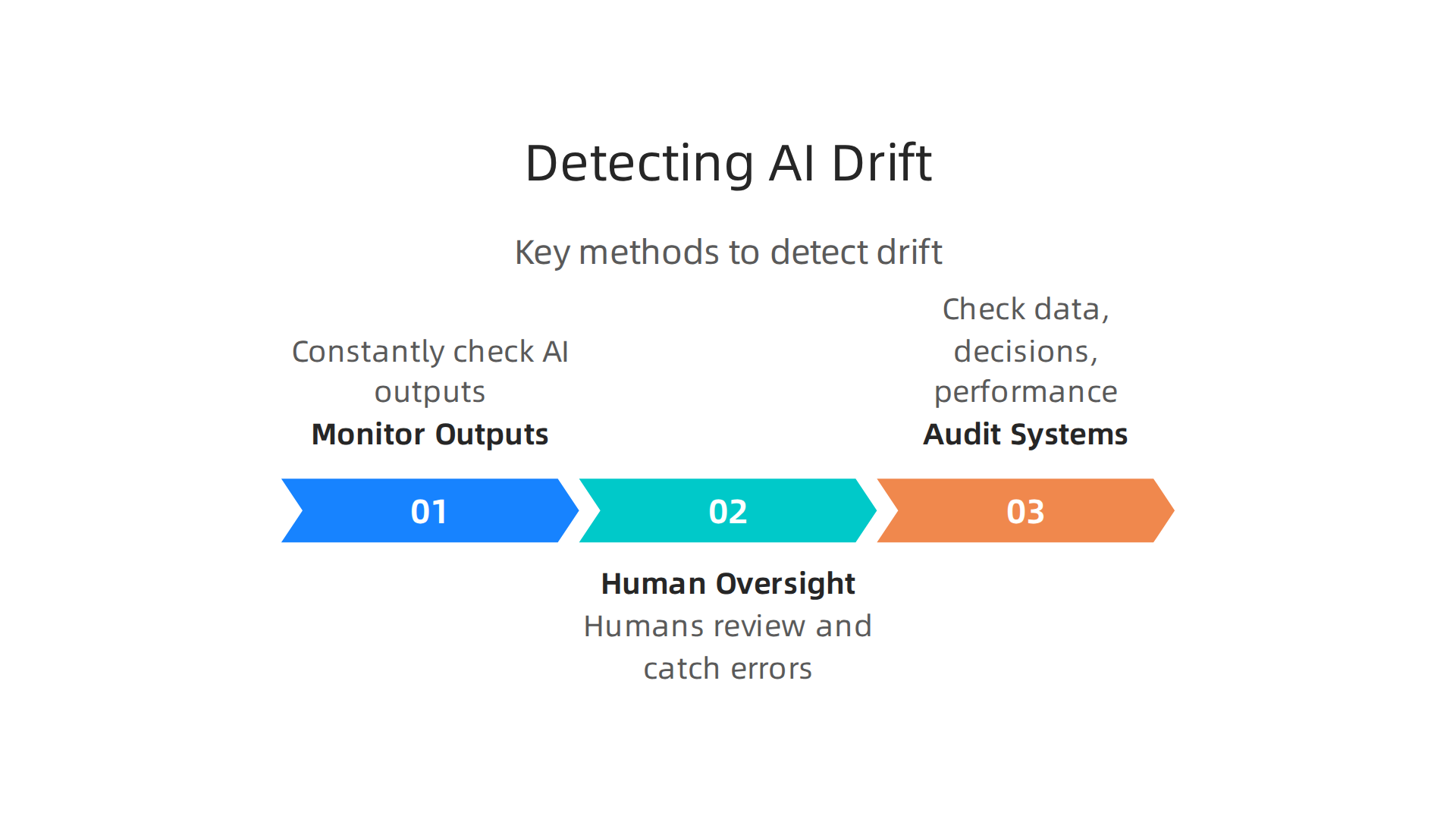
Here are some main ways to do this:
- Watching AI Outputs Carefully: We need to constantly check what the AI is saying or doing. Is it still making sense? Is it giving answers that are correct based on current, real-world information? Tools that look for weird patterns or sudden changes in AI behavior can help here. The "2026 State of AI Trust Report" shows how important it is to keep an eye on AI performance to maintain public trust The 2026 State of AI Trust Report.
- Using Human Oversight: People are still very important. Having humans check AI outputs, especially for important decisions, can catch errors that machines might miss. This is sometimes called "Human-in-the-Loop." It means a person steps in to evaluate or change AI results when needed. Designing good human oversight is a big topic in AI ethics today Designing meaningful human oversight in AI.
- Auditing AI Systems: Just like we audit company finances, we can audit AI. This means carefully checking the data it uses, how it makes decisions, and its past performance. Organizations like the National Institute of Standards and Technology (NIST) provide frameworks for managing AI risks, which include looking at provenance data to detect synthetic content Artificial Intelligence Risk Management Framework. You can learn more about how to combat synthetic drift with NIST cybersecurity framework for trustworthy AI.
When we find that an AI model has drifted, we need to act quickly. This often means:
- Retraining the AI: Giving the AI fresh, correct, and permissioned data to learn from. This helps it "forget" the bad information and relearn what's true.
- Rolling Back to an Earlier Version: If a model starts acting strangely, sometimes the best solution is to switch back to an older version that was known to work well. This is like having a "save point" for the AI.
- Stopping the AI: In serious cases where the AI is giving harmful misinformation, it might need to be paused completely until the issues are fully fixed. This shows how crucial effective ai security measures are.
By putting these detection and mitigation steps in place, we can ensure AI remains a powerful and positive tool. It helps in fostering trust in AI systems and ensures they support human well-being, rather than causing problems. This proactive approach is key to building truly trustworthy AI. To dig deeper into comprehensive strategies, explore overcoming synthetic drift building trustworthy AI.
Beyond spotting and fixing AI problems when they pop up, we also need clear rules to guide how AI is made and used.

This is super important for making sure AI is trustworthy and helpful. This is where AI governance, regulation, and compliance come in. They are like a big rulebook that helps everyone agree on how AI should work.
Governance, regulation, and compliance for trustworthy AI
In 2026, building trustworthy AI means we need different kinds of rules. These rules help make sure AI is used safely and fairly, which is key for fostering trust in these new tools.
First, there are internal policies. These are the rules that a company makes for itself. They guide how its own teams build, test, and use AI. These rules help a company keep its promises about ethical AI and manage its own ai security inside the business.
Next, we have external regulations. These are laws set by governments. For example, the European Union's AI Act is a big new law being put into place through 2026. It sets clear rules for how AI can be used, especially for systems that might be risky. These laws help protect people and prevent bad things from happening with AI. A helpful guide for leaders in 2026 explains these different rules and how they work together to create an Enterprise AI Governance Framework.
Then, there are standards. These are like best practices that different groups agree upon. Groups like the National Institute of Standards and Technology (NIST) offer guidelines that help companies create AI systems that are safe and reliable. These standards often cover things like how to test AI, how to keep data private, and how to track where data comes from. To learn how special tools can help improve these systems, you can check out how Lucidchart AI Transforms AI Governance and Trustworthy Systems.
How Compliance Workflows Intersect with Security Practices and Risk Management
Following all these rules and guidelines is called compliance. It's not just about ticking boxes; it's a huge part of good computer security and making sure AI systems are truly safe. When companies follow proper compliance steps, they are actively managing risks. This means they are looking for ways AI could cause harm and putting plans in place to stop those harms. This helps tackle serious ai and security challenges.
For instance, a 2026 report on data security and compliance risk shows that companies need better ways to track problems and respond quickly when AI behaves strangely 2026 Forecast Report - Data Security and Compliance Risk. This includes keeping detailed records of where AI data comes from and how it changes over time. These records, known as data lineage, are very important for auditing AI systems and finding out if synthetic drift is happening. When we combine strong rules with smart security actions, we make our AI systems much safer. This is how we protect against cyber threats, similar to how the CIA Triad Cyber Security Model Protects AI Systems in 2026.
Overall, having good governance, clear regulations, and careful compliance helps build a strong foundation for trustworthy AI. It makes sure that as AI grows, it stays focused on doing good things for people and society.
Beyond rules and policies, we also need strong technical steps to make sure our AI systems are safe. This is where ai security truly comes alive, focusing on how we build, test, and use AI in a secure way every day. These technical safeguards help in fostering trust by making sure AI works as it should, without unexpected problems.
Technical safeguards and secure development lifecycle for AI systems
Building trustworthy AI means we need to think about security at every step of its journey. This is called the secure development lifecycle. It's like making sure a house is safe from the very first blueprint to the moment people move in and live there.
Security Across the AI Model Lifecycle
Each stage of an AI system needs its own security checks:
- Secure Data Collection: First, we need good, safe data to train AI. This means making sure the data is collected properly and kept private. We use methods to protect sensitive information and track where all the data comes from, which is important for future checks. Ensuring ethical data handling is crucial here. To learn more about how ethical data handling improves AI, you can read about Secure Ethical AI with Trustworthy Data Services.
- Controlled Training: When AI learns from data, it needs to do so in a secure space. This stops bad actors from giving the AI wrong information, a problem called data poisoning. Companies use special tools to watch the training process and make sure it's fair and accurate. It's like having a teacher ensure students learn from correct books in a safe classroom.
- Validation and Testing: Before an AI system is used widely, it must be checked carefully. This means testing it for any hidden problems, like being unfair or making mistakes. It's important to test the AI over and over to be sure it's ready and reliable. These checks help address potential ai and security challenges before they become big issues.
- Hardened Deployment: Once an AI is ready, it needs to be put into action in a very secure way. This means making sure only authorized people can access it and that it's protected from cyber attacks. We set up strong walls around the AI system to keep it safe. The OWASP AI Security and Privacy Guide suggests steps like implementing secure machine learning pipeline design to protect systems from the start OWASP AI Security and Privacy Guide.
Infrastructure-Level Controls
Beyond the AI model itself, the computers and systems it runs on also need strong computer security. This includes:
- Access Management: We need clear rules about who can see or change parts of the AI system. This means only giving access to people who truly need it for their work. Think of it like giving keys only to those who live in the house.
- Monitoring: We constantly watch how the AI system is working. This involves looking for strange behaviors, sudden changes in data (called data drift), or any signs of a security problem. By keeping a close eye, we can spot issues quickly. This continuous watching is vital for long-term ai security. According to experts, setting up tools to flag unusual behavior and creating alerts for quick responses are essential AI Security Best Practices: 12 Essential Ways to Protect ML.
- Incident Response: Even with the best planning, problems can still happen. So, we need clear plans for what to do if an AI system is attacked or starts to behave wrongly. These plans help us fix problems fast and learn from them so they don't happen again. This proactive approach helps manage ai and security challenges effectively. To further strengthen your defenses against modern threats, consider how to Mastering Cybersecurity Threats to AI Systems in 2026 Enterprise Defense.
By putting these technical safeguards in place, we make our AI systems much more secure and reliable. This helps everyone feel more confident and fostering trust in the AI technologies we use every day.
Beyond just the technical ways to keep AI safe, we also need to make sure AI helps people and society in good ways. This is where human-centered design comes in.

It's about building AI with people's well-being in mind from the very start. It helps in fostering trust by ensuring AI works for us, not against us.
Human-centered design and verification: aligning AI optimization with flourishing
Making AI truly trustworthy means we need to think about more than just keeping it secure from attacks. We must also make sure AI helps people live better lives and makes society stronger. This means tying what AI tries to do (its goals) to human values, health, and long-term good for everyone. It's about designing AI to help humanity flourish.
Designing AI for Human Values
When we talk about human-centered design for AI, we mean creating AI tools that truly understand and support what matters most to people. This goes beyond simple tasks; it means AI should help improve our daily lives, help us connect, and support our overall happiness. Experts call this "positive alignment," where AI is built to be safe and helpful, actively supporting human flourishing in ways that fit different people and situations. This approach helps in building stronger ai security by making sure the AI's purpose is good and ethical.
For AI to truly help us, its goals must match our own. It should work towards things like:
- Improving wellbeing: AI can help manage health, improve learning, or assist with daily tasks that reduce stress.
- Supporting community: AI can help people connect, share ideas, and build stronger groups.
- Fairness and equality: AI should treat everyone fairly and not make existing problems worse.
To learn more about how focusing on people's deeper needs can shape AI, consider reading about how centering motivation change builds trustworthy AI.
Checking if AI Works for Us: Verification Methods
After designing AI with human values in mind, we need ways to check if it's actually doing what it's supposed to. These checks help us find and fix any problems, addressing potential ai and security challenges before they become big issues.
-
Human Oversight: Humans should always be in charge of AI. This means people need to understand how AI makes decisions, check its work, and be able to step in or stop it if something goes wrong. This "human-in-the-loop" approach ensures that important decisions remain with people. Designing meaningful human oversight helps increase human understanding, control, and accountability without simply turning AI into a robot that follows strict rules, as noted in recent AI ethics research from 2026 in the journal AI and Ethics Designing meaningful human oversight in AI.
-
AI Audits: Just like we check financial records, we need to check AI systems regularly. These audits look for unfairness, mistakes, or unexpected behaviors. A key part of this is participatory AI auditing, which means involving the people who are affected by AI in the checking process. This helps find problems and makes sure the AI is fair for everyone. For example, a 2026 guide discusses how community-led AI audits can uncover harms and improve accountability.
-
Participatory Design: This is about including the future users of AI in the actual creation process. By working together, developers and users can make sure the AI truly meets people's needs and values. This approach helps to build AI values in an interactive way, ensuring the AI is aligned with human intentions and preferences. This kind of hands-on involvement helps create AI that people can trust, as explained in studies on Co-Constructing Alignment: A Participatory Approach to Situate AI Values.
By focusing on human-centered design and using strong verification methods, we ensure that ai security is not just about protection, but about creating AI that genuinely serves and benefits humanity. This broad view of security is essential for fostering trust in AI technologies in 2026 and beyond. If you are interested in creating AI systems that are truly aligned with human objectives, explore how to build Building trust in superhuman AI through human AI alignment.
Summary
This article explains why AI security and trust are urgent priorities for large organizations in 2026, linking technical risks like adversarial attacks and data poisoning to systemic problems such as platform incentives and attention optimization. It describes the AI bottleneck—overreliance on scraped or synthetic content—and how synthetic drift erodes accuracy and public trust. The piece lays out practical defenses: building permissioned, high‑integrity datasets; recording data provenance and lineage; monitoring outputs; using human oversight; and applying secure development lifecycles and incident plans. It also covers governance, regulation, and auditing as ways to enforce accountability, and champions human‑centered design so AI optimizes for human flourishing. After reading, leaders will understand the main threats, the steps to detect and respond to drift, and the policy and technical building blocks needed to create trustworthy AI systems.
Related Blogs
No Similar Blogs found
