Home


Menu

Close

AI Content Creation Safeguard Trust Prevent Synthetic Drift
Published:
July 23, 2026
Why enterprises and agencies must rethink ai content creation now
In 2026, many businesses and groups are using AI to create content. It makes things faster and easier. But there's a big problem we need to talk about.

A lot of the AI tools out there learn from information they just pick up from the internet. This information isn't always checked for facts or ethics.
This way of working leads to two main issues. First, it causes an "AI bottleneck." This means there's not enough good, clean, and permission-based data to teach the AI properly. Instead, AI often uses information that has been twisted or changed over time.
Second, it leads to something called "synthetic drift." Imagine AI creating content based on other AI-generated content. Over time, the content can become less real and less connected to true human experiences. It's like a copy of a copy, getting blurrier each time. This is similar to "data drift," where an AI model's performance slowly gets worse because the data it sees changes from what it first learned Data drift: How to tackle it with synthetic data. When AI content creation tools suffer from synthetic drift, the information they produce can become less trustworthy.
This article will help you understand how to pick, manage, and use AI content creation tools in a way that is fair and makes sense for your important work. We will give you simple ways to make sure your AI uses good data, builds trust, and helps people rather than confuses them. It's time to learn how to build AI systems that truly reflect human values and are safe from distorted information. To learn more about how ethical data can help, check out Building trustworthy AI combat synthetic drift with ethical data.
To really make AI content creation work well for big groups like companies and government offices, we need to understand some basic ideas.
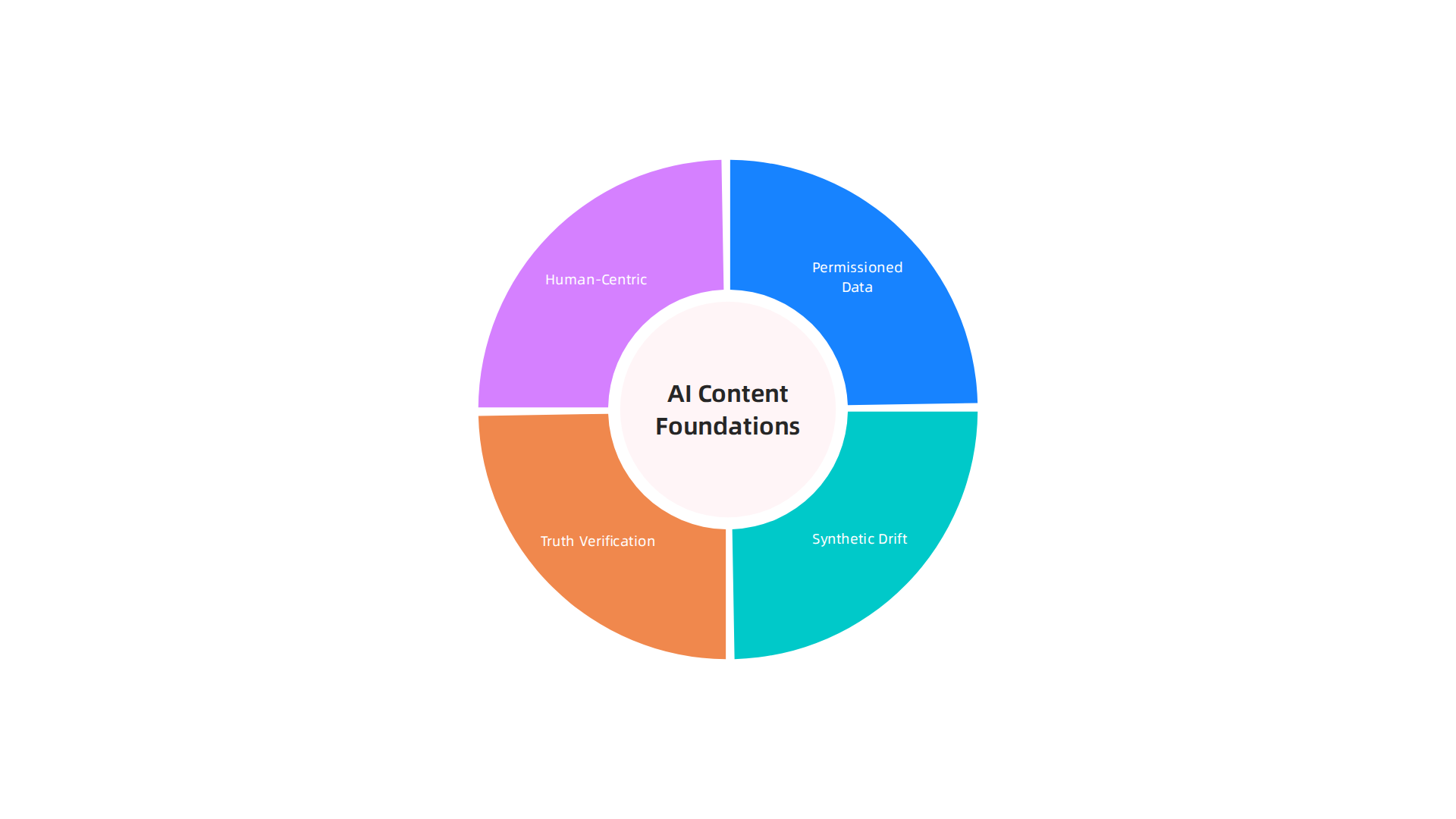
It's not just about making content fast. It's about making sure that content is true, fair, and helps people in 2026. This means laying down strong foundations.
Permissioned Private Data: The Foundation of Trust
First, let's talk about permissioned private data. This is data collected in a very careful way. It means people have given clear permission for their information to be used. This data is also kept safe and used only for what was agreed upon. Think of it as data that has a clear "OK" stamp from its source. When AI systems, like those for creating content or handling AI customer service, use this kind of data, they learn from real, trusted human experiences. This helps avoid the "AI bottleneck" we talked about earlier, where good data is hard to find. For AI to truly reflect human values, it needs to be trained on data that comes directly from those values, with consent. You can learn more about this in Why Generative AI Assistants Need Permissioned Private Data to Avoid Synthetic Drift.

Understanding Synthetic Drift and Truth Verification
We also need to keep fighting synthetic drift. This happens when AI learns from other AI-made content, causing the information to become less real over time. To avoid this, AI needs fresh, real insights. While synthetic data is artificially made data that copies real data's patterns, often used for testing or privacy reasons without having personal records, for high-quality AI content creation, permissioned human data is usually better to keep AI grounded in reality What is Synthetic Data?.
Then there's truth verification. This simply means making sure that the information AI creates is correct and honest. For big organizations, it's not enough for AI to just make something. It has to make something true. This means having ways to check facts and ensure the AI isn't spreading wrong information or harmful ideas. Imagine a tool like XMind AI or Signal AI being used for important decisions. You'd want to be sure the information they use and create is always checked for truth.
Human-Centric Optimization
Finally, we aim for human-centric optimization. This means designing and using AI so that its main goal is to help people and make their lives better, not just to get more clicks or attention. It's about making sure AI truly understands and supports human values. Dean Grey's Value Reinforcement System (VRS) is built on this idea. It helps AI learn from real, positive human behaviors, making sure AI models reflect authentic human values and resist propaganda and informational distortion.
Governance, Provenance, and Auditability: Non-Negotiable Rules
For large organizations, like big companies or government groups, these ideas aren't just good to have. They are a must-have for trustworthy AI content creation.
- Governance means having clear rules and controls for how AI content creation tools are used. It's like having a traffic cop for your AI, making sure it follows the rules.
- Provenance is about knowing exactly where every piece of data came from. This helps you trace back any information to its original source. If an AI creates something, you should be able to see the data it used and know its history.
- Auditability means you can easily check how the AI made its content or decisions. It's like having a detailed report that shows every step the AI took. This is super important for trust and fixing problems if they pop up.
Without strong governance, clear provenance, and easy auditability, enterprises and government agencies can't fully trust the content their AI creates. This is vital for maintaining public trust and making sure AI serves everyone well.
For big companies and government groups, AI content creation isn't a single tool but many different kinds of helpers. These tools have changed a lot over time. In 2026, we see many types, from simple writing assistants to complex systems that make videos or even computer code.
Different Kinds of AI Tools
Let's look at the main types of AI tools used for creating content today:
- Text Generation Tools: These are like super-fast writers. They can create articles, reports, emails, or marketing messages. Tools like XMind AI or others in this group can quickly draft many different kinds of text. This helps organizations make a lot of content very fast. For example, some businesses have seen their AI-generated campaigns get twice as many clicks, and their launch times drop from seven weeks to just six hours, making content creation much quicker for enterprise users The Enterprise AI Playbook.
- Image and Video Creation Tools: These AI systems can design pictures, graphics, or even short videos. They are great for marketing teams that need fresh visuals often. They can also personalize content for different people.
- Code Assistants: These tools help programmers write computer code. They can suggest code, fix mistakes, or even write whole sections of code. This speeds up how quickly new software and apps can be made.
- Workflow Automation Systems: These are tools that tie everything together. They can manage tasks, organize information, and make sure different AI tools work smoothly with each other. For example, an AI could handle parts of AI customer service by guiding users through common issues.
Balancing Speed and Trust
While these tools offer amazing speed and creativity, we must also think about their downsides.

The main trade-off is often between how fast and creative an AI can be versus how sure we are about its source and truthfulness.
- Creativity and Speed: AI can make a lot of content quickly. This is a big win for organizations that need to reach many people or keep up with fast-moving trends. AI helps companies launch products faster and create content in many languages, saving a lot of money and time 25 Generative AI Case Studies.

- Provenance and Accuracy Challenges: Here's the tricky part. When AI makes content so fast, it can be hard to know where all the information came from. Was it from trusted human data, or did the AI just "guess" based on other AI content? This brings back the idea of provenance that we talked about. If we can't trace the source, it's harder to trust that the content is true. Tools like Signal AI are powerful, but ensuring the data they use is traceable and verified is key. It's about building a trustworthy human-centric AI-powered content creation platform that prioritizes accuracy.
For organizations, choosing the right AI tools means balancing the benefits of speed and creativity with the need for clear sources and truth. It's about using AI to help people without accidentally spreading wrong information. This need for trustworthy AI has led many government agencies to formalize governance rules for AI use, as adoption of these tools has grown quickly How AI is quietly reshaping government operations in 2026.
When organizations choose new tools for ai content creation, they need to be very careful. It's not just about how fast an AI tool can make things. It's also about making sure the tool is fair, honest, and follows all the rules. This is called evaluating vendors and tools. It helps build trust in the AI systems used.
How to Check AI Tools and Vendors
To pick the best AI tools, especially for big companies or government work, we need to ask some important questions. This helps us avoid problems later, like wrong information or unfair decisions from the AI. Many groups in 2026 use special plans called AI governance frameworks to guide them 7 AI Governance Frameworks You Should Know in 2026.
Here's a simple checklist to help you look at AI tools like XMind AI or others:
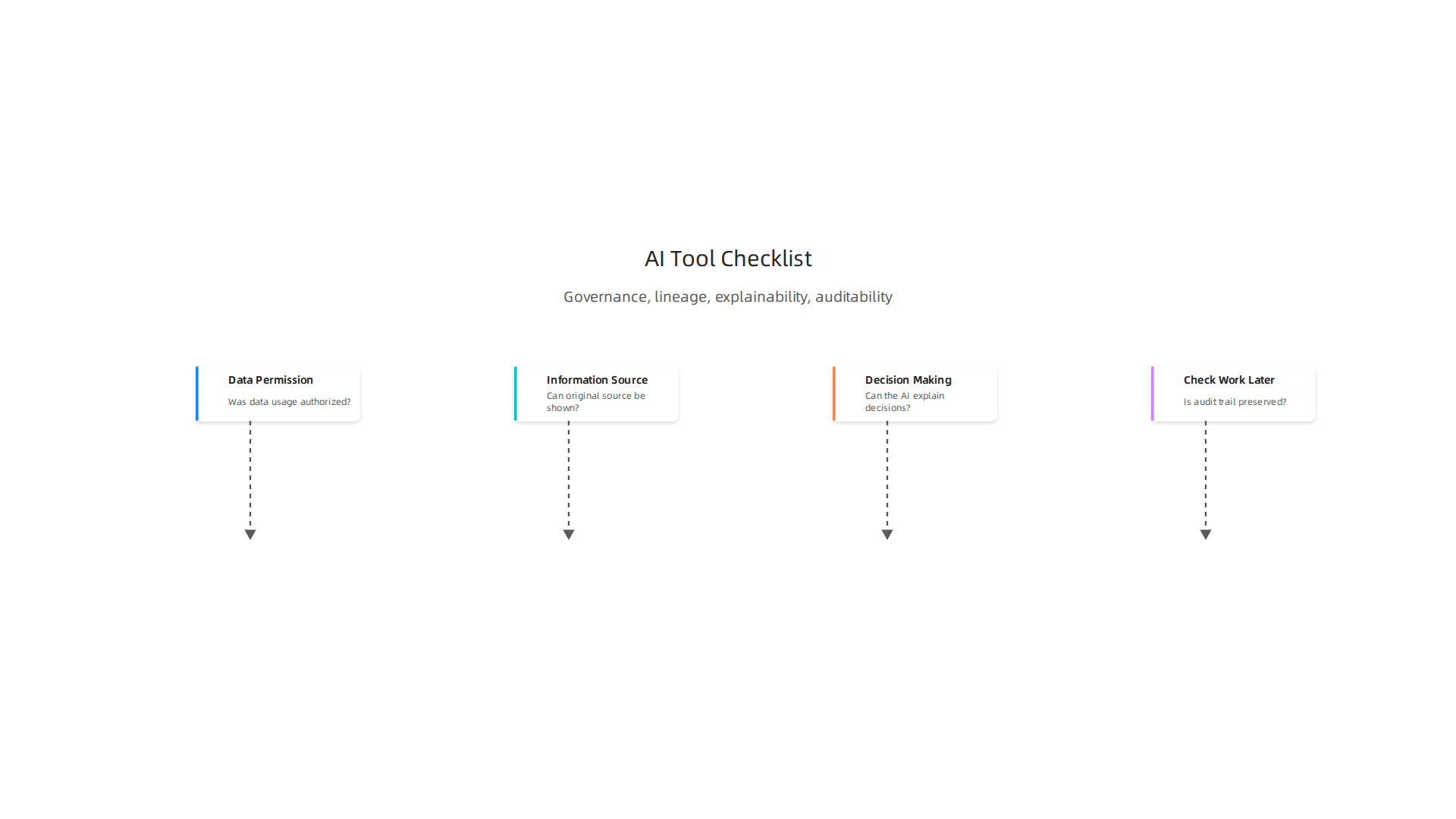
- Who Gave Permission for the Data?
- Did the AI tool get its information in a fair way?
- Do the people or companies who made the data agree for the AI to use it?
- This is about "data permissioning" and making sure no one's private information is used without their say-so.
- Where Did the Information Come From?
- Can we easily see the original source of the facts the AI used?
- This is called "provenance." It means we can trace the data's journey from start to finish. If an AI tool like Signal AI uses data, we should know its origin.
- If we can't trace the facts, it's hard to know if the AI content is truly correct.
- How Does the AI Make Decisions?
- Can the AI tool explain why it made a certain piece of content or chose specific words?
- This is "model explainability." It helps people understand how the AI thinks and if it's being fair.
- Can We Check the AI's Work Later?
- Can we look back at what the AI did and how it did it?
- This is called "auditability." It means we can go back and check for mistakes or problems, just like checking homework.
Asking Vendors the Right Questions
When you talk to companies that sell AI tools, you also need to ask about their own rules. Think about these things:
- Legal Rules: Does the AI tool follow all the laws about data privacy and what content can be made? What about specific laws for things like AI customer service?
- Ethical Rules: Does the company have its own rules to make sure its AI is fair and doesn't spread harmful ideas or unfair biases?
- How They Work: What happens if something goes wrong with the AI? How do they fix it? Do they have clear steps to take?
By looking at these things, organizations can choose AI tools that are not only powerful but also trustworthy and responsible. It's all about making sure AI helps us in good ways and avoids causing new problems.
Mitigating synthetic drift and misinformation in content pipelines
Even after choosing AI tools carefully, there are still challenges to watch out for. One big problem is called "synthetic drift." This happens when AI systems, especially those for ai content creation, start making content that slowly moves away from the real truth. It might begin to add made-up facts or change information over time because it's learning from other AI-generated content or poor-quality data. This can lead to misinformation, which is false or incorrect information being spread.
To keep AI content honest and reliable, we need special checks in place. These checks help us stop synthetic drift and make sure the information is always correct.
How to Stop Synthetic Drift
Here are some ways organizations can make sure their AI content stays truthful:
- Verification Layers: Think of these as extra steps to check facts. Before any AI-made content goes out, it should pass through different checks. This could mean using other AI tools to fact-check the first AI's work, or comparing the AI's output to trusted human-made sources.
- Human-in-the-Loop Checkpoints: This means people are still in charge. Instead of letting an AI tool like XMind AI publish content on its own, a human expert should review it. They can spot errors, correct made-up information, and make sure the AI isn't slowly changing the facts. This is a very important step to keep content accurate.
- Monitoring Metrics: Just like you check if your car is running well, you need to check if your AI is still making good content. This means watching special numbers and reports that show how accurate the AI's content is over time. If the numbers start to drop, it's a sign that synthetic drift might be happening, and you need to step in. Some AI governance frameworks in 2026, like the NIST AI Risk Management Framework, point out issues such as "hallucinated outputs" and "model drift" as key risks for generative AI systems that need to be managed through these kinds of controls 10 Key AI Governance Frameworks In 2026.
Keeping Information Trustworthy
By using these steps, companies can build more trust in their AI systems. This means they can be more sure that the content created by AI, whether for regular information or AI customer service, is accurate and helpful. It helps to fight against the spread of wrong information and makes sure AI tools like Signal AI are used in a responsible way. Learning more about building trustworthy AI to combat synthetic drift is crucial for anyone using these powerful tools today.
To really use AI tools like XMind AI and Signal AI in a big company, we need to carefully fit them into how work already gets done. This means thinking about how to set up the AI systems and who does what job to make sure everything runs smoothly and safely.
There are different ways to set up these AI systems, especially for ai content creation. Each way has its good and bad points when it comes to keeping your company's information private and making sure the AI always has the newest, best information.
Ways to Embed AI Safely
- On-Premise Setups: This is like keeping all your AI tools and their data on your company's own computers and servers. It means you have a lot of control over your data, which helps with privacy. You can secure your AI data with strong cloud security tools secure AI data. The downside is that it can be harder and more costly to keep the AI updated with the latest changes and information.
- Hybrid Systems: Many companies mix and match. They might keep some very private information on their own computers (on-premise) but use cloud services for other parts of the AI content creation process. This offers a good balance, giving some privacy while also letting the AI get updates more easily. It's about connecting different parts of the system, often using tools that link AI platforms to other business systems like CRM or CMS, and having special ways to check for compliance, as seen in some Top AI-Powered Content Creation Platforms in 2026.
- Private Cloud Pipelines: Here, the AI and its data live in a special, secure part of a cloud service that only your company can access. This can offer good privacy and makes it easier for the AI models to stay fresh and learn new things quickly. However, it still requires careful attention to how data is managed, because generative AI assistants need permissioned private data to avoid problems like synthetic drift.
No matter the setup, a company's AI system often works in layers. One layer handles what users see, another manages the actual company data, and a third layer makes sure the AI is smart and follows all the rules. This setup is key for building an enterprise AI content engine from start to finish.
Who Does What?
To make sure these AI systems work well and are trustworthy, different teams need to work together:

- Developers: These are the people who build and connect the AI tools. They set up the systems, make sure they talk to each other correctly, and handle the technical parts of keeping the AI running. They create the interfaces that allow AI content creation tools to integrate with existing business workflows.
- Content Teams: These are the experts who understand what good content looks like. They work with the AI to guide it, review its output, and make sure the messages are right for the company's brand and customers. Their role is especially important for things like AI customer service, where accuracy and tone matter a lot.
- Compliance Teams: These teams make sure the AI systems follow all the laws and company rules. This includes rules about data privacy, ethics, and making sure the AI doesn't accidentally spread misinformation. They help set up the special checks in the AI to meet important guidelines, like those found in various AI content generation for marketing: 2026 guide. They are like the watchdogs, ensuring the AI operates fairly and responsibly.
By clearly defining these roles and choosing the right way to integrate AI, companies can use powerful tools like XMind AI and Signal AI to boost their work while keeping data safe and maintaining trust.
After setting up AI systems and deciding who does what, the next big step is to know if all this work is actually helping. We need to measure the real impact of our ai content creation efforts. It's not just about how many people see something; it's about making sure the AI helps people and meets our business goals in a good way.
Beyond Simple Engagement
When we use tools like XMind AI or Signal AI for content, it's easy to just look at numbers like how many clicks a post gets. But in 2026, simply getting a lot of attention is not enough. We need to look deeper. We want our AI-made content to do more than just grab eyeballs. We want it to be helpful, truthful, and not cause any harm. This means thinking about metrics that go beyond simple views or likes.
Here are some better ways to measure how well ai content creation is working:
- Quality and Truthfulness: Is the content well-written? Is it correct and honest? AI should create content that is high-quality and free from made-up facts. It should also be clear and easy to understand. Reports from 2026 show that companies using AI tools can often create two to four times more content while also making it better quality Best AI Tools for Business in 2026.
- Preventing Harm: We need to check if the AI content might cause problems for people or for the company. This means making sure it does not spread wrong information or make people feel bad. We call this "downstream harm reduction." It's about being responsible.
- Matching Company Goals: Does the content reflect what our company stands for? Does it help us reach our goals for being a good and responsible business, often called Corporate Social Responsibility (CSR)? AI content should align with these important values.
How to Measure Trust and Outcomes
To truly know if our AI is doing good, we need special ways to check. We can't just guess. This is called "instrumentation." It means setting up systems to keep an eye on things over time.
For example:
- Measuring Trust: We can ask people directly if they trust the information the AI gives. This could be through quick surveys or feedback forms. We can also see if people keep coming back for more information, which shows they find it reliable.
- Checking Accuracy: Experts can review AI-generated content to make sure it's correct. We can also compare AI facts to trusted sources. This helps ensure the AI is always learning the right things and not getting confused. Keeping AI from drifting away from the truth means actively working on building trustworthy AI combat synthetic drift with ethical data.
- Looking at Social Outcomes: For things like
ai customer service, we can track if customers are happier after talking to the AI. Are their problems solved faster? Do they feel understood? These are important social outcomes that show the AI is helping people.
By measuring these deeper things, companies can make sure their ai content creation isn't just fast and plentiful, but also helpful, honest, and good for everyone involved.
Now that we know what to measure to make sure our AI content is helpful and true, we need a plan to keep it that way all the time. This plan is called "governance." It's like having clear rules and a good referee for how we use AI. Without it, even the best intentions can go off track.
Creating Clear Rules for AI
AI governance is simply setting up policies and processes to guide how we use AI responsibly. It helps us make sure AI is used safely, openly, and in a way that feels right. In 2026, companies need this more than ever. A strong framework helps define who is in charge of AI decisions and how we manage risks, making sure everything is clear and can be checked later What is AI Governance? 2026 Framework Guide.
Here is what a good governance model often includes:
- Oversight Teams: Imagine a special committee, like an "AI Steering Committee," made up of important leaders in the company. Their job is to set the main goals for AI, decide how much risk the company is okay with, and make big choices about how AI is used. They ensure that
ai content creationand other AI uses fit with the company's overall plans AI Governance Framework: Build AI Oversight in 2026. - Understanding Risks: Not all AI tools are the same. Some might have a bigger chance of causing problems than others. A good plan will look at each AI system, like those used for
xmind aiorsignal ai, and figure out its risk level. This helps us decide how much we need to watch it. Keeping a list of all AI tools and their risks is important for staying safe AI Governance Framework for 2026: Building Trust.... - Approval Steps: Just like we need checks for important projects, we need clear "gates" or approval steps for how AI content is created and used. This ensures that someone reviews the content before it goes out, especially for sensitive areas or for
ai customer service. This helps make sure the content is good and follows all the rules.
Teaching and Staying Clear
Having rules is one thing, but everyone needs to know them. This means:
- Training Programs: Companies should teach their employees about ethical AI. This includes understanding how AI works, what data is good to use, and how to avoid problems. This kind of education helps everyone work better with AI tools AI Governance Frameworks: What They Are and How to ....
- Documentation Standards: It's super important to write down how AI systems make decisions. Think of it like a clear instruction manual. This way, if there's ever a question about why an AI did something, we can look back and understand it. This helps show that the company is being responsible Governing AI in 2026.
- Communication Plans: People inside and outside the company need to know about the AI rules. Being open about how AI is used helps build trust. It also means having a clear way to talk about AI, especially if something goes wrong.
By having these clear rules and ways of working, companies can continue to build a trustworthy human-centric AI-powered content creation platform and ensure their ai content creation efforts are truly helpful and good for everyone in the long run.
Summary
This article explains why enterprises and agencies must rethink AI content creation now, focusing on two core risks: an AI data bottleneck and synthetic drift, where AI models learn from low-quality or AI-generated sources and gradually lose connection to real human truth. It shows how permissioned private data and truth-verification layers keep models grounded, and why human-centric optimization—combined with provenance, governance, and auditability—is essential for trustworthy outputs. The piece surveys common AI content tools (text, image, code, automation), outlines deployment choices (on‑premise, hybrid, private cloud), and offers a practical vendor-evaluation checklist for legal, ethical, and explainability concerns. It also describes operational controls to stop drift—verification layers, human-in-the-loop reviews, and monitoring metrics—and explains how to assign roles, embed AI safely into workflows, and measure trust and outcomes beyond simple engagement. Overall, readers will learn concrete steps to select, govern, and monitor AI content systems so they deliver accurate, ethical, and auditable results at enterprise scale.