

Global Ministries: Crisis Stability

Community collapses when leadership burns out. 892-day user streaks, 2,000+ virtual events, and 89,000+ members across 100+ countries show what happens when values -not algorithms -hold a congregation together.
When the Doors Closed, the Congregation Stayed: A VRS Crisis-Stability Case Study
When the world locked down, faith communities faced a question they'd never had to ask. Not "how do we grow?"
Instead: how do we hold together when we can't gather at all?
For organizations built on physical presence, the handshake, the pew, the shared room, the sudden loss of in-person gathering wasn't an inconvenience. It was an existential threat to the very thing that held the community together.
When you can't gather, presence has to be rebuilt as something a person feels every day, not something they attend once a week.
This is the story of what happened when the Value Reinforcement System (VRS) was deployed as crisis infrastructure for a global faith community during exactly that moment.
The Community
This deployment placed VRS inside Promise Keepers, a global faith organization with a congregation spanning an age bracket of 40 to 80, across more than 135 countries.
That demographic matters. This was not a digitally native, app-fluent audience. These were members for whom community had always meant being in the room together, and who were now cut off from it at the exact moment connection mattered most.
The hardest audience to keep engaged digitally is the one that never needed digital in the first place.
The Crisis: Two Failures at Once
When gathering stopped, two things began to break in parallel.
Congregants drifted.
Without the rhythm of showing up, the thread that kept members connected to the community, and to their own practice, started to fray. Disengagement isn't neutral for a faith community. It's the slow loss of the very thing the organization exists to provide.
Leaders burned out.
At the same time, the burden of holding everything together fell on a small number of leaders, suddenly improvising digital outreach on top of everything else. Manually. Constantly. With no infrastructure underneath them. Leadership burnout was quietly becoming as dangerous as congregant drift.
VRS was deployed to address both at once.
The Recognition Engine, Running 24/7
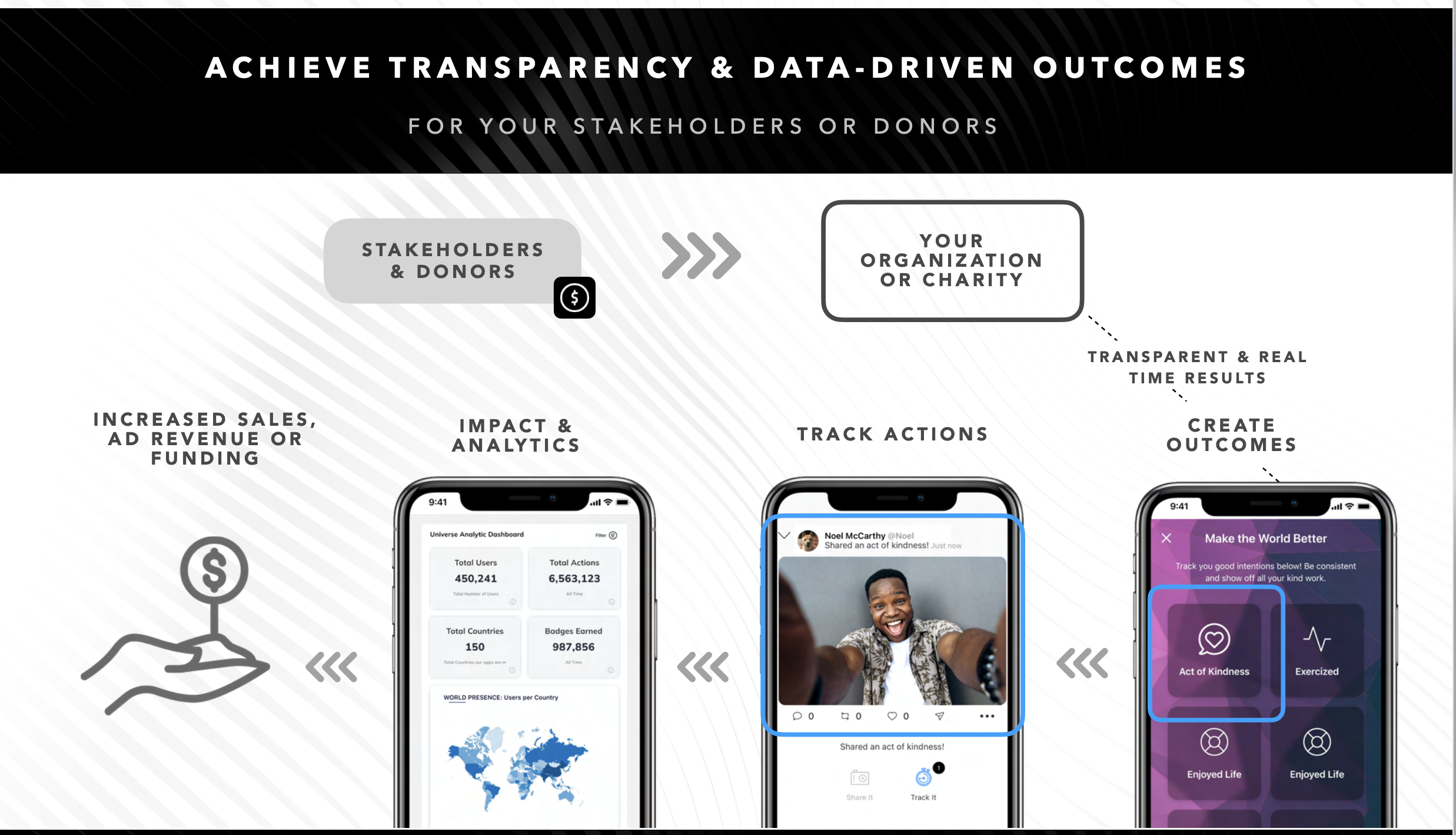
The core of the deployment was a 24/7 congregation recognition system. It ran the same VRS loop that reinforces value rather than extracting attention, running continuously so the community never went dark.
Members logged the practices that sustained them.
Daily habits, reflection, participation, the behaviors of an engaged faith life, now trackable and visible even when no one could meet in person.
The system recognized them automatically. Recognition, leaderboards, and acknowledgment ran around the clock without a leader having to manually orchestrate it. The community saw itself staying active, every day, and that is what kept the thread intact.
The recognition didn't wait for a leader to send it. That single shift is what kept the congregation connected and kept leadership from collapsing under the weight of doing it by hand.
By automating recognition, VRS kept congregants engaged and lifted the manual, around-the-clock outreach burden off the leaders, cutting the administrative load that drives burnout.
The Results
These figures are from the deployment's own analytics, not projections.
Longest individual streak: 892 consecutive days
Events hosted: 2,000+ across the globe
Habits tracked: 13,000+
Users: 89,000+ across more than 135 countries
The headline isn't the reach, though the reach is real. It's the 892-day streak. Nearly two and a half years of a single member showing up, every single day, inside a community that was supposed to be impossible to hold together remotely.
An 892-day streak in a 40-to-80 age bracket, during a period when in-person gathering was impossible, is not a digital-engagement statistic. It's proof that presence can survive the loss of the room.
Why It Matters
Most engagement technology is designed for growth in good times. It is not designed to hold a community together when the foundation falls out.
VRS did something different. It turned recognition into infrastructure. Something that ran on its own, kept members connected to their practice and each other, and protected leaders from burning out trying to do it all manually.
The attention economy keeps people scrolling. VRS kept a global congregation together through the one event that should have scattered it.
The Bigger Picture
This case study is one of several spanning more than a decade of VRS deployments across distinct communities. Each tests the same hypothesis in a different population, and each adds to the same conclusion: when you reinforce value instead of extracting attention, engagement stops being a metric and becomes resilience.