

Addiction Recovery Engagement: How VRS Sustained a 473-Day Streak

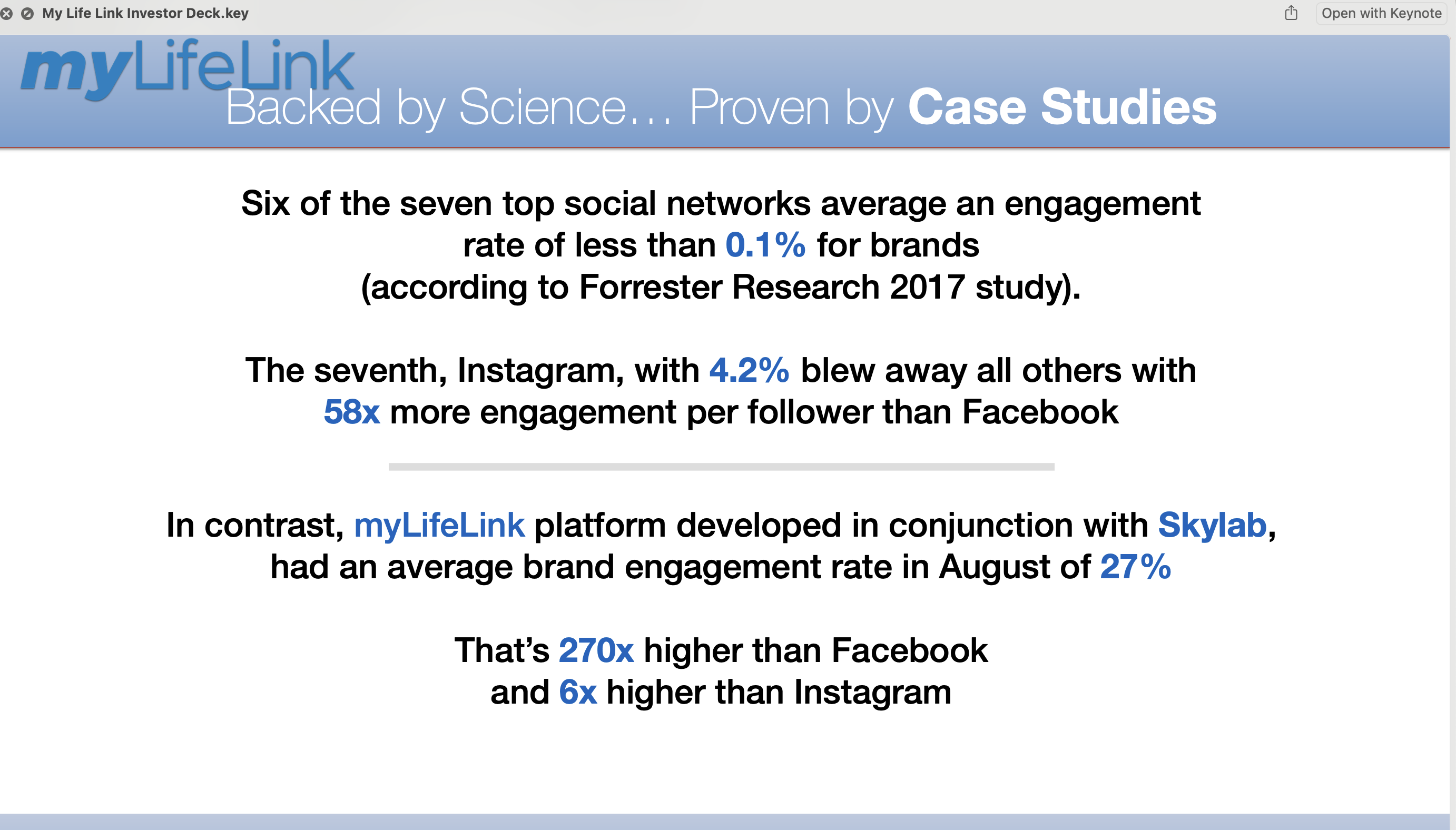
Recovery breaks down between meetings. The myLifeLink platform - powered by the VRS - digitized the sobriety coin, gamified accountability streaks, and built 24/7 virtual community around the moments AA can't reach. The result: 27% sustained engagement. That's was 27x higher than Facebook, and 2x higher than Instagram.
Addiction Recovery, Reinforced Daily: How VRS Drove a 473-Day Engagement Streak
When most people hear "engagement," they picture a number on a marketing dashboard. A like. A click. A flicker of attention gone by the next scroll.
That definition was never good enough for the work that mattered.
The attention economy was built on a model that could hold a person for seconds. VRS was built to hold them for years.
At the time of this deployment, the industry benchmark told a bleak story. According to a 2017 Forrester study, six of the seven largest social networks averaged a brand engagement rate of under 0.1%. Instagram, the outlier, reached 4.2% — and that was considered exceptional.
The Value Reinforcement System (VRS) was built to prove something different: that engagement, when it reinforces what a person actually values instead of extracting their attention, could hold people not for seconds — but for years. And that it could do so in a population where staying engaged isn't a vanity metric. It's protective.
The Community
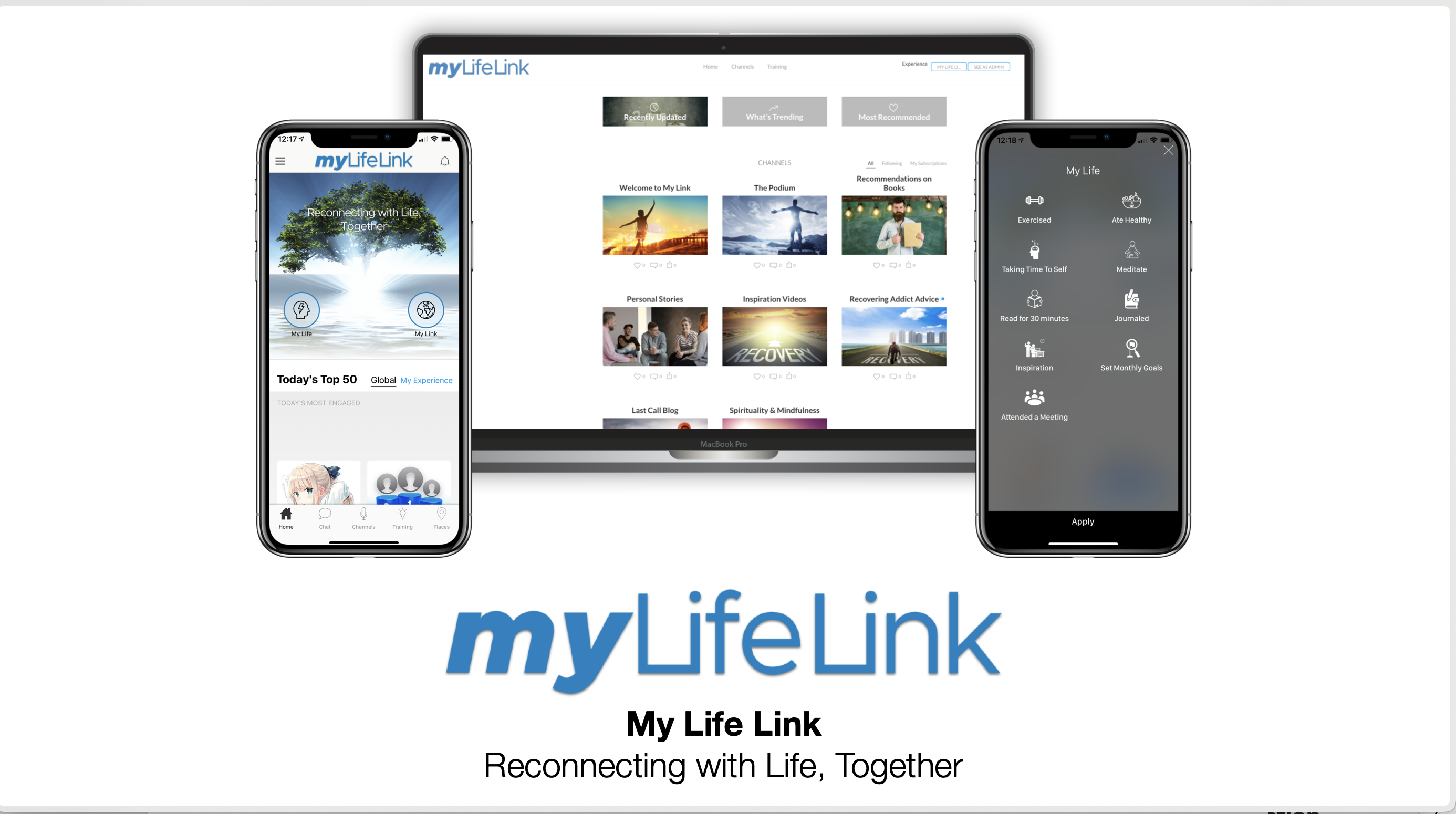
This deployment placed VRS inside an addiction-recovery community on the myLifeLink platform — people doing the daily, unglamorous work of staying in recovery. The platform's own channels reflected it: Recovery, Recovering Addict Advice, Personal Stories, Spirituality & Mindfulness, the Last Call Blog.
For this population, "did they keep showing up?" is not a soft question. Disengagement and isolation are precisely the conditions that precede relapse.
For a person in recovery, consistency isn't a metric. Consistency is the intervention.
The Recognition Loop Engine
VRS didn't gamify consumption. It gamified the behaviors a person in recovery already values but struggles to sustain — and then it did something the attention economy never does: it got real brands to reward those behaviors.
Here's how the loop turned:
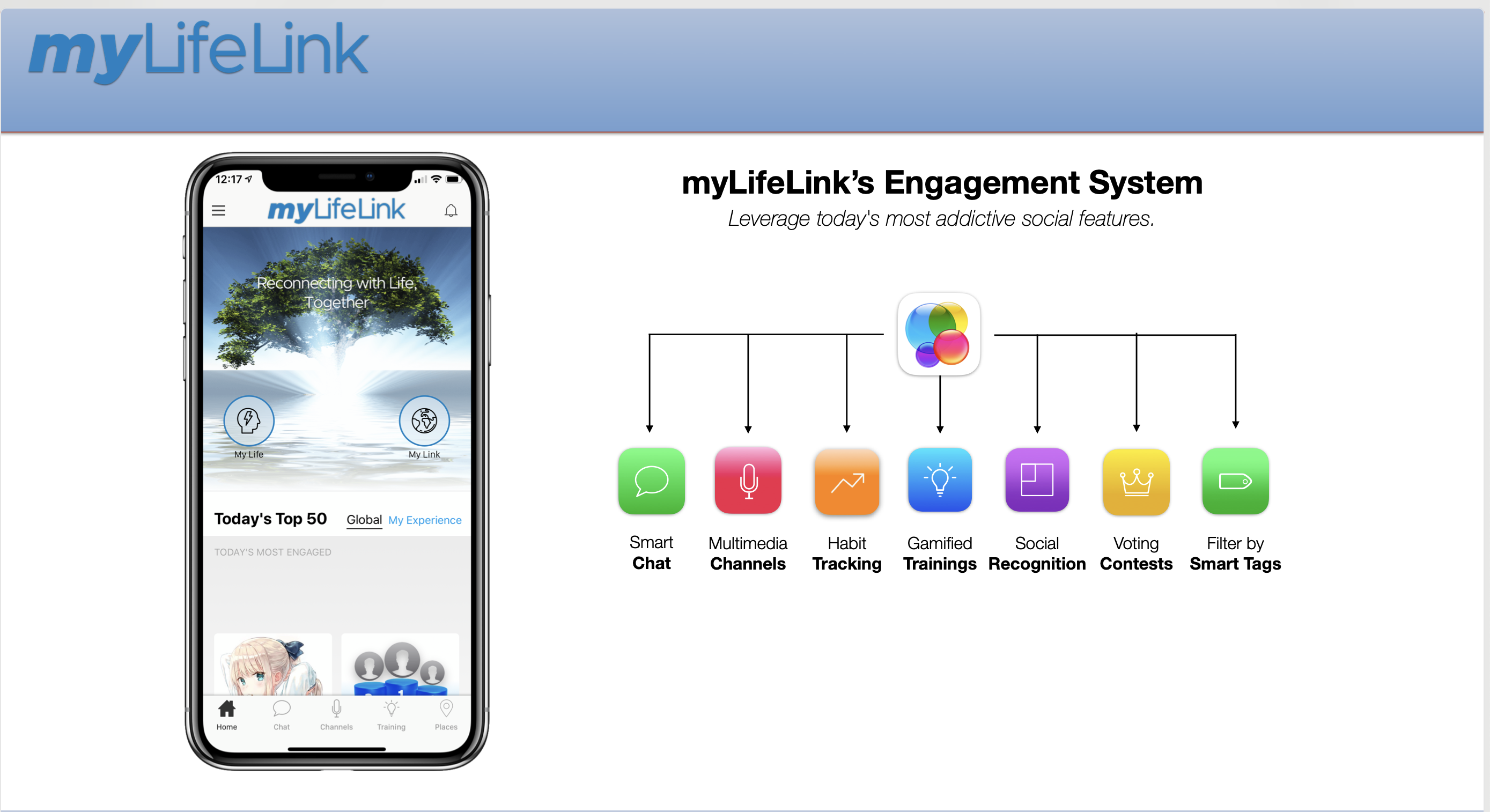
① A member logs a protective behavior. The in-app tracker offered the exact actions recovery depends on: Attended a Meeting, Meditated, Journaled, Read for 30 Minutes, Took Time to Self, Set Monthly Goals, Ate Healthy, Exercised.
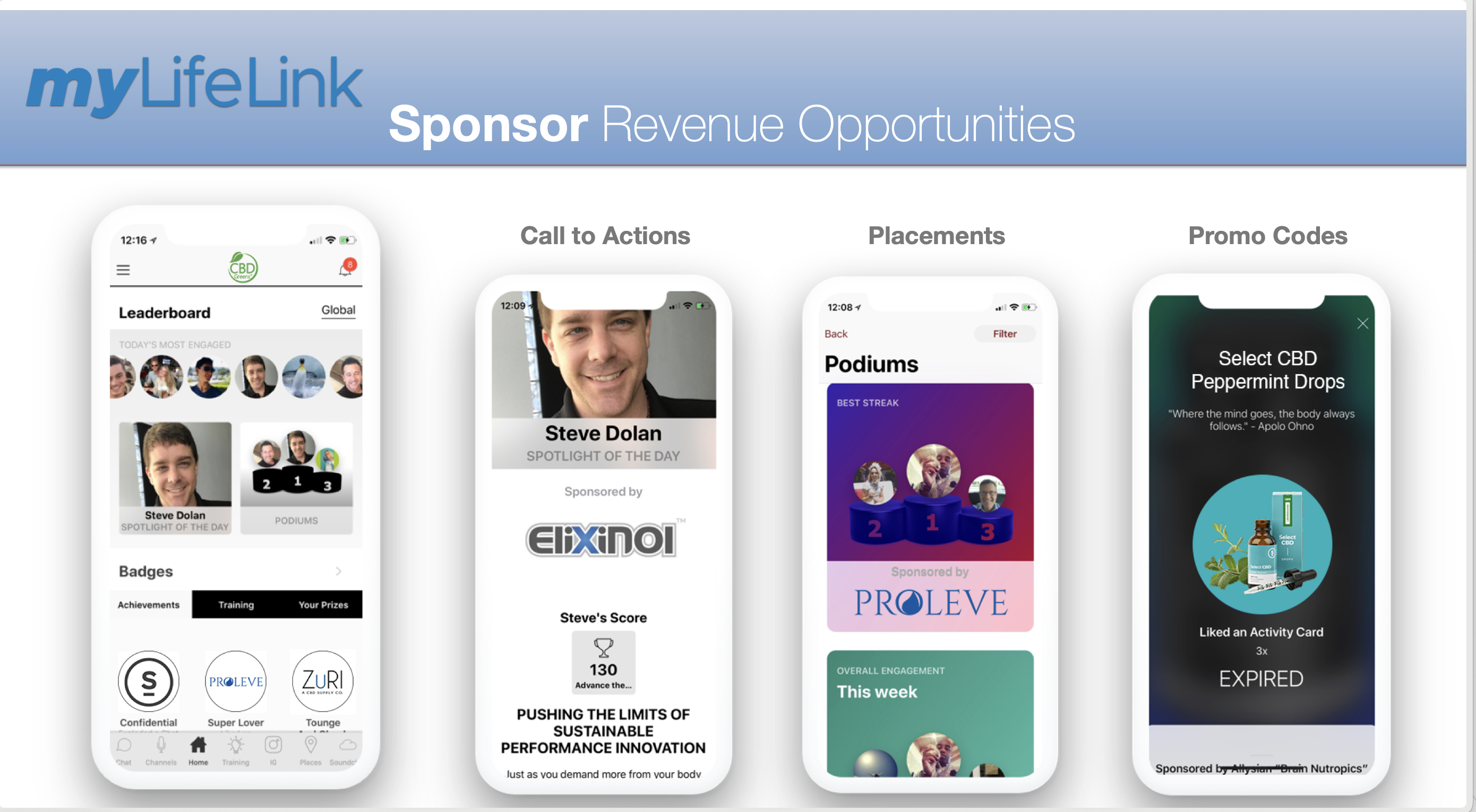
② That action earns visible recognition. Logged behavior fed a live Leaderboard ("Today's Most Engaged"), a Podium ranking, a daily Spotlight, and a wall of Badges and Achievements. The member wasn't rewarded for scrolling — they were seen by their community for doing the work.
③ Recognition is underwritten by real brands. This is the engine. Spotlights, podium placements, and activity rewards were sponsored by health and wellness brands, who funded the recognition and offered tangible rewards — product and promo codes — for healthy action.
The member gets recognized and rewarded. The brand earns authentic association with people improving their lives. And the public gets paid, in real value, to take the healthy action.
④ Recognition compounds into a streak. Sustained behavior became a visible run of consecutive days — turning a single good day into a chain a person doesn't want to break.
Consumption platforms reward you for taking — watching, scrolling, clicking. VRS rewarded members for doing, and recruited major brands to put real value behind every healthy choice.
The Results — From the Live Dashboard
These are the platform's own analytics for the community — not projections.
Monthly Active Users — 2,152
Daily Active Users — 199
New Users (single month) — 561, up 48% over the prior month
Best Individual Streak — 473 consecutive days
But one number tells the real story.
A 473-day streak isn't attention captured. It's a behavior sustained — for over a year — by a person in recovery.
That's more than a year of one person showing up, every single day, to do the behaviors that keep them well. And it wasn't a solo outlier — active streaks ran in parallel across the community, members mid-chain and climbing.
Why It Matters
The benchmark of the era was 4.2% brand engagement — on the best platform available, for seconds at a time.
VRS produced year-plus streaks of self-directed, protective behavior in a recovery population — by aligning three forces that are usually at war:
- The individual who wants to stay well
- The community that wants to support them
- The brands that want genuine engagement
The attention economy pits those against each other. VRS made them pull in the same direction.
VRS did not treat addiction. It kept people doing the behaviors that research associates with sustained recovery — meetings, reflection, routine, connection — at a depth the engagement industry doesn't believe is possible.
The Bigger Picture
This case study is one of several spanning more than a decade of VRS deployments across distinct communities. Each tests the same hypothesis in a different population — and each adds to the same conclusion:
When you reinforce value instead of extracting attention, engagement stops being a metric and becomes an outcome.